
Fire Protection Specification Material: The Foundation of Safe and Compliant Construction
Fire Protection Specification Materials for Modern Building and Infrastructure Projects
In today's construction industry, fire safety is a critical consideration throughout the design, specification, and construction process. Architects, consultants, engineers, contractors, and project owners increasingly rely on Fire Protection Specification Materials to ensure buildings and infrastructure projects meet stringent fire safety standards while protecting lives, assets, and structural integrity.
Properly specified fire protection materials form the backbone of an effective fire safety strategy, helping projects achieve regulatory compliance, improve fire resistance, and enhance long-term building resilience. At LIFEGUARD®, we provide advanced fire protection solutions designed to meet demanding project specifications across commercial, industrial, residential, and infrastructure sectors.
What are Fire Protection Specification Materials?
Fire Protection Specification Materials are specially engineered products and systems selected during the design and construction phase to provide fire resistance, fire containment, smoke control, and structural protection in the event of a fire.
These materials are incorporated into project specifications to ensure consistent fire performance and compliance with applicable building codes, fire regulations, and project requirements.
Common fire protection specification materials include:
- Fire-resistant coatings
- Intumescent coatings
- Fire stop systems
- Fire compartmentation materials
- Thermal barrier coatings
- Fire-rated sealants
- Fire-resistant boards and panels
- Structural fire protection systems
- Passive fire protection products
Why Fire Protection Specifications are Important
A well-defined fire protection specification helps ensure that fire safety requirements are incorporated into every stage of a project.
Benefits include:
Improved Occupant Safety
Specified fire protection materials help delay fire spread and provide valuable evacuation time during emergencies.
Regulatory Compliance
Supports compliance with building regulations, fire safety codes, and project standards.
Structural Fire Resistance
Protects load-bearing elements from heat exposure and structural failure.
Quality Assurance
Ensures approved fire protection materials are used throughout the project.
Reduced Risk
Minimizes the likelihood of fire-related damage, business disruption, and asset loss.
Long-Term Building Performance
Enhances the durability and resilience of structures throughout their operational lifespan.
Key Categories of Fire Protection Specification Materials
Intumescent Fire Coatings
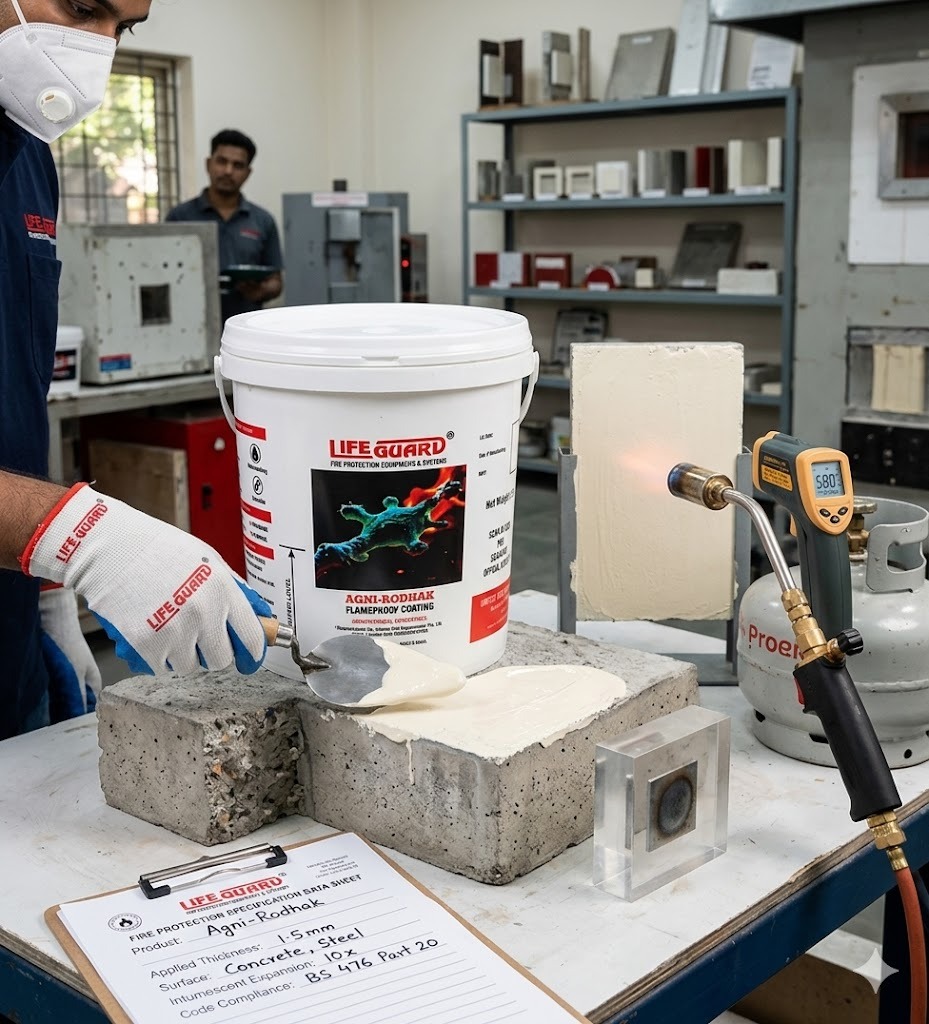
Intumescent coatings are among the most widely specified passive fire protection materials for structural steel.
When exposed to fire, these coatings expand and form an insulating char layer that protects steel from rapid temperature increases.
Benefits include:
- Enhanced fire resistance
- Architectural finish
- Lightweight protection
- Long-term durability
Fire Resistant Coatings
Fire-resistant coatings provide a protective barrier that slows heat transfer and improves structural fire performance.
Applications include:
- Structural steel
- Industrial equipment
- Commercial buildings
- Infrastructure projects
Fire Stop Systems
Fire stop materials maintain the integrity of fire-rated walls and floors by sealing penetrations and joints.
Common applications:
- Electrical penetrations
- Mechanical services
- Plumbing systems
- Cable trays
Fire Compartmentation Materials
Compartmentation systems divide buildings into fire-resistant zones, limiting the spread of fire and smoke.
Advantages include:
- Improved life safety
- Enhanced fire containment
- Better emergency response capability
Thermal Barrier Systems
Thermal barriers reduce heat transfer and improve overall fire resistance performance in structural assemblies.
Applications of Fire Protection Specification Materials
Commercial Buildings
Office complexes, shopping malls, business parks, and mixed-use developments require comprehensive fire protection specifications.
Residential Developments
High-rise apartments and residential communities depend on fire-resistant materials for occupant safety.
Healthcare Facilities
Hospitals and medical centers require robust fire protection systems to safeguard patients and critical operations.
Educational Institutions
Schools, colleges, and universities utilize fire-rated materials to improve safety and compliance.
Industrial Facilities
Manufacturing plants, warehouses, refineries, and logistics centers require specialized fire protection solutions.
Infrastructure Projects
Airports, tunnels, bridges, railway stations, metro systems, and power plants rely on advanced fire protection specifications to ensure long-term resilience.
Data Centers
Mission-critical facilities require passive fire protection systems to protect equipment and maintain operational continuity.
Characteristics of High-Quality Fire Protection Specification Materials
Proven Fire Performance
Materials should demonstrate reliable fire resistance under tested conditions.
Durability
Products must maintain effectiveness throughout the design life of the structure.
Code Compliance
Materials should support compliance with fire safety regulations and project requirements.
Environmental Resistance
Protection against moisture, corrosion, UV exposure, and harsh operating conditions.
Ease of Application
Efficient installation helps maintain project schedules and quality standards.
Compatibility
Materials should integrate seamlessly with other building systems and construction components.
Passive Fire Protection and Material Specifications
Passive Fire Protection (PFP) is a critical component of modern construction specifications. Unlike active systems such as sprinklers and alarms, passive fire protection materials provide continuous protection without activation.
Passive fire protection materials help:
- Protect structural steel
- Maintain compartmentation
- Restrict smoke spread
- Improve evacuation safety
- Reduce fire damage
- Enhance building resilience
Proper specification of passive fire protection systems ensures consistent fire safety performance throughout the life of the building.
Why Choose LIFEGUARD® Fire Protection Specification Materials?
Industry Expertise
LIFEGUARD® has extensive experience delivering fire protection solutions for diverse construction and infrastructure projects.
Advanced Fire Safety Technology
Our products utilize innovative fire-resistant and passive fire protection technologies.
Quality-Assured Performance
Every product is manufactured and tested to meet demanding safety and performance standards.
Technical Support
We assist architects, consultants, contractors, and developers with product selection, specifications, and implementation guidance.
Customized Solutions
Our team provides project-specific recommendations based on risk assessment, building type, and fire protection objectives.
Future-Proof Your Projects with LIFEGUARD® Fire Protection Solutions
As fire safety regulations become more demanding, selecting the right Fire Protection Specification Materials is essential for creating safe, compliant, and resilient structures. By incorporating high-performance passive fire protection systems into project specifications, stakeholders can significantly improve fire safety while protecting valuable assets and infrastructure.
LIFEGUARD® delivers advanced fire protection materials designed to meet modern construction challenges and support long-term safety objectives.
Contact LIFEGUARD®
LIFEGUARD® – United Fire Equipments Pvt. Ltd.
Manufacturer of ISI Certified Fire Safety Equipment
📞 8048034226