
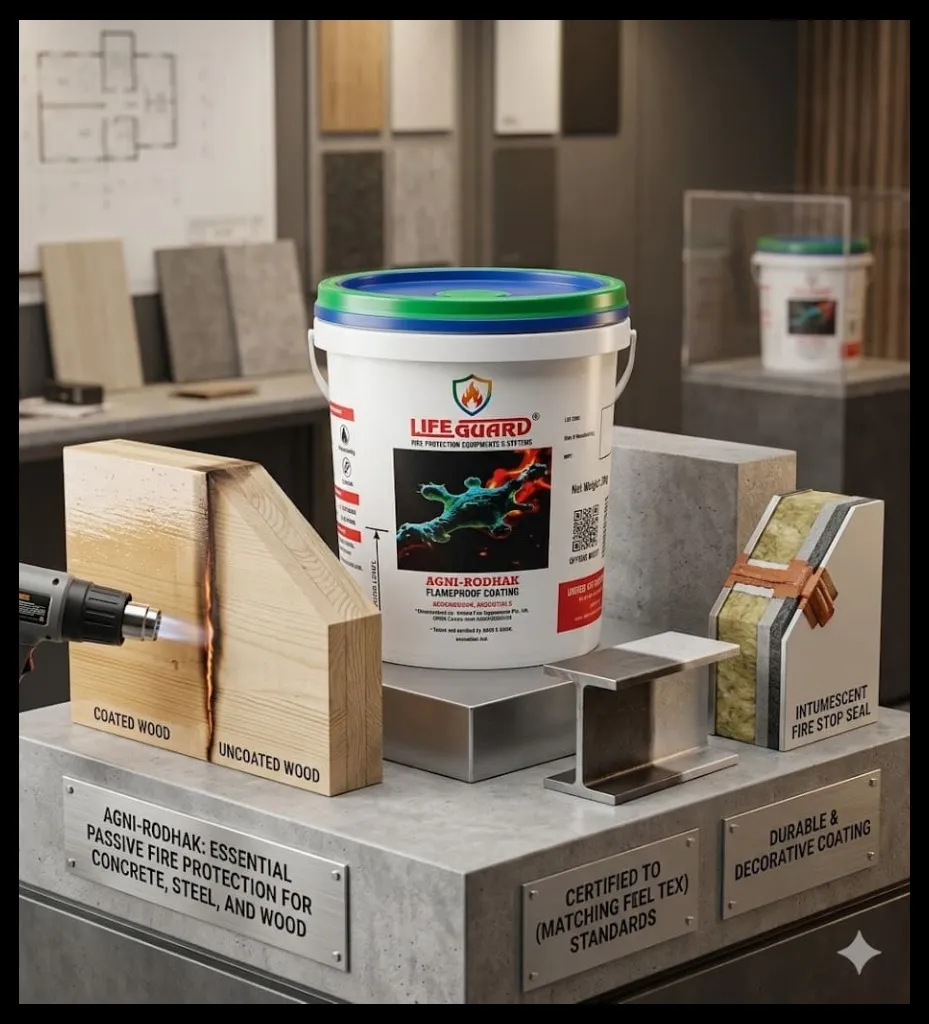
Passive Fire Protection Material – Fire Resistant Building Material
Fire safety has become one of the most critical aspects of modern infrastructure development. With the rapid growth of commercial buildings, industrial facilities, residential complexes, healthcare institutions, educational campuses, and high-rise structures, the demand for advanced Passive Fire Protection Materials and Fire Resistant Building Materials is increasing significantly.
Fire-resistant construction materials play a crucial role in minimizing fire spread, protecting structural integrity, improving evacuation safety, and reducing overall fire-related damage. These materials are specially engineered to withstand high temperatures, delay structural collapse, and enhance the overall safety of buildings and industrial infrastructure.
At LIFEGUARD® United Fire Equipments Pvt. Ltd., we provide advanced passive fire protection systems and high-performance fire resistant building materials designed to deliver superior fire safety, structural protection, and long-term durability for modern infrastructure projects.
What is Passive Fire Protection Material?
Passive Fire Protection (PFP) Material refers to fire-resistant products and construction systems integrated into buildings to contain fire, reduce heat transfer, and prevent smoke spread during fire emergencies.
Unlike active fire protection systems such as sprinklers and alarms, passive fire protection systems operate continuously without activation.
Main Objectives of Passive Fire Protection
- Prevent rapid fire spread
- Protect structural stability
- Maintain fire compartmentation
- Reduce smoke propagation
- Improve evacuation safety
- Minimize infrastructure damage
- Increase emergency response time
Passive fire protection materials form the foundation of safe and resilient building design.
Understanding Fire Resistant Building Material
Fire Resistant Building Materials are specially manufactured construction materials designed to withstand fire exposure for a specified period without losing structural performance.
These materials help:
- Delay structural collapse
- Resist flame penetration
- Reduce heat transfer
- Improve building safety
- Protect occupants and assets
- Enhance overall fire resistance ratings
Fire-resistant construction materials are essential for commercial, industrial, institutional, and residential buildings.
Importance of Fire Resistant Building Materials
During a fire emergency, ordinary construction materials can weaken rapidly under extreme heat. Fire-resistant building materials help slow the spread of flames and maintain structural integrity long enough for evacuation and firefighting operations.
Key Benefits Include:
- Enhanced life safety
- Improved structural protection
- Increased evacuation time
- Reduced fire spread
- Better smoke control
- Lower property damage
- Compliance with fire safety regulations
- Long-term building durability
These materials are critical for modern fire-safe construction practices.
Types of Fire Resistant Building Materials
Fire-Rated Gypsum Boards
Fire-rated gypsum boards are widely used for walls, ceilings, and partitions to improve fire resistance.
Applications Include:
- Commercial buildings
- Hospitals
- Schools
- Hotels
- Offices
- Industrial facilities
Benefits:
- Lightweight construction
- Thermal insulation
- Easy installation
- Excellent fire resistance
Fire Resistant Cement Boards
Cement boards provide durable fireproofing for industrial and commercial infrastructure.
Common Uses:
- Fire-rated partitions
- Industrial wall systems
- Exterior cladding
- Utility areas
Advantages:
- High durability
- Moisture resistance
- Fire resistance
- Structural stability
Fireproof Insulation Materials
Fire-resistant insulation materials help reduce heat transfer and improve thermal protection.
Common Materials Include:
- Mineral wool
- Rock wool
- Ceramic fiber insulation
- Glass wool systems
Applications:
- HVAC systems
- Industrial equipment
- Walls and ceilings
- Duct insulation
Fire-Rated Glass Systems
Fire-resistant glass allows visibility while maintaining fire compartmentation.
Used In:
- Office partitions
- Escape corridors
- Hospitals
- Hotels
- Commercial complexes
Benefits:
- Heat resistance
- Smoke control
- Modern aesthetics
- Enhanced safety
Fire Resistant Doors
Fire-rated doors prevent smoke and flame spread between compartments.
Features Include:
- Heat-resistant construction
- Smoke seals
- Fire-rated hardware
- Automatic closing systems
Applications:
- Staircases
- Electrical rooms
- Emergency exits
- Escape routes
Structural Steel Fireproofing Materials
Steel structures weaken rapidly during fire exposure. Fireproofing materials protect structural steel from extreme temperatures.
Common Fireproofing Solutions:
- Intumescent coatings
- Cementitious coatings
- Fire-resistant cladding
- Thermal barrier systems
Benefits:
- Delayed structural collapse
- Increased fire resistance
- Improved evacuation safety
Intumescent Fire Protection Coatings
Intumescent coatings expand when exposed to heat, creating an insulating protective layer.
Applications Include:
- Structural steel
- Warehouses
- Commercial buildings
- Industrial plants
Key Advantages:
- Lightweight protection
- Excellent thermal insulation
- Smooth decorative finish
Firestop Systems
Firestop materials seal gaps around cables, pipes, ducts, and conduits to prevent fire and smoke spread.
Components Include:
- Firestop sealants
- Fire collars
- Intumescent wraps
- Cable coating systems
Importance:
- Maintains compartment integrity
- Prevents smoke leakage
- Improves fire containment
Applications of Fire Resistant Building Materials
Commercial Buildings
Protection for offices, malls, hotels, and business complexes.
Industrial Facilities
Fireproofing for factories, warehouses, manufacturing plants, and processing units.
Healthcare Infrastructure
Enhanced fire safety for hospitals, laboratories, and healthcare facilities.
Educational Institutions
Protection for schools, colleges, libraries, and auditoriums.
Residential Buildings
Improved occupant safety and structural fire resistance.
Data Centers & IT Infrastructure
Protection for server rooms, cable systems, and electrical equipment.
Transportation Infrastructure
Fire safety for airports, metro stations, railway stations, and tunnels.
Advantages of Passive Fire Protection Materials
Continuous Protection
Works 24/7 without manual activation.
Improved Structural Integrity
Protects buildings from heat-related structural failure.
Increased Evacuation Time
Provides valuable time for safe evacuation during emergencies.
Enhanced Fire Compartmentation
Prevents fire spread between building sections.
Reduced Property Damage
Minimizes overall fire-related losses.
Long-Term Durability
Provides reliable fire resistance for years.
Importance of Fire Compartmentation
Fire compartmentation is one of the most important concepts in passive fire protection.
It Helps To:
- Contain fire within a specific area
- Prevent rapid flame spread
- Protect evacuation routes
- Improve firefighting efficiency
- Reduce overall building damage
Proper compartmentation significantly improves life safety and infrastructure protection.
Compliance & Fire Safety Standards
Passive fire protection materials and fire resistant building materials must comply with:
- National Building Code (NBC)
- BIS Fire Safety Standards
- Fire Department Regulations
- Industrial Safety Norms
- International Fire Resistance Standards
Regular inspections and maintenance are essential for ensuring long-term performance.
Why Choose LIFEGUARD® for Passive Fire Protection Materials?
LIFEGUARD® United Fire Equipments Pvt. Ltd. is a trusted provider of advanced passive fire protection systems and fire resistant building materials in India.
Our Solutions Include:
- Fire-resistant building materials
- Structural steel fireproofing
- Firestop systems
- Intumescent fire coatings
- Fire-rated partitions
- Fire-resistant insulation
- Fire-rated doors & glass systems
- Fire safety consultation & audits
Our expert technical team delivers reliable, certified, and high-performance fire protection solutions tailored to commercial, industrial, healthcare, and infrastructure projects.
Future of Fire Resistant Building Materials
Modern fire-resistant technologies are evolving rapidly with innovations such as:
- Smart fire-resistant materials
- Nano-technology fireproof coatings
- Sustainable fireproof construction systems
- Eco-friendly insulation materials
- Advanced thermal barrier systems
These innovations are improving fire safety, structural resilience, and environmental sustainability.
Conclusion
Passive Fire Protection Materials and Fire Resistant Building Materials are essential for modern fire-safe infrastructure. These advanced materials help contain fire, protect structural integrity, reduce heat transfer, improve evacuation safety, and minimize fire-related damage.
Investing in advanced fire-resistant construction materials ensures long-term safety, regulatory compliance, operational continuity, and enhanced protection for commercial, industrial, healthcare, educational, and residential buildings.
Contact LIFEGUARD® United Fire Equipments Pvt. Ltd.
Manufacturer of ISI Certified Fire Safety Equipment
📞 8048034226
📧 ufe126@gmail.com | info@lifeguardindia.in
Keywords






