
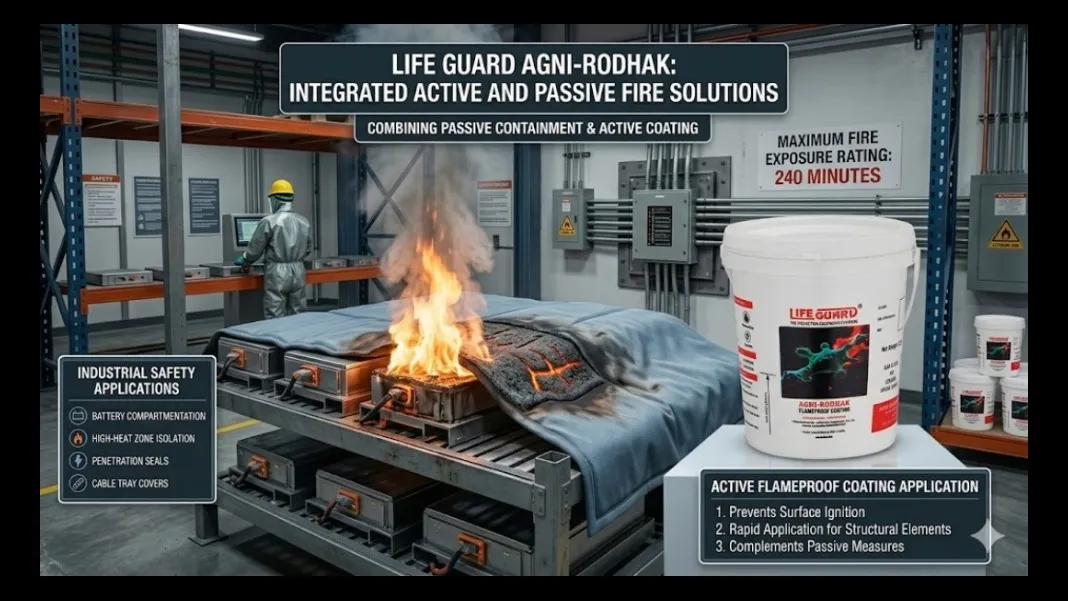
Fire Resistant Cooling Material for Industrial Safety
Industrial environments are increasingly exposed to high-temperature operations, thermal hazards, electrical risks, and fire-related emergencies. With the rapid growth of manufacturing facilities, power plants, battery energy storage systems (BESS), data centres, oil & gas installations, and heavy engineering industries, the need for advanced fire resistant cooling materials has become more important than ever.
Fire resistant cooling materials are specially engineered solutions designed to provide thermal insulation, temperature control, fire resistance, and passive fire protection in critical industrial applications. These advanced materials help reduce heat buildup, slow fire propagation, improve equipment safety, and enhance operational reliability under extreme conditions.
Modern industries now rely on high-performance fire resistant cooling systems to improve workplace safety, protect infrastructure, and ensure uninterrupted operations.
What is Fire Resistant Cooling Material?
Fire resistant cooling material is a specially formulated thermal protection solution designed to:
- Resist high temperatures
- Reduce heat transfer
- Provide cooling performance
- Delay flame spread
- Protect critical equipment during fire exposure
These materials are widely used in industrial safety systems where both thermal management and fire resistance are essential.
Depending on the application, fire resistant cooling materials may be available as:
- Thermal barrier coatings
- Fire resistant compounds
- Cooling gels
- Fireproof insulation panels
- Intumescent materials
- Heat resistant wraps
- Ceramic-based protection systems
- Passive fire protection materials
Importance of Fire Resistant Cooling Materials in Industries
Industrial systems often generate excessive heat during operations. In many sectors, overheating can lead to:
- Equipment failure
- Fire incidents
- Thermal runaway
- Structural damage
- Electrical hazards
- Production downtime
Fire resistant cooling materials help industries:
- Control operating temperatures
- Improve fire safety
- Protect critical assets
- Minimize heat transfer
- Reduce fire escalation risks
- Extend equipment lifespan
These solutions are particularly important in high-risk industries handling electrical systems, batteries, transformers, chemicals, and high-temperature machinery.
Key Features of Fire Resistant Cooling Materials
High Temperature Resistance
Designed to withstand extreme heat conditions without losing structural integrity or protective performance.
Thermal Insulation Performance
Reduces heat transfer and maintains safe operating temperatures for sensitive equipment.
Fire Retardant Properties
Helps slow flame spread and improves fire containment during emergency conditions.
Cooling Efficiency
Advanced formulations absorb and dissipate heat effectively, helping maintain thermal stability.
Thermal Runaway Protection
Essential for lithium-ion battery systems and Battery Energy Storage Systems (BESS), where overheating can rapidly escalate into fire events.
Lightweight & Durable
Modern cooling materials are engineered for long-term industrial use with minimal maintenance.
Corrosion & Moisture Resistance
Suitable for harsh industrial environments exposed to humidity, chemicals, and weather conditions.
Chemical Stability
Performs reliably in demanding industrial applications involving oils, chemicals, and electrical infrastructure.
Applications of Fire Resistant Cooling Materials
Battery Energy Storage Systems (BESS)
Fire resistant cooling materials are widely used for:
- Thermal runaway protection
- Battery module insulation
- Heat management systems
- Fire compartmentation
These materials help reduce fire propagation risks in lithium-ion battery installations.
Electrical & Transformer Protection
Electrical systems generate significant heat and require advanced thermal management solutions for:
- Transformers
- Electrical panels
- Control rooms
- Cable trays
- Substations
Industrial Machinery & Equipment
Manufacturing plants use cooling materials to improve heat resistance and operational safety of:
- Furnaces
- Boilers
- Turbines
- High-temperature process equipment
Data Centres & Server Rooms
Critical IT infrastructure requires thermal protection systems to maintain safe operating temperatures and reduce fire risks.
Oil & Gas Industry
Petrochemical facilities use fire resistant cooling materials to protect equipment operating in high-temperature hazardous environments.
Renewable Energy Projects
Solar and energy storage systems rely on advanced thermal management solutions for safe and efficient performance.
Benefits of Fire Resistant Cooling Materials
Enhanced Industrial Safety
Reduces risks associated with overheating, fire incidents, and thermal failures.
Improved Equipment Reliability
Maintains thermal stability and protects machinery from heat damage.
Reduced Downtime
Prevents operational disruptions caused by overheating or fire emergencies.
Longer Asset Life
Thermal protection helps extend the lifespan of critical industrial equipment.
Energy Efficiency
Improves heat management and operational performance in industrial systems.
Fire Protection Integration
Supports passive fire protection strategies for modern industrial infrastructure.
Types of Fire Resistant Cooling Materials
Thermal Barrier Coatings
Protect surfaces from heat transfer and fire exposure.
Ceramic-Based Cooling Materials
Offer excellent heat resistance and thermal insulation properties.
Intumescent Fire Protection Materials
Expand under heat exposure to create insulating protective barriers.
Fire Resistant Cooling Compounds
Advanced compounds designed for thermal management and passive fire protection.
Heat Resistant Insulation Panels
Used in industrial walls, battery enclosures, and equipment protection systems.
Why Passive Fire Protection Matters
Passive fire protection systems are essential because they provide continuous protection without requiring manual activation. Fire resistant cooling materials form an important part of passive fire protection strategies by controlling heat transfer and limiting fire spread.
Industries increasingly invest in passive fire protection because it:
- Improves evacuation safety
- Protects critical infrastructure
- Reduces structural damage
- Supports business continuity
- Enhances industrial resilience
Choosing the Right Fire Resistant Cooling Material
When selecting industrial cooling and fire protection materials, industries should evaluate:
- Temperature resistance capability
- Fire retardant performance
- Thermal insulation efficiency
- Surface compatibility
- Environmental exposure
- Moisture and chemical resistance
- Durability requirements
- Compliance with safety standards
Selecting high-quality tested materials ensures reliable long-term industrial protection.
LIFEGUARD® Fire Resistant Cooling Solutions
LIFEGUARD® provides advanced fire resistant cooling materials and passive fire protection solutions for industrial safety applications across India.
Our solutions are designed for:
- Thermal runaway protection
- Industrial heat management
- Fire compartmentation
- Transformer fire safety
- Battery Energy Storage Systems (BESS)
- Cable tray fire protection
- Structural fireproofing
- High-temperature industrial applications
We support safety requirements for:
- Manufacturing industries
- Power plants
- Data centres
- Renewable energy projects
- Battery facilities
- Oil & gas industries
- Infrastructure projects
- Industrial processing plants
Conclusion
Fire resistant cooling materials have become a critical component of modern industrial safety systems. These advanced thermal protection solutions help industries manage heat, prevent fire escalation, improve equipment reliability, and enhance operational safety in demanding environments.
As industrial operations become more complex and energy-intensive, investing in high-performance fire resistant cooling materials is essential for long-term safety, efficiency, and infrastructure protection.
Contact LIFEGUARD®
United Fire Equipments Pvt. Ltd.
Manufacturer of ISI Certified Fire Safety Equipment
📞 8048034226
📧 ufe126@gmail.com | info@lifeguardindia.in
Keywords






