
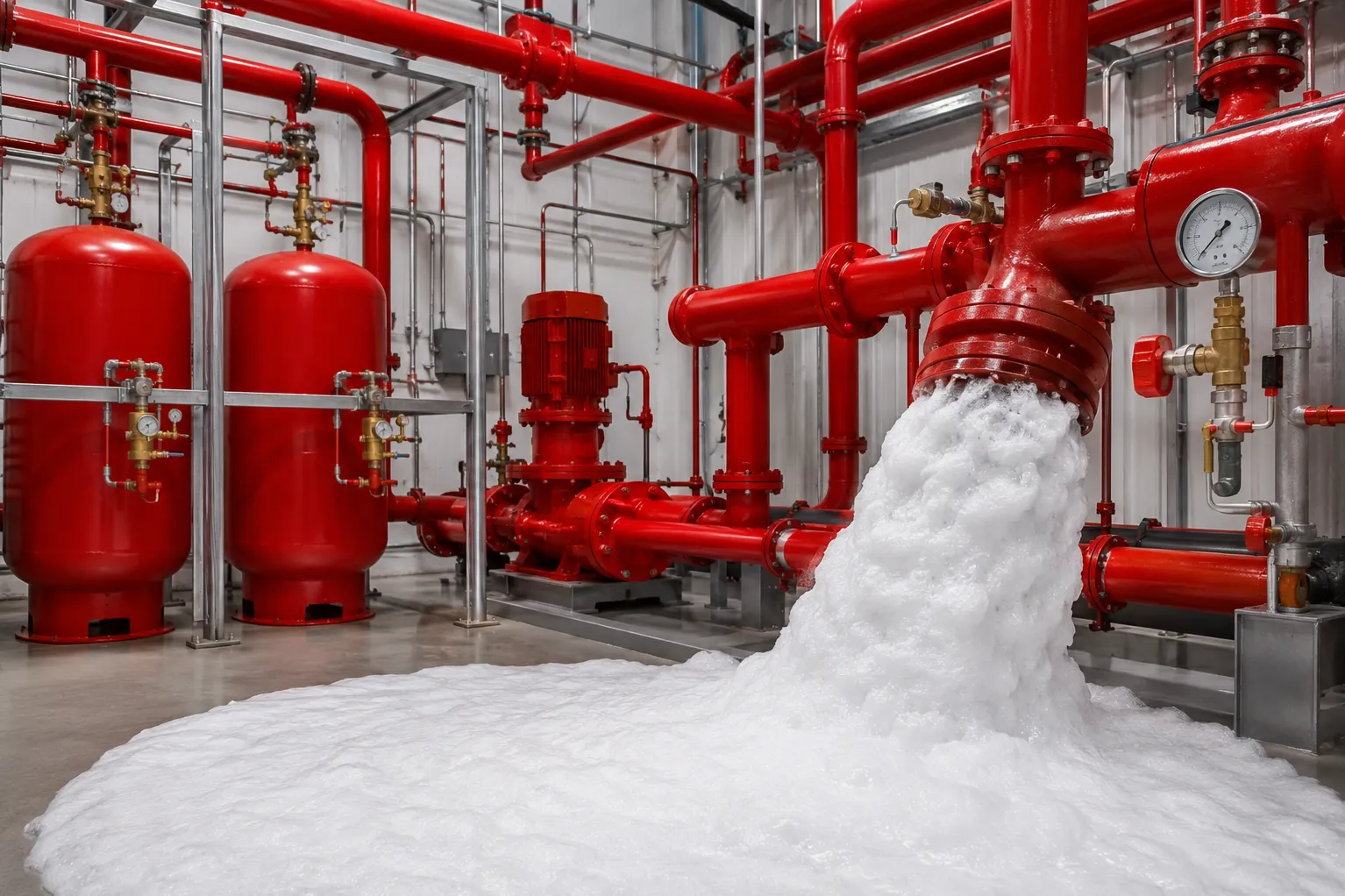
Not every fire can be controlled effectively with water. In many industrial settings, using water on flammable liquids can actually make a fire spread instead of stopping it. This is why foam fire suppression systems are widely used in industries where combustible liquids, fuels, solvents, and chemicals are present.
Across Delhi, manufacturing facilities, fuel storage terminals, warehouses, airports, and chemical plants rely on foam-based fire protection to safeguard people, equipment, and valuable assets. Understanding how these systems work can help businesses choose the right protection for their operations.
What Is a Foam Fire Suppression System?
A foam fire suppression system is a fixed fire protection solution that mixes water with a specially formulated foam concentrate. The resulting foam is discharged over the burning material, creating a blanket that separates the fuel from oxygen while also cooling the surface.
This combination helps extinguish the fire and reduces the risk of reignition.
Unlike standard water-based systems, foam suppression is particularly effective against flammable liquid fires, making it an important solution for industrial environments.
How Does Foam Suppression Work?
When activated, the system follows a simple but effective process.
- Fire detectors identify smoke, heat, or flames.
- The control panel triggers the suppression system.
- Water and foam concentrate are mixed in precise proportions.
- Foam is discharged through specially designed nozzles.
- The foam covers the fuel surface, suppressing vapours and extinguishing the fire.
Because the foam seals the fuel from oxygen, it significantly reduces the possibility of the fire spreading.
Where Foam Fire Suppression Systems Are Commonly Used
Foam systems are designed for locations where flammable liquids are handled or stored.
Common applications include:
- Oil and gas facilities
- Fuel storage depots
- Chemical manufacturing plants
- Aircraft hangars
- Refineries
- Paint manufacturing units
- Solvent storage warehouses
- Industrial processing plants
- Loading and unloading terminals
- Power generation facilities
Many industrial businesses operating in Delhi install foam suppression systems to strengthen workplace safety and meet fire protection requirements.
Types of Foam Suppression Systems
Different fire hazards require different foam technologies.
Some commonly used options include:
Low Expansion Foam
Suitable for fuel storage tanks and processing facilities where a stable foam blanket is required.
Medium Expansion Foam
Often used in enclosed industrial spaces where rapid foam coverage is beneficial.
High Expansion Foam
Ideal for large enclosed areas such as warehouses, aircraft hangars, and storage facilities where extensive foam filling is required.
The selection depends on the nature of the hazard, building design, and operational requirements.
Benefits of Foam Fire Suppression
Foam systems offer several important advantages over conventional firefighting methods in specific applications.
Effective on Flammable Liquid Fires
Foam quickly suppresses vapours and prevents oxygen from reaching the burning fuel.
Reduced Fire Spread
The foam blanket limits fire growth and helps contain the incident within a smaller area.
Improved Equipment Protection
By controlling fires quickly, foam systems help minimise damage to industrial machinery and infrastructure.
Enhanced Worker Safety
Automatic activation reduces the need for personnel to approach dangerous fire conditions during the early stages of an incident.
Supports Business Continuity
Faster suppression often reduces operational downtime and expensive repairs.
Factors to Consider Before Installation
Every facility has unique fire hazards, so proper planning is essential.
Important considerations include:
- Type of combustible materials
- Storage methods
- Building layout
- Ventilation systems
- Fire load
- Environmental conditions
- Applicable fire safety standards
A detailed fire risk assessment helps determine the most appropriate foam system for a specific facility.
Maintaining Foam Fire Suppression Systems
Like any fire protection equipment, foam systems require regular inspection and testing.
Routine maintenance should include:
- Foam concentrate quality checks
- Pump inspection
- Pipework examination
- Nozzle cleaning
- Detector testing
- Control panel verification
- Functional discharge testing where appropriate
Preventive maintenance ensures the system remains ready for emergency situations.
Frequently Asked Questions
Can foam systems replace sprinkler systems?
Not always. Foam systems are designed for specific fire hazards involving flammable liquids. Many facilities use both technologies as part of a comprehensive fire protection strategy.
Is foam environmentally safe?
Modern foam concentrates are designed to meet evolving environmental standards, although selection should always consider local regulations and the intended application.
Are foam systems only used in large industries?
No. Smaller facilities handling fuels, chemicals, or solvents may also benefit from foam fire suppression systems.
Can existing facilities install foam systems?
Yes. Many industrial buildings can be retrofitted after a technical assessment of their fire risks and infrastructure.
Industries dealing with combustible liquids require specialised protection that goes beyond conventional firefighting methods. Foam fire suppression systems provide fast, reliable control of high-risk fires while helping reduce property damage and improve workplace safety. United Fire Equipment Pvt Ltd supports industries across Delhi by designing foam-based fire protection solutions tailored to the unique hazards of each facility.
Keywords






