
HMS Application Methods
Advanced Lithium Battery Fire Protection Using HMS Technology
The rapid adoption of lithium-ion batteries in electric vehicles, energy storage systems, backup power infrastructure and portable electronics has created a new category of fire risk requiring specialized suppression methods.
To address these risks, LIFEGUARD® Lion-Ex HMS Fire Protection Systems provide multiple application methods tailored to different battery capacities, fire intensities and installation environments.
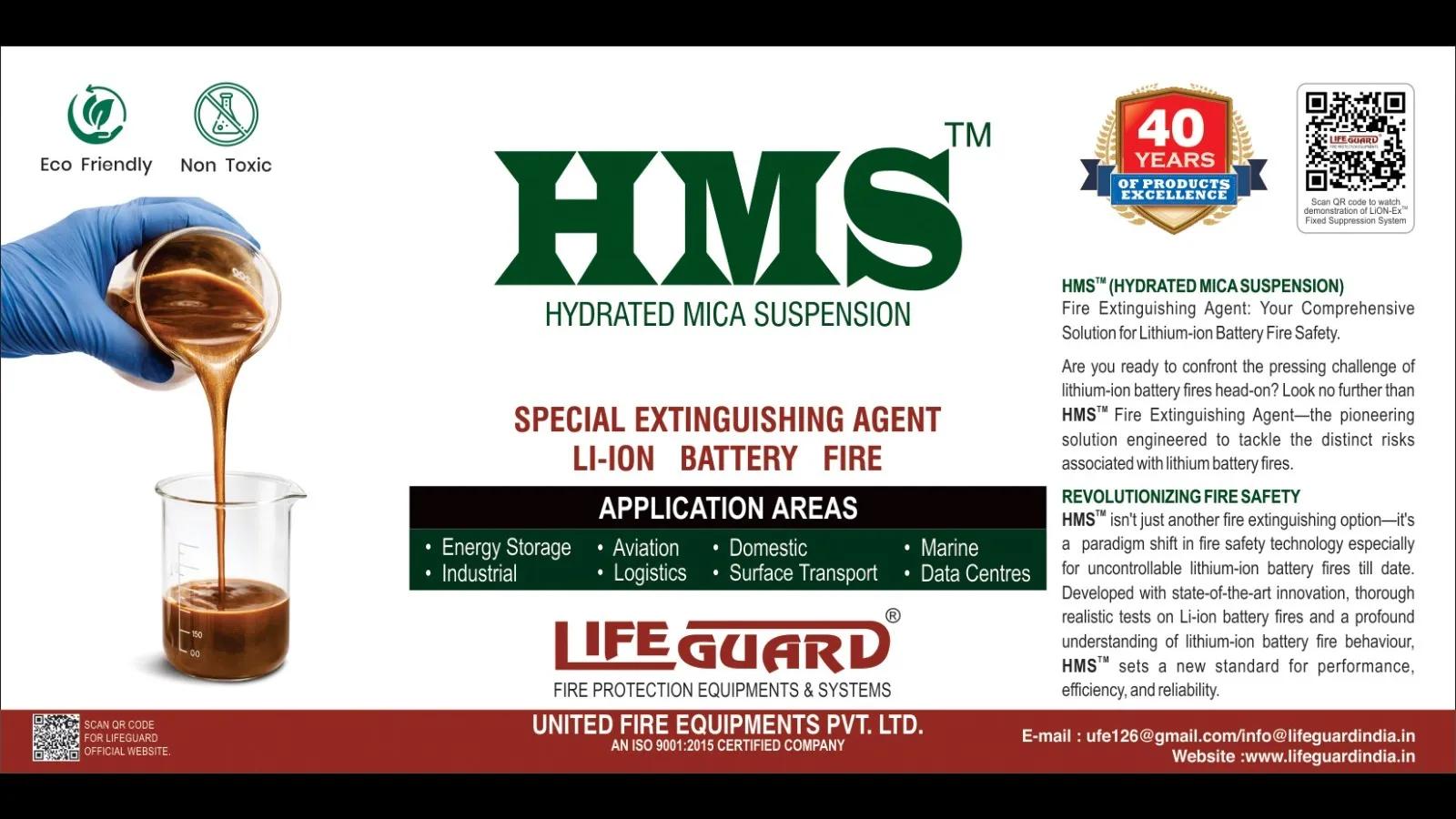
HMS (Hydrated Mica Suspension) is engineered specifically for lithium battery fires, offering rapid cooling, surface encapsulation and re-ignition resistance.
Understanding the correct HMS application method is critical to designing an effective fire protection strategy.
Why Application Method Matters in Lithium Battery Fires
Lithium battery fires vary widely depending on:
- Battery capacity (Wh / kWh / MWh)
- Cell chemistry and packaging
- Installation environment
- Ventilation conditions
- Thermal runaway propagation potential
A small device battery fire requires a different suppression approach than an EV battery pack or an energy storage system.
This is why HMS is deployed in multiple formats.
HMS Application Methods by Battery Size and Risk Level
1. Portable Lion-Ex HMS Fire Extinguishers
For Small Lithium Battery Applications
Portable HMS extinguishers are designed for:
- Consumer electronics
- Small battery packs
- UPS units
- Laboratory battery testing areas
- Residential EV chargers
Typical capacities include small handheld units and compact portable models suitable for early-stage fires.
Advantages
- Rapid response
- Easy handling
- Ideal for first-aid firefighting
- Effective cooling and encapsulation
Portable units are essential for early intervention.
2. Medium Capacity Portable Units
For Commercial and Institutional Environments
These extinguishers are suitable for:
- Offices and server rooms
- Hospitals and diagnostic facilities
- Battery rooms in buildings
- Workshops and repair centers
They provide increased discharge duration and cooling capacity compared to handheld units.
3. Wheeled Lion-Ex HMS Fire Extinguishers
For High-Energy Battery Installations
Wheeled extinguishers are recommended where larger lithium battery risks exist:
- EV parking basements
- Bus depots
- Railway maintenance yards
- Warehouses storing battery systems
Typical higher capacities provide:
- Extended discharge time
- Higher cooling effectiveness
- Improved reach and coverage
Wheeled units are critical for controlling larger battery incidents before escalation.
4. High-Capacity HMS Trailer Units
180 Litre and 300 Litre Systems
For large lithium battery risks, trailer-mounted HMS units provide large-volume suppression capability.
Recommended for:
- Electric bus depots
- Energy storage installations
- Battery manufacturing facilities
- Large EV charging hubs
- Industrial lithium storage areas
Key Benefits
- High cooling capacity
- Large coverage area
- Rapid deployment in open or semi-open environments
- Suitable for emergency response teams
These units are designed to manage fires involving large battery packs or multiple battery systems.
5. Automatic Fixed HMS Fire Suppression Systems
For Continuous Lithium Fire Protection
Automatic systems are used in areas where:
- Fire may develop unnoticed
- Continuous protection is required
- Human response time may be delayed
Typical installations include:
- Battery energy storage systems (BESS)
- EV charging infrastructure
- UPS and battery rooms
- Data centers
- Electrical control rooms
These systems integrate:
- Fire detection sensors
- Thermal monitoring
- Automatic HMS discharge
Early detection combined with automatic suppression significantly reduces fire escalation.
BIS Applicability and Compliance Considerations
LIFEGUARD Lion-Ex HMS extinguishers are designed considering:
- BIS safety requirements where applicable
- Installation guidelines for fire extinguishers
- Inspection and maintenance practices
- Operational safety standards
Compliance ensures reliability and acceptance across regulated sectors.
HMS Application Methods by Sector
High-Rise Buildings
Recommended protection:
- Portable HMS extinguishers
- Wheeled units in basements
- Fixed suppression in battery rooms
Applications include:
- EV parking
- UPS rooms
- Electrical infrastructure
Electric Buses and Transport Fleets
Recommended protection:
- Wheeled HMS extinguishers
- Trailer units for depots
- Automatic suppression in battery compartments
These systems reduce vehicle fire risk and operational downtime.
Railways and Metro Systems
Recommended protection:
- Portable HMS units
- Fixed suppression for battery installations
- Emergency response trailer units
These systems support rapid response in confined environments.
Hospitals and Healthcare Facilities
Recommended protection:
- Portable HMS extinguishers
- Fixed suppression in UPS rooms
- Detection and alarm integration
Protection is critical in oxygen-rich environments.
Public Gathering Places
Recommended protection:
- Portable HMS extinguishers
- Fixed suppression near charging stations
- Detection and alarm integration
High occupancy areas require fast and reliable suppression.
Importance of Early Cooling in Lithium Battery Fires
The effectiveness of HMS depends on:
- Rapid deployment
- Sufficient cooling volume
- Proper coverage of battery surfaces
Selecting the correct extinguisher capacity ensures:
- Thermal runaway interruption
- Reduced spread
- Lower re-ignition probability
Layered Protection Strategy Using HMS
A comprehensive lithium fire protection strategy includes:
Risk Area
Recommended Solution
Small electronics
Portable HMS
Battery rooms
Fixed suppression
EV parking
Wheeled HMS
Bus depots
Trailer HMS
BESS installations
Detection + automatic HMS
Layered protection significantly improves safety outcomes.
Why Choose LIFEGUARD® Lion-Ex HMS Systems
LIFEGUARD provides:
- Portable HMS extinguishers
- Wheeled lithium fire extinguishers
- Trailer-mounted suppression units
- Automatic lithium fire suppression systems
- Fire detection and alarm integration
- Installation, training and AMC services
Our solutions are designed specifically for modern lithium fire risks.
Conclusion
Lithium battery installations vary in size, energy density and fire risk. Effective protection requires selecting the correct HMS application method based on battery capacity and installation type.
From portable extinguishers to trailer-mounted units and automatic suppression systems, LIFEGUARD provides scalable protection for lithium-ion battery fires across industries.
Proper system selection, installation and training ensure maximum fire safety in the electrified world.
SEO Keyword Bank
Primary Keywords
HMS Application Methods
Lithium battery fire suppression methods
Secondary Keywords
HMS fire extinguisher applications
Lithium fire suppression systems
Lion-Ex HMS extinguishers
Long-Tail Keywords
Different application methods of HMS fire extinguishers
Lithium battery fire suppression for EV parking and BESS
Portable vs wheeled lithium fire extinguishers
Automatic lithium fire suppression system installation
Meta Title
HMS Application Methods | Lithium Battery Fire Protection – LIFEGUARD
Meta Description
Learn HMS application methods for lithium battery fire protection, including portable, wheeled, trailer-mounted and automatic suppression systems for EVs, BESS, buildings and transport infrastructure.
Contact Information (Footer Section)
United Fire Equipments Pvt. Ltd.
Manufacturer of ISI Certified Fire Safety Equipment
📞 8048034226
📧 ufe126@gmail.com, info@lifeguardindia.in
Keywords






