
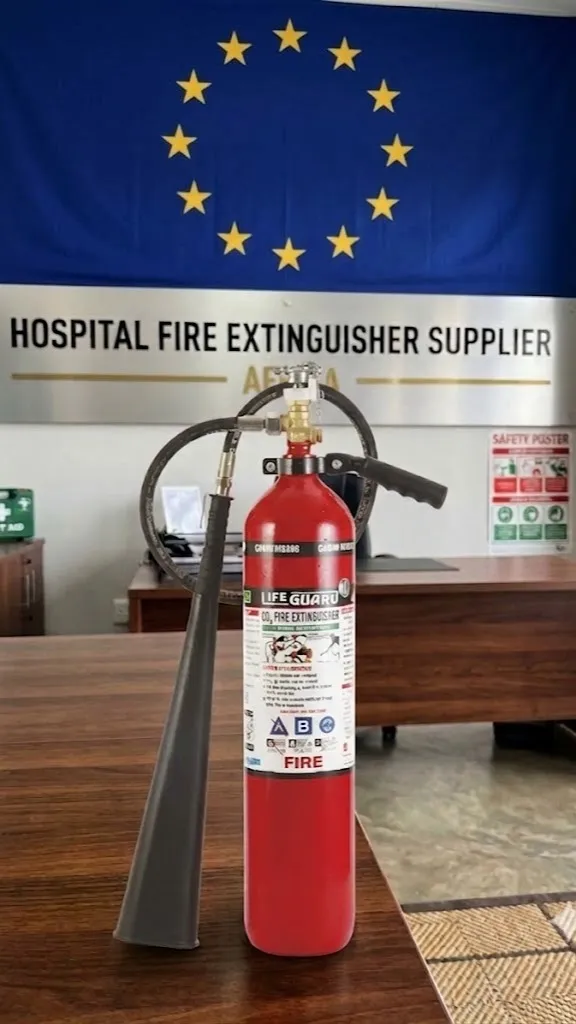
Hospital Clean Agent Suppression Exporter in Europe
Reliable Hospital Clean Agent Fire Suppression Solutions Exported Across Europe
LIFEGUARD® is a fire protection solutions brand of United Fire Equipments Pvt. Ltd., supplying and exporting engineered fire suppression equipment and solutions for critical applications. As a hospital clean agent suppression exporter in Europe, LIFEGUARD® supports healthcare projects requiring reliable gaseous fire protection for sensitive electrical, electronic, communication and medical infrastructure.
Hospitals operate around the clock and depend on critical systems such as servers, electrical distribution, communication equipment, monitoring systems, diagnostic equipment and emergency power infrastructure. A fire in one of these areas can affect both equipment and continuity of essential healthcare services.
LIFEGUARD® provides clean-agent fire suppression solutions designed around the specific hazard, protected enclosure, equipment configuration and project requirements.
Hospital Clean Agent Suppression Exporter Europe
As an international hospital clean agent suppression exporter, LIFEGUARD® can support European customers including:
- Hospitals and healthcare groups
- Medical centres
- Diagnostic facilities
- Research hospitals
- Healthcare infrastructure contractors
- MEP contractors
- Fire protection contractors
- Fire safety consultants
- System integrators
- Facility management companies
- Electrical contractors
- Data-centre contractors
- Industrial and institutional project developers
Our objective is to provide dependable fire suppression equipment and technical support for projects where conventional firefighting methods may not be appropriate.
What Is Clean Agent Fire Suppression?
Clean agent fire suppression is a gaseous fire protection technology designed to suppress fire without relying on conventional water or dry chemical discharge.
A typical system includes:
- Clean agent storage cylinder
- Cylinder valve
- Actuation mechanism
- Fire suppression control panel
- Smoke and heat detection
- Manual release station
- Abort switch where applicable
- Audible and visual alarms
- Pressure monitoring
- Distribution piping
- Discharge nozzles
- Interface modules
- Warning signage
When the automatic detection system identifies a fire condition, the programmed control sequence can initiate alarms, provide a pre-discharge warning and activate the suppression system after the specified delay.
The exact sequence depends on the approved system design and project requirements.
Why Hospitals Need Clean Agent Fire Suppression
Healthcare facilities contain a combination of people, sensitive equipment, electrical infrastructure and mission-critical systems.
Areas such as server rooms and electrical rooms can be particularly challenging because water or powder-based extinguishing media may create secondary cleanup or equipment-protection concerns.
A properly engineered clean-agent system can provide an additional layer of protection for:
- Critical electronic equipment
- Hospital IT infrastructure
- Electrical systems
- Communication equipment
- Control systems
- Medical equipment
- UPS systems
- Data storage infrastructure
The system should always be selected following a detailed fire-risk assessment and in coordination with the hospital's overall fire strategy.
Hospital Areas Suitable for Clean Agent Suppression
1. Hospital Server Rooms
Hospital IT systems support patient records, communication, administration and other essential functions.
Clean-agent suppression can be considered for enclosed server rooms where protecting electronic equipment and reducing post-discharge residue are important requirements.
2. Data Centres
Healthcare data centres contain servers, storage equipment, networking hardware and associated electrical systems.
LIFEGUARD® can support clean-agent suppression solutions for suitable data-centre environments.
3. Electrical Rooms
Switchgear, electrical panels, distribution equipment and control systems can present potential fire hazards.
A clean-agent system may be suitable for selected enclosed electrical rooms following appropriate engineering assessment.
4. UPS Rooms
Hospitals frequently use UPS systems to provide uninterrupted power to critical equipment.
Fire protection for UPS rooms should be selected according to the equipment configuration, battery technology, ventilation and applicable requirements.
5. Communication Rooms
Communication and networking infrastructure can be essential for hospital operations.
A dedicated gaseous suppression system can help protect selected communication rooms from fire-related damage.
6. Medical Equipment Rooms
Modern healthcare facilities contain expensive diagnostic, monitoring and electronic equipment.
Where appropriate, clean-agent suppression can provide protection without introducing the same type of water or powder residue associated with conventional extinguishing systems.
7. Control Rooms
Building management, security, electrical control and other critical systems may require dedicated fire protection.
Clean-agent systems can be considered for suitable enclosed control rooms.
8. Laboratories
Medical and research laboratories can contain electrical equipment, combustible materials and specialised processes. The fire suppression strategy should be based on the actual materials and hazards present.
Clean Agent Fire Suppression Technologies
The correct extinguishing agent depends on the application, enclosure, equipment, required design concentration, environmental considerations and applicable regulations.
FM-200 Systems
FM-200 is a gaseous extinguishing agent used in a range of enclosed critical-equipment applications.
Potential applications include:
- Server rooms
- Electrical rooms
- Data rooms
- Control rooms
- Communication rooms
- UPS rooms
The system must be appropriately designed and calculated for the protected enclosure.
FK-5-1-12 Systems
FK-5-1-12 is another clean-agent technology used in applications where protection of sensitive equipment and low-residue fire suppression are important considerations.
It may be considered for suitable:
- Data centres
- Server rooms
- Electrical rooms
- Communication rooms
- Control rooms
- Medical equipment areas
Inert Gas Systems
Inert gas systems use gases such as nitrogen, argon or suitable mixtures to suppress fire by reducing oxygen concentration within a protected enclosure to the required design level.
The appropriate technology should be selected by competent fire protection professionals based on the project's hazard analysis and applicable requirements.
Complete Hospital Clean Agent Suppression System
LIFEGUARD® can support projects requiring a complete clean-agent suppression arrangement rather than isolated components.
A typical system architecture may include:
Smoke/Heat Detector → Fire Suppression Control Panel → Alarm & Pre-Discharge Warning → Time Delay → Actuator → Cylinder Valve → Clean Agent Cylinder → Pipe Network → Discharge Nozzles → Fire Suppression
Additional interfaces may include:
- HVAC shutdown
- Electrical shutdown
- Building management system
- Remote monitoring
- Fire alarm panel
- Pressure switch
- Flow monitoring
- Door monitoring
- Emergency warning systems
All interfaces should be developed according to the approved cause-and-effect matrix.
Clean Agent Suppression Equipment Exporter for European Projects
LIFEGUARD® can support international enquiries for clean-agent fire suppression equipment and project requirements.
Depending on the project, the supply package may include:
Fire Suppression Cylinders
Cylinders designed to store the specified extinguishing agent at the required operating conditions.
Cylinder Valves
Engineered valves for controlled agent discharge and integration with the actuation system.
Actuation Devices
Release mechanisms used to initiate suppression discharge according to the system's approved release sequence.
Fire Suppression Control Panels
Panels designed to monitor detection circuits, alarms, release circuits, system faults and connected suppression equipment.
Detection Devices
Smoke and heat detectors selected according to the protected environment and system design.
Discharge Nozzles
Nozzles selected and positioned according to system calculations to distribute the extinguishing agent throughout the protected enclosure.
Piping and Accessories
Distribution pipework, fittings and associated accessories required for installation of the suppression network.
Manual Release and Abort Devices
User-operated devices incorporated into the suppression system where required by the design.
Alarm and Indication Devices
Audible and visual devices used to provide warning during alarm and pre-discharge conditions.
Export Support for Europe
European projects can involve different technical specifications, languages, documentation requirements and regulatory expectations.
LIFEGUARD® can support international project enquiries with:
- Product information
- Technical documentation
- Equipment specifications
- System configuration support
- Project-based quotations
- Packing and dispatch coordination
- Export documentation
- Installation guidance
- Commissioning support
- Maintenance information
For large projects, the equipment package can be coordinated with contractors and system integrators to suit the approved design.
Hospital Clean Agent Suppression System Design
A clean-agent system should be designed for the exact protected enclosure.
Important design parameters can include:
- Room volume
- Protected area
- Ceiling height
- Raised floor
- False ceiling
- Equipment layout
- Fire load
- Ventilation
- HVAC arrangement
- Room leakage
- Door and wall construction
- Pressure relief
- Agent concentration
- Discharge requirements
- Nozzle arrangement
- Pipe network
- Cylinder capacity
- Detection arrangement
- Alarm sequence
- Equipment shutdown interfaces
Room integrity is particularly important because gaseous suppression systems depend on maintaining the required agent concentration inside the protected enclosure.
Hospital Clean Agent Suppression Exporter and Compliance
European fire protection projects can be subject to multiple levels of requirements, including:
- European standards
- National standards
- Building regulations
- Local fire authority requirements
- Healthcare-specific regulations
- Insurance requirements
- Project specifications
- Environmental requirements
- Equipment certification requirements
Requirements vary between European countries. Therefore, LIFEGUARD® recommends that each hospital project be reviewed according to the regulations applicable at its installation location.
The system should be designed, installed, commissioned and maintained by appropriately qualified professionals.
Installation of Hospital Clean Agent Suppression Systems
Professional installation is essential for system reliability.
The installation process can involve:
- Site survey
- Hazard assessment
- System engineering
- Cylinder installation
- Control panel installation
- Detector installation
- Alarm installation
- Manual release installation
- Abort arrangement where required
- Piping installation
- Nozzle installation
- Electrical wiring
- System programming
- Interface connections
- Functional testing
- Commissioning
- Documentation
- Handover
The actual installation procedure should follow the approved design, manufacturer's instructions and applicable standards.
Testing and Commissioning
Before a hospital clean-agent system is placed into service, the complete installation should be inspected and tested.
Typical testing activities include:
- Detector operation
- Fire alarm activation
- Control-panel functionality
- Pre-discharge alarm
- Time delay
- Manual release
- Abort functionality
- Actuator operation
- Pressure monitoring
- Fault indication
- Battery backup
- HVAC interface
- Electrical shutdown interface
- Cause-and-effect sequence
- Audible and visual warning
- Piping inspection
- Nozzle inspection
Testing in operational hospitals should be carefully planned to avoid unintended disruption to critical healthcare services.
Maintenance of Hospital Clean Agent Systems
Fire suppression systems require periodic inspection and maintenance to remain operational.
Maintenance may include:
- Cylinder inspection
- Cylinder pressure verification
- Valve inspection
- Actuator inspection
- Detection testing
- Control panel testing
- Alarm testing
- Battery inspection
- Manual release testing
- Abort switch testing
- Piping inspection
- Nozzle inspection
- System fault monitoring
- Room integrity assessment where applicable
- System log review
- Replacement of defective components
The maintenance frequency should follow the applicable standard, manufacturer's recommendations and local regulatory requirements.
Benefits of Choosing LIFEGUARD® as a Hospital Clean Agent Suppression Exporter
Application-Focused Solutions
Every hospital has different fire hazards. LIFEGUARD® focuses on selecting suppression arrangements according to the specific application.
International Supply Capability
LIFEGUARD® supports international enquiries for fire suppression equipment and can coordinate export requirements for European projects.
Sensitive Equipment Protection
Clean-agent solutions can be considered for areas containing critical electronic, electrical and medical equipment.
Complete System Approach
Detection, control, storage, actuation, piping and discharge components can be integrated into a coordinated suppression solution.
Technical Support
Project teams can receive technical information and system guidance appropriate to their requirements.
Lifecycle Support
Installation, testing, commissioning and periodic maintenance are important parts of ensuring long-term system readiness.
Hospital Clean Agent Suppression Exporter Europe – Industries Served
LIFEGUARD® can support fire suppression requirements for:
- Hospitals
- Healthcare centres
- Medical laboratories
- Diagnostic centres
- Research institutions
- Pharmaceutical facilities
- Data centres
- Telecommunication facilities
- Electrical infrastructure
- Control rooms
- Commercial buildings
- Industrial facilities
- Critical infrastructure
Why Select Clean Agent Suppression for Critical Hospital Areas?
A hospital fire can cause direct damage as well as operational disruption. Protecting critical infrastructure can therefore be an important part of the facility's business-continuity and fire-risk strategy.
Clean-agent suppression can provide:
- Automatic fire response
- Rapid distribution within protected enclosures
- Protection for sensitive equipment
- Low-residue suppression
- Integration with detection systems
- Protection of critical infrastructure
- Reduced potential for secondary equipment contamination
The actual performance and suitability depend on correct system design, installation, commissioning and maintenance.
Hospital Clean Agent Suppression Exporter Europe – SEO Keywords
For LIFEGUARD®'s European SEO strategy, this page can target high-intent keywords including:
- Hospital clean agent suppression exporter Europe
- Hospital clean agent fire suppression exporter Europe
- Clean agent suppression exporter Europe
- Hospital fire suppression equipment exporter Europe
- Hospital clean agent suppression supplier Europe
- Hospital fire suppression supplier Europe
- Hospital fire protection equipment exporter Europe
- Hospital clean agent fire suppression system Europe
- Clean agent fire suppression system exporter
- FM-200 hospital fire suppression exporter
- FK-5-1-12 hospital suppression exporter
- Hospital gaseous fire suppression exporter Europe
- Healthcare fire suppression exporter Europe
- Hospital fire suppression equipment supplier
- Medical facility fire suppression exporter
- Hospital data centre fire suppression Europe
- Hospital server room suppression system Europe
- Hospital electrical room fire suppression Europe
Frequently Asked Questions
Who is a hospital clean agent suppression exporter in Europe?
LIFEGUARD® is an international fire protection brand of United Fire Equipments Pvt. Ltd. offering clean-agent fire suppression solutions and equipment for healthcare and other critical applications, including enquiries from European markets.
Where can hospital clean-agent systems be used?
They can be considered for suitable enclosed spaces such as server rooms, data centres, electrical rooms, UPS rooms, communication rooms, control rooms, laboratories and selected medical equipment rooms.
Which clean agent is best for a hospital?
There is no single agent that is universally best for every hospital. The selection should consider the fire hazard, room volume, occupancy, equipment, environmental requirements, applicable regulations and system design.
Can clean-agent systems protect hospital server rooms?
Yes. Clean-agent suppression is commonly considered for suitable enclosed electronic-equipment environments such as server and data rooms, subject to proper engineering.
Does LIFEGUARD® export fire suppression equipment to Europe?
LIFEGUARD® supports international project enquiries and export requirements for fire suppression equipment and solutions. Product selection, certification and delivery requirements should be confirmed for the specific destination country and project.
Get a Hospital Clean Agent Suppression Export Quote
If you are searching for a hospital clean agent suppression exporter in Europe, LIFEGUARD® can support your project with application-specific fire suppression equipment and technical solutions.
Whether you require protection for a hospital server room, data centre, electrical room, UPS room, communication room, medical equipment room or other critical healthcare area, our team can help develop a suitable suppression approach based on the project's requirements.
Contact LIFEGUARD®
United Fire Equipments Pvt. Ltd.
LIFEGUARD® – Fire Safety & Fire Suppression Solutions
Manufacturer of ISI Certified Fire Safety Equipment
Phone: 8048034226
Email: ufe126@gmail.com | info@lifeguardindia.in
Website: www.lifeguardindia.in
LIFEGUARD® – Engineered Fire Protection for Critical Healthcare Infrastructure.
Important: Hospital clean-agent suppression systems must be designed, installed, tested and maintained by competent professionals. Applicable certification, standards and regulatory requirements can vary by European country and project. Final agent selection and system configuration should be determined through project-specific engineering and authority requirements.
Keywords






