
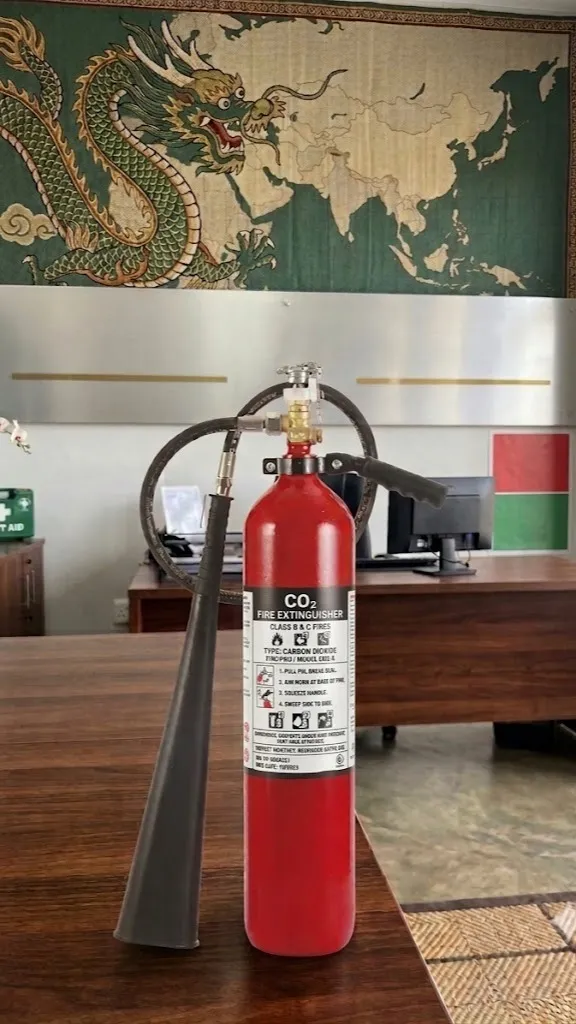
Hospital Clean Agent Suppression Manufacturer Asia | LIFEGUARD®
Hospital Clean Agent Suppression Manufacturer in Asia
LIFEGUARD® is an experienced hospital clean agent suppression manufacturer in Asia, providing engineered clean agent fire suppression solutions for hospitals, healthcare facilities, medical centers, diagnostic laboratories, pharmaceutical areas, server rooms, electrical rooms, UPS rooms, data centers and other critical healthcare environments.
Hospitals require specialized fire protection because they contain sensitive electronic equipment, critical medical infrastructure, valuable assets and patients who may require assisted evacuation. A fire protection strategy must therefore provide rapid detection and effective suppression while considering equipment protection, business continuity and the requirements of the applicable fire and life-safety regulations.
LIFEGUARD® designs and supplies clean agent fire suppression systems for applications where conventional water-based extinguishing systems may not be the preferred primary protection method.
What Is a Clean Agent Fire Suppression System?
A clean agent fire suppression system is an engineered fire protection system that uses a gaseous extinguishing agent to suppress a fire within a protected enclosure.
A typical system consists of:
- Clean agent storage cylinders
- Cylinder valves
- Releasing mechanism
- Fire detection system
- Releasing control panel
- Smoke and/or heat detectors
- Discharge piping
- Discharge nozzles
- Pressure switches
- Manual release station
- Abort switch
- Alarm devices
- Warning signage
- System monitoring components
When the detection system identifies the required fire condition, the releasing panel initiates the programmed sequence. After the configured pre-discharge sequence and safety interlocks, the suppression system can release the clean agent through strategically positioned nozzles.
Why Hospitals Need Clean Agent Fire Suppression
Healthcare facilities depend on electrical, electronic and computerized equipment for patient care and hospital operations. Fire in a server room, electrical room, control room or medical equipment area can cause significant operational disruption.
Clean agent suppression is particularly useful for selected applications where:
- Valuable electronic equipment is present
- Water damage could affect critical equipment
- Fast fire suppression is required
- Residue-free or low-residue extinguishing is desirable
- Continuous operation is important
- The protected enclosure can be appropriately engineered
Clean agent suppression does not replace the hospital's complete fire protection system. Instead, it can form an important part of a comprehensive strategy that may also include sprinklers, fire detection, hydrants, extinguishers, compartmentation and emergency response systems.
LIFEGUARD® Hospital Clean Agent Suppression Systems
As a hospital clean agent suppression manufacturer in Asia, LIFEGUARD® provides application-focused solutions designed around the specific hazard.
Our clean agent solutions can be considered for:
Hospital Server Rooms
Server and IT rooms contain critical infrastructure supporting patient records, hospital management, communication and digital services.
A clean agent system can be engineered to protect:
- Server racks
- Network switches
- Storage systems
- Communication equipment
- UPS systems
- Data processing equipment
Electrical Rooms
Electrical rooms can contain switchgear, control panels, distribution boards and other equipment where fire can originate due to electrical faults, overheating or component failure.
Clean agent suppression can provide dedicated protection for suitable electrical environments.
UPS and Battery Rooms
UPS systems support critical hospital operations during power interruptions. Depending on the equipment and battery technology involved, specialized fire detection and suppression strategies may be required.
The suppression solution should be selected following a detailed hazard assessment and in accordance with the applicable requirements.
Medical Equipment Rooms
Hospitals use sophisticated electronic and diagnostic equipment that may be costly and difficult to replace. Dedicated fire protection can help reduce the potential impact of a fire event.
Control Rooms
Hospital automation, security, building management and other control systems can be protected using appropriately engineered suppression systems.
Diagnostic and Laboratory Areas
Laboratories and diagnostic facilities may contain electronic equipment, combustible materials and specialized processes. The fire protection approach should be based on the actual hazard rather than relying on a generic system.
Clean Agent Technologies for Healthcare Applications
The correct extinguishing agent depends on the protected hazard, enclosure, occupancy, equipment, environmental requirements, local regulations and project specifications.
Potential clean-agent technologies include:
- FK-5-1-12 systems
- HFC-based clean agents where permitted and appropriate
- Inert gas systems
- Other approved gaseous suppression technologies
LIFEGUARD® evaluates the application before recommending a particular suppression technology.
The selection of a clean agent should consider extinguishing performance, design concentration, enclosure integrity, occupant safety, environmental considerations, availability and applicable standards.
How a Hospital Clean Agent Suppression System Works
A typical automatic clean agent suppression sequence is:
Smoke/Heat Detection → Fire Alarm Signal → Releasing Panel → Pre-Discharge Alarm → Time Delay → Equipment Shutdown/Interlocks → Clean Agent Release → Agent Discharge Through Nozzles → Fire Suppression → System Monitoring
The exact sequence is determined by the system design, project specification and applicable codes.
Detection
Smoke or heat detectors monitor the protected area. Depending on the risk, specialized detection technologies may also be considered.
Alarm Verification
The releasing control panel receives signals from the detection system and processes the programmed logic.
Pre-Discharge Warning
Audible and visual warning devices can notify occupants before agent discharge.
Time Delay
A configured time delay can provide an opportunity for personnel to evacuate the protected space before discharge.
Agent Release
Once the programmed release conditions are satisfied, the releasing mechanism activates the clean agent cylinder system.
Discharge
The agent flows through the engineered piping network and exits through discharge nozzles positioned to provide appropriate distribution throughout the protected enclosure.
Major Components of a Hospital Clean Agent System
1. Clean Agent Cylinder
The cylinder stores the extinguishing agent at the specified design conditions.
2. Cylinder Valve
The valve controls agent release and interfaces with the system's actuation mechanism.
3. Solenoid or Pneumatic Actuator
The actuator initiates cylinder discharge when the releasing sequence is completed.
4. Releasing Control Panel
The panel supervises detectors, manual release devices, abort switches and system circuits while controlling the programmed suppression sequence.
5. Smoke and Heat Detectors
Detectors identify the early signs of fire and transmit signals to the releasing panel.
6. Discharge Piping
The piping network transports the agent from the storage cylinder to the discharge nozzles.
7. Discharge Nozzles
Nozzles distribute the agent throughout the protected enclosure according to the engineered design.
8. Manual Release Station
A manual release station allows authorized personnel to initiate the suppression sequence where permitted by the system design.
9. Abort Switch
An abort switch can be provided where required to interrupt or delay discharge according to the approved system sequence.
10. Pressure Monitoring
Pressure switches and supervisory devices can provide information about cylinder/system status to the control panel.
Advantages of Clean Agent Suppression for Hospitals
Rapid Fire Suppression
A properly designed gaseous suppression system can respond rapidly once the required detection and release conditions are met.
Protection of Sensitive Equipment
Clean agents are suitable for selected electronic and electrical environments where traditional extinguishing media may create additional equipment concerns.
Minimal Residue
Many clean agents leave little or no solid residue after discharge, simplifying post-discharge cleanup compared with powder-based extinguishing systems.
Reduced Equipment Downtime
Fast detection and suppression can help reduce the potential impact of a fire on critical hospital operations.
Automated Operation
The system can be designed to operate automatically after receiving the required detection signals.
24/7 Protection
Automatic detection and suppression provide continuous protection for critical areas, including rooms that may be unattended.
Hospital Applications for Clean Agent Suppression
LIFEGUARD® clean agent suppression solutions can be engineered for:
- Server rooms
- Data centers
- UPS rooms
- Electrical rooms
- Switch rooms
- Control rooms
- Telecom rooms
- Medical equipment rooms
- Diagnostic rooms
- Laboratory areas
- Critical electrical panels
- Network rooms
- Communication rooms
- Hospital command centers
- Specialized equipment rooms
Hospital Clean Agent Suppression Manufacturer Asia – Engineering Process
A professional clean agent system should be engineered according to the actual protected hazard.
Step 1: Site Survey
The protected room, equipment, ventilation and access conditions are assessed.
Step 2: Hazard Assessment
The fire risk, combustible materials and equipment characteristics are evaluated.
Step 3: System Selection
The appropriate suppression technology is selected based on the application and applicable requirements.
Step 4: Hydraulic/Piping Design
The cylinder arrangement, pipe network and nozzle locations are engineered according to the selected system.
Step 5: Detection Design
Smoke/heat detection and releasing logic are developed according to the risk.
Step 6: Control and Interlock Design
The releasing panel can be integrated with relevant alarms and equipment shutdown/interlock functions where required.
Step 7: Installation
The suppression equipment, detection system, piping, nozzles and control components are installed according to the approved design.
Step 8: Testing and Commissioning
System circuits, detection devices, alarms, manual release, abort function, supervisory signals and other relevant functions are tested.
Step 9: Handover
System documentation, testing records, operating instructions and maintenance recommendations are provided as applicable.
Standards and Compliance
Hospital clean agent suppression systems should be designed, installed, tested and maintained according to the standards and regulations applicable to the project.
Depending on the location and application, references may include:
- NFPA 2001
- NFPA 72
- NFPA 25
- NFPA 101
- Applicable IS standards
- NBC requirements
- Local fire authority requirements
- Project-specific specifications
- Manufacturer installation requirements
For Asian projects, local codes and authority requirements can vary significantly between countries. Therefore, the final design should always be reviewed against the requirements applicable to the specific project location.
Clean Agent Suppression vs Conventional Water Suppression
Clean agent suppression is not intended to replace sprinklers throughout a hospital. Instead, different fire protection systems can protect different hazards.
ApplicationPotential Protection ApproachGeneral patient areasAutomatic sprinkler/fire protection systemServer roomClean agent suppressionElectrical roomClean agent or suitable specialized suppressionHospital kitchenDedicated kitchen suppressionData centerClean agent suppressionCritical control roomClean agent suppressionGeneral storageSprinkler/appropriate suppressionElectrical panelsLocalized automatic suppression where appropriate
The final solution should be based on the fire-risk assessment and applicable standards.
Importance of Enclosure Integrity
Clean agent systems depend on maintaining the required agent concentration within the protected enclosure for the specified design period.
Therefore, enclosure integrity is an important part of system performance.
Potential leakage points include:
- Doors
- Cable penetrations
- HVAC openings
- False ceilings
- Raised floors
- Wall penetrations
- Service openings
Where required, these openings should be appropriately addressed as part of the system design.
Testing and Maintenance
A clean agent suppression system requires periodic inspection, testing and maintenance to remain ready for operation.
Maintenance activities may include:
- Visual inspection
- Cylinder condition inspection
- Pressure/status verification
- Detection testing
- Alarm testing
- Releasing-panel testing
- Manual release testing
- Abort-switch testing
- Pressure-switch testing
- Nozzle inspection
- Piping inspection
- Battery inspection
- Alarm/interface testing
- Record keeping
Maintenance intervals should follow the applicable standards, manufacturer recommendations and local regulatory requirements.
Why Choose LIFEGUARD®?
LIFEGUARD® combines fire protection engineering with practical installation and commissioning experience to deliver application-specific solutions.
LIFEGUARD® Capabilities
- Hospital clean agent suppression systems
- Clean agent fire suppression equipment
- Gas-based fire suppression systems
- Releasing control panels
- Detection and alarm integration
- Cylinder and valve assemblies
- Suppression piping and nozzles
- Electrical room protection
- Server room protection
- Data center protection
- UPS room protection
- Medical equipment protection
- Installation and commissioning
- Testing and maintenance
- Technical documentation
- Customized fire protection engineering
Hospital Clean Agent Suppression Manufacturer Across Asia
LIFEGUARD® can support hospital and healthcare fire protection requirements for projects across Asian markets, subject to project scope, applicable regulations and local authority requirements.
Target markets can include:
India | UAE | Saudi Arabia | Qatar | Oman | Kuwait | Bahrain | Bangladesh | Nepal | Sri Lanka | Singapore | Malaysia | Indonesia | Thailand | Philippines | Vietnam and other Asian markets
For every project, the clean agent system should be selected according to the actual hazard and the applicable local fire safety requirements.
Why Select an Asian Clean Agent Fire Protection Manufacturer?
Working with an experienced regional manufacturer and fire protection provider can provide advantages such as:
- Application-specific engineering
- Faster technical communication
- Project customization
- Installation support
- Commissioning assistance
- Spare-parts availability
- Maintenance support
- Technical documentation
- Local project understanding
- Export-oriented supply capabilities
Frequently Asked Questions
What is a hospital clean agent suppression system?
It is an engineered gaseous fire suppression system designed to detect and suppress fires in selected hospital areas, particularly spaces containing sensitive electrical, electronic or critical equipment.
Which hospital rooms can use clean agent suppression?
Typical applications include server rooms, data centers, electrical rooms, UPS rooms, control rooms, telecom rooms and specialized equipment rooms. The final application depends on the hazard assessment and applicable requirements.
Is clean agent suppression suitable for occupied hospital areas?
Some clean agents are designed for use in normally occupied spaces when properly engineered within their applicable safety limits. Occupant safety, agent concentration, discharge arrangements and applicable standards must be considered in the system design.
Is a clean agent system better than sprinklers?
Not necessarily. They protect different types of hazards. Hospitals often require a combination of fire detection, sprinklers and specialized suppression systems depending on the area and risk.
Does LIFEGUARD® manufacture hospital clean agent suppression systems?
LIFEGUARD® provides clean agent fire suppression equipment and engineered fire protection solutions for hospitals and other critical facilities, with system configuration determined by project requirements.
How is a clean agent system activated?
A typical automatic system receives signals from fire detectors through a releasing control panel. When the programmed release conditions are satisfied, the suppression system activates and discharges the agent through the engineered nozzle network.
Conclusion
Hospitals need fire protection systems that recognize the importance of both life safety and critical infrastructure protection. Clean agent suppression provides an effective solution for selected healthcare areas where rapid fire response and protection of sensitive equipment are priorities.
As a hospital clean agent suppression manufacturer in Asia, LIFEGUARD® provides engineered fire suppression solutions for server rooms, electrical rooms, UPS rooms, data centers, medical equipment areas, control rooms and other critical healthcare applications.
From system design and equipment supply to installation, testing, commissioning and maintenance support, LIFEGUARD® works toward delivering dependable fire protection solutions tailored to individual project requirements.
Contact LIFEGUARD®
LIFEGUARD® – United Fire Equipments Pvt. Ltd.
Manufacturer of ISI Certified Fire Safety Equipment
Phone: 8048034226
Email: ufe126@gmail.com | info@lifeguardindia.in
Website: www.lifeguardindia.in
Contact LIFEGUARD® for hospital clean agent suppression systems, healthcare fire protection solutions, server room suppression, electrical room protection and customized fire suppression projects across Asia.
SEO Meta Information
Meta Title:
Hospital Clean Agent Suppression Manufacturer Asia | LIFEGUARD®
Meta Description:
LIFEGUARD® is a hospital clean agent suppression manufacturer in Asia offering engineered fire suppression systems for hospitals, server rooms, electrical rooms, UPS rooms, data centers and critical healthcare facilities.
Suggested URL:
/hospital-clean-agent-suppression-manufacturer-asia
Primary Keyword:
Hospital Clean Agent Suppression Manufacturer Asia
Secondary Keywords:
Hospital clean agent suppression system Asia, hospital fire suppression manufacturer Asia, healthcare clean agent suppression company Asia, hospital fire protection manufacturer Asia, clean agent fire suppression supplier Asia, hospital gas suppression system Asia, hospital server room suppression Asia, hospital electrical room suppression Asia.
Suggested H1:
Hospital Clean Agent Suppression Manufacturer in Asia
Suggested H2s:
Hospital Clean Agent Suppression Systems
Why Hospitals Need Clean Agent Fire Suppression
LIFEGUARD® Hospital Clean Agent Solutions
Clean Agent Technologies for Healthcare Applications
Hospital Applications for Clean Agent Suppression
Hospital Clean Agent Suppression Manufacturer Asia
Hospital Clean Agent System Engineering and Installation
Why Choose LIFEGUARD®
Frequently Asked Questions
Keywords






