
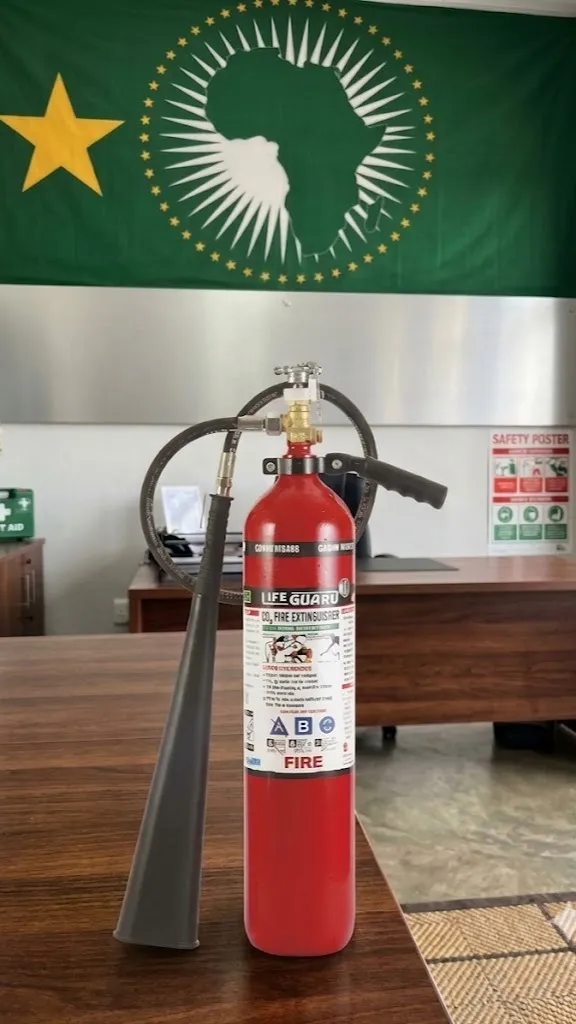
Hospital Clean Agent Suppression OEM Manufacturer Africa
LIFEGUARD® – Advanced Clean Agent Fire Suppression Solutions for Hospitals Across Africa
Hospitals, medical centres, diagnostic facilities, laboratories and healthcare institutions contain some of the most sensitive and mission-critical equipment found in any building. Electrical control rooms, server rooms, data centres, MRI and diagnostic equipment areas, UPS rooms, communication rooms and medical record storage facilities require fire protection that can suppress a developing fire quickly without causing secondary damage.
LIFEGUARD® – United Fire Equipments Pvt. Ltd. provides engineered clean agent fire suppression solutions for healthcare projects and is positioned as a reliable Hospital Clean Agent Suppression OEM Manufacturer for Africa. We offer clean agent suppression systems engineered for critical hospital applications where conventional water-based fire protection may not be suitable.
Our solutions are intended to deliver rapid fire suppression while protecting sensitive electronic equipment, maintaining operational continuity and minimizing post-discharge cleanup requirements.
Why Hospitals Need Clean Agent Fire Suppression Systems
Hospitals operate continuously and depend on electrical, electronic, communication and data infrastructure for patient care. Even a relatively small fire in a critical equipment room can interrupt hospital operations, affect patient services and damage expensive equipment.
Traditional water sprinklers are essential for many building areas, but water discharge may create additional risks in rooms containing sensitive electronics and specialized medical equipment.
A professionally engineered hospital clean agent suppression system offers several important advantages:
- Rapid detection and suppression of developing fires
- Electrically non-conductive extinguishing medium
- No water damage to sensitive equipment
- Minimal or no residue after discharge
- Reduced cleanup and restoration requirements
- Protection of valuable hospital infrastructure
- Automatic detection and system activation
- Manual release and emergency abort arrangements
- Suitable for normally occupied critical spaces when appropriately designed
- Reduced downtime after a fire incident
These characteristics make clean agent suppression an important fire protection option for high-value hospital areas.
Hospital Clean Agent Suppression OEM Manufacturer in Africa
As an experienced fire protection equipment manufacturer, LIFEGUARD® supports clean agent suppression requirements for healthcare facilities across African markets.
We can support projects involving:
- Government hospitals
- Private hospitals
- Multispecialty hospitals
- Medical colleges
- Diagnostic centres
- Healthcare campuses
- Research laboratories
- Pathology laboratories
- Pharmaceutical facilities
- Blood banks
- Medical data centres
- Telemedicine centres
- Hospital IT facilities
- Critical electrical and control rooms
Our approach is based on understanding the protected hazard, calculating the required extinguishing agent quantity, developing the piping and nozzle arrangement and integrating the suppression system with suitable fire detection and releasing controls.
Clean Agent Suppression Applications in Hospitals
A hospital contains different risks, and clean agent suppression is normally selected for areas where valuable electronic or electrical equipment must be protected without water or powder residue.
Hospital Server Rooms
Modern hospitals depend on servers for patient records, hospital management software, billing, imaging systems and communications.
A clean agent fire suppression system for hospital server rooms can detect and suppress fire rapidly while reducing the possibility of damage to servers and networking equipment.
Hospital Data Centres
Hospital data centres may support:
- Electronic medical records
- Patient monitoring
- Digital imaging
- Laboratory information systems
- Pharmacy systems
- Access control
- CCTV
- Communication networks
Clean agent suppression provides effective protection for these mission-critical environments.
Electrical and Control Rooms
Electrical panels, switchboards, automation controls and communication equipment can develop fires from overheating, insulation failure, loose electrical connections or short circuits.
Clean agent suppression helps control electrical fires without introducing conductive water into energized equipment areas.
UPS and Power Backup Rooms
Continuous power availability is critical in hospitals. UPS installations and associated electrical equipment therefore require carefully engineered fire protection.
A clean agent system can form part of an overall fire safety strategy for UPS and power-management rooms, subject to the specific battery technology and hazard assessment.
Medical Equipment Rooms
Hospitals use sophisticated and expensive medical equipment. Selected equipment rooms and associated technical spaces may benefit from clean agent suppression where water damage represents a significant concern.
Diagnostic and Imaging Support Areas
Supporting technical rooms associated with diagnostic equipment can contain computers, electrical panels, controls and communication systems.
Properly selected clean agent suppression can help safeguard these high-value installations.
Hospital Communication Rooms
Hospital telephone, networking, nurse-call and emergency communication systems are essential during normal operation and emergencies.
Clean agent suppression can protect communication infrastructure while minimizing operational interruption.
Medical Record and Archive Rooms
Where hospitals maintain important physical records, documents or specialized archives, clean agent suppression can provide fire protection without the water damage associated with conventional suppression methods.
Clean Agent Fire Suppression System Working Principle
A typical hospital clean agent suppression system combines automatic fire detection with an engineered extinguishing-agent distribution arrangement.
The system generally consists of:
- Fire Detection Devices
- Smoke or other suitable detectors continuously monitor the protected room.
- Fire Alarm and Gas Release Control Panel
- The control panel receives signals from detectors and operates the programmed releasing sequence.
- Pre-Discharge Alarm
- Audio-visual warning devices alert personnel before agent discharge.
- Clean Agent Cylinder Assembly
- The calculated quantity of extinguishing agent is stored inside approved cylinder assemblies.
- Discharge Valve and Actuation Arrangement
- The release mechanism initiates agent discharge following the approved operating sequence.
- Distribution Piping
- Engineered piping transports the extinguishing agent to discharge nozzles.
- Discharge Nozzles
- Nozzles are positioned according to hydraulic/flow calculations to achieve the required distribution within the protected enclosure.
- Manual Release Station
- Allows trained personnel to manually initiate suppression when required.
- Abort Facility
- Where provided by the system design, the abort device can delay or interrupt automatic discharge according to the configured releasing philosophy.
- Pressure Monitoring and Accessories
- Suitable monitoring accessories support system supervision and maintenance.
Clean Agent Suppression System Design for Hospitals
An effective clean agent system cannot be selected solely on the basis of room dimensions. Every project should be evaluated based on the actual hazard and enclosure conditions.
LIFEGUARD® supports an engineering approach considering factors such as:
- Room length, width and height
- Gross and net enclosure volume
- Raised floor volume
- False ceiling volume
- Equipment arrangement
- Hazard classification
- Clean agent selection
- Required design concentration
- Minimum design concentration
- Ambient temperature
- Site elevation
- Cylinder capacity
- Cylinder location
- Pipe routing
- Pipe sizes
- Number of nozzles
- Nozzle orientation
- Discharge characteristics
- Ventilation conditions
- Pressure relief requirements
- Door and penetration conditions
- Enclosure integrity
- Detection philosophy
- Manual release requirements
- Abort requirements
- Interface with HVAC systems
- Interface with fire alarm/BMS systems
Correct engineering is particularly important because insufficient agent concentration or poor distribution can reduce system performance.
Engineered Piping and Nozzle Design
Clean agent systems must distribute the extinguishing medium throughout the protected enclosure within the required discharge conditions.
Depending on the selected system, engineering calculations may be used to determine:
- Agent quantity
- Cylinder configuration
- Pipe diameter
- Pipe length
- Pipe network arrangement
- Tee configuration
- Nozzle size
- Nozzle quantity
- Nozzle location
- Predicted flow rate
- Discharge time
- Predicted enclosure concentration
LIFEGUARD® focuses on properly engineered layouts rather than adopting a generic one-system-fits-all approach.
FK-5-1-12 Clean Agent Suppression for Hospitals
FK-5-1-12 is widely used for clean agent suppression applications involving sensitive electronic and electrical equipment.
A properly engineered FK-5-1-12 hospital fire suppression system can provide:
- Fast fire suppression
- Electrically non-conductive protection
- No powder residue
- Minimal cleanup requirements
- Protection of electronic equipment
- Reduced operational downtime
Typical hospital applications include:
- Data centres
- Server rooms
- Control rooms
- Communication rooms
- Electrical rooms
- Medical IT rooms
- Diagnostic equipment support rooms
Agent selection should always be based on project requirements, applicable regulations and the characteristics of the protected hazard.
HFC-227ea Clean Agent Fire Suppression for Hospitals
HFC-227ea systems are another established clean agent suppression technology used for protection of electronic and electrical risks.
Hospital applications may include:
- Server rooms
- Data rooms
- Electrical control rooms
- Telecommunication rooms
- Medical records areas
- Specialized equipment rooms
System engineering should confirm the required design concentration, storage quantity, distribution network and discharge performance for the particular enclosure.
Hospital Clean Agent Fire Suppression System Components
Depending upon the project specification and system configuration, LIFEGUARD® solutions may include:
ComponentFunctionClean Agent CylinderStores the calculated extinguishing agentCylinder ValveControls discharge of the extinguishing agentPressure GaugeIndicates cylinder operating pressureActuatorInitiates cylinder dischargeFlexible Discharge HoseConnects cylinder assembly to distribution system where applicableManifoldCombines multiple cylinders where requiredNon-Return ValveHelps prevent reverse flow in applicable configurationsDistribution PipingCarries agent to discharge locationsDischarge NozzleDistributes clean agent within the protected enclosureGas Release PanelControls detection and extinguishing sequenceSmoke DetectorsDetect developing fire conditionsManual Release UnitProvides manual initiationAbort UnitProvides controlled discharge-delay function where specifiedHooter/SounderProvides audible warningFlasher/StrobeProvides visual warningWarning SignageIdentifies protected areas and system conditions
The exact system configuration is finalized according to the approved design and project specification.
Automatic Detection and Gas Release Control
Reliable suppression begins with effective fire detection.
A hospital clean agent system can be configured using suitable detection arrangements, including conventional or addressable devices depending on the project architecture.
A typical sequence may involve:
First Detection Signal → Alarm
Second Confirmed Detection Signal → Pre-Discharge Warning
Programmed Time Delay → Clean Agent Release
Additional control functions may include:
- HVAC shutdown
- Damper closure
- Door release
- Fire alarm interface
- BMS interface
- Remote monitoring
- Equipment shutdown
- Audio-visual warning
- Manual release
- Abort control
- System status indication
The exact cause-and-effect sequence should be approved during system engineering.
Enclosure Integrity – An Important Part of Hospital Clean Agent Protection
Clean agent suppression is based on maintaining an effective extinguishing concentration inside the protected enclosure.
Uncontrolled leakage through doors, cable openings, ducts or wall penetrations can reduce agent retention and therefore affect suppression performance.
Important enclosure considerations include:
- Door gaps
- Cable penetrations
- Pipe penetrations
- Wall openings
- Ceiling openings
- Raised-floor penetrations
- HVAC ducts
- Ventilation openings
An enclosure integrity assessment or door-fan testing may be specified to evaluate whether the protected room can retain the extinguishing concentration for the required duration.
Clean Agent Suppression for Occupied Hospital Areas
Hospital projects require additional attention because many facilities operate continuously and may contain staff, patients or maintenance personnel.
System design should therefore include appropriate consideration of:
- Agent safety characteristics
- Design concentration
- Exposure limits
- Pre-discharge alarms
- Emergency evacuation
- Manual release controls
- Abort controls where applicable
- Warning signage
- Training
- System isolation procedures
- Maintenance procedures
All installations should follow the applicable codes, project specifications and local authority requirements.
Why Choose LIFEGUARD® as Your Hospital Clean Agent Suppression OEM Manufacturer in Africa?
OEM Manufacturing Capability
LIFEGUARD® is backed by United Fire Equipments Pvt. Ltd., an established manufacturer of fire safety equipment. Our focus on OEM manufacturing enables us to support hospitals, consultants, EPC contractors, fire protection contractors and distributors with engineered fire suppression solutions.
Engineering-Oriented Approach
Clean agent suppression requires engineering, not simply equipment supply.
Our project support can include:
- Room-volume evaluation
- Agent quantity calculation
- Cylinder selection
- Piping layout
- Nozzle planning
- System schematic
- Technical data sheets
- Bill of quantities
- Drawings
- Technical submittals
- Installation guidance
- Testing and commissioning support
Solutions for Critical Infrastructure
Healthcare establishments require high system reliability. We focus on applications where equipment protection and business continuity are significant considerations.
Complete System Supply
Depending on the project requirement, we can support complete clean agent system packages rather than isolated components.
Project-Specific Configuration
Hospital buildings differ considerably in architecture and operating conditions. Systems can therefore be configured according to the protected risk rather than relying on a generic package.
Technical Documentation Support
For consultant and EPC-driven projects, technical documentation is frequently as important as product supply.
Project documentation can include applicable:
- Technical data sheets
- Equipment catalogues
- Compliance statements
- System drawings
- Schematics
- BOQ
- Calculation documentation
- Operation and maintenance documentation
Hospital Clean Agent Suppression Supplier for Africa
LIFEGUARD® supports clean agent suppression requirements for projects across African markets, subject to commercial, regulatory and logistics feasibility.
Our solutions can support requirements from:
- Fire protection contractors
- EPC companies
- MEP contractors
- Hospital developers
- Healthcare groups
- Architects
- Fire consultants
- Facility management companies
- System integrators
- Distributors
- Government project contractors
Whether the requirement involves one critical equipment room or a multi-building healthcare campus, systems can be evaluated individually based on the identified fire risk.
Hospital Clean Agent Fire Suppression Solutions Across Africa
LIFEGUARD® can support enquiries for hospital fire suppression projects in African markets including:
- South Africa
- Kenya
- Nigeria
- Ghana
- Tanzania
- Uganda
- Ethiopia
- Rwanda
- Zambia
- Zimbabwe
- Botswana
- Namibia
- Mozambique
- Mauritius
- Algeria
- Morocco
- Tunisia
- Egypt
- Angola
- Senegal
- Cameroon
- Côte d'Ivoire
- Democratic Republic of the Congo
- Other African markets
Project supply remains subject to applicable local regulations, approvals and country-specific requirements.
Clean Agent Suppression for New and Existing Hospitals
New Hospital Projects
For new projects, suppression design can be coordinated with architectural, electrical, HVAC and fire alarm drawings before installation.
Early design coordination can help optimize:
- Cylinder locations
- Pipe routes
- Nozzle locations
- Detection layouts
- Cable routing
- Control interfaces
- HVAC shutdown logic
- Space requirements
Existing Hospital Retrofitting
Clean agent systems can also be evaluated for existing healthcare facilities upgrading their fire protection.
Retrofit projects require careful site assessment to minimize interruption to ongoing hospital operations.
Hospital Fire Protection Integration
Clean agent suppression should form part of a coordinated hospital fire protection strategy rather than operate as an isolated system.
Depending on the facility, an integrated hospital fire safety solution can include:
- Fire alarm and detection systems
- Clean agent suppression
- Portable fire extinguishers
- Hydrant systems
- Hose reels
- Sprinkler systems
- Aspirating smoke detection
- Emergency alarm systems
- Specialized detection systems
- Fire suppression control panels
- Emergency signage and accessories
Integration allows each technology to protect the hazard for which it is best suited.
Quality, Reliability and Compliance
Healthcare fire protection installations should be selected according to applicable project specifications, relevant fire safety standards and requirements of local authorities having jurisdiction.
Depending on the project and selected technology, clean agent system engineering may consider internationally recognized clean agent fire suppression principles and applicable local fire codes.
Final compliance should always be established for the specific African country, hospital project, consultant specification and authority requirements.
Benefits of LIFEGUARD® Hospital Clean Agent Suppression Systems
Choosing an engineered clean agent suppression solution provides several potential benefits:
- Rapid fire suppression
- Reduced risk of damage to electronic equipment
- No water discharge into protected equipment
- Minimal post-discharge residue
- Faster recovery after an incident
- Automatic operation
- 24/7 protection
- Integration with fire alarm systems
- Flexible cylinder configurations
- Engineered piping and nozzle distribution
- Suitable for critical hospital infrastructure
- Project-specific technical support
Frequently Asked Questions
What is a hospital clean agent fire suppression system?
A hospital clean agent fire suppression system is an automatic fire protection system using a gaseous or vaporizing extinguishing medium to suppress fire without leaving the residue associated with powder systems or the water damage associated with water-based suppression.
Where is clean agent suppression used in hospitals?
Typical applications include server rooms, data centres, electrical control rooms, communication rooms, UPS technical rooms, medical IT spaces and other critical equipment areas.
Does clean agent damage electronic equipment?
Clean agents selected for electronic-equipment applications are intended to be electrically non-conductive and residue-free, making them suitable for protecting sensitive equipment when properly designed and applied.
Is clean agent suppression suitable for hospital server rooms?
Yes. Server and data rooms are among the most common applications because clean agent systems can suppress fire without discharging water or powder residue over electronic equipment.
Can one clean agent cylinder protect multiple rooms?
System configuration depends on the engineering design, hazard arrangement, applicable standards and approved selector-valve or distribution architecture. Each project must be evaluated individually.
How is the clean agent quantity calculated?
The required quantity depends on factors including enclosure volume, selected agent, required design concentration, ambient temperature, elevation and applicable system-design criteria.
Does a clean agent system require fire detection?
Automatic clean agent systems are generally integrated with an approved detection and releasing arrangement so a confirmed fire condition can initiate the required alarm and discharge sequence.
Why is enclosure integrity important?
The extinguishing agent must remain inside the protected enclosure at an effective concentration for the required period. Excessive leakage can reduce retention and compromise system performance.
Can LIFEGUARD® provide customized clean agent suppression systems for African hospitals?
Yes. LIFEGUARD® can support project-specific clean agent solutions based on room dimensions, equipment risk, system specifications, detection requirements and other engineering inputs, subject to applicable regulatory and commercial requirements.
Partner with LIFEGUARD® for Hospital Clean Agent Suppression Projects in Africa
Hospitals require fire protection solutions that combine rapid response, dependable operation and protection of mission-critical equipment.
As a Hospital Clean Agent Suppression OEM Manufacturer for Africa, LIFEGUARD® supports healthcare developers, consultants, contractors and system integrators with engineered suppression solutions for sensitive hospital environments.
From technical evaluation and agent calculation to equipment selection, piping/nozzle engineering, documentation and system support, our goal is to deliver an effective fire protection package tailored to each project.
Contact LIFEGUARD®
LIFEGUARD® – United Fire Equipments Pvt. Ltd.
Manufacturer of Fire Safety & Fire Suppression Equipment
For hospital clean agent fire suppression requirements, technical proposals, project quotations, OEM enquiries and distribution opportunities across Africa, contact the LIFEGUARD® team.
Suggested SEO Meta Title
Hospital Clean Agent Suppression OEM Manufacturer Africa | LIFEGUARD®
Suggested Meta Description
LIFEGUARD® is a hospital clean agent suppression OEM manufacturer serving Africa, offering engineered FK-5-1-12 and clean agent fire suppression solutions for hospital server rooms, data centres, electrical rooms and critical healthcare facilities.
Suggested URL Slug
/hospital-clean-agent-suppression-oem-manufacturer-africa/
Primary SEO Keyword
Hospital Clean Agent Suppression OEM Manufacturer Africa
Secondary SEO Keywords
- Hospital clean agent suppression manufacturer Africa
- Hospital clean agent suppression OEM Africa
- Hospital clean agent fire suppression Africa
- Hospital fire suppression system manufacturer Africa
- Clean agent system supplier Africa
- Hospital FK-5-1-12 suppression manufacturer Africa
- Hospital server room fire suppression Africa
- Hospital data centre fire suppression Africa
- Hospital automatic fire suppression system Africa
- Clean agent fire suppression OEM Africa
- Healthcare clean agent suppression system Africa
- Hospital fire protection system manufacturer Africa
- Hospital gas suppression system Africa
- Hospital server room clean agent system
- Medical facility fire suppression Africa
- Healthcare fire suppression solutions Africa
- Hospital fire safety equipment manufacturer Africa
Suggested Image ALT Tags
Hospital clean agent suppression OEM manufacturer AfricaLIFEGUARD hospital clean agent fire suppression systemHospital server room clean agent suppression AfricaHospital FK-5-1-12 fire suppression system AfricaClean agent cylinder and nozzle system for hospitalsHospital data centre fire suppression manufacturer AfricaHealthcare clean agent suppression solution Africa
Keywords






