
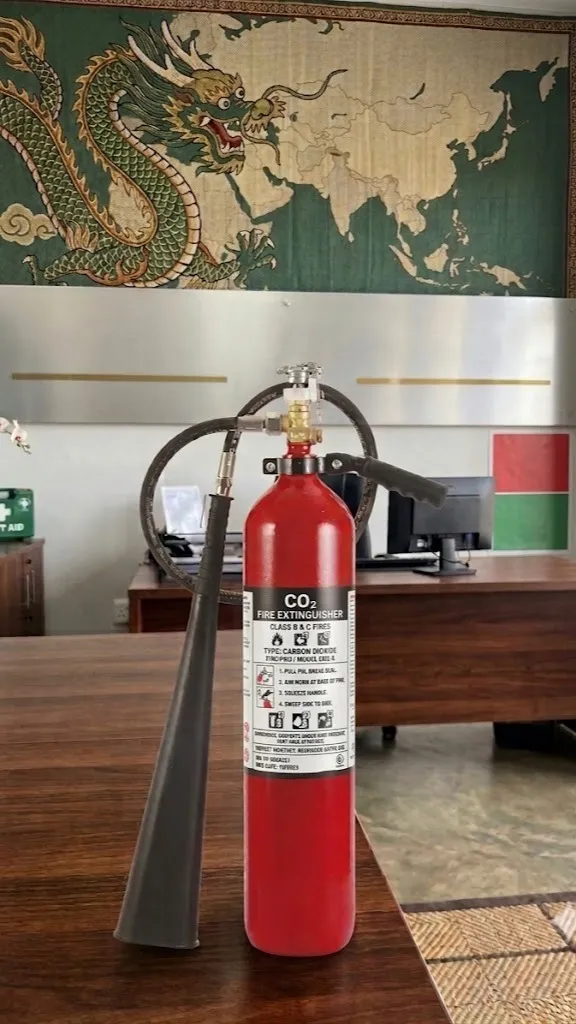
Hospital Clean Agent Suppression OEM Manufacturer Asia
LIFEGUARD® – Advanced Clean Agent Fire Suppression Solutions for Hospitals Across Asia
LIFEGUARD® by United Fire Equipments Pvt. Ltd. is a trusted hospital clean agent suppression OEM manufacturer in Asia, providing engineered fire suppression solutions for healthcare facilities, hospitals, medical institutions, laboratories, diagnostic centres, pharmaceutical areas, data rooms and other critical environments.
Modern hospitals contain sophisticated electrical equipment, sensitive medical electronics, communication systems, servers, control panels and valuable diagnostic equipment that can be severely damaged by conventional water-based firefighting methods. Clean agent fire suppression systems provide a highly effective solution for protecting these critical areas because they are designed to suppress fire rapidly while leaving no water, foam, powder or corrosive residue after discharge.
As an OEM fire safety equipment manufacturer, LIFEGUARD® offers comprehensive support covering system engineering, cylinder assemblies, clean agent storage, control systems, piping networks, discharge nozzles, detection and alarm integration, technical documentation and project support for hospital fire protection projects throughout Asia.
Why Hospitals Require Clean Agent Fire Suppression Systems
Hospitals operate continuously and depend on electrical, electronic and communication infrastructure for patient care. A fire in a server room, control room, UPS room or medical equipment area can interrupt critical hospital operations even when the fire itself is relatively small.
Traditional firefighting media such as water and dry chemical powder may extinguish a fire but can create secondary damage to electronics and sensitive equipment.
A professionally designed hospital clean agent fire suppression system helps protect:
- Hospital server rooms
- Data centres and IT rooms
- UPS and battery rooms
- Electrical control rooms
- Medical equipment rooms
- MRI and diagnostic support rooms
- Laboratory control areas
- Communication rooms
- Nurse-call system equipment rooms
- Building management system rooms
- CCTV and security control rooms
- Hospital electrical panels
- Medical record storage areas
- Critical equipment enclosures
LIFEGUARD® develops clean agent solutions according to the specific hazard, room volume, equipment layout and project requirements.
Clean Agent Fire Suppression Solutions for Hospitals
Clean agent systems use gaseous or vaporising extinguishing agents to control or extinguish fire without leaving damaging residue.
Depending upon project requirements, LIFEGUARD® can provide engineered solutions based on clean-agent technologies suitable for critical hospital applications.
FK-5-1-12 Clean Agent Fire Suppression System
FK-5-1-12 systems are widely considered for areas containing sensitive electronics and high-value equipment.
The extinguishing agent is stored in cylinders and discharged through an engineered piping and nozzle network. On receiving a confirmed fire signal from the detection and releasing system, the agent is discharged into the protected enclosure.
Typical applications include:
- Hospital data centres
- Server rooms
- UPS rooms
- Electrical rooms
- Communication rooms
- Control rooms
- Diagnostic equipment support rooms
The system is designed to achieve the required extinguishing concentration within the protected enclosure while considering applicable safety and engineering requirements.
HFC-227ea Clean Agent Suppression System
HFC-227ea, commonly associated with FM-200 type systems, is another gaseous fire suppression technology used for protecting electrical and electronic hazards.
An engineered HFC-227ea hospital fire suppression system may include:
- Agent storage cylinder
- Cylinder valve
- Pressure monitoring arrangement
- Discharge hose
- Manifold, where required
- Distribution piping
- Discharge nozzles
- Fire detection system
- Gas release control panel
- Manual release station
- Abort switch
- Audio-visual alarms
- Warning signage
Systems are selected and engineered according to the protected volume and applicable project specifications.
OEM Hospital Clean Agent Suppression Manufacturer in Asia
As an OEM hospital clean agent suppression manufacturer, LIFEGUARD® focuses on supplying complete engineered solutions rather than merely supplying standalone cylinders.
Our approach can include:
Fire Hazard Assessment
The first stage of clean agent system development is understanding the protected hazard.
Important parameters include:
- Room dimensions
- Ceiling height
- Raised floor volume
- False ceiling volume
- Equipment layout
- Fire load
- Ventilation openings
- Door openings
- Air-conditioning arrangement
- Occupancy
- Required extinguishing concentration
This information forms the basis for system engineering.
Clean Agent Quantity Calculation
The required extinguishing-agent quantity is calculated based on room volume, selected agent, design concentration, temperature conditions and applicable system design criteria.
Proper calculation is essential to provide sufficient extinguishing concentration without unnecessary oversizing.
Hydraulic Flow Calculation
For engineered clean agent systems, the piping network and nozzle configuration are evaluated using appropriate flow calculation procedures/software.
Engineering may consider:
- Cylinder pressure
- Pipe diameter
- Pipe length
- Equivalent fittings
- Tee configuration
- Nozzle quantity
- Nozzle orifice size
- Agent distribution
- Discharge time
- System pressure
This helps achieve balanced and effective agent distribution throughout the protected area.
Clean Agent System Components for Hospital Applications
A complete LIFEGUARD® hospital clean agent fire suppression package can include the following components.
Clean Agent Storage Cylinders
Clean agent is stored in specially designed pressure cylinders selected according to the required extinguishing-agent quantity and system configuration.
Cylinder assemblies may incorporate:
- Cylinder valve
- Pressure gauge
- Safety pressure relief arrangement
- Solenoid/electrical actuator
- Manual actuator
- Discharge connection
- Flexible discharge hose
- Mounting brackets
Multiple cylinders may be connected through a manifold where larger protected volumes require increased agent capacity.
Engineered Piping Network
The piping system distributes the extinguishing agent from the storage cylinder to the protected hazard.
Pipe routing is developed considering:
- Minimum pressure losses
- Balanced flow
- Room layout
- Nozzle positioning
- Ceiling obstructions
- Equipment arrangement
- Project installation constraints
Correct pipe sizing and routing are important for achieving the required discharge performance.
Clean Agent Discharge Nozzles
Nozzles are positioned to distribute extinguishing agent effectively throughout the protected enclosure.
Depending on the room arrangement, systems may use:
- 180-degree discharge nozzles
- 360-degree discharge nozzles
Nozzle selection and orifice sizing are determined during system engineering.
Automatic Fire Detection and Gas Release System
Clean agent suppression should operate as part of an integrated detection and releasing system.
A hospital clean agent system may incorporate:
- Smoke detectors
- Multi-criteria detectors
- Aspirating smoke detection systems
- Cross-zone detection
- Gas suppression control panel
- Manual release switch
- Abort switch
- Hooter
- Flasher
- Warning indicators
- Solenoid activation circuits
- HVAC shutdown interface
- Damper control
- Fire alarm system interface
- Building Management System interface
Early fire detection allows suppression action to begin before a developing fire causes extensive damage.
Aspirating Smoke Detection for Critical Hospital Areas
Critical hospital environments may require extremely early warning of smoke.
Aspirating Smoke Detection systems, including technologies such as VESDA, continuously sample air through a network of sampling pipes and analyse it for very small concentrations of smoke particles.
These systems can be particularly useful in:
- Hospital server rooms
- Data centres
- Communication rooms
- Control rooms
- High-value electronic equipment areas
When integrated with a clean agent suppression system, early detection can improve the overall fire-protection strategy.
Hospital Server Room Clean Agent Suppression
Hospital servers support numerous operational functions, including patient data management, digital medical records, billing systems, hospital management software and network communications.
Water discharge inside a server room can cause major equipment damage.
LIFEGUARD® clean agent suppression solutions provide protection for:
- Server racks
- Network switches
- Storage equipment
- Communication hardware
- Control panels
- Raised floor areas
- False ceiling areas
Where necessary, the raised floor and ceiling voids can be considered separately during system engineering.
Hospital UPS Room Fire Suppression
Hospitals rely heavily on uninterrupted electrical power.
UPS rooms contain power electronics, electrical connections and energy-storage equipment that require carefully engineered fire protection.
Depending on the specific battery technology, electrical equipment and room configuration, LIFEGUARD® can develop an appropriate detection and fire suppression strategy.
A complete solution can include:
- Early smoke detection
- Heat detection
- Clean agent suppression
- Gas release panel
- Audible and visual alarms
- HVAC shutdown
- Electrical system interface
Battery hazards should always be assessed specifically, particularly where lithium-ion batteries are present.
Hospital Electrical Room Clean Agent Suppression
Electrical rooms are another important clean agent application.
Hospital electrical infrastructure may include:
- Distribution panels
- LT panels
- Control panels
- Automatic transfer systems
- Power conditioning equipment
- Electrical switchgear
Clean agent suppression is particularly useful where the objective is to extinguish fire without applying conductive water or contaminating powder directly onto critical electrical equipment.
Hospital Control Room Fire Suppression
Hospital control rooms often combine multiple safety and operational systems, such as:
- Building Management Systems
- Fire alarm monitoring
- CCTV surveillance
- Access control
- Nurse-call monitoring
- Communication systems
- Electrical controls
Loss of these systems during an emergency can severely affect hospital operations.
Clean agent systems help provide rapid fire suppression while reducing post-discharge cleanup requirements.
No-Residue Fire Suppression for Sensitive Medical Equipment
One of the major benefits of clean agent systems is their suitability for sensitive equipment.
Unlike dry powder extinguishing agents, properly selected clean agents do not leave particulate residue throughout the protected enclosure.
This makes them particularly suitable for areas containing:
- Computers
- Medical electronics
- Communication equipment
- Control panels
- Servers
- Monitoring equipment
- Sensitive instruments
Reduced cleanup requirements may help hospitals restore operations faster following a suppression event, subject to appropriate safety inspections and equipment checks.
Room Integrity and Clean Agent Retention
A clean agent system depends on maintaining the required extinguishing concentration inside the protected enclosure for the necessary period.
Excessive leakage through openings can reduce agent retention.
Hospital clean agent projects may therefore require evaluation of:
- Door gaps
- Cable openings
- Pipe penetrations
- Ventilation ducts
- Raised-floor openings
- Ceiling voids
- Wall penetrations
Where specified, a room integrity test / door fan test can be used to evaluate enclosure leakage and agent retention performance.
Proper sealing of penetrations is an important part of overall clean agent system performance.
HVAC Shutdown and Damper Integration
Hospital rooms often have continuous air-conditioning and ventilation.
If ventilation remains active during clean agent discharge, the extinguishing agent can be removed from the protected enclosure.
Clean agent control systems can therefore be engineered to interface with:
- AHU shutdown
- Precision air-conditioning systems
- Exhaust fans
- Supply fans
- Motorised dampers
- Fire dampers
- Building Management Systems
The required cause-and-effect sequence should be established during project engineering.
Typical Clean Agent Suppression Operating Sequence
A typical automatic clean agent suppression sequence can operate as follows:
- The first detector senses smoke or fire.
- The control panel generates an initial fire alarm.
- A second independent detector or detection zone confirms the fire condition.
- The releasing panel initiates the pre-discharge warning sequence.
- Audible and visual alarms operate.
- HVAC or ventilation systems are shut down where required.
- A programmed discharge delay allows personnel to evacuate the protected room.
- The suppression cylinder actuator is energised.
- Clean agent is discharged through the engineered nozzle network.
- The required design concentration is developed inside the enclosure.
Manual release and abort functions can be incorporated according to the project design philosophy and applicable requirements.
Clean Agent Fire Suppression Engineering for Asian Hospital Projects
Hospital projects across Asia can vary significantly in building regulations, approval procedures and environmental conditions.
LIFEGUARD® works with project consultants, contractors, system integrators and end users to develop project-specific solutions.
Engineering documentation can include:
- General arrangement drawings
- Cylinder layout drawings
- Piping layout
- Nozzle layout
- Equipment schedule
- Bill of quantities
- Technical datasheets
- System calculations
- Hydraulic flow calculations
- Cause-and-effect documentation
- Installation recommendations
- Testing and commissioning documentation
Local statutory requirements and project specifications should always be verified for the destination country.
Hospital Clean Agent Suppression Solutions Across Asia
LIFEGUARD® supports clean agent suppression requirements for healthcare projects in markets throughout Asia, including:
India, UAE, Saudi Arabia, Qatar, Oman, Bahrain, Kuwait, Singapore, Malaysia, Indonesia, Thailand, Vietnam, Philippines, Bangladesh, Nepal, Sri Lanka and other Asian markets, subject to project requirements, logistics and applicable local approvals.
We work with:
- Hospital developers
- Healthcare groups
- EPC contractors
- MEP contractors
- Fire protection contractors
- System integrators
- Consultants
- Distributors
- Dealers
- Government institutions
- Private hospitals
New Hospital and Retrofit Fire Suppression Projects
LIFEGUARD® solutions can be considered for both new construction and existing hospital facilities.
New Hospital Projects
For new facilities, clean agent suppression can be coordinated during the MEP design stage.
This enables better planning of:
- Cylinder location
- Pipe routing
- Detection layout
- Nozzle positioning
- HVAC shutdown interfaces
- Electrical connections
Retrofit Hospital Projects
Existing hospitals may require clean agent protection as part of modernization or fire-safety upgrades.
Retrofit engineering can consider existing:
- Ceiling conditions
- Electrical installations
- Server racks
- HVAC systems
- Cable trays
- Equipment layouts
The objective is to develop an effective system while minimizing disruption to hospital operations.
Why Choose LIFEGUARD® as Your Hospital Clean Agent Suppression OEM Manufacturer in Asia?
Established Fire Protection Manufacturer
United Fire Equipments Pvt. Ltd., manufacturer of the LIFEGUARD® brand, has been associated with fire safety equipment and engineered fire-protection solutions for decades.
OEM Engineering Capability
Our scope extends beyond equipment supply to project-oriented engineering support for suppression systems.
Complete System Approach
We can support projects with:
- Suppression cylinders
- Valves and actuators
- Piping
- Nozzles
- Detection
- Releasing control panels
- Manual controls
- Warning devices
- System engineering
Customized Solutions
Every hospital area has different dimensions and fire hazards. System configuration is therefore developed according to the actual project requirements rather than relying on a generic package.
Technical Documentation
Technical documentation can be prepared to assist contractors, consultants and project teams during approval and execution stages.
Support for Asian Projects
We support domestic and export inquiries for hospitals, healthcare groups, EPC contractors, distributors and fire protection companies throughout Asia.
Applications of LIFEGUARD® Hospital Clean Agent Suppression Systems
Our hospital clean agent fire suppression solutions can be considered for:
- Multi-speciality hospitals
- Super-speciality hospitals
- Government hospitals
- Private hospitals
- Medical colleges
- Research hospitals
- Diagnostic centres
- Healthcare data centres
- Pathology laboratories
- Pharmaceutical facilities
- Blood banks
- Hospital control centres
- Healthcare IT infrastructure
Benefits of Hospital Clean Agent Fire Suppression
Rapid Fire Suppression
Clean agents are designed for rapid discharge and fast development of the required extinguishing concentration.
No Residue
Clean agents do not produce the powder residue associated with conventional dry chemical systems.
Protection of Electronics
They are well suited to areas containing electrical and electronic equipment when appropriately selected and engineered.
Reduced Cleanup
The absence of powder, foam or water residue can reduce post-discharge cleanup requirements.
Automatic Operation
Integration with automatic fire detection allows suppression to operate without relying solely on manual intervention.
Space-Efficient Protection
A properly engineered system can protect the entire enclosed hazard from strategically located agent cylinders and nozzles.
Hospital Clean Agent Suppression OEM Supplier and Exporter Asia
LIFEGUARD® supports OEM, contractor, distributor and institutional requirements for hospital fire protection projects.
Our project support can cover:
Design → Engineering → Equipment Selection → Manufacturing/Supply → Technical Documentation → Installation Guidance → Testing & Commissioning Support
Whether the requirement is for a single hospital server room or a multi-building healthcare development, our engineering team can assist in preparing an appropriate clean agent fire suppression solution.
Frequently Asked Questions
What is the best clean agent suppression system for a hospital?
The appropriate clean agent depends on the hazard, enclosure size, equipment, occupancy, design concentration, local regulations and project specifications. FK-5-1-12 and HFC-227ea are among the technologies commonly considered for electrical and electronic hazards.
Can clean agent suppression be used in hospital server rooms?
Yes. Server and IT rooms are common applications because clean agents provide gaseous fire suppression without depositing extinguishing powder on electronic equipment.
Does a clean agent system damage hospital electronics?
Properly selected clean extinguishing agents are specifically used for sensitive electrical and electronic areas because they do not leave conventional powder or water residue after discharge.
Is room integrity testing required?
Enclosure integrity is important for total flooding systems. Depending on the project specification and applicable standard, an integrity test may be required to confirm whether the protected enclosure can retain the agent concentration.
Can clean agent systems automatically shut down hospital HVAC systems?
Yes. The fire suppression control panel can be configured to interface with HVAC equipment, dampers and other building services where required by the approved cause-and-effect sequence.
Can LIFEGUARD® provide systems for hospital projects outside India?
Yes. LIFEGUARD® supports project inquiries from Asian markets, subject to technical requirements, export feasibility and the applicable approvals of the destination country.
LIFEGUARD® – Your Hospital Clean Agent Suppression OEM Partner in Asia
Fire protection in a hospital cannot be approached in the same way as ordinary commercial premises. Critical healthcare infrastructure demands reliable detection, rapid suppression and protection methods that minimize secondary damage to expensive electronic equipment.
LIFEGUARD® combines fire suppression equipment with engineering support to provide hospital clean agent suppression solutions in Asia for server rooms, electrical rooms, control rooms, UPS rooms and other critical hospital infrastructure.
For consultants, hospitals, EPC contractors, MEP contractors, fire protection companies, distributors and system integrators seeking a dependable hospital clean agent suppression OEM manufacturer in Asia, LIFEGUARD® offers project-specific technical solutions backed by established fire-protection manufacturing expertise.
SEO Meta Title
Hospital Clean Agent Suppression OEM Manufacturer Asia | LIFEGUARD®
SEO Meta Description
LIFEGUARD® is a hospital clean agent suppression OEM manufacturer in Asia offering FK-5-1-12 and HFC-227ea fire suppression solutions for hospital server rooms, UPS rooms, electrical rooms and critical healthcare facilities.
Suggested SEO Keywords
Primary Keywords:
hospital clean agent suppression OEM manufacturer Asia, hospital clean agent suppression manufacturer Asia, hospital clean agent fire suppression Asia, hospital fire suppression system manufacturer Asia
Secondary Keywords:
clean agent system for hospitals Asia, hospital server room fire suppression, hospital data centre fire suppression, hospital electrical room suppression, hospital UPS room fire suppression, FK-5-1-12 hospital suppression system, HFC-227ea hospital fire suppression, hospital gaseous fire suppression system, hospital automatic fire suppression Asia, hospital fire protection OEM Asia
Long-Tail Keywords:
best clean agent suppression system for hospitals in Asia, OEM clean agent fire suppression manufacturer for hospital server rooms Asia, hospital electrical room clean agent suppression supplier Asia, hospital data centre clean agent fire suppression manufacturer Asia, automatic clean agent suppression system for healthcare facilities Asia
Contact LIFEGUARD®
LIFEGUARD® – United Fire Equipments Pvt. Ltd.
Manufacturer of ISI Certified Fire Safety Equipment
Corporate Office: LIFEGUARD TOWER, K-960, Opp. SBI, Rithala, Rohini, Delhi – 110085, India
Manufacturing Facility: B-38, Mangolpuri Industrial Area, Phase-II, Delhi – 110034, India
For hospital clean agent suppression projects, OEM requirements, dealership, distribution and export inquiries across Asia, contact the LIFEGUARD® fire protection team.
Keywords






