
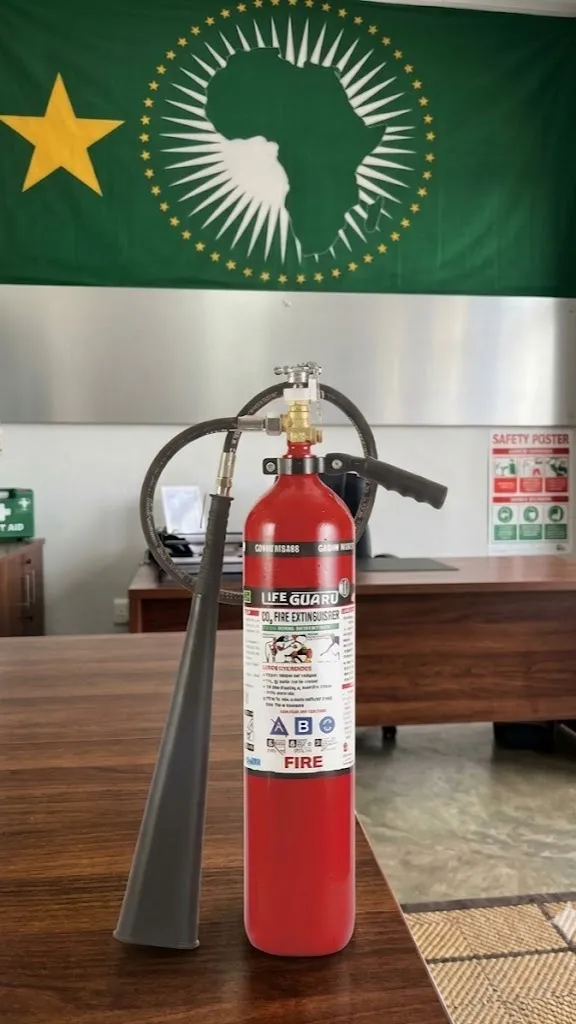
Hospital Clean Agent Suppression Solutions Africa
Advanced Clean Agent Fire Suppression Solutions for Hospitals Across Africa
Hospitals and healthcare facilities require highly reliable fire protection because even a small fire can threaten patients, medical personnel, critical equipment, essential records, and continuity of healthcare services. Conventional water-based firefighting systems may not always be suitable for sensitive areas containing electrical, electronic, communication, diagnostic, or data-processing equipment.
LIFEGUARD® offers hospital clean agent suppression solutions in Africa for the protection of critical healthcare infrastructure. Our clean agent fire suppression systems are engineered to detect and suppress fires rapidly while minimizing damage to sensitive equipment and helping hospitals restore normal operations quickly.
As a specialist in fire protection and suppression technology, LIFEGUARD® provides customized solutions for hospitals, medical colleges, diagnostic centers, laboratories, healthcare data centers, pharmaceutical facilities, and other medical institutions throughout African markets.
What Is a Hospital Clean Agent Fire Suppression System?
A clean agent fire suppression system is an engineered firefighting solution that uses a gaseous extinguishing agent to suppress fire without leaving water, powder, foam, or other significant residue behind.
The extinguishing agent is stored in specially designed cylinders and released through a network of pipes and discharge nozzles when the fire detection and control system confirms a fire condition.
Because clean agents leave little or no residue, they are particularly suitable for protecting high-value and electrically sensitive hospital equipment.
Depending on the application, applicable regulations, environmental requirements, and project specifications, clean agent solutions may include agents such as:
- FK-5-1-12 clean agent
- HFC-227ea clean agent
- Other approved gaseous suppression technologies suitable for the protected hazard
Each system should be engineered according to the actual room dimensions, hazard classification, operating temperature, altitude, enclosure integrity, equipment arrangement, and applicable codes.
Why Hospitals in Africa Need Clean Agent Suppression Solutions
Modern hospitals depend heavily on electrical and electronic infrastructure. Servers, UPS systems, medical data networks, imaging systems, laboratory equipment, telecommunication systems, control panels, and other critical assets can be severely damaged not only by fire but also by inappropriate extinguishing media.
Clean agent suppression can provide several important advantages.
Rapid Fire Suppression
Clean agent systems are designed to discharge rapidly and establish the required extinguishing concentration inside the protected enclosure.
Early suppression helps prevent a small electrical or equipment fire from developing into a major incident.
No Water Damage
Sensitive electronics can suffer extensive damage when exposed to water. Clean agent suppression systems provide an alternative for areas where water discharge could damage critical equipment or interrupt hospital services.
Minimal Residue
Clean agents are suitable for environments where residue from dry chemical powder, foam, or other extinguishing media could contaminate or damage valuable equipment.
Protection of Critical Hospital Operations
Hospital IT systems, communication equipment, power infrastructure, diagnostic technology, and laboratory systems may need to operate continuously.
Rapid detection and suppression can reduce fire-related downtime and support faster recovery.
Automatic Fire Protection
A properly engineered clean agent system can be integrated with automatic fire detection and releasing controls, enabling fire suppression even when a protected room is temporarily unattended.
Applications of Hospital Clean Agent Suppression Systems in Africa
LIFEGUARD® clean agent fire suppression solutions can be engineered for various critical areas within healthcare facilities.
Hospital Server Rooms
Hospitals increasingly depend on servers for patient records, medical imaging, billing, laboratory information, communication, and hospital management systems.
Clean agent suppression provides fire protection without introducing water or powder into sensitive IT environments.
Hospital Data Centers
Healthcare data centers contain valuable servers, storage equipment, networking infrastructure, and communication systems.
LIFEGUARD® can engineer clean agent total flooding systems based on room volume, raised-floor areas, ceiling voids, equipment arrangements, and site conditions.
UPS and Battery Support Rooms
UPS systems provide essential backup power for critical healthcare services.
Where clean agent suppression is appropriate for the identified fire hazard, systems can be engineered to protect electrical and supporting infrastructure. Battery hazards, particularly lithium-ion battery applications, require a separate hazard assessment to determine the appropriate suppression and thermal-event management strategy.
Electrical Control Rooms
Electrical switchgear, distribution equipment, control panels, and associated equipment can be protected using suitably designed clean agent systems.
Medical Equipment Rooms
Hospitals contain sophisticated and expensive medical equipment. Where permitted by equipment manufacturers, local regulations, and project-specific fire engineering requirements, clean agent systems can provide protection for associated electrical and equipment spaces.
Laboratories
Research, pathology, diagnostic, and specialized hospital laboratories may contain sensitive instruments and electronic equipment requiring carefully selected fire suppression solutions.
Communication and Telecom Rooms
Healthcare communication networks must remain operational during emergencies. Clean agent suppression can protect telecom racks, networking equipment, control systems, and communication infrastructure.
Hospital Archives and Record Rooms
Physical medical records, administrative documents, and valuable archives can be seriously damaged by water.
Clean agent systems may be considered for selected enclosed archive areas following appropriate fire-risk evaluation.
Pharmacy Control and Technical Areas
Certain technical, control, storage, and electronic areas associated with hospital pharmacies may benefit from clean agent suppression, depending on the materials present and the fire-risk assessment.
Security and CCTV Control Rooms
CCTV servers, security management systems, access control equipment, and surveillance infrastructure are important for hospital security and emergency management.
Clean agent systems provide residue-free protection for sensitive electronic systems.
Customized Hospital Clean Agent Suppression Solutions for African Projects
Every hospital has different fire risks. LIFEGUARD® therefore emphasizes an engineered solution rather than a one-size-fits-all suppression package.
A typical project evaluation may consider:
- Protected room dimensions
- Net and gross enclosure volume
- Raised-floor volume
- False-ceiling volume
- Equipment layout
- Fire hazard classification
- Minimum design concentration
- Operating temperature
- Site altitude
- Door and ventilation openings
- Air-conditioning systems
- Required hold time
- Enclosure integrity
- Cylinder location
- Pipe routing
- Nozzle placement
- Detection philosophy
- Shutdown and interlock requirements
- Applicable fire codes and local authority requirements
These parameters help determine the appropriate extinguishing-agent quantity, cylinder configuration, pipe sizes, nozzle sizes, and discharge arrangement.
Engineering of Clean Agent Suppression Systems
Proper system engineering is essential for dependable clean agent fire protection.
Hazard Assessment
The first stage is understanding the protected environment and identifying the potential fire hazards.
This includes electrical equipment, cable loading, heat sources, combustible materials, ventilation, occupancy, and operational requirements.
Room Volume Calculation
The actual protected volume is calculated after considering the room dimensions and other relevant protected spaces.
Raised floors and ceiling voids may also need protection where a fire hazard exists.
Agent Quantity Calculation
The required quantity of extinguishing agent is determined according to:
- Protected volume
- Design concentration
- Agent properties
- Minimum temperature
- Site altitude
- Applicable design standards
- Project specifications
Hydraulic Flow Calculation
Clean agent piping systems require engineering calculations to establish suitable pipe diameters, nozzle flow rates, pressure conditions, discharge performance, and agent distribution.
Hydraulic flow calculation software may be used where required by the selected suppression technology and system approval.
Pipe Network Design
The piping network is designed to deliver the required extinguishing agent to the discharge nozzles within the specified system performance criteria.
Nozzle Selection
Nozzle location, orientation, coverage, orifice configuration, and discharge characteristics are selected according to the approved system design.
Main Components of a Hospital Clean Agent Suppression System
A complete clean agent suppression package may include:
Clean Agent Cylinder
The extinguishing agent is stored in an approved cylinder assembly designed for the selected operating pressure and suppression agent.
Cylinder Valve Assembly
The cylinder valve provides controlled release of the extinguishing agent when the system receives an activation command.
Discharge Piping
Engineered piping transports the agent from the storage cylinder to the protected area.
Discharge Nozzles
Specially selected nozzles distribute the agent throughout the protected enclosure.
Fire Detection System
Depending on the project requirements, the system may use:
- Smoke detectors
- Multi-criteria detectors
- Aspirating smoke detection systems
- Heat detection
- Other compatible early-warning technologies
Gas Release Control Panel
The suppression control panel monitors detection devices and manages the release sequence.
Manual Release Station
A manual release facility can allow authorized personnel to initiate the suppression system when required.
Abort Station
Where specified, an abort station may be provided as part of the releasing system.
Audible and Visual Alarms
Sounders, hooters, strobes, and illuminated warning indicators can provide notification before and during system discharge.
Pressure Monitoring
Pressure gauges and supervisory devices can assist with monitoring the condition of the suppression cylinder.
Intelligent Detection and Automatic Suppression
Early detection is particularly important in hospitals.
A clean agent suppression system can be integrated with a cross-zoned or coincidence-based detection philosophy, where appropriate, to reduce the possibility of unwanted discharge.
A typical sequence may include:
Stage 1 – Initial Fire Detection
A detector senses smoke or another programmed fire condition.
Stage 2 – Confirmed Fire Detection
A second detection signal confirms the fire condition according to the programmed release logic.
Stage 3 – Alarm and Shutdown Functions
The suppression panel can initiate audible/visual alarms and, where engineered, send signals for HVAC shutdown, damper control, equipment shutdown, door control, or building-management integration.
Stage 4 – Time Delay
Where required, a programmed pre-discharge delay provides warning before agent release.
Stage 5 – Clean Agent Discharge
The cylinder actuator operates and releases the extinguishing agent into the protected enclosure.
Total Flooding Clean Agent Systems for Hospitals
Most enclosed critical hospital rooms are protected using a total flooding clean agent suppression system.
During activation, the extinguishing agent is discharged throughout the enclosure to achieve the calculated design concentration.
For reliable total-flooding protection, enclosure integrity is important. Excessive leakage through doors, cable penetrations, ducts, flooring, ceiling voids, or unsealed openings can reduce the ability of the room to retain the required agent concentration.
Where specified, an enclosure integrity or door-fan test can be used to evaluate the leakage characteristics and expected retention performance of the protected room.
Clean Agent Suppression for Hospital Data Centers in Africa
Hospital digital infrastructure has become essential for modern healthcare.
Electronic medical records, PACS imaging systems, laboratory databases, telemedicine, pharmacy management, building management systems, CCTV, and communication networks depend on reliable data-processing infrastructure.
Fire protection for hospital data centers should therefore consider both life safety and business continuity.
LIFEGUARD® hospital clean agent suppression solutions can be engineered for:
- Main data centers
- Server rooms
- Network operation rooms
- Data racks
- Telecom rooms
- Raised-floor spaces
- Ceiling voids
- UPS supporting areas
- Control and monitoring rooms
Clean agent suppression provides rapid firefighting capability without the cleanup associated with conventional powder extinguishing systems.
Clean Agent Fire Suppression System Design Standards
Hospital fire suppression projects in Africa may be governed by different national regulations, authority requirements, consultant specifications, insurer requirements, and international standards.
Where applicable to the selected system, engineering can consider recognized standards and practices such as:
- NFPA 2001 – Standard on Clean Agent Fire Extinguishing Systems
- Relevant manufacturer design manuals
- Applicable electrical and fire alarm standards
- Local African national fire codes
- Civil defence/fire authority requirements
- Consultant and end-user technical specifications
The exact standard and system configuration should always be established according to the country and project.
Hospital Clean Agent Suppression Solutions for Different African Markets
Africa contains rapidly expanding healthcare markets with significant investment in hospitals, diagnostic centers, medical colleges, pharmaceutical facilities, and healthcare infrastructure.
LIFEGUARD® can support clean agent suppression requirements for projects across regions including:
- South Africa
- Kenya
- Nigeria
- Ghana
- Tanzania
- Uganda
- Ethiopia
- Rwanda
- Zambia
- Zimbabwe
- Botswana
- Namibia
- Mozambique
- Mauritius
- Egypt
- Morocco
- Algeria
- Tunisia
- Senegal
- Côte d'Ivoire
- Cameroon
- Angola
- Democratic Republic of the Congo
- Other African countries
System design and documentation should be adapted to each country's applicable regulatory and approval requirements.
Turnkey Hospital Clean Agent Suppression Solutions
LIFEGUARD® can support healthcare projects from initial engineering through final system documentation.
Depending on project scope, services can include:
- Fire-risk assessment support
- Site data review
- Clean agent system selection
- Room-volume calculation
- Agent-quantity calculation
- Hydraulic flow calculation
- Cylinder selection
- Nozzle calculation and positioning
- Pipe-network engineering
- General arrangement drawings
- Piping layout drawings
- Bill of quantities
- Technical data sheets
- System schematics
- Detection and releasing philosophy
- Installation guidance
- Testing and commissioning support
- Operating instructions
- Maintenance guidance
- Technical documentation
Why Choose LIFEGUARD® for Hospital Clean Agent Suppression Solutions in Africa?
Specialized Fire Suppression Expertise
LIFEGUARD® provides engineered fire suppression solutions for critical infrastructure and special-hazard applications.
Customized Engineering
Systems can be configured according to the actual hospital room, hazard, equipment layout, project specification, and operating environment.
Complete Fire Protection Approach
Clean agent suppression can be coordinated with fire detection, releasing controls, warning devices, interface modules, and associated fire-safety systems.
Support for International Projects
We support consultants, contractors, system integrators, distributors, EPC companies, hospital developers, and healthcare organizations requiring technically coordinated fire suppression solutions for African projects.
Technical Documentation
Project documentation can include data sheets, drawings, calculations, system architecture, equipment schedules, BOQs, and other required technical submissions.
OEM Support
As an OEM-focused fire safety company, LIFEGUARD® can support project-specific technical requirements, system integration, documentation, and customized fire suppression packages.
Benefits of LIFEGUARD® Hospital Clean Agent Suppression Solutions
Key advantages include:
- Rapid fire suppression
- Minimal residue after discharge
- Reduced risk of collateral damage to sensitive electronics
- Suitable for critical electrical and electronic environments
- Automatic detection and release capability
- Customized hydraulic system design
- Centralized fire suppression control
- Integration with fire alarm and building systems
- Flexible cylinder arrangements
- Engineered pipe and nozzle distribution
- Protection for occupied critical infrastructure when correctly designed
- Reduced post-fire cleanup
- Support for continuity of healthcare operations
Clean Agent System Integration with Hospital Fire Alarm Systems
A modern hospital requires coordinated fire protection rather than isolated equipment.
Clean agent suppression controls can be integrated, subject to system compatibility and approved cause-and-effect design, with:
- Main fire alarm panels
- Building Management Systems (BMS)
- HVAC controls
- Smoke dampers
- Access control systems
- Emergency alarm systems
- Remote monitoring
- Electrical shutdown controls
- Security monitoring systems
- Central facility-management systems
Such integration allows the clean agent suppression system to become part of the hospital's overall fire-safety strategy.
Importance of Preventive Maintenance
Clean agent suppression systems should remain operational throughout the life of the protected facility.
Preventive maintenance should include inspection of relevant components such as:
- Clean agent cylinder
- Agent quantity or pressure indication
- Cylinder valve
- Actuation mechanism
- Pipe network
- Discharge nozzles
- Detectors
- Suppression panel
- Manual release station
- Abort station
- Sounders and strobes
- Interface modules
- Electrical wiring
- System fault indications
Periodic inspection, testing, and servicing should be performed in accordance with the applicable standard, system manufacturer's instructions, local requirements, and facility maintenance procedures.
Hospital Fire Safety Requires More Than a Single System
A clean agent suppression system is an important part of hospital fire protection, but it should form part of a comprehensive fire and life-safety strategy.
A complete healthcare fire-protection approach may include:
- Portable fire extinguishers
- Automatic fire detection and alarm systems
- Clean agent suppression systems
- Water-based suppression systems
- Hydrant systems
- Hose reels
- Sprinkler systems
- Fire doors
- Emergency lighting
- Exit signage
- Smoke management
- Early-warning detection
- Emergency evacuation planning
- Special-hazard suppression systems
The correct combination depends on the hospital design and applicable fire-risk assessment.
LIFEGUARD® – Hospital Clean Agent Suppression Solutions Provider for Africa
For healthcare facilities requiring reliable protection of high-value and mission-critical areas, LIFEGUARD® delivers professionally engineered hospital clean agent suppression solutions for Africa.
From server rooms and data centers to electrical, telecom, laboratory, and control environments, our focus is on providing technically appropriate suppression solutions that help protect critical infrastructure while minimizing secondary damage.
Whether your project involves a new hospital, hospital expansion, modernization program, medical college, diagnostic facility, or healthcare infrastructure project, our technical team can support the selection and engineering of an appropriate clean agent fire suppression solution.
Frequently Asked Questions
What is the best clean agent suppression system for a hospital?
There is no single system suitable for every hospital. Selection depends on the protected hazard, room volume, equipment, occupancy, environmental conditions, applicable regulations, and project specifications. An engineering assessment should be completed before selecting the clean agent.
Can clean agent suppression be used in hospital server rooms?
Yes. Server rooms and healthcare data centers are common applications for properly engineered clean agent total-flooding systems because the agents can suppress fires without introducing water or powder residue into sensitive electronic environments.
Does a clean agent system damage electronic equipment?
Clean agents are selected for critical electronic environments because they generally leave little or no residue. Suitability should nevertheless be confirmed for the specific equipment, agent, concentration, and project conditions.
Does a clean agent system require fire detectors?
Automatic clean agent suppression systems normally incorporate compatible detection and releasing controls. The exact detection philosophy depends on the system design and applicable requirements.
Can clean agent suppression be connected to the hospital BMS?
Where compatible, clean agent control panels can provide interface signals to BMS, HVAC, fire alarm, access control, or other facility-management systems.
Is clean agent quantity calculated according to room size?
Yes. Agent quantity is influenced by room volume, required design concentration, temperature, altitude, agent characteristics, hazard type, and applicable engineering requirements.
Can one clean agent system protect multiple rooms?
Multi-zone or selector-valve arrangements may be possible with some system configurations, but they require detailed engineering and must comply with the selected system's approvals, design rules, and project requirements.
SEO Meta Information
SEO Title:
Hospital Clean Agent Suppression Solutions Africa | LIFEGUARD®
Meta Description:
LIFEGUARD® provides hospital clean agent suppression solutions in Africa for server rooms, data centers, electrical rooms, telecom facilities, laboratories and critical healthcare infrastructure. Customized clean agent system design, detection, piping, nozzles and fire suppression engineering.
Primary Keyword:
Hospital Clean Agent Suppression Solutions Africa
Secondary Keywords:
- Hospital clean agent fire suppression Africa
- Clean agent suppression system for hospitals Africa
- Hospital fire suppression solutions Africa
- Clean agent fire protection Africa
- Hospital server room fire suppression Africa
- Hospital data center suppression Africa
- Healthcare clean agent suppression Africa
- Hospital gaseous fire suppression Africa
- Hospital FK-5-1-12 suppression Africa
- Hospital HFC-227ea suppression Africa
- Hospital automatic fire suppression Africa
- Hospital clean agent system supplier Africa
- Healthcare fire protection solutions Africa
- Clean agent suppression company Africa
- Hospital special hazard fire suppression Africa
Suggested URL Slug:
/hospital-clean-agent-suppression-solutions-africa/
Contact LIFEGUARD®
LIFEGUARD® – United Fire Equipments Pvt. Ltd.
Manufacturer of ISI Certified Fire Safety Equipment
For hospital clean agent suppression systems, healthcare fire protection projects, technical proposals, system design, BOQs, drawings, and project-specific fire suppression requirements across Africa, contact the LIFEGUARD® technical team.
LIFEGUARD® – Protecting Critical Infrastructure with Engineered Fire Safety Solutions.
Keywords






