
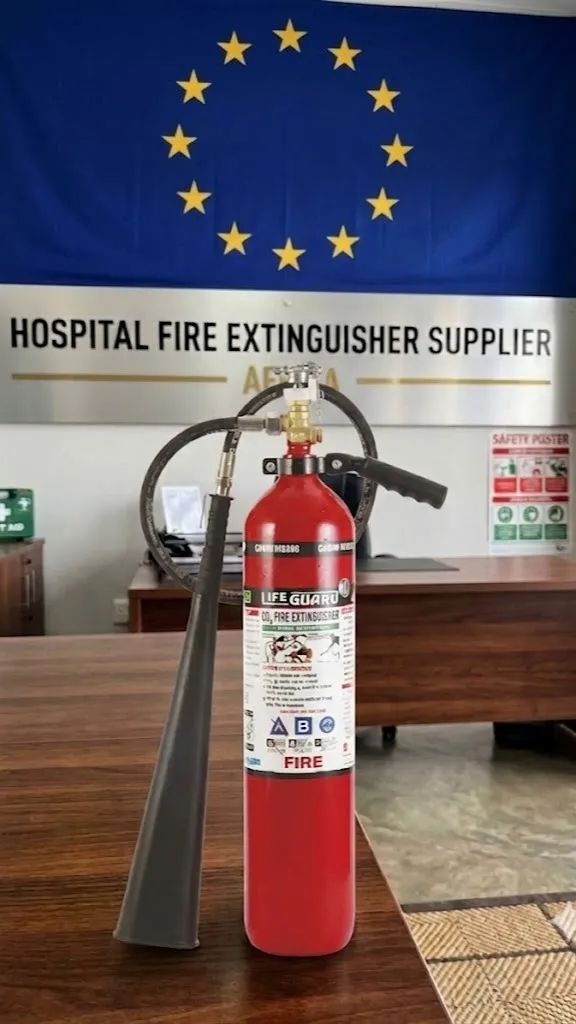
Hospital Clean Agent Suppression Solutions Europe
Advanced Clean Agent Fire Suppression Solutions for Hospitals Across Europe
Modern hospitals depend on sophisticated electrical, electronic, communication, diagnostic, and data-processing infrastructure that must remain operational around the clock. Traditional water-based firefighting methods may not always be suitable for protecting sensitive hospital equipment, server rooms, control panels, laboratories, diagnostic systems, UPS rooms, and other critical facilities.
LIFEGUARD® – United Fire Equipments Pvt. Ltd. provides engineered hospital clean agent suppression solutions for Europe, designed for rapid fire detection and suppression while helping minimise damage to valuable equipment and reducing operational interruption.
As an experienced fire safety equipment manufacturer and system solution provider, LIFEGUARD® offers clean agent fire suppression systems for hospitals, healthcare centres, medical laboratories, diagnostic facilities, pharmaceutical areas, data centres, electrical rooms, and other sensitive applications.
Our solutions can be engineered according to the protected hazard, room volume, equipment layout, fire risk, applicable design requirements, and project-specific European compliance requirements.
Why Hospitals Need Clean Agent Fire Suppression Systems
Hospitals operate highly sensitive facilities where fire protection must safeguard not only property but also essential healthcare operations. A fire inside an electrical control room, server room, diagnostic equipment area, laboratory, or communication facility can interrupt critical hospital services.
Clean agent fire suppression systems are particularly suitable for enclosed areas containing equipment that could be damaged by water, foam, or dry chemical powder.
A properly engineered clean agent system can provide:
- Fast automatic fire suppression
- Minimal residue after discharge
- Reduced risk of secondary damage to electronics
- Protection of high-value medical and electrical equipment
- Automatic detection and system activation
- Manual release and emergency abort functions
- Rapid restoration of protected areas after an incident
- Centralised alarm and suppression control
- Integration with fire alarm and building management systems
- Protection for continuously operating hospital infrastructure
For European hospitals requiring reliable protection of critical technical areas, clean agent suppression can form an important part of an integrated fire safety strategy.
LIFEGUARD® Hospital Clean Agent Suppression Solutions Europe
LIFEGUARD® provides comprehensive solutions covering system engineering, suppression equipment, detection, control panels, cylinders, piping networks, discharge nozzles, warning devices, manual controls, and associated system accessories.
Depending on the project requirement, a complete hospital clean agent suppression system may include:
Clean Agent Storage Cylinders
Engineered cylinders store the required quantity of suppression agent and are selected according to the protected enclosure volume, design concentration, environmental conditions, and system configuration.
Systems can be designed using single or multiple cylinders depending on the required agent quantity.
Discharge Valve Assemblies
Cylinder valve assemblies facilitate controlled release of the extinguishing agent after receiving the required mechanical, pneumatic, or electrical activation signal.
Discharge Piping Network
The pipe network transports the clean agent from the cylinder bank to strategically positioned discharge nozzles.
Pipe sizes, fittings, routing, equivalent lengths, flow distribution, and nozzle allocation must be carefully engineered to achieve appropriate agent distribution throughout the protected enclosure.
Clean Agent Discharge Nozzles
Specially designed discharge nozzles distribute the extinguishing agent throughout the protected area.
Depending on room geometry and system requirements, configurations may include:
- 180° discharge nozzles
- 360° discharge nozzles
- Multiple-nozzle networks
- Raised-floor nozzle protection
- False-ceiling protection
- Main-room protection
Nozzle selection and orifice calculations are finalised during system engineering.
Automatic Fire Detection and Release System
A hospital clean agent suppression installation is normally supported by an automatic fire detection and release arrangement.
Depending on the risk and project specification, detection may include:
- Smoke detectors
- Multi-criteria detectors
- Aspirating smoke detection systems
- Heat detectors
- Specialised early-warning detection technologies
The objective is to identify fire conditions at an early stage and initiate the required alarm and suppression sequence.
Clean Agent Fire Suppression Control Panel
The suppression control panel manages detection inputs, alarms, release logic, manual controls, system status, and agent discharge.
Typical functions may include:
- First-stage fire alarm
- Confirmed fire detection
- Cross-zone detection logic
- Pre-discharge warning
- Time delay before agent release
- Automatic agent discharge
- Manual release
- Abort function
- Cylinder release monitoring
- Fault supervision
- Audible and visual warning
- Interface with hospital fire alarm systems
- Potential communication with BMS or supervisory systems where specified
Control architecture is selected according to the hospital fire strategy and project requirements.
Manual Release and Abort Stations
Manual controls are important components of clean agent suppression systems.
Manual Release Station
Allows authorised personnel to activate the suppression system manually when required.
Abort Switch
Provides a controlled means of delaying the automatic discharge sequence where the system design and applicable requirements permit.
These controls should be positioned according to the approved cause-and-effect philosophy and hospital fire safety plan.
Audio-Visual Warning Devices
Pre-discharge warning devices help alert personnel that the suppression system is preparing to release the clean agent.
Typical devices may include:
- Hooters
- Sounders
- Flashers
- Combination sounder-strobes
- “Gas Release” indicators
- “Do Not Enter” warning indicators
Appropriate warning arrangements are particularly important in occupied healthcare buildings.
Areas Where Hospital Clean Agent Suppression Systems Can Be Used
LIFEGUARD® solutions can be engineered for a variety of specialised areas within hospitals and healthcare facilities.
Hospital Server Rooms
Hospital information systems contain patient information, medical records, communication systems, imaging data, administration platforms, and other critical digital resources.
Clean agent suppression can protect servers while avoiding the residue associated with conventional powder-based extinguishing systems.
Data Centres
Large hospitals increasingly operate dedicated data centres supporting clinical and administrative applications.
Clean agent systems can protect:
- Server racks
- Network switches
- Storage systems
- Communication equipment
- Control electronics
- Raised-floor cable areas
Electrical Control Rooms
Hospital electrical infrastructure is essential for uninterrupted operation.
Clean agent suppression can be considered for:
- Electrical control rooms
- LT panels
- Electrical switchboards
- Critical control cabinets
- Automation systems
- Specialised power-distribution equipment
UPS and Power Backup Rooms
UPS installations supply emergency power to life-safety and critical medical systems.
A fire within associated electrical equipment can cause significant operational disruption. Engineered suppression and early detection can provide an additional layer of protection.
MRI and Diagnostic Equipment Support Areas
Hospitals use advanced imaging and diagnostic technology containing sensitive electronics and controls.
Fire protection for these technical spaces should minimise potential secondary damage while considering equipment manufacturers' requirements and hospital safety procedures.
Medical Laboratories
Hospital laboratories contain analytical equipment, electrical systems, computers, instruments, and specialised processes.
Clean agent protection may be suitable for selected enclosed laboratory support spaces after appropriate hazard assessment.
Hospital Communication Rooms
Clean agent suppression solutions can protect critical communication infrastructure such as:
- Telephone systems
- Network rooms
- Communication racks
- Security systems
- Access-control systems
- Nurse-call system infrastructure
- CCTV control rooms
Building Management System Rooms
Modern healthcare campuses rely on centralised building management systems for monitoring HVAC, electrical installations, utilities, safety systems, and facility operations.
Protecting these control systems helps improve operational resilience.
Medical Records and Digital Archive Rooms
Where hospitals maintain sensitive electronic archives and supporting IT systems, residue-free suppression can help reduce potential equipment contamination following extinguishing-system activation.
How Clean Agent Fire Suppression Works
A clean agent suppression system typically follows a predetermined detection and discharge sequence.
Stage 1 – Early Fire Detection
Automatic detectors identify smoke, heat, or other defined fire signatures.
Stage 2 – Alarm Activation
The suppression control panel initiates an alarm and warns building personnel.
Stage 3 – Fire Confirmation
Where cross-zone detection is incorporated, a second detection condition confirms the fire event before automatic release.
Stage 4 – Pre-Discharge Warning
Audible and visual alarms warn occupants before the extinguishing agent is discharged.
Stage 5 – Agent Release
The cylinder valve activates and releases the suppression agent through the engineered pipe network.
Stage 6 – Agent Distribution
Discharge nozzles distribute the calculated quantity of agent throughout the protected enclosure.
Stage 7 – Fire Suppression
The agent reaches the required extinguishing concentration and suppresses the developing fire.
The exact sequence depends on system design, applicable standards, occupancy requirements, and approved project specifications.
Benefits of Clean Agent Suppression for European Hospitals
No Significant Cleanup Residue
One of the major advantages of clean agent technology is the absence of powder or foam residue after discharge.
This is particularly beneficial for sensitive medical and electronic infrastructure.
Reduced Secondary Damage
Water or chemical residue can damage electronic components even after the original fire has been extinguished.
Clean agent systems are selected for applications where minimising secondary equipment damage is a priority.
Rapid Suppression
A properly engineered system is intended to discharge and develop the required extinguishing concentration rapidly, helping control fire development during its early stages.
Suitable for Sensitive Equipment
Clean agent solutions can be used for appropriately assessed environments containing:
- Computers
- Servers
- Electronics
- Control panels
- Telecommunications equipment
- Medical-system electronics
- Laboratory instrumentation
Automatic Operation
Integration with automatic detection allows the system to respond to fire conditions even when the protected technical area is temporarily unattended.
Flexible System Engineering
Clean agent systems can be developed for:
- Small technical rooms
- Multiple interconnected spaces
- Raised floors
- False ceilings
- Large server rooms
- Electrical facilities
- Multi-nozzle distribution networks
Engineered Hospital Clean Agent Suppression Design
Clean agent systems should never be designed solely by selecting a cylinder according to approximate room size. Proper system engineering is essential.
LIFEGUARD® considers project information such as:
- Room length
- Room width
- Room height
- Gross enclosure volume
- Raised-floor volume
- False-ceiling volume
- Equipment displacement
- Maximum and minimum room temperature
- Required design concentration
- Agent characteristics
- Pipe lengths
- Pipe diameters
- Number of fittings
- Elevation changes
- Number of nozzles
- Nozzle coverage
- Enclosure leakage
- Ventilation arrangements
- Protected equipment configuration
The final design should be verified against the selected suppression technology and applicable project requirements.
Hydraulic Flow Calculation
For engineered clean agent systems, pipe networks and nozzles must be sized to provide the required agent quantity and distribution.
Flow calculations may evaluate parameters such as:
- Total agent quantity
- Cylinder configuration
- Pipe diameter
- Pipe equivalent length
- Agent flow rate
- Nozzle pressure
- Nozzle orifice size
- Flow distribution
- Discharge duration
- Agent distribution between branches
Proper flow calculations help ensure that the system performs according to its intended design.
Enclosure Integrity Testing
Successful total-flooding clean agent suppression depends heavily on enclosure integrity.
If a room contains excessive leakage openings, the extinguishing concentration may not remain within the enclosure for the required period.
An enclosure integrity evaluation can help identify leakage through:
- Doors
- Cable penetrations
- Wall openings
- Raised floors
- False ceilings
- Ventilation openings
- Service penetrations
- Unsealed ducts
Where required by the project, a room integrity or door-fan test can be undertaken to evaluate the enclosure's ability to retain the suppression concentration.
HVAC Shutdown and Damper Integration
Ventilation systems can remove clean agent from a protected enclosure after discharge.
Depending on the hospital design, the suppression sequence may therefore interface with:
- Air handling units
- Ventilation fans
- Exhaust systems
- Fire dampers
- Motorised dampers
- Access-control systems
- Building management systems
The final cause-and-effect sequence should be coordinated with hospital consultants, fire engineers, and MEP designers.
Clean Agent Suppression for Raised Floors and False Ceilings
Hospital IT and technical areas frequently contain hidden combustible materials and cables beneath raised floors or above suspended ceilings.
Where these spaces form part of the fire risk, the system can be designed to protect:
Main Room
Protects servers, control equipment, electrical panels, and general room contents.
Raised Floor
Protects power cables, data cables, and associated services below the floor.
False Ceiling
Protects electrical wiring, cable trays, communication cables, and services located above the ceiling.
Separate nozzle distribution may be used where necessary.
Hospital Fire Suppression System Integration
Clean agent suppression should operate as part of a coordinated hospital fire protection strategy.
Integration may be provided with:
- Addressable fire alarm systems
- Conventional fire alarm systems
- Aspirating smoke detection
- BMS
- HVAC systems
- Emergency warning systems
- Security systems
- Access-control systems
- Remote monitoring arrangements
Integration requirements are determined during design and cause-and-effect development.
Clean Agent Suppression Solutions for New and Existing Hospitals
LIFEGUARD® can support projects involving:
New Hospital Projects
Clean agent systems can be coordinated during MEP design to optimise cylinder locations, piping routes, detector placement, nozzle coverage, and panel integration.
Hospital Expansion Projects
New server rooms, diagnostic areas, laboratories, electrical rooms, or healthcare wings can be provided with independent suppression systems.
Existing Hospital Upgrades
Older systems can be evaluated for replacement or modification based on present requirements and compatibility.
Retrofit Fire Protection
Where sensitive equipment requires additional fire protection, an engineered clean agent system can be considered with minimum practical disruption to existing hospital operations.
Hospital Clean Agent Suppression Solutions for Europe
LIFEGUARD® supports hospital and healthcare fire suppression requirements for projects across European markets.
Solutions can be developed for customers, consultants, EPC contractors, system integrators, distributors, and fire protection companies operating in countries including:
- Germany
- France
- Italy
- Spain
- Netherlands
- Belgium
- Portugal
- Poland
- Austria
- Czech Republic
- Romania
- Hungary
- Greece
- Sweden
- Denmark
- Finland
- Ireland
- Switzerland
- Norway
- Other European markets
System compliance, documentation, certification, and product configuration should always be verified against the specific requirements of the destination country and project authority.
Why Choose LIFEGUARD® for Hospital Clean Agent Suppression Solutions?
LIFEGUARD® combines fire protection manufacturing experience with engineering support for specialised suppression projects.
Customers can approach us for:
- Clean agent suppression system engineering
- Fire suppression cylinders
- Agent quantity calculations
- Piping and nozzle design
- Detection and release systems
- Control panels
- Manual release and abort stations
- Audio-visual alarms
- System accessories
- Technical data sheets
- Drawings and system layouts
- Bill of quantities
- Project documentation
- Installation guidance
- Testing and commissioning support
- System maintenance guidance
- Customised OEM solutions
Our objective is to provide hospital fire suppression solutions that combine effective fire control with careful protection of sensitive medical and electronic infrastructure.
Applications
LIFEGUARD® hospital clean agent suppression solutions can be considered for:
- Hospitals
- Super-speciality hospitals
- Medical colleges
- Diagnostic centres
- Pathology laboratories
- Healthcare data centres
- Medical research facilities
- Hospital server rooms
- Hospital electrical rooms
- UPS rooms
- Control rooms
- Communication rooms
- BMS rooms
- CCTV control rooms
- Medical equipment support areas
- Pharmaceutical healthcare facilities
OEM Clean Agent Suppression Solutions for European Fire Protection Companies
LIFEGUARD® also supports OEM and project-based requirements for international fire protection companies.
Depending on commercial and technical requirements, support may include:
- OEM supply
- Project-specific configuration
- Technical documentation
- Equipment selection
- Suppression system design assistance
- Cylinder and valve assemblies
- Nozzle and piping accessories
- Fire detection interfaces
- Control and release equipment
- Customised labelling and documentation where mutually agreed
- Export-oriented supply support
This makes LIFEGUARD® a potential technology and supply partner for European distributors, contractors, healthcare infrastructure companies, and fire suppression system integrators.
Frequently Asked Questions
What is a hospital clean agent suppression system?
A hospital clean agent suppression system is an engineered fire protection solution designed primarily for sensitive enclosed spaces where conventional water or powder extinguishing could damage equipment. It typically combines fire detection, a suppression control panel, clean agent cylinders, piping, discharge nozzles, warning devices, and manual controls.
Where can clean agent systems be installed in hospitals?
Typical applications include server rooms, data centres, electrical control rooms, communication rooms, UPS facilities, BMS rooms, CCTV control rooms, selected laboratory areas, and other sensitive technical spaces.
Does a clean agent leave residue?
Clean gaseous agents are generally selected for applications where residue-free suppression is important, helping minimise post-discharge cleanup and contamination of sensitive electronics.
Can clean agent systems protect raised floors?
Yes. Where required by the hazard analysis, separate discharge nozzles can be provided for raised floors, the main room, and false-ceiling spaces.
Can the system be connected to the hospital fire alarm panel?
Yes. Appropriate interface modules and cause-and-effect logic can be used to coordinate the clean agent system with the hospital's fire alarm and building-management infrastructure.
Is room integrity important?
Yes. Total-flooding systems depend on the protected enclosure retaining the required agent concentration. Leakage through doors, ducts, cable penetrations, and structural openings should therefore be evaluated.
Does every hospital room require clean agent suppression?
No. Clean agent systems are normally selected for specific high-value or sensitive technical hazards. The appropriate protection method should be determined through fire-risk assessment and the applicable project requirements.
LIFEGUARD® – Hospital Clean Agent Suppression Solutions Europe
For hospitals that depend on uninterrupted operation of sophisticated electronics and medical infrastructure, engineered clean agent suppression provides a specialised approach to fire protection.
LIFEGUARD® – United Fire Equipments Pvt. Ltd. offers hospital clean agent suppression solutions incorporating detection, control, suppression cylinders, piping networks, discharge nozzles, warning systems, manual controls, and project engineering support.
From a single hospital server room to complex healthcare infrastructure projects, our team can support system selection, engineering, documentation, equipment supply, and technical coordination according to project requirements.
Contact LIFEGUARD®
LIFEGUARD® – United Fire Equipments Pvt. Ltd.
Manufacturer of Fire Safety & Suppression Equipment
For enquiries related to Hospital Clean Agent Suppression Solutions Europe, clean agent fire suppression systems, hospital server-room protection, medical facility fire protection, OEM supply, or customised healthcare fire suppression projects, contact LIFEGUARD® for technical and commercial support.
Suggested SEO Meta Title
Hospital Clean Agent Suppression Solutions Europe | LIFEGUARD®
Suggested Meta Description
LIFEGUARD® provides engineered hospital clean agent suppression solutions in Europe for server rooms, electrical rooms, data centres, laboratories and sensitive healthcare infrastructure.
Suggested SEO Keywords
Primary Keyword:
Hospital Clean Agent Suppression Solutions Europe
Related Keywords:
hospital clean agent suppression Europe, hospital clean agent fire suppression system, healthcare clean agent suppression solutions Europe, hospital server room fire suppression, hospital data centre fire suppression, medical facility clean agent system, clean agent suppression supplier Europe, hospital fire suppression solutions Europe, healthcare fire protection system Europe, hospital automatic fire suppression, clean agent suppression OEM, clean agent system manufacturer, medical equipment fire protection, hospital electrical room fire suppression, hospital server room clean agent system, healthcare facility fire suppression system, clean agent fire protection Europe, hospital gaseous fire suppression system, hospital critical room fire suppression, LIFEGUARD hospital fire suppression.
Suggested URL Slug
/hospital-clean-agent-suppression-solutions-europe/
Keywords






