
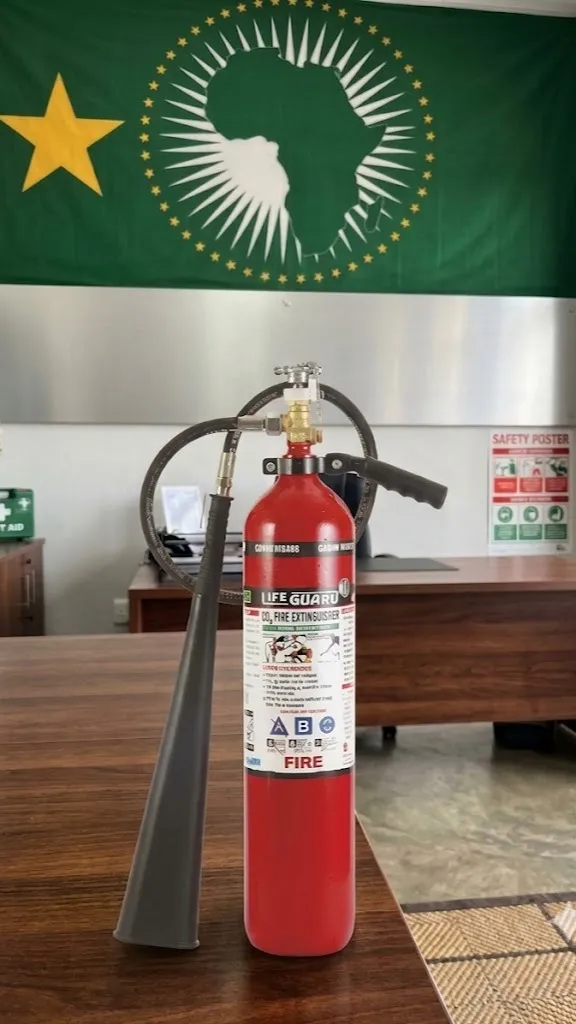
Hospital Clean Agent Suppression Supplier Africa
Advanced Clean Agent Fire Suppression Systems for Hospitals & Healthcare Facilities
Hospitals require a highly reliable approach to fire protection because they contain vulnerable occupants, critical medical equipment, electrical infrastructure, IT systems, laboratories, pharmaceuticals and other sensitive assets. A conventional water-based system may be suitable for many hospital areas, but certain rooms require a specialized suppression strategy where minimizing residue, equipment damage and operational disruption is important.
LIFEGUARD® – United Fire Equipments Pvt. Ltd. provides Hospital Clean Agent Suppression Solutions in Africa, supporting hospitals, healthcare facilities, laboratories, server rooms, electrical rooms, data centres and other critical environments with engineered clean-agent fire suppression systems.
Clean-agent systems are designed for suitable enclosed hazards where the suppression agent can be discharged through a fixed piping and nozzle network following automatic detection and releasing-system activation. The selection of agent, design concentration, enclosure requirements and release sequence should always be based on the protected hazard, applicable standards and project requirements.
Why Hospitals Need Clean Agent Fire Suppression
Healthcare facilities increasingly depend on electronic and computerized systems. A fire in a server room, control room or critical equipment room can interrupt essential hospital operations.
Water, foam or dry chemical discharge may also create secondary cleanup or equipment-recovery challenges in applications where sensitive electronics are present.
Clean-agent suppression can provide an alternative for appropriately designed enclosed spaces.
Key objectives include:
- Rapid fire detection
- Automatic suppression
- Protection of sensitive equipment
- Minimal post-discharge residue
- Reduced interruption to critical operations
- Integration with fire alarm systems
- Protection of high-value infrastructure
- Support for business and healthcare continuity
Clean-agent suppression should complement—not replace—the hospital's overall fire detection, sprinkler, compartmentation, emergency response and life-safety strategy.
LIFEGUARD® – Hospital Clean Agent Suppression Supplier in Africa
LIFEGUARD® provides application-oriented fire suppression solutions for healthcare and critical infrastructure applications.
Our clean-agent suppression solutions can be considered for:
- Hospitals
- Multi-specialty hospitals
- Medical centres
- Diagnostic centres
- Laboratories
- Research facilities
- Hospital data centres
- Server rooms
- Network rooms
- Electrical rooms
- UPS rooms
- Control rooms
- Communication rooms
- Medical equipment rooms
- Pharmaceutical facilities
The correct clean-agent system depends on the room volume, fire hazard, enclosure characteristics, equipment, occupancy, ventilation, agent characteristics and applicable regulations.
Hospital Clean Agent Fire Suppression System
A typical clean-agent suppression system consists of several coordinated components:
Fire Detection System
Smoke or other approved detection devices identify signs of a developing fire.
Releasing Control Panel
The releasing panel receives signals from the detection system and manages the programmed suppression sequence.
Alarm Notification
Audible and visual alarms can warn occupants before discharge, according to the approved cause-and-effect sequence.
Time Delay
Where required by the design, a time delay provides an opportunity for occupants to leave the protected space before agent discharge.
Clean Agent Cylinder
The stored suppression agent is contained in a suitably sized cylinder or cylinder bank.
Piping Network
The agent is distributed through a calculated pipe network.
Discharge Nozzles
Specialized nozzles distribute the agent throughout the protected enclosure.
Monitoring & Interfaces
The system may interface with:
- HVAC systems
- Dampers
- Building management systems
- Equipment shutdown
- Fire alarm monitoring
- Pressure monitoring
- Door interfaces
- Emergency controls
The exact configuration should be established through detailed engineering.
How a Hospital Clean Agent Suppression System Works
A typical sequence can be represented as:
Smoke Detection
↓
Fire Alarm / Releasing Panel
↓
Pre-Alarm
↓
Second Detection / Release Logic
↓
Audible & Visual Warning
↓
Time Delay
↓
HVAC / Equipment Interface
↓
Clean Agent Release
↓
Piping Network
↓
Discharge Nozzles
↓
Fire Suppression
The actual activation logic varies according to the system design, detection arrangement, agent and applicable standards.
Clean Agent Applications in Hospitals
1. Hospital Server Room Suppression
Server rooms contain equipment essential to hospital administration, communications and clinical information systems.
LIFEGUARD® clean-agent systems can be engineered for suitable server-room applications involving:
- Servers
- Network switches
- Storage systems
- Communication equipment
- Monitoring systems
- IT racks
- UPS equipment
Clean-agent systems can help suppress a fire while avoiding the extensive water cleanup associated with conventional water discharge in applications where a gaseous suppression system is appropriate.
2. Hospital Data Centre Fire Suppression
Hospital data centres are high-value, mission-critical environments.
A clean-agent system can integrate:
- Early smoke detection
- Releasing panel
- Alarm notification
- Clean-agent cylinders
- Distribution piping
- Discharge nozzles
- HVAC shutdown
- Manual release
- Abort functionality where applicable
- Room pressure-management provisions
- Monitoring interfaces
A properly engineered system is intended to provide rapid fire suppression while supporting recovery of critical IT infrastructure.
3. Electrical Room Clean Agent Suppression
Electrical rooms contain equipment that can be exposed to electrical faults, overheating, insulation failure and other ignition sources.
Potentially suitable applications can include:
- Switchgear rooms
- Electrical control rooms
- Power distribution rooms
- Control panel rooms
- Electrical equipment rooms
The appropriate suppression technology should be selected after considering the specific electrical equipment, enclosure and fire scenario.
4. UPS Room Fire Protection
Hospitals depend on UPS systems to maintain power to critical equipment.
UPS rooms may contain:
- UPS cabinets
- Power electronics
- Batteries
- Electrical distribution equipment
- Cabling
Where a gaseous suppression solution is appropriate, clean-agent protection can be considered as part of an integrated detection and suppression strategy.
Battery technologies can present specialized fire hazards, so the suppression approach should be based on the actual battery chemistry, installation configuration and applicable fire-protection requirements.
5. Hospital Control Room Protection
Control rooms can contain essential monitoring, communication and automation equipment.
Clean-agent suppression may be considered where the protected enclosure and hazard are suitable.
Applications may include:
- Building management control rooms
- Security control rooms
- Electrical control rooms
- Automation rooms
- Monitoring centres
- Communication rooms
6. Medical Equipment Room Protection
Hospitals contain sophisticated diagnostic and medical equipment that may be costly and difficult to replace.
Potential applications include:
- Equipment control rooms
- Imaging support rooms
- Diagnostic equipment rooms
- Medical technology rooms
- Specialized electronic equipment rooms
The suppression system must be designed around the equipment manufacturer's requirements and the specific fire risk.
7. Laboratory Fire Suppression
Laboratories may contain electrical equipment, chemicals, research materials and other potential fire hazards.
Clean-agent suppression may be appropriate for selected enclosed electronic or equipment areas, while other laboratory hazards may require specialized or conventional suppression methods.
A complete laboratory fire-protection assessment should consider:
- Chemicals
- Flammable liquids
- Electrical equipment
- Gas supplies
- Ventilation
- Storage
- Occupancy
- Fire load
Clean Agent Technologies
The term 'clean agent' covers different gaseous suppression technologies. Depending on the project, suitable systems may use agents such as:
- FK-5-1-12-based agents
- HFC-based clean agents
- Inert gas systems
- Other approved gaseous extinguishing agents
Agent selection should consider:
- Fire performance
- Occupant safety
- Environmental characteristics
- Room volume
- Design concentration
- Required holding time
- Equipment compatibility
- Local regulations
- Applicable standards
- Manufacturer requirements
LIFEGUARD® can help identify an appropriate system configuration based on the specific application.
Key Benefits of Hospital Clean Agent Suppression
Minimal Residue
Clean agents are gaseous and, for appropriate applications, do not leave the type of solid residue associated with dry chemical extinguishing agents.
Suitable for Sensitive Electronics
Clean-agent systems can be considered for enclosed rooms containing sensitive electrical and electronic equipment.
Rapid Fire Suppression
When correctly designed, installed and commissioned, clean-agent systems can rapidly discharge the required extinguishing concentration throughout the protected enclosure.
Reduced Cleanup Requirements
The absence of conventional water or powder discharge can simplify post-discharge cleanup in suitable applications.
Protection of Critical Operations
Rapid suppression can help reduce the potential for extended disruption to hospital IT and technical infrastructure.
Integrated Control
Clean-agent systems can be integrated with fire detection, alarms, HVAC systems and other building services.
Hospital Clean Agent Suppression System Design
A professional clean-agent system requires engineering rather than simply selecting cylinders based on room size.
Important design considerations include:
Protected Room Volume
The enclosure dimensions are required to establish the quantity of suppression agent.
Fire Hazard
The system must be suitable for the materials and equipment present in the room.
Design Concentration
The required agent concentration depends on the hazard and selected agent.
Enclosure Integrity
The protected room must be capable of retaining the agent for the required period.
Nozzle Distribution
Nozzles must be positioned and sized according to the engineered design.
Pipe Network
Pipe diameter, routing and nozzle arrangement require appropriate hydraulic or flow calculations according to the selected technology.
Pressure Relief
Suitable pressure-relief provisions may be required because of the pressure generated during agent discharge.
HVAC Interface
Ventilation systems may need to be shut down or controlled during discharge.
Detection Arrangement
Detection should provide reliable fire identification and appropriate release logic.
Occupant Safety
Where occupied spaces are involved, the system must comply with the applicable safety requirements for the selected agent and application.
Clean Agent Suppression System Installation
LIFEGUARD® can support installation requirements for hospital clean-agent systems, including:
- Clean-agent cylinders
- Cylinder brackets
- Cylinder valves
- Actuation arrangements
- Pressure switches
- Pipe network
- Discharge nozzles
- Detection devices
- Releasing control panel
- Manual release station
- Abort switch where applicable
- Audible alarms
- Visual indicators
- Warning signage
- HVAC interfaces
- Equipment shutdown interfaces
Installation should follow approved engineering drawings, manufacturer instructions and applicable standards.
Testing & Commissioning
Before a clean-agent suppression system is placed into service, the complete system should be inspected and tested.
Testing may include:
- Smoke detector testing
- Alarm testing
- Releasing panel testing
- Manual release testing
- Abort switch testing where applicable
- Time-delay verification
- Solenoid/actuator circuit testing
- Pressure-switch monitoring
- HVAC shutdown testing
- Equipment shutdown interface testing
- Audible and visual alarm testing
- Cause-and-effect testing
- Fault monitoring
- Cylinder and valve inspection
- Nozzle inspection
- Room integrity assessment where required
For hospital environments, commissioning should be carefully coordinated so that testing does not unnecessarily interrupt critical clinical operations.
Hospital Clean Agent Suppression Maintenance
Installing a clean-agent system is only the beginning of effective fire protection.
Regular inspection and maintenance help ensure that:
- Cylinders remain properly secured
- System pressure remains within the required range
- Detection devices remain operational
- Releasing panels remain healthy
- Nozzles remain unobstructed
- Manual release stations remain accessible
- Abort controls remain functional where provided
- Alarm circuits remain operational
- HVAC interfaces remain functional
- Room configuration has not changed significantly
- Protected-room integrity remains suitable
- System impairment is properly managed
Inspection and maintenance intervals should follow the applicable standard, manufacturer instructions and local requirements.
Hospital Clean Agent Suppression Compliance
The applicable compliance framework depends on the country, authority, project specification and selected technology.
Where NFPA-based specifications are adopted, relevant standards may include:
- NFPA 72 – Fire Alarm and Signaling Code
- NFPA 99 – Health Care Facilities Code
- NFPA 101 – Life Safety Code
- NFPA 2001 – Clean Agent Fire Extinguishing Systems
Other national and international standards may also apply.
For African projects, the final design should be reviewed against the applicable national building regulations, fire codes, environmental requirements and authority having jurisdiction (AHJ) requirements.
For example, South African building regulations and standards include specific requirements concerning fire protection and fixed fire-extinguishing systems. The applicable requirements should be verified for the particular healthcare project.
Hospital Clean Agent Fire Protection Across Africa
LIFEGUARD® can support hospital and healthcare fire-protection requirements across African markets, subject to project scope, local approvals, logistics and installation requirements.
Potential markets include:
- South Africa
- Nigeria
- Kenya
- Ghana
- Tanzania
- Uganda
- Ethiopia
- Rwanda
- Zambia
- Zimbabwe
- Botswana
- Namibia
- Mozambique
- Angola
- Egypt
- Morocco
- Algeria
- Tunisia
- Senegal
- Cameroon
- Côte d'Ivoire
- Other African markets
Every country has its own regulatory environment and project requirements. Therefore, the final system should always be reviewed by the appropriate local authority and qualified fire-protection professionals.
Why Choose LIFEGUARD® as a Hospital Clean Agent Suppression Supplier?
Application-Focused Engineering
We understand that different hospital areas require different fire-protection approaches.
Complete System Approach
From detection and releasing control to cylinders, piping, nozzles and interfaces, the system can be developed as an integrated solution.
Critical Area Protection
Solutions can be designed for server rooms, electrical rooms, UPS rooms, control rooms, laboratories and other sensitive environments.
Project Support
LIFEGUARD® can support projects through design, equipment supply, installation, testing and commissioning.
Quality-Focused Fire Protection
Equipment selection and system design should be aligned with applicable standards, manufacturer requirements and project specifications.
Africa-Focused Project Support
LIFEGUARD® can support international project requirements for African healthcare and critical infrastructure applications, subject to country-specific requirements.
Hospital Clean Agent Suppression System Supplier – Complete Project Support
A successful hospital suppression project can follow a structured process:
Site Survey
↓
Fire Risk Assessment
↓
System Selection
↓
Engineering Design
↓
Agent Quantity Calculation
↓
Piping & Nozzle Design
↓
Equipment Supply
↓
Installation
↓
Testing & Commissioning
↓
Training
↓
Maintenance
This systematic approach helps ensure that the suppression system is designed for the actual hazard rather than simply installed as a standard package.
Frequently Asked Questions
What is a clean agent fire suppression system?
A clean-agent fire suppression system is a fixed fire-extinguishing system that uses a gaseous extinguishing agent to suppress fire in a suitably designed protected enclosure.
Why use clean agent suppression in hospitals?
Clean-agent systems can be useful for suitable rooms containing sensitive electronic equipment where minimizing water or powder discharge is important.
Can clean-agent systems protect hospital server rooms?
Yes. Server and data rooms are common applications for clean-agent systems, provided the room is properly enclosed and the system is engineered for the specific hazard.
Can clean-agent systems be installed in electrical rooms?
They can be considered for suitable electrical rooms following a hazard assessment and applicable design requirements.
Is clean agent suitable for every hospital area?
No. The appropriate suppression method depends on the occupancy, fire hazard, room configuration, equipment, ventilation, agent characteristics and applicable regulations.
Does LIFEGUARD® supply clean-agent suppression systems in Africa?
LIFEGUARD® supports hospital and critical-infrastructure fire suppression projects in African markets, subject to project requirements, local regulations, approvals and logistics.
Conclusion
Hospitals need fire protection systems that are designed around life safety, critical equipment protection and continuity of healthcare operations. For sensitive technical environments such as server rooms, data centres, electrical rooms, control rooms and selected medical equipment areas, clean-agent suppression can provide an effective fire-protection option when properly engineered.
LIFEGUARD® – United Fire Equipments Pvt. Ltd. provides Hospital Clean Agent Suppression Solutions in Africa, supporting healthcare facilities with engineered gaseous fire suppression systems, detection and releasing controls, cylinders, piping, nozzles and integrated system interfaces.
From site assessment and engineering design to supply, installation, testing, commissioning and maintenance, LIFEGUARD® can support healthcare fire-protection requirements with application-specific solutions.
Contact LIFEGUARD®
LIFEGUARD® – United Fire Equipments Pvt. Ltd.
Manufacturer of ISI Certified Fire Safety Equipment
Phone: 8048034226
Email: ufe126@gmail.com | info@lifeguardindia.in
Website: www.lifeguardindia.in
SEO Optimization
Primary Keyword
Hospital Clean Agent Suppression Supplier Africa
Secondary Keywords
- Hospital Clean Agent Suppression System Africa
- Hospital Clean Agent Fire Suppression Africa
- Clean Agent Fire Suppression Supplier Africa
- Hospital Fire Suppression Supplier Africa
- Hospital Clean Agent System Provider Africa
- Hospital Fire Protection Supplier Africa
- Clean Agent Suppression Company Africa
- Hospital Gas Fire Suppression System Africa
- Hospital Server Room Suppression Africa
- Hospital Data Centre Fire Suppression Africa
- Hospital Electrical Room Fire Suppression Africa
- Hospital UPS Room Fire Suppression Africa
- Healthcare Clean Agent Fire Protection Africa
- Medical Facility Clean Agent Suppression
- Clean Agent Fire Protection Solutions Africa
SEO Title
Hospital Clean Agent Suppression Supplier Africa | LIFEGUARD®
Meta Description
LIFEGUARD® is a hospital clean agent suppression supplier in Africa, providing engineered clean-agent fire suppression solutions for server rooms, electrical rooms, data centres, UPS rooms and critical healthcare facilities.
Suggested URL Slug
/hospital-clean-agent-suppression-supplier-africa/
Keywords






