
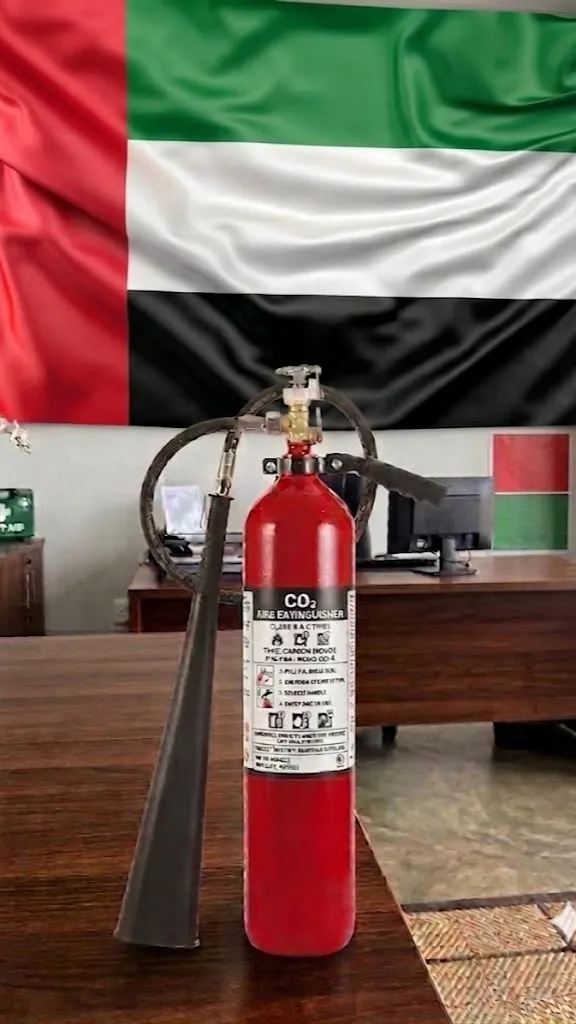
Hospital Clean Agent Suppression Supplier UAE
Hospital Clean Agent Suppression Supplier in UAE
Hospitals and healthcare facilities require highly reliable fire protection systems because they contain critical medical equipment, electronic infrastructure, laboratories, pharmaceuticals, patient-care areas and other sensitive assets. In many of these environments, conventional water-based extinguishing systems may not be the preferred solution for every room because accidental water discharge can damage sensitive equipment and interrupt essential healthcare operations.
LIFEGUARD® – United Fire Equipments Pvt. Ltd. provides engineered hospital clean agent suppression systems and fire protection solutions for healthcare facilities in the UAE. Our clean agent suppression solutions can be considered for server rooms, electrical rooms, medical equipment areas, data centres, control rooms, telecommunications rooms and other enclosed spaces where protection of sensitive equipment is important.
Healthcare fire protection in the UAE must be developed according to the applicable authority requirements, project specifications and relevant fire-safety standards. For Dubai healthcare projects, DHA Health Facility Guidelines provide engineering guidance for healthcare facility planning and design, including fire protection requirements.
What Is a Hospital Clean Agent Suppression System?
A clean agent fire suppression system is an engineered fire extinguishing system that uses a gaseous extinguishing agent to control or extinguish a fire without leaving conventional water or powder residue on protected equipment.
A typical system consists of:
- Automatic smoke or heat detectors
- Fire alarm and releasing control panel
- Clean agent storage cylinder
- Cylinder valve
- Actuation mechanism
- Distribution pipe network
- Discharge nozzles
- Manual release station
- Abort switch where required
- Audible and visual warning devices
- Pressure monitoring
- Electrical and building-system interfaces
The system is designed so that fire detection initiates a programmed sequence before the clean agent is discharged.
Typical Operating Sequence
Smoke/Heat Detection → Fire Alarm → Pre-Discharge Warning → Time Delay → Equipment/HVAC Interface → Clean Agent Release → Agent Discharge → Fire Suppression
The exact cause-and-effect sequence should be established through the approved system design and project requirements.
Why Hospitals Need Clean Agent Fire Suppression
Healthcare facilities contain many areas where water damage could create significant operational and financial consequences.
A hospital may depend on:
- Patient information systems
- Diagnostic equipment
- Medical imaging equipment
- Network infrastructure
- Electronic monitoring systems
- Electrical distribution systems
- UPS systems
- Communication systems
- Laboratory equipment
- Building management systems
A clean agent system can provide an alternative suppression approach for selected enclosed hazards where residue-free extinguishing is desirable.
DHA healthcare guidance identifies specialized healthcare areas where alternative fire suppression arrangements, including gas suppression or pre-action systems, may be considered depending on the application and design.
Hospital Areas Where Clean Agent Suppression Can Be Used
1. Hospital Server Rooms
Server rooms support hospital IT operations, patient records and communication systems. Clean agent suppression can be engineered to protect these sensitive electronic environments while avoiding conventional water discharge.
2. Data Centres
Healthcare data centres contain high-value computing and network infrastructure. Clean agent systems are widely considered for enclosed electronic equipment rooms where residue-free suppression is required.
3. Electrical Rooms
Switchgear, control panels and electrical distribution equipment can present fire risks. Depending on the hazard and room configuration, a clean agent system may be considered as part of an overall electrical-room fire protection strategy.
4. UPS and Battery Rooms
UPS systems provide backup power for critical healthcare infrastructure. Suppression requirements should be based on the specific battery technology, room arrangement and applicable fire protection criteria.
5. Medical Equipment Rooms
Hospitals use expensive diagnostic and treatment equipment. A clean agent solution can be considered for suitable enclosed spaces containing sensitive equipment.
6. MRI and Imaging Support Areas
Medical imaging environments require special consideration because equipment can be highly sensitive and expensive. Fire protection design should account for the equipment, room conditions, ventilation, access and applicable healthcare requirements.
7. Control Rooms
Hospital building management, security and technical control rooms may contain electronic control equipment that benefits from residue-free suppression.
8. Telecommunications Rooms
Telecommunication and network rooms can contain switches, routers, fibre equipment and other electronic infrastructure. Clean agent systems can provide localized automatic fire protection for appropriately enclosed spaces.
9. Laboratories
Laboratories can have a combination of electrical equipment, instruments, chemicals and other potential hazards. A detailed hazard assessment should be completed before selecting the appropriate suppression agent and system configuration.
10. Pharmacy and Critical Storage Areas
Where suitable based on the stored materials and room characteristics, clean agent protection may be considered for selected pharmacy or specialized storage spaces.
Clean Agent Suppression for Sensitive Medical Equipment
One of the primary advantages of clean agent suppression is its suitability for selected areas containing sensitive electronic equipment.
Compared with conventional water-based discharge, a properly designed gaseous suppression system can avoid introducing large quantities of water into the protected enclosure.
Potential benefits include:
- No conventional water discharge
- Minimal extinguishing-agent residue
- Protection of sensitive electronics
- Rapid automatic response
- Reduced post-fire cleanup
- Potentially lower equipment recovery time
- Integration with automatic fire detection
However, the system must be correctly designed for the protected enclosure. Factors such as room volume, leakage, ventilation, agent concentration, discharge characteristics and occupant safety need to be considered during engineering.
Clean Agent Options for Hospital Applications
Depending on the project requirements and approvals, clean agent systems can be engineered around suitable gaseous extinguishing technologies.
Potential categories include:
HFC-Based Clean Agents
HFC clean agents have historically been used for electronic and critical-area fire suppression applications. Their suitability depends on current regulatory, environmental, project and authority requirements.
FK-Based Clean Agents
Fluorinated ketone-based agents may be considered for selected applications requiring a residue-free extinguishing solution.
Inert Gas Systems
Inert gas systems use gases that reduce the oxygen concentration within a protected enclosure to a level capable of suppressing combustion while being engineered around applicable occupant safety requirements.
Selection Is Application-Specific
The appropriate agent should not be selected solely on the basis of price or room size. The design should consider:
- Fire hazard
- Occupancy
- Room volume
- Equipment type
- Agent characteristics
- Required design concentration
- Discharge time
- Ventilation
- Pressure relief
- Room integrity
- Authority requirements
- Environmental considerations
- Applicable standards
Hospital Clean Agent Suppression System Design UAE
A professional hospital clean agent suppression supplier in UAE should provide an engineered solution rather than simply supply cylinders and nozzles.
LIFEGUARD® can support the design process through:
Site Survey
Assessment of the protected room, equipment, ventilation, access and existing fire alarm infrastructure.
Hazard Analysis
Identification of combustible materials and likely fire scenarios.
Room Volume Assessment
Determination of the protected enclosure volume required for system calculations.
Agent Selection
Evaluation of an appropriate clean agent based on the project requirements.
Detection Design
Selection and positioning of smoke or heat detection devices.
Pipe Network Design
Development of the suppression distribution network and nozzle arrangement according to the approved engineering design.
Releasing Panel Integration
Integration of the suppression system with an appropriate fire alarm/releasing control system.
Cause-and-Effect Programming
Development of the required sequence for alarm, delay, release, equipment shutdown and monitoring.
Testing & Commissioning
Verification of system functionality before handover.
Clean Agent System Components
A hospital clean agent system normally includes several coordinated components.
Fire Detection System
Smoke and/or heat detectors identify a developing fire condition.
Releasing Control Panel
The releasing panel processes detector signals and controls the suppression sequence.
Clean Agent Cylinder
The extinguishing agent is stored in a pressurized cylinder designed for the selected system.
Cylinder Valve and Actuation
The cylinder valve controls agent release following the approved actuation sequence.
Distribution Pipework
Pipework transports the clean agent from the cylinder to the discharge nozzles.
Discharge Nozzles
Nozzles distribute the clean agent throughout the protected enclosure according to the approved design.
Manual Release Station
A manual release arrangement can allow authorized personnel to initiate the suppression sequence where required.
Abort Switch
Where applicable, an abort switch can be incorporated to temporarily interrupt or delay discharge according to the approved cause-and-effect sequence.
Alarm Devices
Audible and visual warning devices notify occupants before and during system operation.
Hospital Clean Agent Suppression Installation UAE
Correct installation is critical to achieving the intended performance of a clean agent system.
Typical installation activities include:
- Site inspection
- Room and hazard assessment
- Review of approved drawings
- Cylinder positioning
- Detection-device installation
- Releasing-panel installation
- Pipework installation
- Nozzle installation
- Manual release installation
- Abort-switch installation where applicable
- Alarm-device installation
- Electrical wiring
- HVAC and equipment interfaces
- Cause-and-effect programming
- Functional testing
- Commissioning
- Documentation and handover
Installation should follow the approved design, equipment manufacturer's instructions, applicable standards and UAE authority requirements.
Room Integrity and Pressure Relief
Clean agent suppression systems depend on the protected enclosure retaining the required agent concentration for the specified period.
Therefore, the design should evaluate:
- Doors and door seals
- Wall and ceiling construction
- Cable penetrations
- HVAC openings
- Dampers
- Other room leakage paths
Pressure relief provisions may also be required because the rapid discharge of gaseous agent can create pressure changes within the enclosure.
For this reason, clean agent protection should be treated as a complete engineered system rather than simply a cylinder-and-pipe installation.
Integration With Hospital Fire Alarm Systems
Hospital clean agent suppression systems can be integrated with the broader fire safety infrastructure.
Possible interfaces include:
- Fire alarm panel
- Releasing panel
- HVAC shutdown
- Air-handling systems
- Door systems
- Building management system
- Equipment shutdown
- Remote monitoring
- Supervisory signals
The exact interfaces should be established through the approved cause-and-effect matrix.
Testing and Commissioning
Before the system is handed over to the hospital operator, comprehensive functional testing should be carried out.
Testing may cover:
- Detector activation
- Alarm indication
- Releasing panel operation
- Manual release
- Abort function
- Pre-discharge alarm
- Time delay
- Actuation circuit
- Cylinder pressure monitoring
- Audible alarms
- Visual indicators
- HVAC shutdown
- Equipment interfaces
- Battery backup
- Fault monitoring
- Cause-and-effect sequence
The system should only be commissioned and handed over after the required tests have been completed and documented.
Maintenance of Hospital Clean Agent Suppression Systems
Regular maintenance is essential because a suppression system that is not inspected or maintained may fail to operate when required.
Maintenance activities can include inspection of:
- Clean agent cylinders
- Cylinder pressure
- Valves
- Actuation mechanisms
- Detection devices
- Releasing panels
- Manual release stations
- Abort switches
- Discharge nozzles
- Pipework
- Alarm devices
- Batteries
- Electrical connections
- HVAC interfaces
- Room integrity
- System fault history
Inspection and maintenance should follow the applicable standards, manufacturer recommendations, approved project requirements and UAE authority requirements.
Advantages of Choosing LIFEGUARD® as a Clean Agent Suppression Supplier
Application-Based Solutions
Every hospital area has different hazards. LIFEGUARD® approaches clean agent protection according to the specific application.
Protection of Critical Equipment
Clean agent systems can be considered for sensitive electronics and medical equipment where residue-free fire suppression is desirable.
Automatic Fire Response
Automatic detection and releasing systems provide rapid response to developing fire conditions.
Integrated System Design
Detection, releasing, suppression and building interfaces can be coordinated into a single fire protection strategy.
Professional Commissioning
Testing and commissioning help confirm that the installed system operates according to the approved sequence.
Long-Term Support
Inspection and maintenance help healthcare facilities maintain system readiness throughout the system lifecycle.
LIFEGUARD® – Hospital Clean Agent Suppression Supplier UAE
LIFEGUARD® – United Fire Equipments Pvt. Ltd. is focused on fire protection equipment and engineered suppression solutions for critical applications.
Our hospital clean agent fire protection capabilities include:
- Hospital clean agent suppression systems
- Server room fire suppression
- Data centre fire suppression
- Electrical room suppression
- UPS room protection
- Medical equipment room protection
- Control room suppression
- Telecommunications room protection
- Automatic fire detection
- Releasing control systems
- Suppression cylinders and accessories
- Pipe and nozzle systems
- Testing and commissioning
- Inspection and maintenance support
We understand that healthcare fire protection requires a balance between life safety, asset protection, regulatory compliance and operational continuity.
Hospital Clean Agent Suppression Supplier UAE – SEO Keywords
The following high-intent keywords can be incorporated naturally throughout the website:
- Hospital clean agent suppression supplier UAE
- Hospital clean agent fire suppression UAE
- Hospital clean agent suppression system UAE
- Hospital fire suppression supplier UAE
- Hospital fire suppression company UAE
- Healthcare clean agent suppression UAE
- Healthcare fire suppression system UAE
- Hospital fire protection supplier UAE
- Clean agent fire suppression supplier UAE
- Clean agent suppression company UAE
- Clean agent system supplier Dubai
- Hospital clean agent system Dubai
- Hospital server room suppression UAE
- Hospital data centre suppression UAE
- Medical equipment fire suppression UAE
- Electrical room fire suppression UAE
- Hospital automatic suppression UAE
- Healthcare fire protection solutions UAE
- Hospital fire safety system UAE
- Clean agent fire protection UAE
Frequently Asked Questions
What is a hospital clean agent suppression system?
A hospital clean agent suppression system is an engineered gaseous fire suppression system designed to automatically detect and suppress fires in selected enclosed areas, particularly where protecting sensitive equipment from conventional water or residue can be important.
Where can clean agent suppression be used in hospitals?
Typical applications include server rooms, data centres, electrical rooms, UPS rooms, control rooms, telecommunications rooms, medical equipment rooms and selected specialized healthcare spaces.
Why use clean agent suppression instead of water?
For selected hazards, clean agent suppression can provide fire control without conventional water discharge and without leaving the type of residue associated with some other extinguishing methods. The appropriate technology depends on the specific hazard and applicable requirements.
Is clean agent suppression safe for occupied hospital areas?
Occupant safety is a fundamental part of clean agent system design. Agent selection, concentration, warning sequence, discharge arrangement and evacuation procedures must be engineered according to the applicable requirements and the specific occupancy.
Can LIFEGUARD® supply hospital clean agent systems in UAE?
LIFEGUARD® – United Fire Equipments Pvt. Ltd. provides fire protection and clean agent suppression solutions for critical applications, subject to project specifications, system requirements and applicable UAE authority approvals.
Choose a Professional Hospital Clean Agent Suppression Supplier in UAE
Hospitals cannot afford unreliable fire protection. A properly engineered clean agent suppression system can provide an important layer of protection for sensitive medical, electronic and critical infrastructure.
LIFEGUARD® – United Fire Equipments Pvt. Ltd. provides hospital clean agent suppression solutions focused on reliable detection, controlled suppression, equipment protection and integration with the facility's overall fire safety strategy.
Contact LIFEGUARD®
United Fire Equipments Pvt. Ltd.
Manufacturer of ISI Certified Fire Safety Equipment
Phone: 8048034226
Email: ufe126@gmail.com | info@lifeguardindia.in
Website: www.lifeguardindia.in
LIFEGUARD® – Hospital Clean Agent Suppression Supplier UAE | Engineered Fire Protection for Healthcare, Medical & Critical Facilities
Keywords






