
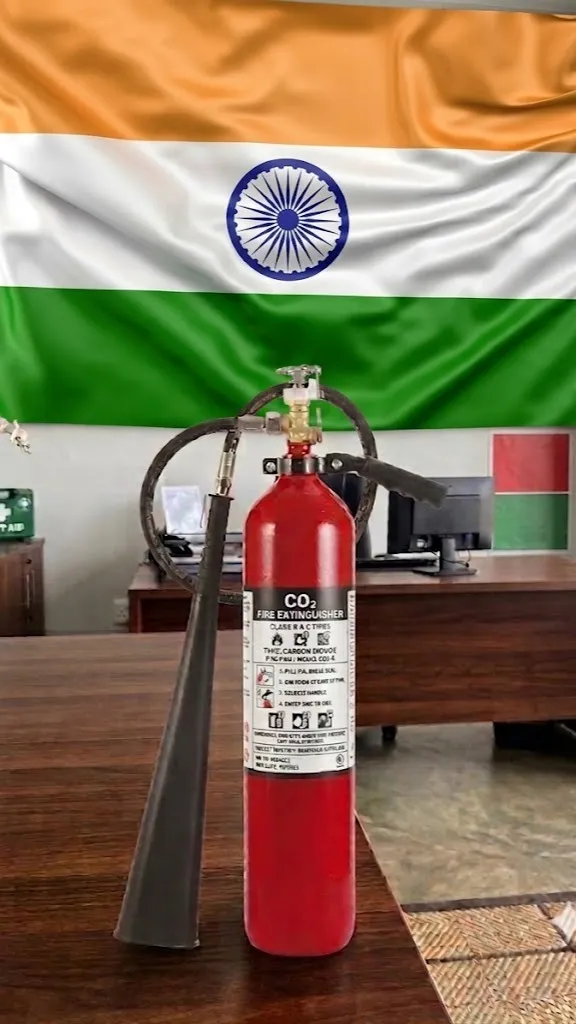
Hospital Fire Extinguisher Exporter India
Hospitals, healthcare centres, diagnostic laboratories, nursing homes and medical institutions require dependable fire protection because they contain a unique combination of patients, medical equipment, electrical systems, oxygen-enriched environments, laboratories, kitchens, pharmacies and critical infrastructure.
LIFEGUARD®, a brand of United Fire Equipments Pvt. Ltd., offers a comprehensive range of fire extinguishers and fire safety solutions for healthcare applications. As a hospital fire extinguisher exporter in India, LIFEGUARD® supports hospitals, healthcare contractors, distributors, project consultants and institutional buyers requiring reliable fire protection equipment for domestic and international projects.
Our hospital fire extinguisher solutions are selected according to the type of fire risk, protected area, electrical equipment, combustible materials and specific operational requirements of healthcare facilities.
Importance of Fire Extinguishers in Hospitals
Hospital fire safety requires special attention because evacuation may be difficult or delayed. Many patients may have limited mobility, be dependent on medical equipment or require continuous clinical supervision.
A small fire incident in a hospital can therefore develop into a serious emergency if it is not detected and controlled quickly.
Appropriate portable fire extinguishers provide an important first line of defence by allowing trained personnel to control a developing fire before it spreads.
Hospital fire risks may arise from:
- Electrical short circuits
- Medical equipment
- UPS systems
- Battery rooms
- Server and data rooms
- Oxygen and medical gas areas
- Laboratories
- Pharmacies
- Hospital kitchens
- Laundry areas
- Generator rooms
- Boiler rooms
- Parking areas
- Administrative offices
- Storage rooms
- Maintenance workshops
- Waste handling areas
For this reason, healthcare facilities generally require different types of extinguishers for different fire hazards.
LIFEGUARD® – Hospital Fire Extinguisher Exporter India
LIFEGUARD® supplies fire extinguishers suitable for multiple healthcare environments and institutional fire safety requirements.
Our product range can be selected for applications such as:
- Multi-speciality hospitals
- Government hospitals
- Private hospitals
- Medical colleges
- Nursing homes
- Diagnostic centres
- Pathology laboratories
- Dental hospitals
- Eye hospitals
- Cancer treatment centres
- Rehabilitation centres
- Clinics
- Healthcare campuses
- Research laboratories
- Pharmaceutical facilities
- Blood banks
- Emergency healthcare centres
As an Indian fire safety equipment manufacturer and exporter, LIFEGUARD® focuses on supplying practical, application-specific fire protection solutions for healthcare projects.
Types of Fire Extinguishers for Hospitals
Different hospital areas present different classes of fire risk. Therefore, extinguisher selection should be based on the hazard rather than installing the same extinguisher throughout the building.
ABC Dry Powder Fire Extinguishers
ABC dry powder extinguishers are widely used for general-purpose fire protection.
They can be considered for areas such as:
- Hospital corridors
- Administrative offices
- Utility areas
- Security rooms
- Maintenance areas
- General stores
- Parking locations
- Plant rooms
ABC extinguishers provide flexible protection where multiple common combustible hazards may be present.
CO₂ Fire Extinguishers
Carbon dioxide extinguishers are commonly selected for electrical and electronic fire risks because CO₂ does not leave the powder residue associated with dry chemical extinguishers.
Typical hospital applications include:
- Electrical panels
- Server rooms
- UPS rooms
- Computer rooms
- Medical equipment rooms
- Control rooms
- Electrical substations
- Diagnostic equipment areas
They can be particularly useful where sensitive electrical equipment needs protection.
Clean Agent Fire Extinguishers
Clean agent extinguishers are suitable for locations where minimizing residue after discharge is important.
Possible applications include:
- Medical equipment rooms
- Diagnostic areas
- Control rooms
- IT rooms
- Laboratories
- Communication rooms
- Sensitive electronic equipment areas
The appropriate extinguishing agent should always be selected according to the specific hazard and applicable project requirements.
Water-Based Fire Extinguishers
Water-based extinguishers may be suitable for appropriate ordinary combustible hazards such as paper, wood and similar materials.
Potential locations can include:
- Records rooms
- General offices
- Selected storage areas
- Non-electrical combustible material areas
They should not be used where their application creates an electrical or other incompatible hazard.
Foam Fire Extinguishers
Foam extinguishers may be considered for suitable Class A and certain flammable-liquid risks, subject to the protected hazard and extinguisher rating.
Typical applications may include selected:
- Workshops
- Utility locations
- Maintenance areas
- Fuel-handling support areas
Wet Chemical Fire Extinguishers
Hospital kitchens and cafeterias may contain cooking oil and grease hazards that require specialized protection.
Wet chemical extinguishers are generally associated with commercial kitchen fire risks and may be considered for:
- Hospital kitchens
- Canteens
- Staff cafeterias
- Food preparation areas
- Cooking oil and fat hazards
Correct fire extinguisher selection for kitchens is especially important because cooking-oil fires behave differently from many ordinary combustible fires.
Hospital Areas Requiring Fire Extinguishers
A hospital should be assessed zone by zone so that fire extinguishers are matched with the actual risks.
Patient Rooms and Wards
General wards contain bedding, furniture, electrical fittings and medical equipment. Appropriate extinguishers should be accessible without obstructing evacuation routes.
Intensive Care Units
ICUs contain sophisticated electronic medical equipment and patients who may not be easily evacuated.
Fire protection planning should therefore include:
- Suitable portable extinguishers
- Early detection
- Alarm systems
- Emergency response procedures
- Proper electrical maintenance
Operation Theatres
Operating theatres are highly controlled clinical areas containing sensitive equipment.
Fire safety planning should consider:
- Electrical hazards
- Medical equipment
- Medical gases
- Combustible materials
- Emergency shutdown procedures
Extinguisher selection should be coordinated with the hospital's fire safety and clinical requirements.
MRI and Diagnostic Areas
Diagnostic areas may contain expensive and sensitive equipment.
The fire protection solution should therefore consider both effective extinguishing capability and the potential impact of extinguishing residue on equipment.
Laboratories
Hospital laboratories may contain electrical equipment, chemicals and other materials presenting multiple hazards.
A laboratory fire risk assessment should determine the correct extinguisher type for each specific area.
Pharmacies
Hospital pharmacies contain medicines, packaging, shelving and electrical equipment.
Portable extinguishers should form part of the overall detection, alarm and emergency response arrangement.
Electrical Rooms
Electrical rooms require special attention because electrical faults can lead to rapid fire development.
CO₂ or other appropriate extinguishers may be selected depending on the equipment and applicable fire safety requirements.
Server and IT Rooms
Hospitals increasingly depend on digital patient records, communication systems and hospital management software.
IT rooms therefore require reliable fire protection with consideration for sensitive electronic equipment.
Hospital Kitchens
Commercial hospital kitchens require fire protection for:
- Cooking oils
- Frying equipment
- Gas appliances
- Electrical appliances
- Exhaust systems
- Combustible materials
Appropriate extinguishers should be installed according to the actual kitchen hazard.
Generator and Utility Rooms
Generator rooms and other plant areas can present fuel, electrical and mechanical risks.
The extinguisher configuration should be determined from the specific equipment and fuel type.
Hospital Fire Safety Requires More Than Portable Extinguishers
Portable fire extinguishers are one component of a comprehensive hospital fire safety strategy.
Depending on building design and applicable requirements, hospitals may also incorporate:
- Automatic fire detection systems
- Fire alarm panels
- Smoke detectors
- Heat detectors
- Manual call points
- Sounders and hooters
- Automatic sprinkler systems
- Fire hydrant systems
- Hose reel systems
- Fire suppression systems
- Clean agent suppression
- Emergency lighting
- Exit signage
- Fire doors
- Fire compartmentation
- Emergency evacuation planning
- Fire drills and staff training
A coordinated fire protection strategy can help improve both life safety and property protection.
Why Hospitals Need Application-Specific Extinguisher Selection
Selecting an extinguisher only according to price or cylinder capacity can result in inadequate fire protection.
Hospital extinguisher selection should consider:
- Type of combustible material
- Electrical equipment present
- Fire classification
- Occupancy
- Patient mobility
- Sensitive medical equipment
- Environmental conditions
- Distance to extinguisher
- Installation location
- Required extinguishing capacity
- Maintenance requirements
- Applicable codes and specifications
Correct selection can significantly improve the effectiveness of first-response firefighting.
Fire Extinguisher Placement in Hospitals
Fire extinguishers should be installed in clearly visible and accessible locations.
Typical considerations include:
- Easy accessibility
- Clear identification
- Avoidance of obstructions
- Proper mounting
- Placement near identified hazards
- Suitable travel distance
- Protection against physical damage
- Clear operating instructions
- Easy access for hospital staff
Placement should always be finalized according to applicable codes, statutory requirements and the hospital's fire safety plan.
Fire Extinguisher Maintenance for Healthcare Facilities
Even a high-quality extinguisher may fail to perform if it is not inspected and maintained correctly.
Hospitals should establish a structured maintenance program that includes:
- Routine visual inspection
- Checking pressure indicators where applicable
- Examining safety seals
- Checking hose and nozzle condition
- Inspecting cylinder condition
- Confirming accessibility
- Checking identification labels
- Periodic servicing
- Refilling after use
- Hydrostatic testing where required
- Maintaining inspection and service records
Because hospitals operate continuously, their fire safety equipment should remain serviceable at all times.
Advantages of Choosing LIFEGUARD® for Hospital Fire Extinguishers
LIFEGUARD® provides fire protection equipment for institutional and healthcare applications with focus on quality, application suitability and technical support.
Key advantages include:
- Wide range of fire extinguishers
- Solutions for different hospital hazards
- Support for institutional projects
- Bulk quantity supply capability
- Project-specific product selection
- Technical documentation support
- Fire detection and suppression solutions
- Support for distributors and contractors
- Export-oriented supply coordination
- Custom project requirements
- After-sales and technical assistance
Hospital Fire Extinguisher Exporter from India for International Projects
India has become an important manufacturing and sourcing destination for fire safety equipment.
LIFEGUARD® supports overseas buyers seeking an experienced hospital fire extinguisher exporter from India for healthcare projects, commercial developments and institutional applications.
Export requirements may include:
- Product technical data
- Commercial quotations
- Product catalogues
- Packing details
- Project-specific documentation
- Quantity-based supply
- Shipping coordination
- Product identification and labeling
- Technical clarification
Requirements vary between countries, so product selection and certification expectations should be confirmed for the destination market before procurement.
Hospital Fire Extinguisher Supplier for Healthcare Projects
LIFEGUARD® can support different stages of healthcare fire protection procurement, including:
Consultants: Technical selection and project specifications.
Hospital Owners: Suitable extinguisher selection for different hospital departments.
Contractors: Project quantities and commercial supply.
Fire Safety Integrators: Extinguisher and related fire protection equipment.
Distributors: Bulk procurement for healthcare markets.
Export Buyers: Fire extinguisher sourcing from India for overseas projects.
Applications Beyond Hospitals
Hospital-grade fire protection requirements may also overlap with many other healthcare-related facilities.
LIFEGUARD® fire extinguishers can be considered for:
- Medical universities
- Healthcare training institutes
- Pharmaceutical laboratories
- Research centres
- Medical warehouses
- Blood banks
- Diagnostic laboratories
- Medical device facilities
- Vaccine storage facilities
- Ambulance facilities
- Healthcare administration buildings
Choosing a Hospital Fire Extinguisher Exporter in India
When selecting a supplier or exporter for hospital fire extinguishers, buyers should consider more than the product price.
Important factors include:
- Manufacturing capability
- Product quality
- Technical specifications
- Applicable certification requirements
- Product range
- Documentation support
- Packaging quality
- Project experience
- Technical assistance
- Delivery capability
- Export support
- After-sales service
A supplier capable of supporting multiple fire safety technologies can help simplify procurement for complex healthcare projects.
Frequently Asked Questions
Which fire extinguisher is best for hospitals?
There is no single extinguisher suitable for every hospital area. The correct type depends on the fire hazard. ABC dry powder, CO₂, clean agent, water, foam and wet chemical extinguishers may all have different applications within a healthcare facility.
Which extinguisher is suitable for hospital electrical rooms?
CO₂ and other appropriately selected extinguishers are commonly considered for electrical equipment risks. Final selection should depend on the equipment, risk assessment and applicable fire safety requirements.
Which extinguisher should be used in a hospital kitchen?
Hospital commercial kitchens may require wet chemical extinguishers for appropriate cooking-oil and fat hazards, along with other extinguishers suitable for additional risks present in the kitchen.
Can LIFEGUARD® supply extinguishers for large hospital projects?
Yes. Fire extinguisher requirements can be evaluated according to project quantities, hospital departments and technical specifications.
Does a hospital need different types of extinguishers?
Yes. Hospitals contain multiple types of hazards, so different areas may require different extinguishing media.
Can hospital extinguishers be exported from India?
Yes. Products can be supplied for international healthcare projects subject to destination-country regulations, certification requirements and project specifications.
Do hospital fire extinguishers require regular maintenance?
Yes. Regular inspection, servicing, refilling where necessary and periodic testing are important for keeping extinguishers ready for emergency use.
Looking for a Hospital Fire Extinguisher Exporter in India?
If you are a hospital developer, healthcare consultant, fire safety contractor, distributor, EPC company or international buyer looking for a reliable hospital fire extinguisher exporter in India, LIFEGUARD® can support your requirement with a broad range of fire extinguishers and engineered fire safety solutions.
Our team can assist with product selection, technical specifications, quantities, documentation and project-specific fire safety requirements.
Contact LIFEGUARD®
United Fire Equipments Pvt. Ltd.
Manufacturer of ISI Certified Fire Safety Equipment
📞 8048034226
📧 ufe126@gmail.com | info@lifeguardindia.in
Suggested SEO Meta Title
Hospital Fire Extinguisher Exporter India | LIFEGUARD®
Suggested Meta Description
Looking for a hospital fire extinguisher exporter in India? LIFEGUARD® supplies fire extinguishers for hospitals, laboratories, ICUs, electrical rooms, kitchens, healthcare centres and medical institutions.
Primary SEO Keyword
Hospital fire extinguisher exporter India
Related SEO Keywords
- Hospital fire extinguisher supplier India
- Hospital fire extinguisher manufacturer India
- Fire extinguisher exporter India
- Healthcare fire extinguisher exporter India
- Hospital fire safety equipment supplier India
- Medical hospital fire extinguisher supplier
- Hospital CO₂ fire extinguisher supplier India
- Hospital ABC fire extinguisher exporter India
- Clean agent extinguisher supplier India
- Hospital fire protection equipment exporter
- Healthcare fire safety equipment India
- Hospital fire suppression system supplier India
Keywords






