
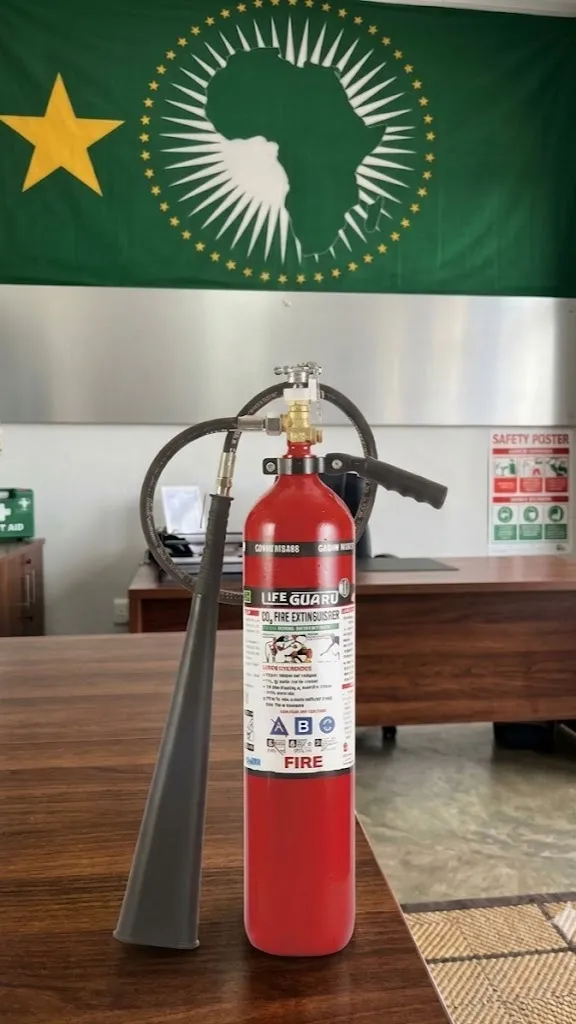
Hospital Fire Extinguisher System Provider Africa – LIFEGUARD®
Hospitals and healthcare facilities require a comprehensive fire protection strategy because they accommodate patients, medical professionals, visitors, sensitive electronic equipment, oxygen systems, laboratories, pharmacies, kitchens, electrical installations and other areas with different fire risks.
LIFEGUARD® – United Fire Equipments Pvt. Ltd. provides engineered fire protection solutions for healthcare facilities and supports customers looking for a reliable hospital fire extinguisher system provider Africa.
Our solutions can include portable fire extinguishers, wheeled extinguishers, fire detection equipment, alarm systems, suppression systems and associated fire safety accessories for hospitals, medical colleges, diagnostic centres, clinics, laboratories and other healthcare facilities.
Reliable Hospital Fire Extinguisher System Provider Africa
Fire safety in a hospital cannot depend on a single type of fire extinguisher. Different departments present different hazards and therefore require carefully selected fire protection equipment.
As a hospital fire extinguisher system provider in Africa, LIFEGUARD® focuses on supplying appropriate firefighting equipment according to the risk profile of each protected area.
Hospital fire protection solutions may include:
- ABC dry powder fire extinguishers
- CO₂ fire extinguishers
- Water-type fire extinguishers
- Foam fire extinguishers
- Clean agent fire extinguishers
- Wet chemical fire extinguishers
- Wheeled fire extinguishers
- Automatic suppression systems
- Fire alarm and detection systems
- Fire extinguisher cabinets
- Fire extinguisher stands
- Fire safety signage
- Fire hose and hydrant accessories
- Fire suppression system components
The final configuration should be selected according to the actual fire hazard, building layout, applicable regulations and project specifications.
Why Hospitals Need Specialized Fire Extinguisher Systems
Hospitals operate 24 hours a day and often accommodate occupants who cannot evacuate without assistance. Fire protection equipment therefore needs to be carefully planned and positioned for rapid response.
Healthcare facilities may contain:
- Electrical equipment
- Medical gas installations
- Oxygen cylinders
- Diagnostic machinery
- Laboratory chemicals
- Pharmaceutical products
- Kitchen cooking oils
- Furniture and bedding
- Paper records
- Server systems
- UPS and battery systems
- Generator rooms
- Laundry facilities
- Storage areas
Because these hazards are different, one extinguisher type may not be appropriate for every area.
A properly designed hospital fire extinguisher system in Africa should therefore consider both the fire classification and the operational requirements of the healthcare facility.
Hospital Fire Risk Assessment
Before selecting fire extinguishers, it is important to understand the risks associated with each hospital department.
A fire risk assessment may consider:
- Type of combustible material
- Electrical hazards
- Presence of flammable liquids
- Cooking oil hazards
- Medical gas installations
- Oxygen-enriched environments
- Patient mobility
- Equipment sensitivity
- Occupancy level
- Escape routes
- Building height
- Fire compartmentation
- Extinguisher travel distance
- Accessibility requirements
Based on these factors, suitable extinguishers and suppression systems can be selected.
Types of Hospital Fire Extinguishers
ABC Dry Powder Fire Extinguishers
ABC dry powder extinguishers provide multipurpose fire protection and are commonly considered for general areas.
Typical hospital applications may include:
- Corridors
- Administrative offices
- Maintenance areas
- Storage rooms
- Utility spaces
- Parking areas
- Security rooms
- Workshops
These extinguishers are available in different capacities depending on the project requirement.
CO₂ Fire Extinguishers
CO₂ extinguishers are commonly selected for electrical and electronic equipment because they do not leave powder residue after discharge.
Possible applications include:
- Electrical panels
- Server rooms
- UPS rooms
- Control rooms
- Electrical substations
- Medical equipment rooms
- Communication rooms
- Diagnostic equipment areas
Clean Agent Fire Extinguishers
Clean agent extinguishers may be considered where sensitive equipment requires fire protection with minimal residue.
Suitable applications may include:
- Medical electronics rooms
- Server rooms
- Data centres
- Control centres
- Diagnostic rooms
- Laboratories
- Communication facilities
Water-Type Fire Extinguishers
Water-based fire extinguishers may be suitable for ordinary combustible materials such as paper, fabric, wood and furniture where incompatible electrical or flammable liquid risks are not present.
Typical areas can include:
- Offices
- Record rooms
- General stores
- Selected ward areas
- Administrative facilities
Foam Fire Extinguishers
Foam fire extinguishers may be used for suitable combustible solids and certain flammable liquid risks.
Applications may include:
- Workshops
- Utility areas
- Selected storage facilities
- Maintenance departments
Wet Chemical Fire Extinguishers
Wet chemical extinguishers are particularly relevant for cooking oil and fat fires.
They may be installed in:
- Hospital kitchens
- Cafeterias
- Commercial cooking areas
- Food preparation departments
Hospital Fire Extinguisher System for Patient Wards
Patient wards require fire protection that is easily accessible and suitable for the surrounding risk.
Typical hazards can include:
- Beds and mattresses
- Curtains
- Furniture
- Electrical appliances
- Medical equipment
- Oxygen-related installations
Portable fire extinguishers should be installed in suitable locations while maintaining clear access and avoiding obstruction of hospital corridors.
Fire Protection for Intensive Care Units
ICUs contain patients requiring continuous medical support and a large quantity of electrical and electronic equipment.
The fire protection strategy for an ICU may therefore consider:
- Sensitive medical equipment
- Continuous electrical power
- Oxygen systems
- Patient mobility
- Emergency evacuation difficulty
- Rapid detection requirements
- Suitable extinguisher media
Appropriate extinguishers should be chosen based on the actual hazard assessment and applicable fire safety requirements.
Fire Extinguisher Systems for Operation Theatres
Operation theatres contain specialized medical equipment, electrical systems and medical gases.
Fire safety planning should consider:
- Medical gases
- Electrical equipment
- Surgical equipment
- Flammable materials where present
- Patient safety
- Emergency isolation procedures
Correct selection and placement of fire extinguishers is important to ensure rapid access without interfering with medical operations.
Fire Extinguisher System for Hospital Electrical Rooms
Hospitals depend heavily on electrical infrastructure for uninterrupted operations.
Electrical rooms may contain:
- Main electrical panels
- Distribution boards
- UPS systems
- Switchgear
- Control panels
- Electrical cables
- Battery systems
- Monitoring equipment
CO₂ and other suitable fire suppression solutions may be considered according to the equipment and risk assessment.
Fire Protection for Diagnostic Centres
Hospitals contain expensive and sensitive diagnostic equipment such as:
- CT scanners
- MRI equipment
- X-ray systems
- Ultrasound equipment
- Laboratory analyzers
- Medical imaging systems
Fire protection in these areas should consider equipment sensitivity and the potential impact of extinguishing residue.
Clean agent or CO₂-based solutions may be suitable for certain applications, depending on the room configuration and risk.
Hospital Laboratory Fire Extinguisher Systems
Hospital laboratories may contain multiple hazards within the same room.
Risks may involve:
- Chemicals
- Solvents
- Electrical instruments
- Gas cylinders
- Refrigeration equipment
- Test equipment
- Packaging
- Biological materials
The fire extinguisher arrangement should therefore be based on a detailed assessment of the materials and processes within the laboratory.
Fire Extinguisher Systems for Hospital Kitchens
Commercial kitchens are one of the significant fire risk areas in healthcare facilities.
Potential hazards include:
- Cooking oils
- Deep fat fryers
- LPG installations
- Electrical appliances
- Hot surfaces
- Grease deposits
Fire protection may include:
- Wet chemical fire extinguishers
- Suitable general-purpose extinguishers
- Kitchen hood suppression systems
- Fire blankets where applicable
- Fire detection systems
Hospital Pharmacy Fire Protection
Pharmacies and medicine storage rooms can contain combustible packaging, racks, electrical equipment and pharmaceutical stocks.
The fire protection system should consider:
- Storage density
- Packaging materials
- Electrical installations
- Air-conditioning equipment
- Special chemical storage where applicable
Suitable fire extinguishers should be provided according to the identified risk.
Fire Protection for Hospital Server and IT Rooms
Modern hospitals rely on digital medical records, networking systems, servers, communication systems and centralized monitoring infrastructure.
Suitable fire protection may include:
- CO₂ fire extinguishers
- Clean agent portable extinguishers
- Automatic clean agent suppression systems
- Smoke detection systems
- Early warning detection systems
- Fire alarm integration
The selected solution should protect both personnel and sensitive electronic equipment.
Hospital Fire Extinguisher System for Generator Rooms
Generator and utility rooms may contain:
- Diesel fuel
- Lubricants
- Electrical panels
- Hot surfaces
- Battery systems
The fire protection arrangement should be designed according to the fuel type, generator configuration and local regulations.
Portable and automatic suppression systems may be considered as required.
Automatic Fire Suppression Systems for Hospitals
Portable fire extinguishers provide important first-response protection, but certain high-value or high-risk areas may benefit from automatic fire suppression systems.
These areas can include:
- Server rooms
- Electrical rooms
- UPS rooms
- Data rooms
- Medical equipment rooms
- Laboratories
- Control rooms
- Kitchen hoods
- Battery installations
Depending on the application, systems may use suitable clean agents or other approved extinguishing media.
Hospital Fire Alarm and Detection Integration
A complete hospital fire safety strategy can include fire extinguishers together with automatic detection and alarm systems.
Possible system components include:
- Smoke detectors
- Heat detectors
- Multi-criteria detectors
- Manual call points
- Fire alarm panels
- Sounders
- Hooters
- Flashers
- Emergency release devices
- Suppression control panels
Detection systems can provide early warning and help initiate emergency procedures before a fire becomes more severe.
Fire Extinguisher Placement in Hospitals
Proper placement is essential for effective use.
Hospital fire extinguishers should generally be:
- Clearly visible
- Easy to reach
- Properly identified
- Installed near appropriate hazard areas
- Located along accessible routes
- Protected from obstruction
- Positioned according to applicable fire safety requirements
The quantity and spacing should be determined according to the size, occupancy, hazard classification and local codes.
Fire Extinguisher Cabinets and Stands
LIFEGUARD® can also provide accessories for organized and professional hospital installations.
These may include:
- Fire extinguisher cabinets
- Wall brackets
- Floor stands
- Double extinguisher stands
- Fire extinguisher signage
- Identification labels
- Protective covers
These accessories help maintain clear visibility and organized placement throughout the hospital.
Complete Hospital Fire Protection Solutions
As a hospital fire extinguisher system provider Africa, LIFEGUARD® can support customers requiring more than portable fire extinguishers.
Depending on project scope, hospital fire protection may also involve:
- Fire detection systems
- Fire alarm systems
- Clean agent suppression
- Fire hydrant systems
- Hose reel systems
- Sprinkler systems
- Fire pumps
- Fire water storage
- Fire doors
- Emergency signage
- Kitchen suppression
- Battery fire suppression
- Emergency lighting
- Fire safety accessories
A coordinated system helps improve overall fire preparedness.
Hospital Fire Extinguisher System Provider for African Countries
LIFEGUARD® can support healthcare and institutional fire safety enquiries from different African markets, including:
- South Africa
- Nigeria
- Kenya
- Ghana
- Tanzania
- Uganda
- Ethiopia
- Rwanda
- Zambia
- Zimbabwe
- Namibia
- Botswana
- Mozambique
- Angola
- Egypt
- Morocco
- Algeria
- Tunisia
- Senegal
- Cameroon
- Mauritius
- Côte d'Ivoire
- Democratic Republic of the Congo
- Other African countries
Supply and system requirements can be evaluated according to project specifications, applicable regulations and commercial terms.
Fire Protection Systems for Government Hospitals
Government hospital projects often require technically compliant equipment, detailed documentation and tender-based supply.
LIFEGUARD® can support requirements involving:
- BOQ-based quotations
- Technical specifications
- Product catalogues
- Test certificates
- Compliance documentation
- Manufacturing information
- Project drawings where applicable
- Inspection coordination
- Export documentation
This allows contractors, consultants and government procurement agencies to source suitable hospital fire protection equipment.
Fire Extinguisher Systems for Private Hospitals
Private hospitals and healthcare groups frequently require consistent fire protection standards across multiple locations.
LIFEGUARD® can support:
- New hospital construction
- Hospital renovation
- Expansion projects
- Fire safety upgrades
- Replacement of old extinguishers
- New hospital branches
- Healthcare chains
- Diagnostic networks
Bulk and project-specific requirements can be evaluated according to the required specifications.
Hospital Fire Extinguisher System Provider for Contractors
LIFEGUARD® can work with:
- EPC contractors
- Fire protection contractors
- MEP contractors
- Healthcare developers
- Hospital consultants
- Architects
- Facility management companies
- Importers
- Distributors
- Fire safety dealers
Support can include product selection, technical data, commercial quotations and project documentation.
Hospital Fire Extinguisher System for Medical Colleges
Medical colleges and teaching hospitals may include:
- Patient wards
- Laboratories
- Lecture halls
- Hostels
- Administrative blocks
- Libraries
- Operation theatres
- Diagnostic departments
- Kitchens
- Electrical rooms
A comprehensive fire extinguisher plan should address each risk category separately.
Fire Protection Systems for Healthcare Laboratories
Research and diagnostic laboratories may require specialized fire protection because they can contain chemicals, electrical instruments and sensitive analytical equipment.
The system may include a combination of:
- Portable fire extinguishers
- Clean agent systems
- Automatic detection
- Fire alarms
- Emergency shutdown arrangements
The actual design should be based on the materials used and the risk classification.
Hospital Fire Extinguisher System for High-Rise Healthcare Buildings
High-rise hospitals require careful fire safety planning because evacuation may be difficult for patients.
Fire protection considerations may include:
- Fire extinguisher distribution
- Fire alarm zoning
- Sprinklers
- Hydrants
- Hose reels
- Fire pumps
- Emergency exits
- Fire doors
- Smoke management
- Emergency communication
- Fire command centres
Portable fire extinguishers should form part of the overall fire protection system rather than being considered independently.
Bulk Hospital Fire Extinguisher System Supply
LIFEGUARD® can cater to bulk requirements for large healthcare developments.
Bulk projects may include:
- Multispecialty hospitals
- Government medical campuses
- Hospital chains
- Medical universities
- Diagnostic networks
- Healthcare infrastructure projects
- Institutional medical facilities
- Hospital redevelopment projects
Customers can provide their BOQ, technical specifications and quantities for suitable technical and commercial evaluation.
OEM Hospital Fire Extinguisher Solutions
LIFEGUARD® can also support project-specific and OEM requirements.
Depending on the commercial arrangement, support may include:
- Customized specifications
- Product capacities
- Branding requirements
- Bulk supply
- Packaging
- Technical documents
- Project-specific configurations
This capability makes LIFEGUARD® relevant to customers searching for an OEM hospital fire extinguisher system provider Africa.
Hospital Fire Extinguisher Supplier and Exporter Africa
In addition to complete system requirements, LIFEGUARD® can support individual or bulk fire extinguisher supply for hospitals and healthcare facilities.
Customers may approach us for:
- New projects
- Tender requirements
- Replacement stock
- Maintenance stock
- Distributor requirements
- Emergency procurement
- Healthcare expansion projects
Why Choose LIFEGUARD® as a Hospital Fire Extinguisher System Provider Africa?
Wide Range of Fire Extinguishers
Multiple extinguisher technologies can be offered for different hospital risk areas.
Application-Oriented Selection
The extinguisher type can be evaluated according to the actual fire hazard rather than using one product for every area.
Healthcare Project Support
Solutions can be developed for hospitals, laboratories, diagnostic centres, medical colleges and healthcare institutions.
Complete Fire Safety Approach
Portable extinguishers can be coordinated with detection, suppression and other fire safety systems.
Bulk Supply Capability
Suitable for large healthcare projects, hospital chains and institutional requirements.
Technical Documentation
Product specifications, catalogues and supporting documents can be provided according to project requirements.
Export Support
International healthcare project enquiries can be supported with technical and commercial coordination.
Importance of Fire Safety Training in Hospitals
Installing fire extinguishers is only one part of hospital fire safety.
Hospital personnel should also receive appropriate training on:
- Raising the fire alarm
- Emergency communication
- Use of fire extinguishers
- Patient evacuation
- Isolation of equipment
- Emergency response procedures
- Identifying evacuation routes
Regular drills and inspections can improve emergency preparedness.
Fire Extinguisher Inspection and Maintenance
Hospital fire extinguishers should be periodically inspected and maintained in accordance with applicable requirements.
Maintenance considerations may include:
- Accessibility
- Pressure condition
- Safety seals
- Hose condition
- Nozzle condition
- Cylinder condition
- Identification labels
- Service dates
- Mounting brackets
- Physical damage
Proper maintenance helps ensure that firefighting equipment remains ready for emergency use.
Frequently Asked Questions
Who is a hospital fire extinguisher system provider in Africa?
LIFEGUARD® – United Fire Equipments Pvt. Ltd. provides fire extinguishers and associated fire protection solutions for hospital, healthcare, laboratory and institutional applications and can support suitable African project enquiries.
Which fire extinguisher types are used in hospitals?
Depending on the hazard, hospitals may require ABC dry powder, CO₂, clean agent, water, foam and wet chemical fire extinguishers.
Can one type of extinguisher be used throughout a hospital?
Not always. Hospitals contain different fire hazards, so extinguisher selection should be based on the specific risk in each department.
What fire extinguisher is suitable for hospital electrical equipment?
CO₂ or other suitable clean extinguishing technologies may be considered depending on the electrical equipment and project requirements.
What type of extinguisher is suitable for hospital kitchens?
Wet chemical extinguishers are commonly considered for commercial cooking oil and fat fire hazards.
Does LIFEGUARD® provide fire suppression systems for hospital server rooms?
Automatic suppression solutions can be developed for suitable sensitive equipment and high-value areas according to the project requirement.
Can LIFEGUARD® support large hospital projects in Africa?
Yes. Project-based enquiries involving multiple extinguisher types, large quantities and associated fire safety equipment can be evaluated.
Can LIFEGUARD® supply fire extinguishers for government hospital tenders?
Suitable government and institutional requirements can be supported with applicable product documentation and technical information.
Choose LIFEGUARD® for Hospital Fire Protection in Africa
Hospitals require fire protection systems that address multiple risks without disrupting critical healthcare operations.
As a hospital fire extinguisher system provider Africa, LIFEGUARD® offers a broad range of firefighting equipment for general hospital spaces as well as specialized areas such as electrical rooms, laboratories, kitchens, server rooms, diagnostic centres and critical care departments.
Our approach focuses on suitable product selection, application-specific protection, technical support and dependable supply for healthcare infrastructure projects.
Whether the requirement is for a new hospital, an existing healthcare facility, medical college, laboratory, diagnostic centre, government healthcare project or hospital chain, LIFEGUARD® can support the fire protection requirement with suitable equipment and engineering assistance.
Suggested SEO Title
Hospital Fire Extinguisher System Provider Africa | LIFEGUARD®
Meta Description
LIFEGUARD® is a hospital fire extinguisher system provider for Africa, offering ABC, CO₂, clean agent, water, foam and wet chemical extinguishers plus fire detection and suppression solutions for hospitals, clinics and healthcare projects.
Suggested SEO Keywords
hospital fire extinguisher system provider Africa, hospital fire protection system Africa, hospital fire extinguisher supplier Africa, hospital fire extinguisher manufacturer Africa, hospital fire extinguisher exporter Africa, healthcare fire protection system provider Africa, hospital fire safety company Africa, medical centre fire extinguisher supplier Africa, hospital CO2 extinguisher Africa, hospital ABC fire extinguisher Africa, clean agent fire extinguisher hospital Africa, hospital fire alarm system Africa, healthcare fire suppression system Africa, hospital fire protection equipment Africa, hospital fire extinguisher solutions Africa, OEM hospital fire extinguisher system provider Africa.
Contact LIFEGUARD®
United Fire Equipments Pvt. Ltd.
Manufacturer of ISI Certified Fire Safety Equipment
📞 8048034226
Keywords






