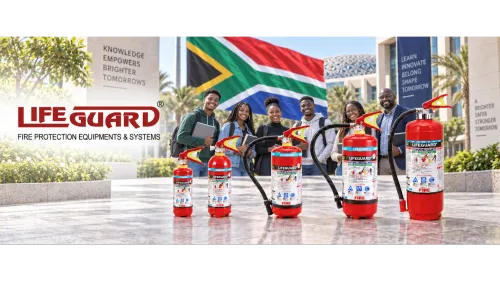

Hospital Fire Protection Manufacturer Africa – Advanced Fire Safety Solutions for Healthcare Facilities
Hospitals and healthcare facilities require a highly reliable, carefully engineered, and integrated approach to fire safety. Unlike conventional commercial buildings, hospitals accommodate patients who may have limited mobility, critical medical equipment, oxygen-enriched environments, laboratories, electrical installations, pharmacies, kitchens, server rooms, diagnostic departments, and intensive care units. These diverse risk areas make hospital fire protection a specialized discipline requiring the right combination of fire detection, alarm, suppression, extinguishing, evacuation, and emergency response systems.
LIFEGUARD® provides comprehensive fire safety equipment and engineered fire protection solutions for hospitals, medical institutions, diagnostic centres, laboratories, nursing homes, healthcare complexes, and other critical infrastructure projects.
For organizations searching for a reliable hospital fire protection manufacturer Africa, LIFEGUARD® offers professionally engineered fire safety products and customized solutions designed for the specific hazards found in modern healthcare environments.
Comprehensive Hospital Fire Protection Solutions for Africa
Hospital fire safety cannot depend on a single fire extinguisher or alarm system. A complete hospital fire protection strategy should identify different fire hazards throughout the facility and select appropriate detection and suppression systems for each area.
LIFEGUARD® supports healthcare projects with solutions that can include:
- Portable fire extinguishers
- Automatic fire detection and alarm systems
- Clean agent fire suppression systems
- CO₂ fire suppression systems
- Water-based fire protection systems
- Fire hydrant systems
- Hose reel systems
- Automatic sprinkler systems
- Water mist fire suppression systems
- Kitchen fire suppression systems
- Aspirating smoke detection systems
- Emergency alarm and notification systems
- Fire suppression systems for electrical and server rooms
- Specialized protection for lithium-ion battery installations
- Fire safety accessories and emergency response equipment
The objective is to provide a coordinated fire protection arrangement capable of detecting a developing fire quickly, warning occupants and hospital personnel, containing the incident, and protecting valuable medical infrastructure.
Why Hospitals Require Specialized Fire Protection
Hospitals operate around the clock and normally contain occupants with significantly different evacuation capabilities. Patients may be unconscious, undergoing surgery, connected to medical devices, receiving oxygen therapy, or dependent on hospital staff for movement.
A hospital may also contain several different categories of fire risk within a single building.
Patient Rooms and Wards
Patient wards require dependable fire detection, clear evacuation routes, accessible firefighting equipment, and carefully planned alarm systems.
Early detection is particularly important because large-scale evacuation of hospitalized patients can be difficult.
Intensive Care Units
ICUs contain electrical medical equipment, monitoring devices, medical gases, oxygen supplies, and patients who cannot normally evacuate independently.
Fire detection and suppression strategies must therefore prioritize rapid detection and controlled emergency response.
Operation Theatres
Operating theatres contain sensitive electrical and medical equipment and may involve oxygen-enriched environments.
Fire safety systems should therefore be carefully selected to minimize damage while maintaining reliable protection.
Electrical Rooms
Electrical panels, transformers, UPS systems, switchgear, battery systems, and electrical distribution equipment can create significant fire hazards.
Clean agent or other suitable fire suppression systems may be considered depending on the equipment, room configuration, and project requirements.
Server and Data Rooms
Hospitals increasingly depend on digital infrastructure for:
- Patient records
- Medical imaging
- Hospital management systems
- Communication systems
- Laboratory information
- Security systems
- Medical equipment networks
Fire protection for server rooms must therefore minimize interruption to critical hospital operations.
LIFEGUARD® can provide engineered clean agent fire suppression systems suitable for protecting sensitive electronic environments.
Clean Agent Fire Suppression for Hospitals
Clean agent systems are widely considered for areas containing sensitive electronic or electrical equipment where conventional water-based suppression may cause additional damage.
Typical hospital applications include:
- Server rooms
- Data centres
- Control rooms
- UPS rooms
- Communication rooms
- Medical equipment rooms
- Diagnostic control rooms
- Electrical rooms
Clean agent fire suppression systems work by rapidly discharging a calculated quantity of extinguishing agent into a protected enclosure.
A properly engineered system may include:
- Agent storage cylinders
- Cylinder valves
- Distribution piping
- Discharge nozzles
- Fire detection devices
- Gas release control panel
- Manual release station
- Abort switch
- Audible alarms
- Visual alarms
- Pressure switches
- Warning signage
System design should be based on the protected room volume, hazard classification, enclosure integrity, agent characteristics, operating temperature, piping layout, and applicable standards.
Fire Extinguishers for Hospitals
Portable fire extinguishers remain an important first-response fire safety device throughout healthcare facilities.
Different extinguishing media may be selected according to the hazard.
ABC Dry Powder Fire Extinguishers
ABC dry powder extinguishers can provide versatile protection against several common fire hazards and may be installed in appropriate utility and service areas.
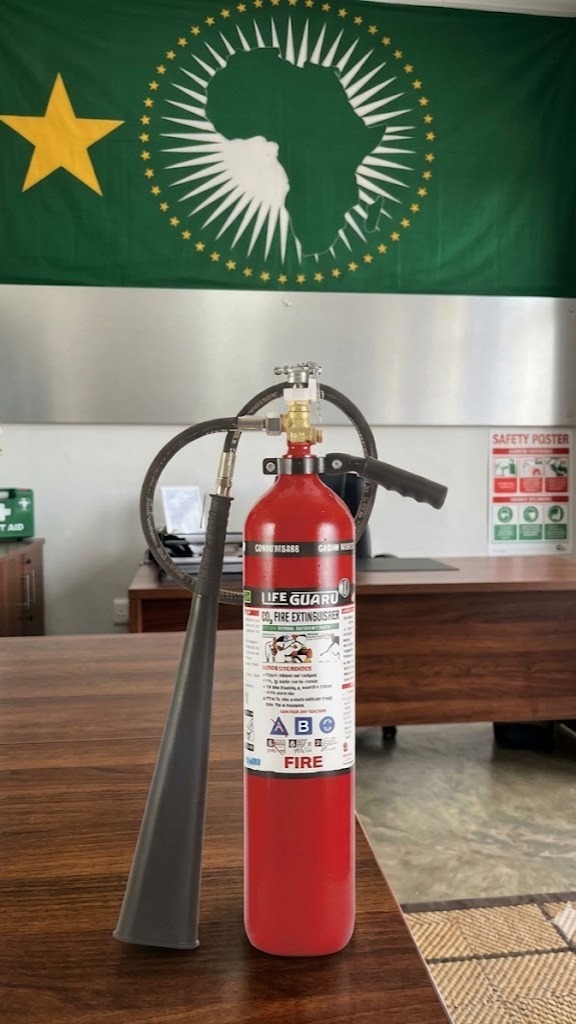
CO₂ Fire Extinguishers
CO₂ extinguishers are commonly selected for electrical and electronic equipment hazards because carbon dioxide does not leave a powder residue.
Potential applications include:
- Electrical rooms
- Server areas
- Laboratories
- Equipment rooms
- Control panels
Water-Type Fire Extinguishers
Water-based extinguishers can be suitable for ordinary combustible materials such as paper, cloth, wood, and similar Class A fire risks where their use is appropriate.
Foam Fire Extinguishers
Foam extinguishers may be suitable for selected combustible solid and flammable-liquid fire hazards, subject to the specific application.
Wet Chemical Fire Extinguishers
Hospital kitchens can contain cooking oils, fats, and high-temperature cooking appliances. Wet chemical extinguishing systems or extinguishers may therefore be selected for appropriate kitchen hazards.
Correct extinguisher selection is essential because the wrong extinguishing medium may be ineffective or potentially hazardous.
Automatic Fire Detection and Alarm Systems
Early detection is one of the most important elements of hospital fire safety.
A properly designed fire alarm system enables healthcare personnel to identify a developing incident before it becomes a major emergency.
Hospital fire detection systems may incorporate:
- Smoke detectors
- Heat detectors
- Multi-criteria detectors
- Manual call points
- Fire alarm control panels
- Sounders
- Hooters
- Flashers
- Interface modules
- Relays
- Repeater panels
- Emergency communication devices
The design of the detection system should take into account the occupancy pattern, environmental conditions, patient sensitivity, critical-care areas, ventilation systems, and emergency procedures.
Aspirating Smoke Detection for Critical Hospital Areas
Critical hospital environments may benefit from very early warning smoke detection.
Aspirating smoke detection systems continuously draw air samples through a network of sampling pipes and analyze them for smoke particles.
They can be especially useful in:
- Server rooms
- Data centres
- Electrical rooms
- Control rooms
- High-value medical equipment areas
- Telecommunications rooms
Early warning allows hospital personnel to investigate abnormal conditions before a fire develops to a more serious stage.
Fire Hydrant and Hose Reel Systems
Large hospitals and multi-storey healthcare buildings may require internal and external water-based firefighting infrastructure.
A complete hydrant arrangement can include:
- Fire water storage
- Fire pumps
- Hydrant valves
- Landing valves
- Hose reels
- Fire hoses
- Branch pipes
- Hose boxes
- Fire brigade connections
- Associated piping
These systems provide trained personnel and emergency responders with an accessible supply of firefighting water throughout the facility.
Automatic Sprinkler Systems
Automatic sprinkler systems provide continuous fire protection and can help control developing fires before they spread beyond their area of origin.
Sprinkler system design depends on several factors, including:
- Building occupancy
- Hazard classification
- Ceiling height
- Water availability
- Hydraulic requirements
- Building configuration
- Applicable fire safety codes
Hospitals may require carefully coordinated sprinkler layouts because of complex ceiling services, medical systems, HVAC ducts, electrical services, and infection-control requirements.
Water Mist Fire Protection
Water mist technology uses very fine water droplets to suppress fire through mechanisms such as cooling and local oxygen displacement through steam generation.
Depending on the application and approved system design, water mist can provide an efficient fire protection solution while using considerably less water than some conventional water-based systems.
Possible healthcare applications can include selected:
- Machinery areas
- Electrical environments
- Utility rooms
- Generator areas
- Specialized equipment zones
Each application must be properly engineered according to the hazard and approved system criteria.
Hospital Kitchen Fire Suppression
Commercial kitchens represent one of the higher fire-risk areas within a hospital complex.
Cooking appliances operate at high temperatures and frequently use oils and fats capable of sustaining intense fires.
Hospital kitchen fire protection may include:
- Automatic detection
- Wet chemical suppression
- Hood and duct protection
- Appliance protection
- Manual release arrangement
- Gas or electrical shutdown interfaces
- Portable wet chemical extinguishers
A properly designed kitchen suppression system can help control fire directly at cooking appliances and associated extraction equipment.
Fire Protection for Medical Gas and Oxygen Areas
Hospitals regularly use medical oxygen and other gases for patient care.
Oxygen itself is not a fuel, but oxygen-enriched conditions can dramatically increase the rate and intensity of combustion.
Fire protection planning around medical gas installations should therefore include:
- Proper segregation
- Controlled storage
- Ventilation
- Ignition-source management
- Fire detection
- Suitable extinguishing equipment
- Emergency isolation procedures
- Appropriate safety signage
Fire safety arrangements should be coordinated with medical gas system requirements and applicable regulations.
Fire Protection for Generator and Utility Rooms
Hospitals depend heavily on emergency electrical power.
Generator rooms may contain:
- Diesel fuel
- Lubricating oils
- Electrical equipment
- Hot surfaces
- Batteries
Suitable fire detection and suppression systems should therefore be selected according to the specific generator installation and hazard analysis.
Fire Protection for Hospital Laboratories
Hospital laboratories can contain:
- Flammable chemicals
- Electrical instruments
- Biological materials
- Gas cylinders
- Testing equipment
Laboratory fire safety should consider the type and quantity of stored chemicals, equipment layout, ventilation, ignition sources, and emergency response requirements.
Appropriate detection and firefighting equipment should be selected after assessing the specific laboratory hazard.
Protection for Hospital Pharmacies and Medical Stores
Pharmacies and hospital storage areas can contain packaging materials, medicines, chemicals, plastics, and other combustible materials.
Fire detection, extinguishers, sprinklers, and storage-management practices should therefore be integrated into the overall fire safety plan.
Fire Safety for Hospital Electrical Panels
Electrical panels can develop fires due to overheating, short circuits, loose electrical connections, overloads, insulation deterioration, or equipment failure.
Specialized fire protection solutions can be considered for:
- Main electrical panels
- Distribution panels
- Control cabinets
- UPS cabinets
- Battery cabinets
- Automation panels
Localized suppression systems may provide additional protection where rapid fire control is required within an enclosed electrical cabinet.
Hospital Fire Protection Manufacturer for African Healthcare Projects
Healthcare infrastructure continues to expand across Africa through new hospitals, medical colleges, diagnostic facilities, healthcare campuses, specialist clinics, laboratories, and public-health projects.
Fire protection systems for these facilities should be engineered according to the individual project rather than relying on a generic equipment package.
LIFEGUARD® supports projects requiring:
- Hospital fire protection equipment
- Fire suppression systems
- Fire extinguishers
- Detection and alarm systems
- Clean agent systems
- Fire hydrant equipment
- Fire hose reels
- Water mist solutions
- Kitchen suppression systems
- Specialized fire protection equipment
Solutions can be developed according to project specifications, consultant requirements, applicable codes, authority approvals, and site conditions.
Customized Fire Protection Engineering
No two hospitals have exactly the same risk profile.
A small medical centre may need a relatively straightforward fire detection and extinguisher arrangement, while a large multi-specialty hospital may require multiple integrated fire protection systems.
A comprehensive engineering approach may include:
- Review of architectural drawings
- Identification of fire hazards
- Area-wise risk classification
- Selection of suitable suppression technology
- Fire detection system planning
- Equipment sizing
- Hydraulic or flow calculations where required
- Pipe and nozzle layout
- Preparation of bill of quantities
- Technical documentation
- System integration
- Installation guidance
- Testing and commissioning support
This approach helps ensure that equipment selection is appropriate for the actual hospital environment.
Areas of a Hospital Requiring Fire Protection
A complete hospital fire protection plan may cover:
- Reception areas
- Patient wards
- ICU
- NICU
- Operation theatres
- Emergency departments
- Laboratories
- Pharmacies
- Medical stores
- Radiology areas
- MRI and diagnostic departments
- Server rooms
- Data centres
- Electrical rooms
- UPS rooms
- Battery rooms
- Generator rooms
- Kitchens
- Laundry areas
- Basements
- Parking facilities
- Medical gas storage areas
- Administrative offices
- Record rooms
- Plant rooms
- Warehouses
Each area should be evaluated independently before selecting the final fire protection solution.
Importance of Integrated Hospital Fire Safety
Effective hospital fire safety depends on integration.
A fire detection system may need to communicate with:
- Fire suppression panels
- HVAC shutdown systems
- Smoke-control systems
- Access-control systems
- Elevators
- Emergency lighting
- Public-address systems
- Building-management systems
- Fire doors
- Medical gas shutdown arrangements
Carefully planned interfaces help create a coordinated emergency response.
Quality-Focused Hospital Fire Protection Equipment
Healthcare facilities require dependable equipment because fire protection systems may remain inactive for years yet must operate immediately during an emergency.
Important considerations when selecting hospital fire safety products include:
- Product quality
- Correct system engineering
- Compatibility of system components
- Compliance with applicable specifications
- Ease of maintenance
- Availability of spare parts
- Technical documentation
- Testing procedures
- Reliability of activation mechanisms
LIFEGUARD® focuses on engineering-driven fire safety solutions suitable for demanding institutional and infrastructure applications.
Why Choose LIFEGUARD® for Hospital Fire Protection in Africa?
Organizations looking for a hospital fire protection manufacturer Africa require more than a supplier of individual products. Healthcare projects often need technical coordination across multiple fire protection technologies.
LIFEGUARD® can support projects with:
Comprehensive Product Range
Multiple fire protection technologies can be coordinated under one project requirement.
Application-Based Engineering
Solutions can be selected according to the actual hazard instead of applying the same suppression technology throughout the hospital.
Customized System Design
Systems can be engineered according to room dimensions, equipment layout, risk category, project specifications, and consultant requirements.
Technical Documentation
Project documentation can include relevant technical data, layouts, calculations, product literature, and system information as required.
Project Support
Technical assistance can be provided during equipment selection, design coordination, installation, testing, and commissioning stages, subject to project scope.
Export-Oriented Support
LIFEGUARD® can cater to international healthcare and infrastructure requirements, including projects across African markets, subject to commercial, regulatory, and project-specific requirements.
Applications Across Africa
LIFEGUARD® hospital fire protection solutions can be considered for healthcare and institutional projects throughout African markets, including requirements arising from countries such as:
- South Africa
- Kenya
- Nigeria
- Ghana
- Tanzania
- Uganda
- Ethiopia
- Rwanda
- Zambia
- Zimbabwe
- Botswana
- Namibia
- Mozambique
- Mauritius
- Egypt
- Morocco
- Algeria
- Tunisia
- Senegal
- Côte d'Ivoire
- Cameroon
Actual system specifications should always be aligned with the applicable national regulations, project requirements, consultant specifications, and local authority requirements.
Fire Protection for New and Existing Hospitals
LIFEGUARD® solutions can be considered for both new healthcare developments and existing facilities undergoing fire-safety modernization.
New Hospital Projects
Fire protection can be coordinated during the design stage with:
- Architectural planning
- Electrical services
- HVAC systems
- Plumbing
- Medical gases
- Building-management systems
- Emergency planning
Early coordination can reduce clashes between services and improve system effectiveness.
Existing Hospital Upgrades
Older healthcare buildings may require:
- Replacement of outdated fire extinguishers
- Alarm-system modernization
- Additional detection
- Clean agent suppression for newly installed server rooms
- Fire hydrant upgrades
- Kitchen suppression
- Improved emergency notification
- Specialized protection for new electrical or battery equipment
A risk-based assessment can help determine the most appropriate upgrade strategy.
Preventive Maintenance of Hospital Fire Protection Systems
Installation alone does not guarantee long-term fire safety.
Hospitals should maintain scheduled inspection and maintenance programs for their fire safety equipment.
Important maintenance activities can include:
- Fire extinguisher inspection
- Cylinder pressure checking
- Fire alarm testing
- Detector inspection
- Manual call-point testing
- Hooter and sounder testing
- Fire pump testing
- Hydrant inspection
- Hose inspection
- Sprinkler-system inspection
- Suppression-system cylinder inspection
- Battery backup testing
- Control-panel functionality checks
- Inspection of fire doors and evacuation routes
Maintenance frequency should follow applicable regulations, manufacturer recommendations, system requirements, and local fire authority requirements.
Frequently Asked Questions
Who can supply hospital fire protection systems for African projects?
LIFEGUARD® provides fire protection equipment and engineered fire suppression solutions that can support hospital and healthcare projects in African markets, subject to project requirements and applicable regulations.
Which fire extinguisher is suitable for hospitals?
Hospitals generally require several extinguisher types because hazards vary from one area to another. ABC dry powder, CO₂, water-based, foam, and wet chemical extinguishers may be used depending on the fire risk and local requirements.
Which fire suppression system is suitable for a hospital server room?
Clean agent fire suppression systems are commonly considered for server rooms and other areas containing sensitive electronic equipment because they can suppress fire without leaving conventional powder residue. Final system selection must be based on a proper engineering assessment.
Do hospitals need automatic fire alarm systems?
Large healthcare facilities typically rely heavily on automatic fire detection and alarm systems because rapid detection is essential where occupants may require assistance during evacuation. The exact requirements depend on local fire and building regulations.
Can LIFEGUARD® provide customized hospital fire suppression solutions?
Yes. Fire protection systems can be engineered according to room size, risk category, equipment configuration, project specifications, and applicable standards.
Can fire protection equipment be supplied for hospitals across Africa?
Fire protection equipment can be supplied for international healthcare projects subject to destination-country requirements, product approvals, logistics, project specifications, and commercial terms.
LIFEGUARD® – Your Hospital Fire Protection Partner for Africa
Healthcare fire protection is ultimately about protecting human life while maintaining the continuity of essential medical services.
A hospital cannot afford a poorly planned fire safety system. Equipment must be selected according to the actual hazard, integrated correctly, maintained properly, and supported by a coordinated emergency response plan.
For organizations searching online for a hospital fire protection manufacturer Africa, hospital fire protection supplier Africa, hospital fire suppression system manufacturer Africa, or hospital fire safety solutions Africa, LIFEGUARD® offers a comprehensive approach combining fire protection equipment with application-based engineering.
From portable fire extinguishers and hydrant systems to sophisticated clean agent suppression and early-warning detection, LIFEGUARD® can support the development of safer healthcare facilities across Africa.
SEO Meta Title
Hospital Fire Protection Manufacturer Africa | LIFEGUARD®
SEO Meta Description
Looking for a hospital fire protection manufacturer in Africa? LIFEGUARD® provides fire extinguishers, fire alarm systems, clean agent suppression, hydrant, sprinkler, water mist and customized hospital fire safety solutions for healthcare projects across Africa.
Primary SEO Keyword
Hospital Fire Protection Manufacturer Africa
Recommended Secondary Keywords
hospital fire protection supplier Africa, hospital fire safety solutions Africa, hospital fire suppression manufacturer Africa, hospital fire extinguisher manufacturer Africa, hospital fire protection system Africa, healthcare fire protection Africa, hospital fire alarm system Africa, hospital clean agent suppression Africa, hospital firefighting equipment supplier Africa, hospital fire safety company Africa
Suggested URL Slug
/hospital-fire-protection-manufacturer-africa/
Suggested Image ALT Tags
- Hospital fire protection manufacturer Africa
- Hospital fire suppression system Africa
- Hospital fire extinguisher supplier Africa
- Hospital clean agent fire suppression system
- Healthcare fire protection solutions Africa
- Hospital fire alarm and detection system Africa
- LIFEGUARD hospital fire safety solutions