
Hospital Fire Protection Solutions Asia – LIFEGUARD®
Advanced Fire Safety Solutions for Hospitals and Healthcare Facilities Across Asia
LIFEGUARD® provides comprehensive hospital fire protection solutions in Asia for hospitals, medical colleges, healthcare centres, diagnostic facilities, laboratories, nursing homes, speciality clinics and large healthcare campuses.
Hospitals demand a specialised fire safety strategy because they operate continuously and accommodate patients who may be unable to evacuate independently. Healthcare facilities also contain sensitive medical equipment, electrical installations, server rooms, medical gases, laboratories, kitchens, pharmacies and other areas with different fire risks.
LIFEGUARD® supports healthcare projects with an integrated approach combining fire detection, alarm, firefighting, automatic suppression and special-hazard protection systems.
Our solutions are intended for new hospital developments, healthcare infrastructure upgrades, expansion projects and specialised medical facilities throughout Asian markets.
Complete Hospital Fire Protection Solutions in Asia
A hospital cannot rely on one single firefighting technology for every risk. Different areas require protection systems selected according to their occupancy, equipment and fire hazards.
LIFEGUARD® hospital fire protection solutions can include:
- Portable fire extinguishers
- Automatic fire alarm systems
- Addressable fire detection systems
- Conventional fire alarm systems
- Smoke detectors
- Heat detectors
- Multi-criteria detectors
- Aspirating smoke detection systems
- Clean agent fire suppression systems
- Electrical panel fire suppression
- Server room fire suppression
- Data centre fire suppression
- Kitchen fire suppression systems
- Hydrant systems
- Hose reel systems
- Automatic sprinkler systems
- Water mist fire suppression systems
- Fire suppression control panels
- Emergency alarm systems
- Manual release stations
- Abort switches
- Hooters and sounders
- Gas detection systems
- Special-hazard fire protection equipment
This comprehensive approach enables LIFEGUARD® to support hospitals requiring an experienced hospital fire protection solution provider in Asia.
Why Hospitals Need Specialised Fire Protection
Hospital fire safety is more complex than fire protection in many conventional commercial buildings.
Vulnerable Occupants
Patients in ICUs, operating theatres, wards, neonatal units and rehabilitation areas may be unable to evacuate without assistance.
A hospital fire safety system should therefore provide early warning and support rapid intervention before fire conditions become severe.
24-Hour Operation
Hospitals operate continuously throughout the year.
Fire protection equipment must therefore remain dependable while inspection, testing and maintenance activities are carefully coordinated with hospital operations.
Sensitive Medical Equipment
Modern hospitals contain high-value medical systems such as:
- MRI equipment
- CT scanners
- Medical imaging systems
- Laboratory instruments
- Patient monitoring systems
- Communication infrastructure
- Servers and networking equipment
Fire suppression technologies should be selected carefully to minimise unnecessary secondary damage.
Medical Gas Hazards
Healthcare facilities commonly use oxygen and other medical gases.
Although oxygen itself is not a combustible fuel, oxygen-enriched conditions can increase the speed and intensity of combustion.
Proper storage, detection, isolation and emergency procedures are therefore essential.
Electrical Infrastructure
Hospitals depend upon:
- Main electrical distribution systems
- UPS installations
- Control panels
- Switchboards
- Generators
- Battery backup systems
- Medical electrical equipment
Electrical rooms and equipment require appropriate fire detection and suppression strategies.
Hospital Fire Alarm and Detection Solutions
Early detection is one of the most important components of hospital fire protection.
LIFEGUARD® can support healthcare projects with suitable combinations of:
- Smoke detectors
- Heat detectors
- Multi-sensor detectors
- Manual call points
- Addressable fire alarm control panels
- Conventional fire alarm panels
- Audible alarms
- Visual alarms
- Sounders
- Hooters with flashers
- Monitoring modules
- Control modules
- Input/output interfaces
Fire alarm systems can be designed according to hospital zoning requirements and integrated with other life-safety systems where required.
Aspirating Smoke Detection for Hospitals
Certain healthcare environments require extremely early warning of smoke development.
Aspirating smoke detection systems continuously draw air samples through a pipe network and analyse them for small concentrations of smoke.
Such systems may be considered for:
- Hospital server rooms
- Data centres
- Communication rooms
- Critical control rooms
- Medical record storage
- Electrical rooms
- High-value equipment areas
Early warning can give hospital engineering teams valuable additional time to investigate developing fire conditions.
Clean Agent Fire Suppression for Hospitals
Clean agent fire suppression is particularly useful for critical hospital environments where conventional water-based suppression could damage sensitive equipment.
Typical applications include:
- Server rooms
- Data centres
- Communication rooms
- Control rooms
- Electrical rooms
- UPS rooms
- Diagnostic equipment control areas
- Medical equipment rooms
Depending upon the project, a clean agent suppression system may include:
- Agent storage cylinders
- Cylinder valves
- Distribution piping
- Discharge nozzles
- Fire suppression control panel
- Smoke detection
- Manual release switch
- Abort switch
- Warning sounders
- Visual alarm indicators
- Pressure monitoring
- System accessories
Correct system design requires consideration of enclosure volume, required design concentration, pipe routing, nozzle placement, discharge performance and room integrity.
Hospital Fire Extinguisher Solutions
Portable extinguishers provide essential first-response firefighting capability throughout healthcare buildings.
Depending upon the identified hazard, suitable extinguishers may include:
ABC Dry Powder Fire Extinguishers
Suitable for many general fire risks involving ordinary combustibles, flammable liquids and electrical hazards where appropriate.
CO₂ Fire Extinguishers
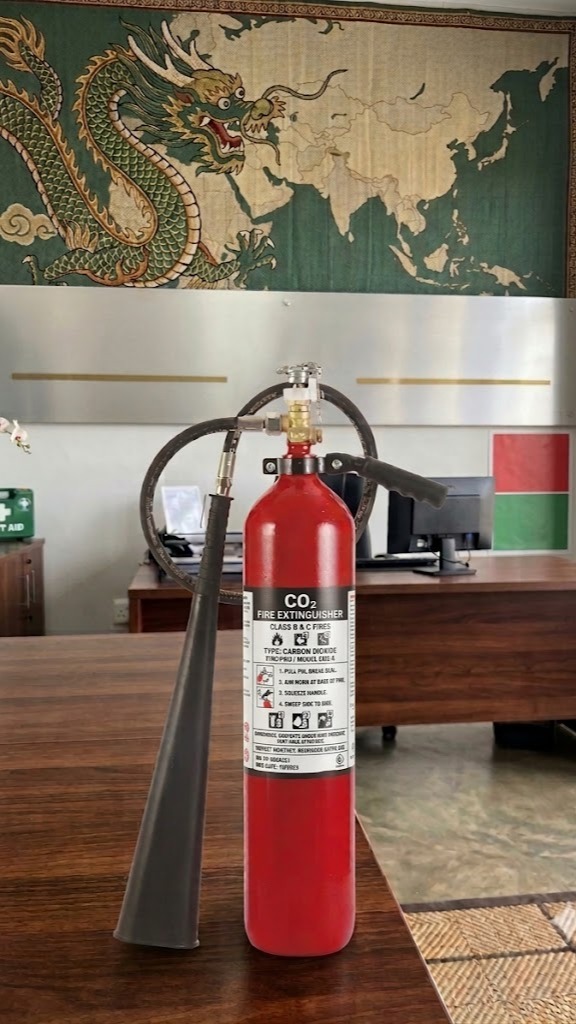
Frequently used around electrical and electronic equipment because carbon dioxide leaves no extinguishing residue.
Water-Based Fire Extinguishers
Suitable for appropriate Class A combustible material fires.
Foam Fire Extinguishers
Used for selected combustible and flammable-liquid fire hazards where specified.
Wet Chemical Fire Extinguishers
Particularly suitable for commercial kitchen environments involving cooking oils and fats.
Extinguisher selection should always be based on the actual fire hazard, applicable regulations and project specifications.
ICU Fire Protection Solutions
Intensive Care Units require highly dependable fire protection because patients may be connected to life-support and monitoring equipment.
Fire safety provisions may include:
- Early smoke detection
- Reliable fire alarm notification
- Fire compartmentation
- Electrical fire protection
- Medical gas safety measures
- Portable firefighting equipment
- Automatic suppression where required
- Emergency response planning
Hospital fire protection design should ensure that fire safety measures are coordinated with critical clinical operations.
Operation Theatre Fire Protection
Operation theatres represent specialised fire risks because medical equipment, electrical energy, surgical materials and oxygen may be present simultaneously.
Protection strategies can include:
- Early fire detection
- Electrical safety systems
- Medical gas isolation
- Fire alarm integration
- Appropriate portable extinguishing equipment
- Emergency operating procedures
- Staff fire-safety training
- Fire-rated separation
The exact fire protection arrangement should be coordinated with the hospital consultant and relevant clinical requirements.
Patient Ward Fire Protection
Patient wards require systems that provide quick warning while supporting orderly evacuation and firefighting response.
Typical measures may include:
- Automatic smoke detection
- Fire alarm notification
- Portable fire extinguishers
- Hose reels
- Sprinklers where specified
- Emergency signage
- Fire compartmentation
- Protected escape routes
The needs of elderly, disabled or non-ambulatory patients should be considered during fire safety planning.
Hospital Laboratory Fire Protection Solutions
Hospital laboratories may contain multiple hazards including:
- Flammable chemicals
- Reagents
- Compressed gases
- Electrical testing equipment
- Laboratory instruments
- Combustible packaging
- Biological materials
Laboratory fire protection should therefore be based on a detailed hazard assessment.
Solutions may include automatic detection, portable extinguishers, specialised suppression systems, gas monitoring and emergency isolation measures.
Pharmacy Fire Protection
Hospital pharmacies and medical storage rooms may contain pharmaceuticals, packaging materials and selected combustible or flammable products.
Fire protection measures can include:
- Smoke detection
- Fire alarm systems
- Appropriate portable extinguishers
- Automatic suppression where required
- Safe storage practices
- Fire-rated separation
- Emergency response procedures
Hospital Server Room Fire Suppression Solutions
Hospitals increasingly depend on digital systems for:
- Electronic medical records
- Patient monitoring
- Medical imaging
- Laboratory information
- Communication
- Hospital management systems
- Data storage
A server room fire can therefore disrupt essential medical services.
Clean agent suppression is often considered for server and data rooms because properly selected systems can provide rapid suppression while avoiding the residue associated with many conventional extinguishing agents.
A typical protection arrangement may combine:
- Smoke detection
- Aspirating detection
- Fire suppression control panel
- Clean agent storage cylinders
- Distribution piping
- Discharge nozzles
- Manual release
- Abort facility
- Hooters and visual alarms
Electrical Room Fire Protection for Hospitals
Hospital electrical installations require careful fire protection because interruptions can affect critical medical services.
Areas requiring protection can include:
- Electrical control rooms
- Main LT panels
- Switchgear rooms
- UPS rooms
- Generator control panels
- Distribution panels
- Battery backup systems
Depending upon the risk, solutions may involve early smoke detection, clean agent suppression, localised panel protection or appropriate portable extinguishers.
Hospital Kitchen Fire Suppression Systems
Large hospitals generally operate commercial kitchens that can contain significant fire hazards from hot cooking oils and grease.
Hospital kitchen protection may include:
- Wet chemical suppression
- Heat detection
- Manual activation
- Hood protection
- Duct protection
- Appliance protection
- Fuel or electrical shutdown
- Wet chemical extinguishers
Proper kitchen suppression can help prevent a localised cooking fire from spreading into the ventilation and exhaust system.
Medical Oxygen and Gas Area Fire Safety
Medical oxygen systems require strict fire-safety management.
Important considerations can include:
- Controlled storage
- Appropriate ventilation
- Separation from ignition sources
- Emergency isolation arrangements
- Fire detection
- Warning signage
- Suitable extinguishing equipment
- Staff awareness and training
Final requirements should comply with applicable healthcare and fire-safety regulations.
Hospital Hydrant Systems
Large hospitals, medical colleges and healthcare campuses may require internal and external hydrant systems.
Typical components may include:
- Fire water storage tank
- Main fire pump
- Standby pump
- Jockey pump
- Hydrant piping
- Landing valves
- Fire hoses
- Branch pipes
- Hose cabinets
- External hydrants
- Fire brigade connections
Hydraulic calculations should determine the required water flow, pressure, pipe size and pump capacity.
Hospital Hose Reel Systems
Fire hose reels provide a continuous water supply for first-aid firefighting of appropriate Class A fires.
Hospital hose reel systems can include:
- Hose reel drums
- Semi-rigid hoses
- Shut-off nozzles
- Isolation valves
- Hose reel cabinets
- Fire water piping
Placement and coverage should be determined according to building layout and applicable fire-safety requirements.
Automatic Sprinkler Systems for Hospitals
Automatic sprinklers provide continuous fire protection and can help control a developing fire before it spreads significantly.
Hospital sprinkler system design may consider:
- Occupancy classification
- Fire hazard category
- Ceiling height
- Room configuration
- Water supply
- Pump capacity
- Sprinkler spacing
- Hydraulic calculations
- Storage arrangements
Sprinkler protection should form part of the overall hospital fire strategy rather than being considered in isolation.
Water Mist Fire Suppression for Healthcare Facilities
Water mist systems use fine water droplets for fire control through cooling, radiant heat reduction and steam generation.
Depending upon the hazard and project requirements, water mist may be considered for selected healthcare environments where reduced water consumption or reduced collateral water damage is desirable.
System selection should be supported by suitable engineering and application criteria.
Fire Protection for Hospital Data Centres
Large healthcare networks may operate dedicated data centres containing high-density electronic equipment.
Potential fire protection measures can include:
- Aspirating smoke detection
- Addressable fire alarm systems
- Clean agent suppression
- Environmental monitoring
- Emergency power isolation
- Manual release and abort controls
- Audio-visual alarms
Fast detection and suppression are important because even a relatively small fire can result in major data and operational consequences.
Special Hazard Fire Protection Solutions
Hospitals contain several areas that cannot always be adequately protected using standard building fire protection alone.
LIFEGUARD® can support special-hazard applications including:
- Electrical cabinets
- Server racks
- Control panels
- Generator areas
- Battery storage areas
- Laboratories
- Kitchens
- Medical equipment rooms
- Communication rooms
Each application should be evaluated individually before selecting the suppression technology.
Integrated Hospital Fire Safety Systems
An effective hospital fire protection strategy requires coordination between multiple systems.
Where appropriate, fire alarm and suppression systems may be integrated with:
- HVAC shutdown
- Smoke control
- Fire doors
- Access control systems
- Building management systems
- Emergency power systems
- Lift controls
- Emergency communication
- Gas isolation systems
- Fire suppression release systems
Integration helps ensure that different life-safety systems respond correctly during an emergency.
Hospital Fire Protection Design Process
1. Fire Risk Assessment
The protection process begins by identifying fire hazards, occupancy types, medical equipment, electrical installations, combustible materials and operational risks.
2. Hazard Classification
Individual hospital spaces are classified according to their fire risks.
3. Technology Selection
Appropriate detection, extinguishing and suppression technologies are selected for each protected area.
4. Engineering Design
Engineering can include:
- Detector positioning
- Suppression system calculations
- Pipe routing
- Nozzle positioning
- Equipment capacity
- Fire alarm zoning
- Hydraulic calculations
- Control philosophy
5. Installation Coordination
System installation should be coordinated with architectural, electrical, HVAC and medical service layouts.
6. Testing and Commissioning
Installed systems should be inspected, tested and commissioned according to applicable project requirements.
7. Maintenance Support
Periodic inspection and maintenance are essential to keep fire protection systems in reliable operating condition.
Hospital Fire Protection Solutions Across Asia
LIFEGUARD® supports healthcare fire protection requirements throughout Asian markets, including projects in:
- India
- UAE
- Saudi Arabia
- Qatar
- Oman
- Bahrain
- Kuwait
- Singapore
- Malaysia
- Indonesia
- Thailand
- Vietnam
- Philippines
- Bangladesh
- Nepal
- Sri Lanka
- Maldives
- Japan
- South Korea
- Other Asian markets
Final designs must always be coordinated with the applicable national regulations, local fire authority requirements and project specifications.
Standards and Compliance
Hospital fire protection requirements can vary significantly between Asian countries.
Depending upon the project, equipment and systems may need to follow relevant national or international standards related to:
- Fire detection and alarm systems
- Portable fire extinguishers
- Automatic sprinkler systems
- Gaseous fire suppression
- Fire pumps
- Hydrant systems
- Water mist systems
- Emergency evacuation
- Building fire safety
The final fire safety solution should be developed according to the requirements of the local authority having jurisdiction, project consultant, applicable codes and approved specifications.
Specific product certifications should always be verified against the exact model and project requirement before being stated in technical submissions.
Why Choose LIFEGUARD® for Hospital Fire Protection Solutions in Asia?
Complete Fire Safety Portfolio
LIFEGUARD® can support multiple hospital fire hazards through detection, extinguishing, suppression and firefighting solutions.
Specialised Fire Suppression Expertise
Critical infrastructure such as server rooms, electrical rooms, panels and high-value equipment areas can be protected through engineered special-hazard systems.
Project-Specific Engineering
Hospital fire protection solutions can be developed according to actual room sizes, equipment layouts and identified fire risks.
OEM Manufacturing Capability
LIFEGUARD® supports OEM and customised requirements for suitable fire safety products and project packages.
Technical Documentation
Project support can include technical datasheets, drawings, equipment specifications, bill of quantities and system documentation.
Export Capability
LIFEGUARD® supports distributors, consultants, EPC contractors and healthcare projects requiring fire protection equipment for markets throughout Asia.
Applications
LIFEGUARD® hospital fire protection solutions can be considered for:
- Government hospitals
- Private hospitals
- Super-speciality hospitals
- Medical colleges
- Nursing homes
- Diagnostic centres
- Cancer hospitals
- Cardiac hospitals
- Children's hospitals
- Eye hospitals
- Research hospitals
- Rehabilitation centres
- Healthcare campuses
- Laboratories
- Blood banks
- Medical storage facilities
Hospital Fire Protection Solutions Asia
Hospital fire protection requires an integrated strategy that protects not only buildings but also patients, healthcare professionals, medical equipment and essential hospital services.
LIFEGUARD® provides comprehensive hospital fire protection solutions for Asia, combining early fire detection, alarm systems, portable extinguishers, hydrants, sprinklers, clean agent suppression, kitchen protection and special-hazard fire suppression.
Whether the requirement is for a new hospital development, existing hospital upgrade, medical college, ICU, operation theatre, diagnostic facility, server room, electrical room or complete healthcare campus, LIFEGUARD® can support project-specific fire protection requirements.
For healthcare developers, consultants, EPC contractors, distributors and hospital organisations looking for a dependable hospital fire protection solutions provider in Asia, LIFEGUARD® offers integrated fire safety technologies, technical support and customised solutions.
Frequently Asked Questions
What are hospital fire protection solutions?
Hospital fire protection solutions include fire detection, alarm, firefighting and suppression systems designed to protect healthcare occupants, equipment and infrastructure against different fire hazards.
Which fire protection systems are commonly used in hospitals?
Hospitals may use fire alarm systems, smoke detectors, extinguishers, hydrants, hose reels, automatic sprinklers, clean agent suppression, kitchen suppression and special-hazard systems.
What fire suppression system is suitable for hospital server rooms?
Engineered clean agent fire suppression is frequently considered for server and data rooms because appropriate systems can suppress fire rapidly while minimising residue on electronic equipment.
Why is early smoke detection important in hospitals?
Early detection is particularly important because many hospital occupants may require assisted evacuation. Early warning gives staff additional time to investigate and implement emergency procedures.
What type of extinguisher is suitable for hospital electrical rooms?
CO₂ and other appropriate extinguishing technologies may be considered for electrical hazards depending upon the equipment and project requirements.
Are kitchen fire suppression systems required in hospitals?
Large commercial hospital kitchens can present significant cooking oil and grease fire hazards. Suitable wet chemical suppression systems are commonly considered for such environments according to applicable requirements.
Can LIFEGUARD® provide customised hospital fire protection systems?
Yes. LIFEGUARD® can support project-specific fire protection requirements including equipment selection, system engineering, technical documentation and customised configurations.
Does LIFEGUARD® support hospital fire protection projects in Asia?
Yes. LIFEGUARD® supports healthcare fire protection requirements for projects, contractors and distributors across Asian markets, subject to the applicable local codes and project specifications.
SEO Meta Information
SEO Title:
Hospital Fire Protection Solutions Asia | LIFEGUARD®
Meta Description:
LIFEGUARD® provides hospital fire protection solutions across Asia including fire alarm, extinguishers, clean agent suppression, hydrants, sprinklers, kitchen suppression and special-hazard fire safety systems.
Primary Keyword:
Hospital Fire Protection Solutions Asia
Secondary Keywords:
Hospital fire protection solutions provider Asia, hospital fire safety solutions Asia, healthcare fire protection Asia, hospital fire suppression system Asia, hospital fire alarm system Asia, hospital clean agent suppression Asia, hospital firefighting equipment Asia, hospital fire protection company Asia, hospital fire safety system supplier Asia.
Suggested URL Slug:
/hospital-fire-protection-solutions-asia/
Contact LIFEGUARD®
LIFEGUARD® – United Fire Equipments Pvt. Ltd.
Manufacturer of Fire Safety Equipment & Fire Protection Systems
For hospital fire protection, healthcare fire suppression, fire detection, firefighting systems, special-hazard protection and project-specific requirements across Asia, contact LIFEGUARD® for a comprehensive fire safety solution.