
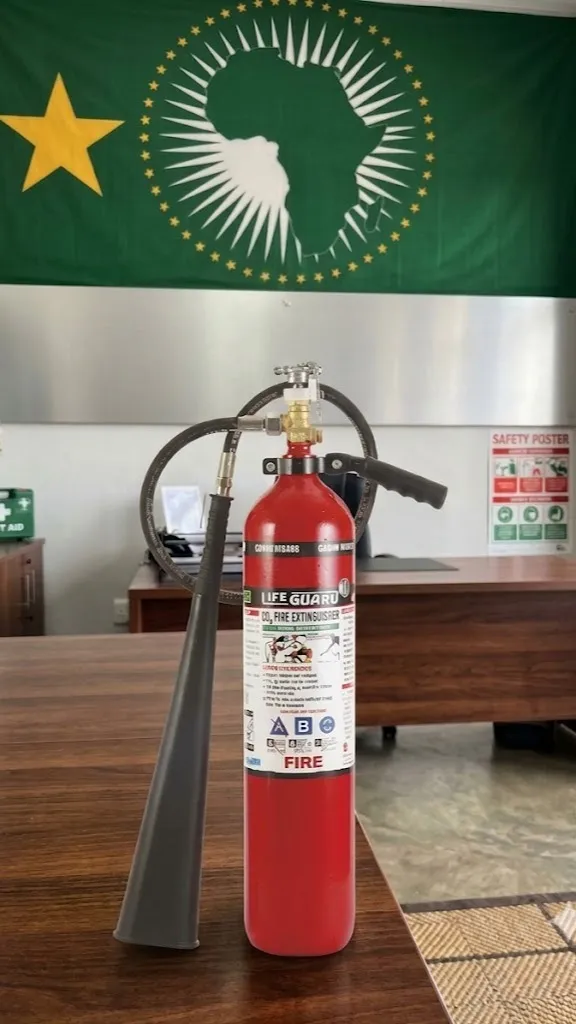
Hospital Fire Protection System Provider Africa
Integrated Fire Safety Systems for Hospitals and Healthcare Facilities Across Africa
Hospitals require a highly coordinated fire protection strategy because they combine vulnerable occupants, complex electrical systems, sensitive medical equipment, laboratories, pharmacies, kitchens, medical gas installations, server infrastructure, battery backup systems and continuously occupied treatment areas within a single facility.
A hospital fire safety system must therefore go beyond individual fire extinguishers. It should combine early fire detection, alarm, automatic suppression, manual fire-fighting equipment, emergency communication and protection of critical infrastructure.
LIFEGUARD® – United Fire Equipments Pvt. Ltd. provides comprehensive fire safety equipment and engineered suppression solutions for healthcare projects. As an experienced Hospital Fire Protection System Provider for Africa, LIFEGUARD® supports hospitals, healthcare developers, consultants, EPC contractors, MEP contractors, fire protection companies, distributors and importers with project-oriented fire protection solutions.
Our objective is to help customers develop an integrated fire safety arrangement suited to the specific risks present within modern hospitals and medical facilities.
Complete Hospital Fire Protection System Provider for Africa
Hospital buildings contain multiple fire hazards that cannot always be addressed through one common system.
A comprehensive hospital fire protection package may therefore incorporate:
- Fire detection and alarm systems
- Portable fire extinguishers
- Clean agent fire suppression systems
- Aspirating smoke detection systems
- Fire hydrant equipment
- Fire hose reel systems
- Fire hoses and accessories
- Electrical panel suppression
- Server room fire suppression
- Kitchen fire protection
- UPS and battery room fire protection
- Specialized suppression systems
- Manual release and abort controls
- Audible and visual alarm devices
- Project engineering and documentation support
The required technologies should be selected according to the hazard, occupancy, building configuration, local regulations and project specifications.
Why Hospitals Need an Integrated Fire Protection System
Healthcare facilities present unique fire safety challenges.
Patients may include:
- Infants
- Elderly persons
- Intensive care patients
- Surgical patients
- Patients connected to life-support equipment
- Persons with reduced mobility
Evacuating these occupants can be considerably more difficult than evacuating a conventional office or commercial building.
Hospital fire protection therefore needs to prioritize:
Early Detection + Fast Notification + Fire Containment + Effective Suppression + Safe Response
A properly coordinated system can help protect human life while reducing damage to critical medical and technical infrastructure.
Major Fire Risks in Hospitals
Potential sources of fire within healthcare facilities include:
- Electrical short circuits
- Overloaded electrical circuits
- Medical equipment
- UPS systems
- Battery banks
- Generator installations
- Server rooms
- Kitchens
- Laboratories
- Pharmacies
- Medical stores
- Oxygen and medical gas equipment
- HVAC systems
- Laundry facilities
- Boilers and mechanical equipment
- Parking facilities
- Storage areas
Each risk should be evaluated individually when determining the hospital's overall fire protection strategy.
LIFEGUARD® Hospital Fire Protection Systems for Africa
LIFEGUARD® can support project requirements in multiple African markets, including:
- South Africa
- Nigeria
- Kenya
- Ghana
- Tanzania
- Uganda
- Ethiopia
- Rwanda
- Zambia
- Zimbabwe
- Namibia
- Botswana
- Mozambique
- Mauritius
- Egypt
- Morocco
- Algeria
- Tunisia
- Senegal
- Angola
- Cameroon
- Côte d'Ivoire
- Democratic Republic of the Congo
- Other African countries
Requirements differ between countries, so final system design, equipment certification and approvals should always be coordinated with the applicable local authority, consultant and project specification.
Fire Detection and Alarm Systems for Hospitals
Early detection is one of the most important components of hospital fire safety.
A fire alarm system should provide rapid indication of abnormal fire conditions and allow hospital staff to initiate the appropriate emergency response.
Depending upon project requirements, a hospital detection and alarm system may include:
- Smoke detectors
- Heat detectors
- Multi-criteria detectors
- Manual call points
- Fire alarm control panels
- Repeater panels
- Sounders
- Hooters
- Flashers
- Input modules
- Output modules
- Interface modules
- Gas release panels
- Emergency control interfaces
The fire alarm strategy should be coordinated with hospital zoning, evacuation procedures and other life-safety systems.
Aspirating Smoke Detection Systems
Critical hospital areas may benefit from highly sensitive smoke detection.
An Aspirating Smoke Detection System continuously draws air through a pipe network and analyses the sample for smoke particles.
This technology may be considered for:
- Server rooms
- Data centres
- Communication rooms
- Electrical control rooms
- High-value medical equipment areas
- Restricted-access technical spaces
Very early detection can provide additional time for facility personnel to investigate developing fire conditions.
Clean Agent Fire Suppression Systems
Critical electronic areas within hospitals often require suppression solutions that minimize secondary damage to equipment.
Clean agent fire suppression systems can be considered for:
- Server rooms
- Data rooms
- IT rooms
- Control rooms
- Communication rooms
- Electrical rooms
- UPS rooms
- Medical equipment control areas
- Digital records infrastructure
Depending upon project requirements and approvals, technologies may include systems using agents such as:
- FK-5-1-12
- HFC-227ea
Clean agent systems are engineered to achieve a specified extinguishing concentration within a protected enclosure.
Typical Components of a Clean Agent Fire Suppression System
An engineered system may incorporate:
- Agent storage cylinders
- Cylinder valves
- Discharge hoses
- Manifolds
- Distribution piping
- Discharge nozzles
- Automatic fire detectors
- Gas release control panel
- Manual release station
- Abort switch
- Sounder
- Hooter
- Visual flasher
- Pressure monitoring devices
- Electrical interfaces
System configuration should be based on the room volume, design concentration, piping arrangement, nozzle requirements and enclosure conditions.
Hospital Server Room Fire Suppression
Hospital IT infrastructure supports many critical functions, including:
- Electronic patient records
- Laboratory information systems
- Medical imaging
- Pharmacy management
- Patient monitoring
- Communication systems
- Hospital administration
- Diagnostic records
- Digital security systems
Damage to a server room can therefore affect hospital operations even if the fire is confined to a relatively small area.
A combination of early smoke detection and engineered clean agent suppression can provide a strong level of protection for such rooms.
Fire Extinguisher Systems for Hospitals
Portable fire extinguishers remain an important first line of defence.
The extinguisher type should be selected according to the fire hazard present.
ABC Dry Chemical Powder Fire Extinguishers
Suitable for many general-purpose applications such as:
- Corridors
- Offices
- Storage areas
- Service spaces
- Maintenance areas
- Utility rooms
- Parking facilities
CO₂ Fire Extinguishers
CO₂ extinguishers may be considered for electrical and electronic risks such as:
- Electrical panels
- Server equipment
- UPS equipment
- Control panels
- Communication equipment
- Medical electronic devices
They are particularly useful where powder residue may be undesirable.
Water-Based Fire Extinguishers
Water-based extinguishers can be considered for suitable ordinary combustible hazards.
Their placement should be carefully evaluated where electrical equipment or other incompatible risks are present.
Wet Chemical Fire Extinguishers
Hospital kitchens often contain heated cooking oils and fats.
Wet chemical fire extinguishers are suitable for appropriate cooking-oil hazards and may be used in:
- Hospital kitchens
- Canteens
- Food preparation areas
- Frying stations
Hospital Kitchen Fire Protection System
Hospital kitchens may operate for many hours each day and can contain significant fire loads.
Typical hazards include:
- Deep-fat fryers
- Cooking oils
- Gas cooking equipment
- Electrical appliances
- Grease deposits
- Exhaust hoods
- Duct systems
A coordinated kitchen fire protection system may include:
- Wet chemical fire extinguishing equipment
- Fire detection
- Alarm devices
- Emergency isolation
- Suppression arrangements
- Shutdown interfaces
The final solution should be selected according to the actual kitchen equipment and layout.
Hospital Electrical Room Fire Protection
Hospitals depend heavily on uninterrupted electrical power.
Important electrical areas may include:
- HT rooms
- LT rooms
- Distribution boards
- Main electrical panels
- Generator control rooms
- Transformer areas
- UPS systems
- Building management panels
Fire protection options may include:
- CO₂ fire extinguishers
- Automatic detection
- Clean agent suppression
- Localized panel suppression
- Fire alarm integration
UPS and Battery Room Fire Protection
Backup power systems are essential for hospital continuity.
Battery installations can present different fire risks depending upon the chemistry, electrical configuration and charging system.
A hospital battery room fire protection arrangement may include:
- Smoke detection
- Heat detection
- Gas detection where applicable
- Fire alarm interfaces
- Automatic suppression
- Emergency electrical isolation
- Suitable portable extinguishers
The suppression technology should be selected according to the specific battery type and risk assessment.
Fire Protection for Hospital Laboratories
Hospital laboratories may contain:
- Chemicals
- Electrical equipment
- Combustible packaging
- Gas cylinders
- Diagnostic instruments
- Refrigerated equipment
The fire protection system should therefore be based on the specific laboratory risks.
Possible measures include:
- Fire extinguishers
- Automatic detection
- Fire alarm systems
- Specialized suppression
- Emergency isolation
- Proper chemical storage
Fire Protection for Hospital Pharmacies
Hospital pharmacies contain medicines, packaging materials, storage systems and electrical equipment.
Fire protection may incorporate:
- Smoke detection
- Fire alarm systems
- Appropriate extinguishers
- Storage safety measures
- Emergency response procedures
Where special or flammable materials are stored, additional protection should be considered according to the associated hazard.
Medical Oxygen and Gas Area Fire Safety
Medical oxygen does not itself burn, but oxygen-enriched conditions can significantly increase the rate and intensity of combustion.
Fire safety considerations should therefore include:
- Proper cylinder storage
- Ignition control
- Safe handling procedures
- Adequate ventilation
- Separation from combustible materials
- Appropriate detection
- Emergency signage
- Staff awareness
Applicable medical gas and fire safety requirements should always be followed.
Fire Hydrant Systems for Hospitals
A fire hydrant system provides trained hospital personnel and responding fire services with a dependable source of water for manual fire fighting.
Typical components may include:
- Landing valves
- Hydrant valves
- Fire hoses
- Branch pipes
- Hose cabinets
- Fire brigade connections
- Associated couplings and accessories
The hydrant network should be coordinated with the building's fire water storage and pumping arrangements.
Hospital Hose Reel Systems
Hose reel systems provide a readily accessible water supply for dealing with suitable ordinary combustible fires.
A typical hospital hose reel arrangement may include:
- Hose reel drum
- Fire hose
- Nozzle
- Isolation valve
- Hose reel cabinet
- Distribution piping
Accessibility and coverage should be considered during system layout.
Electrical Panel Fire Suppression
Localized electrical panel fires can develop from:
- Short circuits
- Loose connections
- Overloading
- Component failure
- Overheating
Automatic local suppression may be considered for selected critical equipment.
Potential applications include:
- Electrical panels
- UPS panels
- Generator control panels
- Server cabinets
- Communication cabinets
- Medical equipment control panels
Early local suppression can help prevent a small enclosure fire from spreading to adjacent equipment.
Fire Protection for Hospital Parking Facilities
Hospital parking structures may contain:
- Petrol and diesel vehicles
- Electric vehicles
- EV charging equipment
- Electrical installations
- Ventilation systems
Depending upon the building and regulatory requirements, protection may include:
- Fire extinguishers
- Hydrant systems
- Hose reels
- Automatic sprinklers
- Fire alarm systems
- Heat or smoke detection
- Smoke extraction
- Emergency signage
EV charging areas should also be considered in the overall fire risk assessment.
Integrated Hospital Fire Protection Architecture
An effective hospital fire safety system should function as a coordinated chain:
Detection → Alarm → Control → Suppression → Manual Fire Fighting → Emergency Response
For critical areas, additional integration may be required between:
- Fire alarm panels
- Gas release panels
- HVAC systems
- Electrical shutdown systems
- Access control
- Building management systems
- Emergency communication equipment
Correct cause-and-effect programming is essential for the reliable operation of integrated fire safety functions.
Hospital Fire Protection System Engineering
A dependable hospital fire protection solution requires proper technical evaluation before equipment is finalized.
LIFEGUARD® can support project stakeholders with engineering-oriented services depending upon project scope.
Hazard Assessment
Identification of risks associated with the individual hospital area.
Equipment Selection
Selection of suitable detection, alarm and suppression technologies.
Suppression System Design
Preparation of project-specific fire suppression configurations where applicable.
Piping and Nozzle Layout
Development of engineered piping and nozzle arrangements for applicable suppression systems.
Technical Drawings
Preparation of system layouts and coordination drawings.
BOQ Support
Preparation or review of equipment schedules and bills of quantities.
Technical Documentation
Relevant documentation may include:
- Technical datasheets
- Product catalogues
- System specifications
- Test certificates
- Compliance documents
- Drawings
- Inspection documents
subject to the equipment and project requirements.
Hospital Areas Supported by LIFEGUARD® Fire Protection Systems
Fire protection solutions can be considered for:
- Patient wards
- Intensive Care Units
- Operation theatres
- Emergency departments
- Reception areas
- Diagnostic centres
- Radiology departments
- Laboratories
- Pharmacies
- Medical stores
- Server rooms
- Data centres
- Electrical rooms
- UPS rooms
- Battery rooms
- Control rooms
- Communication rooms
- Kitchens
- Canteens
- Laundries
- Plant rooms
- Utility buildings
- Parking facilities
- Administrative buildings
- Medical colleges
- Healthcare research centres
Fire Protection for New Hospital Projects
For newly constructed hospitals, fire protection planning should ideally begin during the architectural and MEP design stages.
Early coordination can improve:
- Detector positioning
- Fire alarm zoning
- Suppression system routing
- Nozzle locations
- Fire extinguisher placement
- Hydrant locations
- Hose reel coverage
- Equipment access
- Fire control interfaces
This helps minimize later design conflicts and modifications.
Fire Protection Upgrades for Existing Hospitals
Existing healthcare facilities may require fire safety upgrades as their infrastructure develops.
Typical reasons include:
- Building expansion
- New medical departments
- Increased electrical loads
- Installation of new server systems
- Additional UPS or battery equipment
- New laboratories
- Modernization of fire alarm systems
- Changes in occupancy
- Updated authority requirements
A hazard-based review can identify areas that require improvement.
Hospital Fire Protection System Provider for EPC and MEP Contractors
LIFEGUARD® can support:
- EPC contractors
- MEP contractors
- Fire fighting contractors
- System integrators
- Hospital developers
- Government contractors
- Architects
- Consultants
- Healthcare facility managers
- Distributors
- Dealers
- Importers
- Trading companies
Support can range from individual equipment supply to project-specific engineered fire protection packages.
OEM and Bulk Fire Protection Supply for African Projects
LIFEGUARD® can evaluate project requirements involving:
- Bulk fire safety equipment
- OEM fire protection products
- Project-specific configurations
- Export orders
- Customized technical specifications
- Project labeling
- Technical documentation
- Export packing
- Equipment schedules
Final scope depends upon product certification, quantity and project requirements.
Why Choose LIFEGUARD® as a Hospital Fire Protection System Provider in Africa?
Comprehensive Product Portfolio
LIFEGUARD® can support multiple layers of hospital fire protection within a coordinated product and system offering.
OEM Manufacturing Experience
Our manufacturing capabilities support contractors, distributors and project organisations requiring dependable fire safety equipment.
Engineering-Focused Solutions
Fire protection systems are selected according to the actual hazard rather than applying one standard solution everywhere.
Support for Critical Healthcare Infrastructure
Solutions are available for sensitive areas such as server rooms, electrical rooms, laboratories and battery installations.
Project-Specific Support
Technical requirements can be evaluated according to room configuration, fire risk and project specifications.
Export-Oriented Supply
LIFEGUARD® can support fire safety requirements for customers working across African countries.
Documentation Support
Project documentation and technical information can be supplied according to the offered product and system scope.
Compliance and Fire Safety Standards
Fire protection regulations vary between African countries and jurisdictions.
Hospital fire protection systems should therefore be selected, engineered, installed, tested and maintained in accordance with the applicable:
- National building regulations
- Fire safety codes
- Local fire authority requirements
- Consultant specifications
- Project specifications
- Relevant international standards
- Product certification requirements
Where specified, international standards and recognized fire protection practices may also be referenced, subject to acceptance by the local authority having jurisdiction.
A Complete Fire Protection System Approach
Modern hospitals require layers of protection rather than dependence on a single system.
A comprehensive solution may combine:
Fire Detection + Alarm + Fire Extinguishers + Clean Agent Suppression + Aspirating Detection + Hydrant Equipment + Hose Reels + Electrical Panel Suppression + Specialized Fire Protection
This integrated strategy supports both life safety and continuity of hospital operations.
LIFEGUARD® – Hospital Fire Protection System Provider Africa
Hospitals across Africa continue to expand their use of sophisticated medical technology, digital systems, critical electrical infrastructure and specialized healthcare equipment. This makes reliable fire protection increasingly important.
LIFEGUARD® – United Fire Equipments Pvt. Ltd. provides fire fighting equipment and engineered fire suppression solutions to support healthcare projects across African markets.
For organisations searching for a dependable Hospital Fire Protection System Provider in Africa, LIFEGUARD® offers:
OEM Capability | Engineering Support | Integrated Fire Protection | Project-Specific Solutions | Export Supply
Whether the requirement involves a clinic, specialist healthcare centre, government hospital, private hospital, medical college or large multi-building healthcare campus, our fire safety solutions can be configured according to the specific project requirements.
Frequently Asked Questions
What is a hospital fire protection system?
A hospital fire protection system is an integrated arrangement of fire detection, alarm, suppression and manual fire-fighting equipment designed to protect patients, staff, equipment and hospital infrastructure.
What fire protection systems are commonly used in hospitals?
Depending upon the facility, systems may include fire extinguishers, fire alarms, smoke detectors, heat detectors, clean agent suppression, hydrants, hose reels, sprinklers and specialized suppression systems.
Which system is suitable for hospital server rooms?
An engineered clean agent suppression system combined with early smoke detection is commonly considered for server and critical electronic equipment rooms.
Does LIFEGUARD® provide hospital fire protection systems for African projects?
Yes. LIFEGUARD® supports contractors, distributors, importers, consultants and project organisations serving healthcare projects across African markets.
Can a single fire suppression technology be used throughout a hospital?
Generally, no. Different areas present different hazards. Kitchens, electrical rooms, laboratories, patient areas and server rooms should be evaluated separately.
Can hospital fire protection systems be customized?
Yes. System configurations can be developed according to hazard type, room dimensions, equipment layout, project specification and applicable regulatory requirements.
Can LIFEGUARD® support OEM and bulk fire safety requirements?
Yes. OEM, project-specific and bulk supply requirements can be evaluated according to the requested equipment, specifications, certifications and quantities.
Suggested SEO Title
Hospital Fire Protection System Provider Africa | LIFEGUARD®
Meta Description
LIFEGUARD® is a hospital fire protection system provider for Africa offering fire detection, extinguishers, clean agent suppression, hydrants, hose reels and engineered fire safety systems for healthcare facilities.
Suggested URL Slug
/hospital-fire-protection-system-provider-africa/
Primary SEO Keywords
hospital fire protection system provider Africa, hospital fire protection systems Africa, hospital fire safety system provider Africa, hospital fire suppression system Africa, healthcare fire protection system Africa
Secondary SEO Keywords
hospital fire protection company Africa, hospital fire alarm system Africa, hospital clean agent suppression Africa, hospital fire extinguisher supplier Africa, hospital fire fighting systems Africa, healthcare fire safety solutions Africa, hospital server room fire protection Africa
Long-Tail SEO Keywords
best hospital fire protection system provider Africa, complete hospital fire safety system Africa, hospital fire alarm and suppression system provider Africa, healthcare facility fire protection system Africa, hospital clean agent suppression system Africa, fire protection system for hospitals in Africa, hospital server room suppression system provider Africa
Geographic SEO Keywords
hospital fire protection system South Africa, hospital fire protection system Nigeria, hospital fire protection Kenya, hospital fire safety Ghana, hospital fire protection Tanzania, hospital fire suppression Uganda, hospital fire protection Ethiopia, hospital fire protection Rwanda, hospital fire protection Zambia, hospital fire safety Egypt, hospital fire protection Morocco
Contact LIFEGUARD®
LIFEGUARD® – United Fire Equipments Pvt. Ltd.
Manufacturer of Fire Fighting Equipment & Fire Protection Systems
For hospital fire protection systems, OEM requirements, technical specifications, project enquiries, bulk supply, dealership, distribution and export requirements across Africa, contact the LIFEGUARD® Fire Safety Team.
Keywords






