
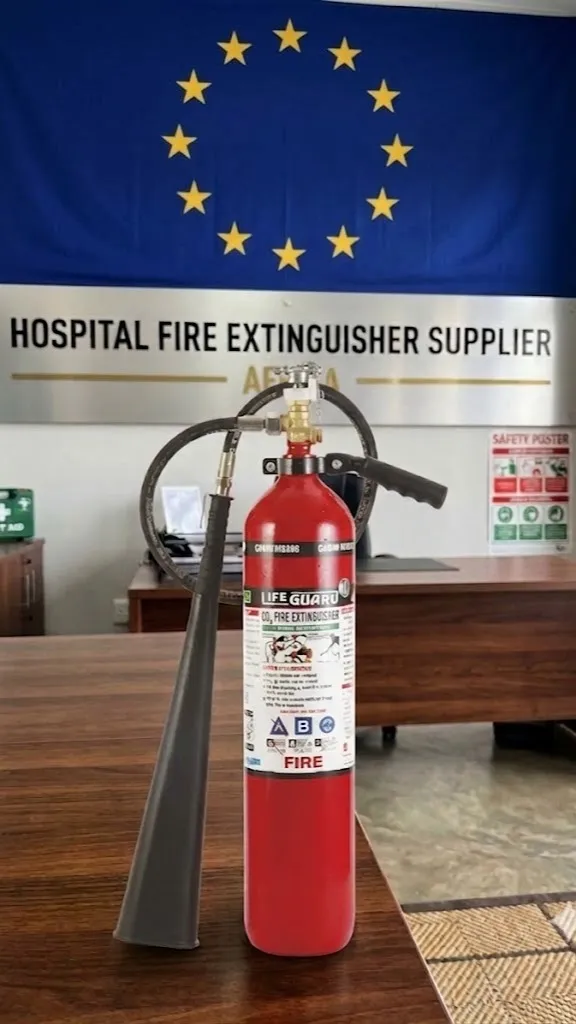
Hospital Fire Protection System Provider Europe – LIFEGUARD®
Comprehensive Fire Safety Systems for Hospitals and Healthcare Facilities Across Europe
Hospitals and healthcare facilities require a sophisticated and carefully coordinated approach to fire safety. Unlike conventional commercial buildings, hospitals operate continuously and accommodate patients who may not be able to evacuate without assistance. They also contain critical medical equipment, electrical infrastructure, laboratories, medical gases, commercial kitchens, data centres, pharmacies, intensive care facilities and other specialized risk areas.
For this reason, selecting an experienced Hospital Fire Protection System Provider in Europe is essential for creating a reliable, integrated and application-specific fire safety strategy.
LIFEGUARD® – United Fire Equipments Pvt. Ltd. provides comprehensive fire fighting, fire detection and fire suppression system solutions suitable for hospitals, healthcare institutions, diagnostic facilities, laboratories, medical colleges and healthcare infrastructure projects.
As a professional Hospital Fire Protection System Provider Europe, LIFEGUARD® focuses on combining the appropriate detection, alarm, suppression and firefighting technologies according to the individual fire risk of each hospital area.
Why Hospitals Need an Integrated Fire Protection System
A fire inside a hospital can create a particularly challenging emergency because normal evacuation procedures may not be immediately possible.
Patients may be:
- In intensive care
- Undergoing surgery
- Connected to life-support equipment
- Receiving oxygen therapy
- Recovering from medical procedures
- Bedridden
- Elderly
- Disabled
- Unable to evacuate independently
At the same time, hospitals contain sophisticated infrastructure that must remain operational whenever possible.
A comprehensive fire protection system should therefore support:
- Early detection of smoke and fire
- Rapid alarm notification
- Identification of the affected area
- Immediate fire suppression
- Restriction of fire and smoke spread
- Protection of patients and medical personnel
- Protection of medical equipment
- Protection of IT and communication systems
- Safe and controlled evacuation
- Emergency response coordination
- Reduced hospital downtime
- Protection of essential healthcare operations
LIFEGUARD® provides a multi-layered approach to hospital fire protection rather than relying on a single type of firefighting equipment.
Complete Hospital Fire Protection System Solutions
As a Hospital Fire Protection System Provider for Europe, LIFEGUARD® can support multiple fire protection requirements within a healthcare facility.
Our solution portfolio may include:
- Portable fire extinguishers
- Automatic fire detection systems
- Fire alarm systems
- Aspirating smoke detection systems
- Clean agent fire suppression systems
- Electrical panel suppression systems
- Automatic sprinkler systems
- Fire hydrant systems
- Fire hose reel systems
- Kitchen fire suppression
- Server room fire suppression
- Data centre fire suppression
- Generator room fire protection
- Medical gas area fire safety
- Laboratory fire protection
- Emergency alarm interfaces
- Fire suppression control panels
- Manual release and abort stations
- Firefighting accessories
1. Hospital Fire Detection and Alarm Systems
Early detection is one of the most important components of hospital fire protection.
An effective fire detection system helps identify developing fire conditions quickly so that hospital personnel can take appropriate action before the situation escalates.
Hospital fire detection systems may include:
- Smoke detectors
- Heat detectors
- Multi-criteria detectors
- Manual call points
- Addressable fire alarm systems
- Conventional fire alarm systems
- Fire alarm control panels
- Sounders
- Visual alarm devices
- Repeaters
- Input/output modules
- Interface modules
- Alarm annunciation
- Emergency control integration
Fire alarm systems can be configured according to hospital zones, floors, departments and risk areas to support fast identification of the alarm location.
2. Aspirating Smoke Detection Systems
Critical areas may require detection significantly earlier than conventional smoke detection systems can provide.
Aspirating Smoke Detection Systems continuously draw air samples through a pipe network and analyse the samples for smoke particles.
They can be considered for:
- Hospital data centres
- Server rooms
- IT infrastructure
- Medical records centres
- Network rooms
- Communication rooms
- Electrical control rooms
- High-value equipment areas
Very early detection provides additional time for investigation, intervention and controlled response.
3. Clean Agent Fire Suppression Systems
Hospitals contain many electrical and electronic areas where the use of water may cause significant equipment damage or operational disruption.
Clean agent fire suppression systems may therefore be considered for selected critical areas.
Applications include:
- Server rooms
- Data centres
- UPS rooms
- Electrical rooms
- Control rooms
- Communication rooms
- Medical equipment rooms
- Diagnostic infrastructure
- Sensitive electronic facilities
A typical engineered clean agent system may incorporate:
- Agent cylinders
- Cylinder valves
- Flexible discharge connections
- Distribution piping
- Engineered discharge nozzles
- Fire detection
- Gas release control panel
- Manual release station
- Abort switch
- Audio-visual alarms
- Pressure monitoring
- Safety signage
- System interlocks
The final suppression arrangement should be developed according to room volume, enclosure characteristics, fire hazard, equipment configuration and applicable project requirements.
4. Electrical Panel Fire Suppression Systems
Hospitals depend heavily on continuous electrical operation.
Electrical panels can operate around the clock and may develop fire because of:
- Short circuits
- Loose electrical connections
- Overheating
- Component failure
- Insulation deterioration
- Electrical overload
- Arcing
Localized automatic suppression systems can provide direct protection within electrical and control cabinets.
Typical applications include:
- Main LT panels
- Distribution boards
- UPS panels
- Generator control panels
- Automation panels
- Server cabinets
- Communication cabinets
- Building management system panels
- Medical equipment control panels
Automatic localized suppression attacks fire close to its source and can help prevent an internal cabinet fire from spreading to adjacent infrastructure.
5. Portable Fire Extinguishers for Hospitals
Portable extinguishers remain a fundamental element of first-response hospital fire protection.
Different extinguishing media should be selected according to the hazard.
ABC Dry Powder Fire Extinguishers
Suitable for a broad range of general fire risks.
Possible locations include:
- Maintenance departments
- Utility rooms
- Stores
- Engineering areas
- Service locations
CO₂ Fire Extinguishers
Commonly considered for electrical and electronic fire hazards because they leave no powder residue.
Suitable areas may include:
- Electrical rooms
- UPS rooms
- Control panels
- Server areas
- Communication rooms
- Electrical equipment locations
Clean Agent Fire Extinguishers
Clean agent extinguishers may be considered where sensitive electronic equipment requires residue-minimizing fire protection.
Water-Based Fire Extinguishers
Appropriate water-based extinguishers may be considered for ordinary combustible fire risks.
Wet Chemical Fire Extinguishers
Wet chemical extinguishers are particularly important in commercial kitchen environments involving high-temperature cooking oils and fats.
6. Automatic Sprinkler Systems
Automatic sprinkler systems provide an important layer of building fire protection.
When properly engineered, sprinklers can help control a developing fire and limit its spread.
Hospital sprinkler systems may protect:
- Patient wards
- Administrative areas
- Corridors
- Storage spaces
- Public areas
- Utility rooms
- Basement areas
- Parking facilities
- Service areas
- Healthcare support spaces
The layout and hydraulic requirements depend upon the building configuration, fire hazard and applicable project standards.
7. Hospital Fire Hydrant Systems
Large hospitals and healthcare campuses may require comprehensive fire hydrant infrastructure.
A typical hydrant system may include:
- Fire water tank
- Fire pumps
- Jockey pumps
- Main firefighting pumps
- Internal hydrants
- External hydrants
- Landing valves
- Hose reels
- Fire hoses
- Branch pipes
- Fire nozzles
- Hose cabinets
- Breeching inlets
- Fire brigade connections
- Distribution piping
Proper hydraulic engineering is essential to ensure adequate firefighting pressure and flow at the required locations.
8. Fire Hose Reel Systems
Fire hose reels provide readily accessible water for suitable first-aid firefighting situations.
They may be installed near:
- Corridors
- Staircases
- Fire exits
- Utility areas
- Service floors
- Plant rooms
- Common access areas
Location, accessibility and signage should be coordinated with the overall hospital fire safety plan.
9. Hospital Kitchen Fire Suppression Systems
Hospital kitchens can present significant fire risks because of continuous cooking activities.
Potential hazards include:
- Cooking oils
- Cooking fats
- Commercial fryers
- Gas appliances
- Electrical appliances
- Cooking ranges
- Hot surfaces
- Exhaust hoods
- Grease deposits
- Kitchen ductwork
A comprehensive kitchen fire protection strategy may include:
- Wet chemical fire extinguishers
- Automatic kitchen suppression
- Heat detection
- Fire alarm interfaces
- Manual emergency release
- Gas shut-off
- Electrical shutdown
- Protection of cooking appliances
- Hood and duct protection where required
10. Medical Gas and Oxygen Area Fire Protection
Medical gases are essential for hospital operation but require careful fire safety management.
Oxygen-enriched conditions can significantly intensify combustion.
Critical areas may include:
- Medical oxygen storage
- Oxygen cylinder banks
- Medical gas manifold rooms
- ICU areas
- Operating theatres
- Emergency departments
- Medical gas distribution facilities
Protection should focus heavily on prevention, leakage control, appropriate electrical equipment, detection and emergency response planning.
11. Hospital Server Room Fire Protection
Modern hospitals depend on digital technology for virtually every aspect of healthcare delivery.
Hospital server rooms may support:
- Electronic patient records
- Medical imaging
- Diagnostic information
- Pharmacy management
- Laboratory systems
- Patient monitoring
- Billing
- Building automation
- Communication networks
- Cybersecurity systems
- Telemedicine
A server room fire can therefore affect multiple departments at the same time.
LIFEGUARD® can support integrated server room protection using:
Very Early Smoke Detection + Fire Alarm + Clean Agent Suppression + Control System Integration
This approach provides both early warning and automatic fire suppression for sensitive electronic infrastructure.
12. Hospital Data Centre Fire Protection
Healthcare data centres are increasingly important because modern hospitals rely heavily on digital information and interconnected clinical systems.
Fire protection for data centres may incorporate:
- Aspirating smoke detection
- Multi-stage fire alarm
- Clean agent suppression
- Gas release control
- Manual release
- Abort controls
- Audio-visual warning
- Emergency shutdown interfaces
- Room integrity considerations
- Automatic monitoring
The system should be engineered according to the physical layout, equipment density, room construction and required level of protection.
13. Generator and Backup Power Fire Protection
Hospitals require reliable backup power to maintain critical healthcare functions during electrical failures.
Generator rooms may contain:
- Diesel fuel
- Lubricants
- Batteries
- Hot engine components
- Electrical control panels
- Cabling
- Fuel distribution equipment
Fire protection measures may include:
- Automatic detection
- Suitable portable extinguishers
- Automatic suppression systems
- Fuel shut-off
- Electrical shutdown
- Hydrant coverage
- Localized panel suppression
The appropriate protection system should be chosen through project-specific hazard assessment.
14. Laboratory Fire Protection
Hospital laboratories can present diverse fire hazards because they may contain:
- Chemicals
- Solvents
- Electrical equipment
- Diagnostic instruments
- Combustible materials
- Laboratory gases
- Heating equipment
A laboratory fire safety strategy may combine:
- Smoke detection
- Heat detection
- Alarm systems
- Appropriate extinguishers
- Automatic suppression
- Localized equipment protection
- Emergency isolation
- Safe chemical storage
Each laboratory should be assessed according to the materials and processes present.
15. MRI, CT and Diagnostic Area Fire Protection
Advanced medical diagnostic equipment represents a major capital investment and is essential for uninterrupted patient care.
Suitable fire protection may include:
- Early warning detection
- Fire alarm integration
- Appropriate portable extinguishers
- Localized electrical panel protection
- Automatic suppression where suitable
- Emergency isolation systems
Selection of fire protection technology should consider the technical requirements and operating restrictions of the medical equipment.
Hospital Fire Protection for Different Healthcare Zones
LIFEGUARD® fire protection systems can be considered across a wide range of hospital areas, including:
- Intensive Care Units
- Neonatal Intensive Care Units
- Operating Theatres
- Emergency Departments
- Patient Wards
- Recovery Rooms
- Isolation Rooms
- Radiology Departments
- MRI Areas
- CT Scan Rooms
- Diagnostic Centres
- Pathology Laboratories
- Research Laboratories
- Pharmacies
- Medicine Stores
- Blood Banks
- Medical Gas Rooms
- Oxygen Storage Areas
- Electrical Rooms
- UPS Rooms
- Server Rooms
- Data Centres
- Communication Rooms
- Generator Rooms
- Kitchens
- Laundries
- Administrative Offices
- Parking Areas
- Basements
- Warehouses
- Plant Rooms
- Medical Equipment Stores
Integrated Hospital Fire Protection System Architecture
An effective hospital fire protection system should operate as multiple coordinated layers.
Layer 1 – Fire Prevention
Fire risks should be reduced through proper housekeeping, maintenance, electrical safety and control of ignition sources.
Layer 2 – Early Detection
Smoke, heat or other indicators of fire should be detected as early as practicable.
Layer 3 – Alarm and Communication
Clear alarm notification enables healthcare staff to initiate emergency procedures.
Layer 4 – Automatic Suppression
Automatic suppression can control a fire before it becomes a large-scale emergency.
Layer 5 – Manual Firefighting
Portable extinguishers, hose reels and hydrant equipment support trained personnel and emergency responders.
Layer 6 – Compartmentation
Fire-resistant construction and smoke control help limit fire spread between hospital departments.
Layer 7 – Evacuation and Emergency Response
Evacuation procedures should consider patients with limited mobility and those dependent on critical medical equipment.
Hospital Fire Protection for New Construction Projects
Fire safety should ideally be integrated into a new hospital project during the design stage.
Early planning helps coordinate:
- Fire alarm zoning
- Detector placement
- Suppression system design
- Sprinkler layouts
- Hydrant networks
- Fire pump capacity
- Cylinder bank locations
- Fire water storage
- Equipment accessibility
- Emergency exits
- Electrical shutdown
- HVAC interfaces
- Medical gas isolation
- Alarm cause-and-effect logic
- Fire-rated compartmentation
Early fire protection planning can reduce redesign and improve coordination between architectural, electrical, mechanical, HVAC, medical equipment and fire protection disciplines.
Hospital Fire Protection Retrofit and Modernization
Existing healthcare facilities often require fire safety modernization.
Upgrades may be required because of:
- Hospital expansion
- New patient wards
- New diagnostic equipment
- Electrical infrastructure upgrades
- Server room modernization
- Additional medical gas installations
- Fire safety audits
- Replacement of aging systems
- Revised insurance requirements
- Building renovations
- Increased occupancy
LIFEGUARD® can support project-specific retrofit and replacement fire protection requirements.
Hospital Fire Protection Engineering Support
Selecting fire equipment is only one part of an effective fire protection project.
Depending on the scope, system-provider support may include:
- Hazard identification
- Equipment selection
- System configuration
- Technical datasheets
- Product catalogues
- System drawings
- Bill of quantities
- Equipment schedules
- Technical submittals
- Installation guidance
- Suppression system calculations
- Nozzle and piping coordination
- Control philosophy
- Alarm integration
- Project documentation
This system-oriented approach helps contractors, consultants and hospital developers coordinate multiple fire protection technologies within one project.
One Hospital – Multiple Fire Risks – Multiple Protection Technologies
One of the most important principles of healthcare fire protection is that different hospital areas require different protection strategies.
For example:
Patient Ward → Fire alarm + appropriate portable extinguishers + sprinkler protection where required
Server Room → Aspirating smoke detection + clean agent suppression
Electrical Panel → Localized automatic suppression
Hospital Kitchen → Wet chemical fire protection
Generator Room → Detection + suppression + fuel isolation
Laboratory → Hazard-specific detection and extinguishing
Data Centre → Very early warning detection + clean agent suppression
Parking Facility → Detection + hydrant/sprinkler protection according to project requirements
This risk-based approach forms the foundation of comprehensive hospital fire protection.
Hospital Fire Protection System Provider Across Europe
LIFEGUARD® can support healthcare fire protection requirements for international projects across European markets, including:
Germany, France, Italy, Spain, Portugal, Netherlands, Belgium, Austria, Switzerland, Poland, Czech Republic, Romania, Hungary, Sweden, Norway, Denmark, Finland, Ireland, Greece and other European markets.
Equipment and system configurations should always be selected according to project specifications, applicable national requirements, consultant recommendations and relevant standards.
Why Choose LIFEGUARD® as a Hospital Fire Protection System Provider Europe?
Comprehensive Product Portfolio
LIFEGUARD® provides access to multiple fire protection technologies for different healthcare risks.
Integrated System Approach
Fire detection, suppression and firefighting equipment can be coordinated as part of a broader hospital safety strategy.
Application-Based Selection
Different hazards are addressed using the appropriate firefighting or suppression technology rather than a generic solution.
Support for Critical Infrastructure
Specialized protection can be provided for server rooms, data centres, electrical panels, UPS installations and other high-value assets.
Project-Oriented Engineering
Fire safety solutions can be developed according to project drawings, specifications and identified hazards.
Technical Documentation Support
Project support may include technical submittals, datasheets, drawings, equipment schedules and related documentation.
International Project Support
LIFEGUARD® can support international contractors, consultants, distributors and project organizations with project-specific technical and commercial coordination.
Who Can Work with LIFEGUARD®?
LIFEGUARD® can support fire protection requirements for:
- Hospital developers
- Healthcare groups
- EPC contractors
- MEP contractors
- Fire protection contractors
- Engineering consultants
- Architects
- Healthcare facility managers
- Fire safety consultants
- Distributors
- System integrators
- Government healthcare projects
- Private hospital projects
Fire Protection Beyond Hospitals
Our healthcare fire safety solutions can also be considered for:
- Medical colleges
- Nursing homes
- Diagnostic centres
- Pathology laboratories
- Research centres
- Rehabilitation centres
- Specialist clinics
- Dental hospitals
- Pharmaceutical laboratories
- Blood banks
- Healthcare warehouses
- Medical equipment facilities
- Ambulance infrastructure
- Healthcare campuses
Benefits of Choosing an Integrated Hospital Fire Protection System
A properly planned hospital fire protection system can provide multiple operational and safety benefits.
Enhanced Life Safety
Early detection and automatic intervention can reduce the possibility of a fire developing into a major emergency.
Protection of Medical Equipment
Specialized suppression technologies can help protect expensive electronic and diagnostic assets.
Faster Emergency Response
Accurate alarm information enables staff and emergency teams to identify the affected area quickly.
Reduced Operational Downtime
Rapid containment can help minimize disruption to healthcare services.
Protection of Digital Infrastructure
Data centre and server room protection helps preserve essential clinical information and IT systems.
Improved System Coordination
Integrated fire protection helps detection, alarm, suppression and emergency interfaces work together more effectively.
Frequently Asked Questions – Hospital Fire Protection System Provider Europe
What does a Hospital Fire Protection System Provider do?
A hospital fire protection system provider supports the selection and integration of appropriate fire detection, firefighting and suppression solutions for different areas within a healthcare facility.
Which fire protection systems are commonly used in hospitals?
Depending on the building and applicable requirements, hospitals may use fire alarm systems, smoke detection, sprinklers, hydrants, hose reels, portable extinguishers, clean agent suppression and specialized localized suppression systems.
Which fire suppression system is suitable for hospital server rooms?
Engineered clean agent systems are often considered for server and data rooms because they can provide rapid suppression while minimizing residue on sensitive electronic equipment. Final selection should be based on detailed engineering.
Can electrical panels inside hospitals have automatic fire suppression?
Yes. Localized automatic suppression systems can be installed for appropriate electrical and control cabinet applications.
Do hospital kitchens require specialized fire suppression?
Commercial kitchens can require specialized fire protection because of high-temperature cooking oils, fats and cooking appliances. Wet chemical protection and automatic kitchen suppression may be considered according to the hazard and applicable requirements.
Does LIFEGUARD® support complete hospital fire protection projects?
LIFEGUARD® can support multiple fire protection requirements including fire extinguishers, detection and alarm equipment, clean agent suppression, localized suppression and associated firefighting systems depending on the project scope.
Can LIFEGUARD® support European hospital projects?
LIFEGUARD® – United Fire Equipments Pvt. Ltd. can support international hospital and healthcare fire protection requirements subject to project specifications, applicable regulations and commercial requirements.
Partner with LIFEGUARD® – Hospital Fire Protection System Provider Europe
Healthcare facilities need fire protection systems designed around the realities of modern hospital operations. Patient safety, continuity of care, critical equipment protection and rapid emergency response must all be considered together.
LIFEGUARD® – United Fire Equipments Pvt. Ltd. provides application-oriented fire fighting, fire detection and suppression solutions for healthcare projects.
Whether the requirement involves a new hospital, medical college, diagnostic centre, data centre, server room, laboratory, electrical installation or existing hospital modernization project, LIFEGUARD® can support the development of an appropriate fire protection package.
For hospital developers, EPC contractors, consultants, MEP contractors and distributors looking for a dependable Hospital Fire Protection System Provider Europe, LIFEGUARD® offers comprehensive fire safety solutions supported by technical expertise and project-oriented engineering.
SEO Meta Title
Hospital Fire Protection System Provider Europe | LIFEGUARD®
SEO Meta Description
LIFEGUARD® is a hospital fire protection system provider for Europe offering fire alarms, extinguishers, clean agent suppression, sprinklers, hydrants and specialized healthcare fire safety systems.
Suggested SEO URL
/hospital-fire-protection-system-provider-europe/
Primary SEO Keyword
Hospital Fire Protection System Provider Europe
Secondary SEO Keywords
- Hospital fire protection provider Europe
- Hospital fire safety system provider Europe
- Healthcare fire protection system Europe
- Hospital fire suppression system provider Europe
- Hospital fire alarm system provider Europe
- Hospital fire extinguisher system Europe
- Healthcare fire safety solutions Europe
- Hospital clean agent suppression Europe
- Hospital server room fire protection Europe
- Hospital data centre fire suppression Europe
- Hospital electrical panel suppression Europe
- Hospital fire fighting system Europe
- Healthcare fire suppression provider Europe
- Medical facility fire protection Europe
- Hospital fire protection company Europe
- Hospital fire safety equipment Europe
- Integrated hospital fire protection Europe
- European hospital fire protection provider
- Hospital automatic fire suppression Europe
- Hospital fire detection system Europe
Suggested Image Alt Text
- Hospital Fire Protection System Provider Europe
- LIFEGUARD Hospital Fire Protection Systems Europe
- Hospital Fire Alarm System Europe
- Hospital Clean Agent Fire Suppression System Europe
- Hospital Server Room Fire Protection Europe
- Healthcare Fire Protection System Europe
- Hospital Electrical Panel Fire Suppression Europe
- Hospital Hydrant and Sprinkler System Europe
SEO H1
Hospital Fire Protection System Provider Europe
Suggested CTA
Looking for a reliable Hospital Fire Protection System Provider in Europe? Contact LIFEGUARD® – United Fire Equipments Pvt. Ltd. for fire detection, fire alarms, clean agent suppression, extinguishers, electrical panel suppression and comprehensive healthcare fire protection systems.
Keywords






