
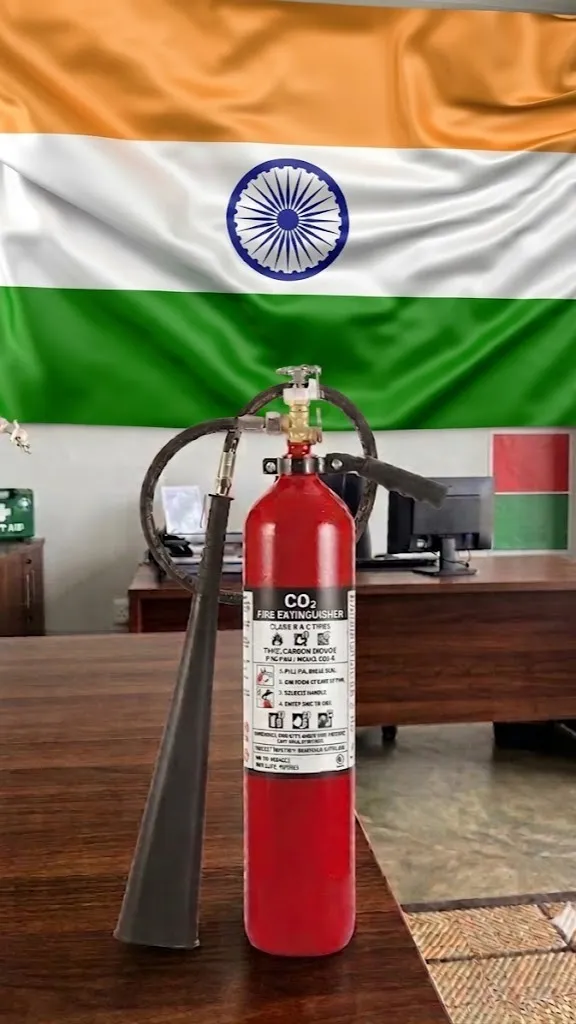
Hospital Fire Protection System Provider India – LIFEGUARD® Integrated Healthcare Fire Safety Solutions
Hospitals are highly sensitive occupancies where fire safety must protect patients, doctors, nurses, visitors, critical medical equipment and uninterrupted healthcare operations. Because many patients may be unable to evacuate independently, healthcare facilities require carefully planned fire detection, alarm, suppression and emergency response systems.
LIFEGUARD® – United Fire Equipments Pvt. Ltd. is a trusted hospital fire protection system provider in India, offering fire-fighting equipment, fire detection systems and engineered suppression solutions for hospitals, medical colleges, diagnostic centres, nursing homes, laboratories and healthcare infrastructure projects.
From portable fire extinguishers and fire alarm systems to clean agent suppression, hydrant equipment and specialized protection for electrical and server rooms, LIFEGUARD® supports integrated fire safety requirements for both new and existing healthcare facilities.
Leading Hospital Fire Protection System Provider in India
Hospital fire safety cannot be addressed with a single product. Different areas of a healthcare facility have completely different hazards and operational requirements.
A patient ward, operation theatre, hospital kitchen, server room, electrical room and laboratory each demand an appropriate fire protection strategy.
As an experienced hospital fire protection system provider India, LIFEGUARD® can support requirements for:
- Fire extinguishers
- Fire detection and alarm systems
- Smoke detectors
- Heat detectors
- Multi-criteria detectors
- Manual call points
- Fire alarm control panels
- Hooters and sounders
- Audio-visual alarms
- Aspirating smoke detection systems
- Clean agent fire suppression systems
- FK-5-1-12 suppression systems
- HFC-227ea suppression systems
- CO₂ suppression systems
- Gas release panels
- Manual release stations
- Abort switches
- Fire hydrant equipment
- Hose reel systems
- Fire fighting hoses
- Hose boxes
- Landing valves
- Fire brigade connections
- Specialized electrical panel suppression
- Fire protection system accessories
This enables hospital owners, consultants, EPC contractors and MEP companies to coordinate multiple fire safety requirements through one experienced provider.
Why Hospital Fire Protection Is Critical
Hospitals operate 24 hours a day and contain occupants with widely varying levels of mobility.
Patients may be:
- Bedridden
- Under anesthesia
- Connected to life-support equipment
- Recovering from surgery
- Receiving intensive care
- Elderly
- Newborns or children
- Unable to evacuate without assistance
Hospitals also contain a combination of potential hazards such as electrical equipment, cooking appliances, combustible materials, batteries, medical electronics, laboratories and mechanical installations.
An effective fire protection strategy must therefore provide early detection, rapid warning, controlled emergency response and suitable suppression for each specific hazard.
Fire Protection Areas in a Modern Hospital
A comprehensive hospital fire safety plan may cover:
- Patient wards
- ICUs
- NICUs
- Operation theatres
- Emergency departments
- Radiology areas
- MRI facilities
- Diagnostic rooms
- Laboratories
- Pharmacies
- Medical stores
- Server rooms
- Data centres
- UPS rooms
- Battery rooms
- Electrical rooms
- Control rooms
- Hospital kitchens
- Laundry areas
- Generator rooms
- Plant rooms
- Administrative offices
- Parking areas
Every space must be assessed according to its fire load, occupancy, equipment and operating conditions.
Hospital Fire Detection and Alarm Systems
Early warning is one of the most important elements of hospital fire safety.
A properly planned detection system can identify abnormal fire conditions and immediately communicate alarms to hospital staff and emergency personnel.
Hospital fire alarm systems may include:
- Fire alarm control panels
- Smoke detectors
- Heat detectors
- Multi-criteria detectors
- Manual call points
- Repeater panels
- Sounders
- Hooters
- Flashers
- Input modules
- Output modules
- Monitoring modules
- Control modules
- System interfaces
Correct zoning helps identify the exact area where an alarm originates and supports faster emergency response.
Smoke Detection Systems for Hospitals
Smoke detectors can provide early warning in many healthcare areas.
Typical applications include:
- Patient corridors
- Administrative offices
- Stores
- Server rooms
- Electrical areas
- Technical rooms
- Communication spaces
- Medical equipment rooms
Detector selection should be based on environmental conditions and expected fire characteristics.
Heat Detection Systems
Heat detection can be useful for locations where normal environmental conditions may make smoke detection less suitable.
Applications may include suitable:
- Utility rooms
- Kitchen-associated spaces
- Plant rooms
- Mechanical areas
The final detector selection should always match the specific fire hazard.
Aspirating Smoke Detection Systems
Hospitals increasingly depend on critical electronic and digital infrastructure.
For areas requiring very early warning, aspirating smoke detection can continuously draw air samples through a pipe network and analyse them for early smoke particles.
Potential applications include:
- Hospital server rooms
- Data centres
- Network rooms
- Critical electrical rooms
- Medical technology rooms
- Communication facilities
- High-value equipment areas
Early warning provides valuable additional time for investigation and intervention.
Clean Agent Fire Suppression Systems for Hospitals
Hospitals contain numerous areas where water or powder-based suppression may cause secondary damage to expensive electronic equipment.
For these areas, clean agent fire suppression can provide a suitable solution when correctly engineered.
Typical applications include:
- Server rooms
- Data centres
- Electrical rooms
- Communication rooms
- Network rooms
- UPS rooms
- Control rooms
- Medical equipment support rooms
A typical system may comprise:
- Clean agent cylinders
- Cylinder valves
- Actuation equipment
- Distribution piping
- Discharge nozzles
- Detection devices
- Gas release control panel
- Manual release station
- Abort switch
- Audio-visual warning devices
- Pressure monitoring components
- Fire alarm interfaces
System performance depends on correct agent quantity, piping configuration, nozzle arrangement and enclosure conditions.
FK-5-1-12 Fire Suppression for Hospital Applications
FK-5-1-12-based systems may be used for suitable sensitive electronic environments where residue-free suppression is required.
Applications can include:
- Hospital data centres
- Server rooms
- Control rooms
- Communication rooms
- Electrical equipment rooms
- Medical records facilities
An engineered design can consider:
- Protected volume
- Design concentration
- Agent quantity
- Cylinder size
- Pipe routing
- Pipe diameter
- Nozzle placement
- Hydraulic performance
- Discharge characteristics
- Enclosure integrity
HFC-227ea Fire Suppression Systems
HFC-227ea systems may be considered for suitable total-flooding applications where permitted by project requirements and applicable regulations.
Potential healthcare applications can include:
- Server rooms
- Electrical rooms
- Communication spaces
- Control rooms
- Other suitable critical technical areas
The final design should be based on the protected enclosure and approved project criteria.
Hospital Server Room Fire Protection
Modern hospitals depend heavily on IT infrastructure.
Hospital servers can support:
- Electronic medical records
- Patient databases
- Medical imaging
- Pharmacy systems
- Laboratory systems
- Billing platforms
- Communication networks
- CCTV
- Building management systems
- Hospital management software
Failure of this infrastructure due to fire can disrupt hospital operations.
An integrated server room solution can include:
- Early smoke detection
- Automatic fire alarm
- Clean agent suppression
- Manual release
- Abort facility where required
- Pre-discharge warning
- Audio-visual alarm
- Engineered piping and nozzles
- Appropriate room integrity
This provides rapid detection while reducing the risk of residue-related damage to sensitive equipment.
Hospital Electrical Room Fire Protection
Electrical systems are fundamental to hospital operations.
Critical electrical locations can include:
- HT panels
- LT panels
- Distribution panels
- UPS systems
- Control panels
- Generator control panels
- Battery backup equipment
- BMS panels
- Communication panels
Depending on the hazard, protection can include:
- Smoke detection
- Heat detection
- Clean agent suppression
- Fire alarm monitoring
- Suitable CO₂ extinguishers
- Appropriate portable extinguishers
- Panel-level suppression
- Audio-visual warning devices
System selection should consider the specific equipment and potential ignition sources.
Hospital UPS and Battery Room Fire Protection
Hospitals depend on reliable backup power for critical healthcare services.
UPS and battery rooms therefore require careful fire risk assessment.
Depending on the battery chemistry and installation, protection may involve:
- Smoke detection
- Heat detection
- Aspirating detection
- Gas monitoring where required
- Automatic suppression
- Alarm integration
- Ventilation coordination
- Suitable portable fire extinguishers
The battery technology should always be identified before selecting the suppression strategy.
Fire Protection for ICU and Critical Care Areas
Intensive Care Units contain vulnerable patients and electrically powered medical devices.
A suitable ICU fire safety strategy can include:
- Early smoke detection
- Fire alarm integration
- Emergency notification
- Suitable portable extinguishers
- Fire compartmentation
- Emergency response procedures
The objective is to detect and control incidents rapidly while minimizing disruption to patient care.
Operation Theatre Fire Protection
Operation theatres are highly controlled medical environments containing sophisticated equipment.
Fire protection can incorporate:
- Early detection
- Fire alarm connectivity
- Suitable extinguishing equipment
- Protection of associated electrical areas
- Protection of control rooms
- Emergency notification
System design must consider the clinical environment as well as patient safety.
Hospital Laboratory Fire Protection
Hospital laboratories may contain electrical instruments, chemicals, reagents and combustible materials.
Protection requirements depend on the processes and substances present.
Solutions may include:
- Fire detection systems
- Appropriate portable extinguishers
- Fire alarm systems
- Specialized suppression
- Clean agent protection for electronic equipment
- Emergency notification systems
A detailed hazard assessment should guide equipment selection.
MRI, Radiology and Diagnostic Area Fire Protection
Hospitals often contain costly and sensitive diagnostic equipment.
Fire protection for MRI, imaging and diagnostic areas should be carefully selected to avoid introducing additional hazards or unnecessary equipment damage.
Depending on the application, protection may include:
- Early smoke detection
- Fire alarm integration
- Appropriate fire extinguishers
- Control-room protection
- Clean agent suppression for suitable technical spaces
Hospital Kitchen Fire Protection Systems
Hospital kitchens can present significant fire risks from:
- Cooking oil
- Deep-fat fryers
- LPG or gas equipment
- Electrical appliances
- Exhaust hoods
- Grease deposits
- Hot cooking surfaces
A suitable kitchen fire safety arrangement may include:
- Wet chemical extinguishers
- Suitable portable extinguishers
- Fire detection
- Kitchen hood suppression where specified
- Emergency shutdown arrangements
- Gas or electrical isolation
- Fire alarm integration
Portable Fire Extinguishers for Hospitals
Correct selection and placement of portable fire extinguishers is essential for first-response fire fighting.
ABC Dry Powder Fire Extinguishers
Suitable applications can include:
- Plant rooms
- Parking facilities
- Utility rooms
- Workshops
- Service areas
CO₂ Fire Extinguishers
CO₂ extinguishers are commonly considered for suitable electrical risks because they do not leave powder residue.
Applications can include:
- Electrical rooms
- Server rooms
- UPS rooms
- Control panels
- Equipment rooms
Water-Based Fire Extinguishers
Water-based extinguishers may be selected for suitable ordinary combustible materials.
Foam Fire Extinguishers
Foam extinguishers can provide protection for suitable Class A and flammable-liquid hazards.
Wet Chemical Fire Extinguishers
Wet chemical extinguishers are designed for appropriate cooking oil and commercial kitchen fire risks.
Fire Hydrant Systems for Hospitals
Large hospital buildings and healthcare campuses require dependable water-based fire fighting infrastructure.
Hydrant equipment can include:
- Internal hydrants
- External hydrants
- Landing valves
- Fire fighting hoses
- Hose boxes
- Branch pipes
- Nozzles
- Fire brigade connections
- Associated accessories
System design should provide the required water flow and pressure throughout the protected facility.
Hospital Fire Hose Reel Systems
Hose reels can provide an immediately available water supply for suitable first-response fire fighting.
A typical installation may include:
- Hose reel drum
- Fire hose
- Nozzle
- Isolation valve
- Cabinet
- Piping
Their location should be coordinated with the approved fire protection design.
Gas Release Panels for Hospital Fire Suppression
Automatic suppression systems require dependable release control.
Gas release panels can perform functions such as:
- Detector monitoring
- Cross-zone logic
- Pre-discharge warning
- Manual release
- Abort control
- Solenoid activation
- Hooter operation
- Flasher operation
- Fault monitoring
- Fire alarm panel integration
- Equipment shutdown signals
In hospitals, cause-and-effect logic must be carefully coordinated because unnecessary shutdown of equipment may interfere with essential clinical operations.
Fire Protection for Pharmacies and Medical Stores
Pharmacies and medical stores may contain medicines, cartons and substantial quantities of packaging materials.
Suitable protection can include:
- Smoke detection
- Fire alarm systems
- Portable extinguishers
- Approved water-based protection where required
- Emergency response equipment
- Proper storage management
Generator and Plant Room Fire Protection
Hospitals use generator and mechanical systems to maintain continuous operations.
Plant-room fire safety may involve:
- Smoke or heat detection
- Portable fire extinguishers
- Automatic suppression where specified
- Fire alarm integration
- Hydrant coverage
- Emergency shutdown arrangements
Hospital Fire Protection System Engineering
A professional hospital fire protection system provider in India should evaluate the actual project rather than applying a standard equipment package.
Engineering considerations can include:
- Hospital layout
- Floor area
- Occupancy
- Hazard classification
- Room dimensions
- Medical equipment
- Electrical equipment
- Raised floors
- False ceilings
- HVAC systems
- Fire alarm zones
- Detection requirements
- Suppression requirements
- Cylinder locations
- Pipe routing
- Nozzle positions
- Hydrant coverage
- System interfaces
This project-specific approach helps improve fire protection performance and coordination.
Hospital Fire Protection System Integration
Fire protection systems may need to interface with:
- Fire alarm systems
- HVAC systems
- Air handling units
- Building management systems
- Access control systems
- Dampers
- Emergency doors
- Electrical shutdown systems
- Suppression panels
- Audio-visual alarm systems
Correctly planned cause-and-effect sequences help ensure that connected systems respond appropriately during an emergency.
Hospital Fire Protection for New Projects
Fire protection should ideally be coordinated at the design stage of a new hospital.
Early engineering helps determine:
- Detector locations
- Alarm zoning
- Hydrant locations
- Hose reel locations
- Fire extinguisher positions
- Suppression-protected rooms
- Cylinder locations
- Piping routes
- Nozzle arrangements
- Control-panel positions
- HVAC and electrical interfaces
Early coordination can also reduce conflicts between architectural, electrical, HVAC and fire-fighting services.
Hospital Fire Protection Retrofit and Upgradation
Existing hospitals may need system modernization because of expansion, aging equipment or changes in infrastructure.
Typical retrofit requirements include:
- Replacement of fire alarm panels
- Additional smoke detectors
- New clean agent systems
- Protection of new server rooms
- Electrical room protection
- Aspirating smoke detection
- Additional fire extinguishers
- Hydrant system expansion
- Additional hose reels
- Replacement of damaged fire fighting accessories
Hospital Fire Protection System Provider for Government Projects
LIFEGUARD® can support fire safety requirements for:
- Government hospitals
- Medical colleges
- Research institutions
- Healthcare campuses
- Public-sector healthcare facilities
- Institutional medical projects
Project requirements can be evaluated according to:
- BOQs
- Technical specifications
- Project drawings
- Approved makes
- Tender requirements
- Consultant requirements
Hospital Fire Protection System Provider for Private Hospitals
LIFEGUARD® also supports private healthcare infrastructure such as:
- Multi-speciality hospitals
- Super-speciality hospitals
- Healthcare chains
- Diagnostic centres
- Nursing homes
- Trauma centres
- Day-care hospitals
- Specialist medical facilities
We can coordinate with:
- Hospital developers
- Architects
- Fire consultants
- MEP consultants
- EPC contractors
- Facility management companies
- Fire protection contractors
- System integrators
Hospital Fire Protection System Provider Across India
LIFEGUARD® supports healthcare fire protection requirements across major Indian markets, including:
- Delhi
- Delhi NCR
- Noida
- Greater Noida
- Gurugram
- Faridabad
- Ghaziabad
- Mumbai
- Navi Mumbai
- Pune
- Bengaluru
- Hyderabad
- Chennai
- Kolkata
- Ahmedabad
- Surat
- Vadodara
- Jaipur
- Chandigarh
- Lucknow
- Kanpur
- Indore
- Bhopal
- Patna
- Bhubaneswar
- Guwahati
- Kochi
- Other locations throughout India
Why Choose LIFEGUARD® as a Hospital Fire Protection System Provider India?
Comprehensive Fire Safety Portfolio
LIFEGUARD® provides a wide range of detection, alarm, suppression and fire-fighting equipment for healthcare applications.
Project-Specific Engineering
System selection can be based on actual hazard conditions, room dimensions, equipment and project specifications.
Engineered Suppression Capability
Critical areas such as server rooms, electrical rooms and technical spaces can be evaluated for specialized suppression requirements.
Support for EPC and MEP Contractors
LIFEGUARD® supports contractors with technical information, system equipment and project-specific fire safety requirements.
OEM Fire Safety Experience
United Fire Equipments Pvt. Ltd. manufactures and supplies fire-fighting equipment under the LIFEGUARD® brand for commercial, institutional, industrial and infrastructure applications.
Technical Documentation Support
Depending on project scope, assistance can include:
- Product datasheets
- Technical specifications
- Equipment schedules
- System drawings
- Compliance documentation
- Technical submittals
- BOQ evaluation
- Product selection support
Healthcare Facilities We Serve
LIFEGUARD® hospital fire protection solutions can support:
- Government hospitals
- Private hospitals
- Super-speciality hospitals
- Multi-speciality hospitals
- Medical colleges
- Nursing homes
- Trauma centres
- Cancer hospitals
- Cardiac hospitals
- Eye hospitals
- Dental hospitals
- Diagnostic centres
- Pathology laboratories
- Rehabilitation centres
- Healthcare campuses
- Medical research centres
Frequently Asked Questions
Who is a hospital fire protection system provider in India?
LIFEGUARD® – United Fire Equipments Pvt. Ltd. provides fire-fighting equipment, fire detection systems, suppression solutions and associated fire protection products for hospitals and healthcare infrastructure projects in India.
What fire protection systems are used in hospitals?
Depending upon the building, hospital fire protection may include fire detection and alarms, portable extinguishers, hydrants, hose reels, sprinklers where required and specialized suppression systems for critical technical areas.
Which fire suppression system is suitable for a hospital server room?
Clean agent suppression is commonly considered for sensitive electronic environments because suitable clean agents can provide suppression without leaving powder residue. The final system must be engineered for the specific room and project requirements.
Can different hospital departments require different fire protection systems?
Yes. Kitchens, ICUs, laboratories, electrical rooms, server rooms, plant areas and patient spaces can have different fire hazards and therefore require different protection strategies.
Does LIFEGUARD® provide hospital electrical room fire protection?
Yes. Depending on the project, solutions can include detection, appropriate portable extinguishers, clean agent systems and specialized equipment protection.
Does LIFEGUARD® support EPC and MEP hospital projects?
Yes. LIFEGUARD® can support EPC contractors, MEP contractors, consultants and system integrators with equipment and technical requirements for hospital fire protection projects.
Can existing hospitals upgrade their fire protection systems?
Yes. Existing facilities can be evaluated for additional detection, modern alarm systems, suppression installations, extinguisher replacement, hydrant expansion and other fire safety improvements.
Contact LIFEGUARD® – Hospital Fire Protection System Provider India
For new hospital projects, healthcare infrastructure developments, system upgrades or specialized fire suppression requirements, contact LIFEGUARD® – United Fire Equipments Pvt. Ltd.
We welcome inquiries from hospital owners, architects, consultants, EPC contractors, MEP contractors, fire protection contractors, healthcare groups and facility management companies seeking a dependable hospital fire protection system provider in India.
LIFEGUARD®
United Fire Equipments Pvt. Ltd.
Manufacturer of Fire Fighting Equipment & Fire Protection Systems
Delhi, India
Share your BOQ, drawings, technical specifications, room dimensions and required fire protection scope for project evaluation.
SEO Title
Hospital Fire Protection System Provider India | LIFEGUARD®
Meta Description
LIFEGUARD® is a hospital fire protection system provider in India offering fire extinguishers, fire alarms, clean agent suppression, detection, hydrants, hose reels and customized healthcare fire safety systems.
Suggested URL
/hospital-fire-protection-system-provider-india/
Primary SEO Keyword
hospital fire protection system provider India
Secondary SEO Keywords
- hospital fire safety system provider India
- hospital fire suppression system provider India
- healthcare fire protection system India
- hospital fire protection company India
- hospital fire safety solutions India
- hospital fire protection solutions India
- hospital fire alarm system provider India
- hospital fire extinguisher supplier India
- hospital clean agent suppression India
- hospital server room fire protection India
- hospital electrical room fire protection India
- hospital fire fighting equipment India
- healthcare fire safety company India
- hospital suppression company India
- hospital fire protection manufacturer India
- hospital fire safety equipment provider India
- hospital fire suppression solutions India
- hospital fire detection system India
Suggested Image ALT Text
LIFEGUARD hospital fire protection system provider India offering fire detection, clean agent suppression, fire extinguishers, fire alarms, hydrants and healthcare fire safety solutions
Keywords






