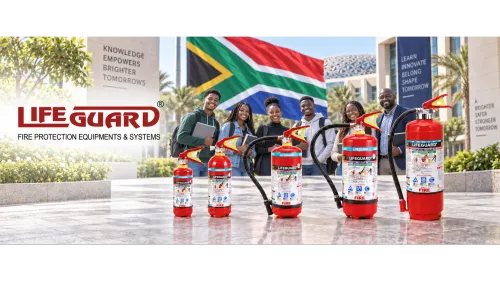

Hospital Fire Safety Equipment Solutions Africa – LIFEGUARD® Complete Fire Protection Solutions for Healthcare Facilities
Hospitals and healthcare facilities require a specialized approach to fire safety because they operate continuously, accommodate patients with limited mobility, contain sensitive medical equipment, and include several high-risk areas such as laboratories, pharmacies, kitchens, electrical rooms, oxygen storage areas, data centres, operation theatres, intensive care units and diagnostic facilities. An effective hospital fire protection strategy must therefore focus on early detection, rapid warning, reliable suppression, safe evacuation and protection of critical infrastructure.
LIFEGUARD® provides hospital fire safety equipment solutions in Africa for hospitals, medical colleges, healthcare centres, diagnostic laboratories, nursing homes, clinics and other healthcare establishments. Our solutions can incorporate fire extinguishers, fire alarm and detection systems, clean-agent suppression systems, hydrant equipment, hose reels, water-based firefighting systems, specialized suppression solutions and associated fire safety accessories.
From individual fire safety products to integrated protection solutions, LIFEGUARD® supports healthcare projects requiring dependable fire protection equipment for different risk areas within a hospital complex.
Comprehensive Hospital Fire Safety Equipment Solutions in Africa
Hospitals present multiple fire hazards within a single facility. Patient wards require a different protection strategy from electrical rooms, kitchens, laboratories, server rooms and medical-gas installations. Consequently, hospital fire safety should not depend on a single type of equipment.
LIFEGUARD® provides a comprehensive range of hospital fire safety equipment solutions for Africa, allowing fire protection systems to be selected according to the nature of the hazard, building configuration, occupancy characteristics and applicable project requirements.
Our solutions can cover:
- Portable and mobile fire extinguishers
- Fire detection and alarm systems
- Addressable and conventional fire alarm solutions
- Smoke, heat and multi-criteria detection
- Manual call points and alarm notification devices
- Clean-agent fire suppression systems
- CO₂ fire suppression systems for appropriate applications
- Water-mist fire suppression solutions
- Fire hydrant and hose reel equipment
- Sprinkler-system components
- Fire hose boxes and cabinets
- Fire hoses, branch pipes and nozzles
- Fireman safety equipment
- Kitchen fire suppression solutions
- Electrical panel fire protection systems
- Server-room and data-centre fire suppression
- Battery and electrical energy storage fire safety solutions
- Specialized fire detection systems
- Fire safety accessories and system components
This integrated approach helps healthcare organizations establish multiple layers of fire protection throughout their premises.
Why Hospitals Need Specialized Fire Protection
A fire in a conventional commercial building may require rapid evacuation of occupants. Hospitals, however, have substantially more complicated evacuation requirements because many occupants cannot move without assistance.
Critical patients may depend on:
- Ventilators
- Medical oxygen
- Patient monitoring equipment
- Dialysis machines
- Life-support systems
- Infusion equipment
- Critical electrical supplies
- Specialized medical installations
A hospital fire safety system must therefore detect developing fires at an early stage while allowing medical personnel and emergency response teams sufficient time to take controlled action.
Fire safety planning should support the fundamental objectives of life safety, property protection, continuity of healthcare services and protection of essential infrastructure.
Fire Safety Equipment for Different Hospital Areas
1. Patient Wards
Patient wards represent one of the most important life-safety areas within any hospital.
Protection may include:
- Smoke detection
- Fire alarm notification
- Portable fire extinguishers
- Hose reel arrangements
- Sprinkler protection where specified
- Manual call points
- Emergency evacuation equipment
Detection systems should provide quick identification of a developing fire while reducing unnecessary disruption to patients.
2. Intensive Care Units – ICU
Intensive care units accommodate patients who frequently cannot be evacuated without medical support.
Fire protection for ICU environments may include:
- Sensitive smoke detection
- Addressable fire alarm systems
- Appropriate portable fire extinguishers
- Controlled alarm notification
- Integration with building fire safety systems
Fire safety design should consider the critical nature of patient care and the need for rapid staff response.
3. Operation Theatres
Operation theatres contain sophisticated medical equipment, electrical installations and controlled environments.
Potential protection measures include:
- Fire detection systems
- Suitable extinguishing equipment
- Clean-agent protection for associated electrical or technical rooms
- Alarm and emergency communication systems
- Fire-resistant compartmentation coordinated with the overall building strategy
Fire protection should be selected carefully to avoid unnecessary damage to valuable medical equipment.
4. Hospital Electrical Rooms
Electrical rooms may contain switchgear, distribution panels, transformers, UPS equipment and control systems.
Depending on the identified hazard, protection can include:
- CO₂ extinguishers
- Clean-agent fire suppression systems
- Automatic detection
- Electrical-panel fire suppression solutions
- Smoke and heat detection
- Manual and automatic release arrangements
The objective is to extinguish or control a fire while limiting secondary damage to essential electrical infrastructure.
Clean-Agent Fire Suppression for Hospitals
Clean-agent fire suppression is particularly valuable where conventional water discharge could damage sensitive electronic or electrical equipment.
Hospital applications can include:
- Server rooms
- Data centres
- UPS rooms
- Communication rooms
- Medical equipment control rooms
- Electrical rooms
- Records and archive facilities
- Diagnostic equipment support rooms
Depending on project requirements, engineered clean-agent systems may use appropriate gaseous extinguishing agents.
A typical system can include:
- Agent cylinders
- Cylinder valves
- Discharge piping
- Engineered discharge nozzles
- Detection devices
- Gas-release control panel
- Manual release station
- Abort switch
- Audible and visual alarms
- Pressure monitoring accessories
- Interface modules
Correct system engineering, enclosure evaluation, agent quantity calculation and discharge arrangement are essential for dependable performance.
Hospital Server Room Fire Suppression Solutions Africa
Modern hospitals depend heavily on digital infrastructure.
Hospital server rooms support:
- Hospital information systems
- Patient medical records
- Laboratory records
- Imaging data
- Billing systems
- Security systems
- Communication infrastructure
- Access-control systems
- Building-management systems
A server-room fire can interrupt critical healthcare operations even if the fire itself remains relatively small.
LIFEGUARD® can support hospital server room fire suppression solutions in Africa incorporating early detection and suitable clean-agent suppression arrangements designed according to the specific room and project requirements.
Fire Detection and Alarm Systems for Hospitals
Early detection is fundamental to hospital fire safety.
LIFEGUARD® solutions can include:
Smoke Detectors
Suitable for areas where smoke development may provide the earliest indication of fire.
Heat Detectors
Used where temperature rise may provide a more appropriate detection method.
Multi-Criteria Detectors
These devices can evaluate multiple fire signatures to improve detection performance in suitable environments.
Aspirating Smoke Detection
High-sensitivity aspirating detection can be considered for selected critical areas including:
- Server rooms
- Data centres
- Electrical spaces
- Sensitive equipment rooms
- High-value technical areas
Manual Call Points
Manual call points allow hospital personnel or occupants to initiate a fire alarm after discovering a fire.
Hooters, Sounders and Flashers
Audible and visual notification devices alert hospital personnel and support emergency response procedures.
Addressable Fire Alarm Solutions for Hospitals
Large hospitals frequently contain multiple buildings, wings, departments and floors. Addressable fire alarm technology enables individual devices or zones to be identified more precisely.
This can assist security and emergency response personnel in rapidly locating the source of an alarm.
Addressable systems may integrate:
- Smoke detectors
- Heat detectors
- Multi-criteria detectors
- Manual call points
- Sounder modules
- Input/output modules
- Fire alarm panels
- Repeater panels
- Building-management interfaces
Hospital fire alarm systems should be configured according to facility size, risk profile, operational requirements and applicable regulations.
Portable Fire Extinguishers for Hospitals Africa
Portable extinguishers provide an essential first-response firefighting capability.
Different fire risks require different extinguishing media.
ABC Dry Chemical Powder Fire Extinguishers
Suitable for many common fire hazards where specified.
Typical locations may include:
- Corridors
- General utility areas
- Maintenance areas
- Service rooms
- Storage spaces
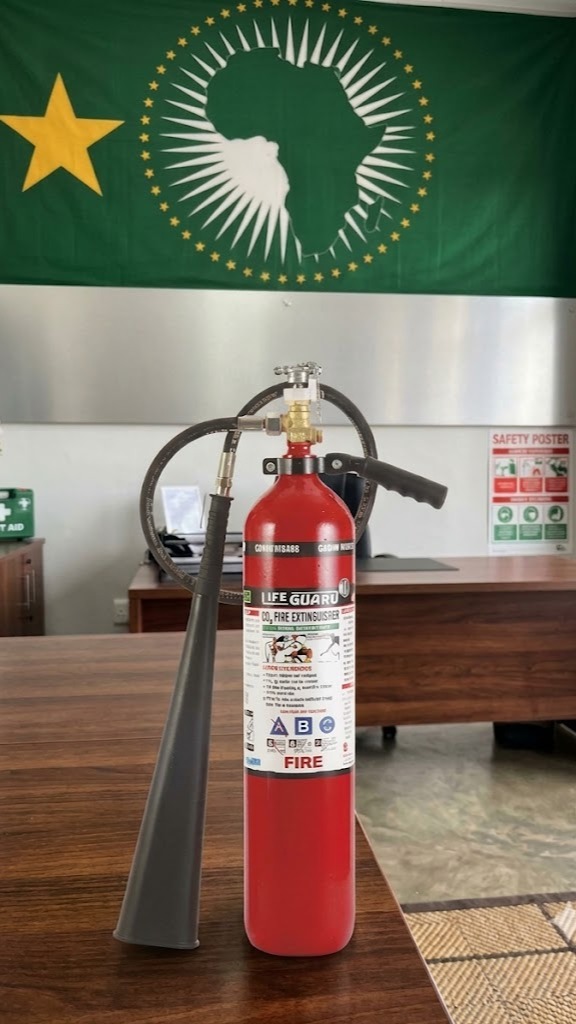
Carbon Dioxide – CO₂ Fire Extinguishers
Commonly considered for electrical hazards such as:
- Electrical panels
- UPS installations
- Control equipment
- IT equipment
- Electrical rooms
Water-Based Fire Extinguishers
These may be appropriate for selected Class A combustible-material hazards where electrical risks do not make water unsuitable.
Foam Fire Extinguishers
Foam extinguishers can be considered for suitable solid and flammable-liquid fire risks.
Wet Chemical Fire Extinguishers
Hospital kitchens and cooking areas may require specialized extinguishing equipment appropriate for cooking-oil and fat fires.
Fire extinguisher selection should always correspond with the actual fire classification and risk present at each location.
Hospital Kitchen Fire Safety
Commercial kitchens inside hospitals operate for extended periods and may contain:
- Deep-fat fryers
- Cooking oils
- Gas appliances
- Electrical equipment
- Exhaust hoods
- Grease deposits
Fire protection can incorporate:
- Wet chemical extinguishers
- Suitable kitchen suppression systems
- Heat detection
- Fire alarm interface
- Manual activation arrangements
Proper inspection and maintenance are especially important because accumulated grease can substantially increase fire risk.
Fire Hydrant Systems for Hospitals
Fire hydrant systems provide an important firefighting resource for trained personnel and fire services.
A hospital hydrant installation may include:
- Fire hydrant valves
- Landing valves
- Fire hoses
- Hose boxes
- Branch pipes
- Fire hose nozzles
- Breeching inlets
- Fire pumps
- Jockey pumps
- Fire-water storage
- Associated piping and accessories
The complete installation should be engineered according to building configuration, hydraulic requirements and applicable local codes.
Fire Hose Reel Solutions
Fire hose reels can provide a continuous water supply for first-aid firefighting where permitted by the building's fire strategy.
Hospital hose reel installations can be located strategically throughout:
- Corridors
- Staircase areas
- Utility zones
- Service floors
- Parking areas
- Engineering blocks
Equipment should remain clearly accessible and must not be obstructed by hospital equipment, furniture or stored materials.
Sprinkler Fire Protection
Automatic sprinklers can provide effective protection for many hospital occupancies.
Sprinkler systems can help:
- Detect heat from a developing fire
- Control fire growth automatically
- Reduce heat release
- Restrict fire spread
- Provide additional response time
- Protect property and infrastructure
Sprinkler designs should account for building classification, hazard category, ceiling configuration, water supply and hydraulic calculation requirements.
Water Mist Fire Suppression for Healthcare Facilities
Water mist systems generate fine water droplets designed to control fire through mechanisms including heat absorption and localized cooling.
Depending on the specific application and approved system design, water mist may be considered for selected hospital risks where minimizing water consumption or collateral damage is important.
Proper engineering is essential because nozzle type, pressure, spacing, flow rate and hazard configuration determine system effectiveness.
Laboratory Fire Protection Systems
Hospital and medical laboratories can contain:
- Flammable chemicals
- Reagents
- Electrical equipment
- Testing instruments
- Gas cylinders
- Heat-producing equipment
Laboratory protection should therefore be based on a detailed hazard assessment.
Solutions may include:
- Appropriate portable extinguishers
- Fire detection
- Automatic suppression
- Gas detection where required
- Fire alarm integration
- Specialized storage protection
Pharmacy Fire Safety
Hospital pharmacies may store medicines, packaging materials and, in some cases, flammable substances.
Protection can incorporate:
- Automatic fire detection
- Portable extinguishing equipment
- Sprinkler protection where applicable
- Fire alarm notification
- Safe chemical-storage practices
Special attention may be required for controlled-temperature storage and electrical refrigeration equipment.
Medical Oxygen and Gas Storage Areas
Medical oxygen is crucial to hospital operation but can significantly increase the severity of combustion.
Hospitals must carefully control:
- Oxygen cylinders
- Medical gas manifolds
- Pipeline systems
- Cylinder-storage areas
- Ignition sources
- Combustible materials
Appropriate detection, ventilation, signage, segregation and fire protection should be incorporated according to the medical-gas system design and relevant local requirements.
Electrical Panel Fire Protection for Hospitals
Electrical panels can develop fires because of factors such as:
- Loose electrical connections
- Overheating
- Short circuits
- Component failure
- Overloading
- Insulation deterioration
Localized fire detection and suppression may be considered for critical panels supporting:
- ICU power
- Operation theatres
- Diagnostic equipment
- Medical gas systems
- Emergency lighting
- Data infrastructure
- Building-management systems
The objective is rapid intervention before a small electrical fault develops into a major facility fire.
Lithium Battery and UPS Fire Safety
Healthcare facilities increasingly rely on:
- UPS batteries
- Lithium-ion battery backup
- Portable medical devices
- Energy storage systems
- Emergency power infrastructure
Battery fires can involve challenging hazards, particularly where thermal runaway occurs.
A suitable solution can incorporate combinations of:
- Early fire detection
- Gas or smoke detection
- Temperature monitoring
- Localized suppression
- Cooling strategies
- Alarm integration
The final design should be based on battery chemistry, installation arrangement, capacity and site-specific risk assessment.
Hospital Generator Room Fire Protection
Hospitals depend on backup generators to maintain critical services during electrical failures.
Generator rooms may contain:
- Diesel fuel
- Lubricating oils
- Electrical equipment
- Hot engine surfaces
- Batteries
Potential fire safety measures include:
- Heat and flame detection
- Appropriate portable extinguishers
- Automatic suppression systems where required
- Fire alarm integration
- Fuel shutoff arrangements
- Ventilation coordination
Fire Protection for Hospital Parking Areas
Basement and multi-level parking facilities create additional fire protection challenges because of vehicles, fuel, electrical charging equipment and restricted ventilation.
Protection may include:
- Hydrant systems
- Sprinklers
- Fire extinguishers
- Detection systems
- Hose reels
- Emergency alarms
- Smoke management systems
EV charging and electric vehicle parking areas may require additional risk assessment because battery incidents can behave differently from conventional vehicle fires.
Healthcare Facilities We Serve
LIFEGUARD® hospital fire safety equipment solutions in Africa can be considered for a broad range of healthcare establishments, including:
- Government hospitals
- Private hospitals
- Super-speciality hospitals
- Medical colleges
- Nursing homes
- Diagnostic centres
- Pathology laboratories
- Healthcare campuses
- Clinics
- Trauma centres
- Rehabilitation centres
- Pharmaceutical healthcare facilities
- Research laboratories
- Emergency healthcare facilities
- Rural healthcare centres
Hospital Fire Safety Solutions for African Countries
LIFEGUARD® can support enquiries and project requirements across African markets, subject to project specifications, import requirements and local regulatory approvals.
Potential markets include:
South Africa, Kenya, Nigeria, Ghana, Tanzania, Uganda, Ethiopia, Rwanda, Zambia, Zimbabwe, Mozambique, Botswana, Namibia, Angola, Mauritius, Senegal, Côte d'Ivoire, Cameroon, Algeria, Morocco, Tunisia, Egypt and other African countries.
For cross-border projects, equipment specifications should be verified against the applicable national fire code, civil defence requirements, project consultant specifications and required product approvals before final selection.
Importance of Fire Compartmentation in Hospitals
Equipment alone does not create a complete hospital fire safety strategy.
Passive fire protection is equally important.
Healthcare buildings should consider suitable:
- Fire-rated walls
- Fire doors
- Fire-resistant shafts
- Fire-stop sealing
- Protected escape routes
- Smoke barriers
- Compartmentation
Compartmentation can limit fire and smoke spread and support phased or horizontal evacuation, which can be particularly important in hospitals where immediate full evacuation may not be possible.
Integration of Hospital Fire Safety Systems
Modern healthcare facilities benefit from integrated fire protection.
Depending on project requirements, fire alarm systems can interface with:
- Smoke-control systems
- HVAC shutdown
- Fire doors
- Elevators
- Access-control systems
- Gas suppression systems
- Building-management systems
- Emergency voice communication
- Fire pumps
Such integration allows coordinated action during a fire emergency.
Hospital Fire Safety Design Considerations
Every healthcare project has different risks. Important factors include:
Occupancy
The number and mobility of patients, visitors and staff.
Building Height
Multi-storey hospitals require carefully planned evacuation and firefighting access.
Departmental Layout
ICUs, operation theatres, laboratories and technical areas have different hazards.
Fire Load
Furniture, bedding, paper records, medical supplies, chemicals and other combustible materials contribute to fire severity.
Electrical Infrastructure
Hospitals contain unusually high concentrations of electrical and electronic equipment.
Medical Gases
Oxygen and other gases require specialized handling and emergency planning.
Continuity of Operation
Hospitals cannot always shut down completely during an emergency.
These factors should be considered during system selection and engineering.
Why Choose LIFEGUARD® for Hospital Fire Safety Equipment Solutions Africa?
Healthcare projects require more than individual firefighting products. They require appropriate product selection and coordination between fire detection, suppression and emergency response systems.
LIFEGUARD® focuses on providing solutions for multiple hospital risks through a comprehensive range of fire safety products and systems.
Key strengths include:
- Comprehensive range of fire safety equipment
- Solutions for different hospital risk categories
- Fire detection and alarm equipment
- Portable and mobile extinguishing equipment
- Clean-agent suppression solutions
- Specialized electrical and technical-room protection
- Hydrant and hose reel equipment
- Water-based suppression solutions
- Project-specific technical support
- Support for hospitals and healthcare infrastructure
- Solutions for export and international project requirements
Hospital Fire Safety Equipment Supplier for Africa
Healthcare projects may require a combination of equipment rather than procurement from multiple unrelated sources.
LIFEGUARD® can support requirements for:
fire extinguishers, fire alarm systems, smoke detectors, heat detectors, manual call points, clean-agent fire suppression systems, hydrant equipment, hoses, hose reels, nozzles, fire cabinets, alarm devices and specialized suppression equipment.
This enables contractors, consultants, hospitals and project developers to source multiple fire safety requirements through a coordinated solution approach.
Hospital Fire Safety Solutions for New and Existing Buildings
Our solutions can support both:
New Hospital Projects
Fire safety can be incorporated at the design and construction stage, enabling improved coordination between architectural, mechanical, electrical and fire protection services.
Existing Hospital Upgrades
Older healthcare buildings may require modernization involving:
- Replacement of obsolete fire alarm systems
- Addition of detection devices
- Upgradation of extinguishers
- Clean-agent protection for new server rooms
- Hydrant-system improvements
- Fire safety equipment replacement
- Protection of newly installed electrical or medical infrastructure
Risk assessment should identify gaps before equipment selection.
Maintenance of Hospital Fire Safety Equipment
Fire protection equipment must remain operational at all times.
A healthcare facility should implement periodic inspection and maintenance for:
- Fire extinguishers
- Fire alarm panels
- Smoke and heat detectors
- Manual call points
- Sounders
- Fire pumps
- Hydrant valves
- Fire hoses
- Hose reels
- Suppression cylinders
- Discharge nozzles
- Batteries and power supplies
- Emergency interfaces
Inspection frequency should follow applicable local requirements, system manuals and project maintenance specifications.
Fire Safety Training for Hospital Personnel
Technology is only one part of hospital fire safety.
Hospital personnel should understand:
- How to raise a fire alarm
- How to report a fire
- Basic extinguisher use
- Patient evacuation procedures
- Department-specific emergency responsibilities
- Medical gas isolation procedures where authorized
- Safe response to electrical fires
- Emergency assembly and communication protocols
Routine drills and training help ensure staff can respond effectively during an emergency.
Choosing the Right Hospital Fire Safety Equipment Solution in Africa
When selecting hospital fire protection equipment, healthcare organizations, fire consultants and contractors should evaluate:
- Nature of fire hazard
- Occupancy type
- Building size and height
- Critical patient areas
- Electrical infrastructure
- Medical-gas installations
- Fire water availability
- Environmental conditions
- Local regulations
- Consultant specifications
- Product approvals
- Maintenance availability
- Long-term service requirements
A project-specific approach is more reliable than applying identical equipment throughout the entire facility.
Complete Hospital Fire Safety Solutions from LIFEGUARD®
Whether the requirement is for a single hospital building or a large multi-speciality healthcare campus, LIFEGUARD® can support fire safety requirements for multiple risk areas.
Our approach can combine:
Detection → Alarm → Suppression → First-Aid Firefighting → Firefighting Infrastructure → Emergency Response
This layered methodology improves overall fire preparedness and helps protect patients, healthcare professionals, critical equipment and essential hospital operations.
Frequently Asked Questions – Hospital Fire Safety Equipment Africa
What fire safety equipment is required in a hospital?
Requirements vary according to national regulations and facility design. Common systems include fire extinguishers, smoke and heat detection, fire alarm systems, hydrants, hose reels, sprinklers, emergency notification and specialized suppression systems for technical areas.
Which fire extinguisher is suitable for hospital electrical equipment?
CO₂ extinguishers are commonly used for suitable electrical fire risks. The final extinguisher type should be selected according to the specific electrical hazard and applicable local standards.
Which suppression system is suitable for hospital server rooms?
Engineered clean-agent suppression is often considered where rapid extinguishment and minimal residue are important. The final agent and system configuration should be determined through project-specific engineering.
Can hospitals use clean-agent fire suppression?
Yes. Clean-agent systems can be suitable for appropriately designed enclosed technical spaces such as server rooms, communication rooms, UPS rooms and selected electrical areas.
Do hospital kitchens need special fire extinguishers?
Commercial kitchens containing cooking oils and fats may require wet chemical extinguishers and, depending on the installation, automatic kitchen suppression systems.
Can LIFEGUARD® supply hospital fire safety equipment for African projects?
LIFEGUARD® can support enquiries for hospital fire safety equipment and integrated fire protection requirements for projects across African markets, subject to destination-specific approvals, specifications and import requirements.
SEO Keywords
Primary Keyword:
Hospital Fire Safety Equipment Solutions Africa
Related Keywords:
hospital fire safety solutions Africa, hospital fire protection equipment Africa, hospital fire fighting equipment Africa, hospital fire suppression systems Africa, healthcare fire safety equipment Africa, hospital fire alarm system Africa, hospital fire extinguisher supplier Africa, hospital clean agent fire suppression Africa, hospital hydrant system Africa, hospital fire detection system Africa, ICU fire protection Africa, operation theatre fire safety Africa, hospital server room fire suppression Africa, healthcare facility fire protection Africa, hospital electrical room fire suppression Africa, medical facility fire safety solutions Africa, hospital fire protection company Africa, hospital fire safety system provider Africa.
SEO Meta Title
Hospital Fire Safety Equipment Solutions Africa | LIFEGUARD®
SEO Meta Description
LIFEGUARD® provides hospital fire safety equipment solutions in Africa, including fire extinguishers, fire alarm systems, clean-agent suppression, hydrants, detection systems, water mist and specialized fire protection for healthcare facilities.
Suggested URL
/hospital-fire-safety-equipment-solutions-africa/
Suggested H1
Hospital Fire Safety Equipment Solutions Africa
Suggested Image ALT Tags
- Hospital Fire Safety Equipment Solutions Africa – LIFEGUARD
- Hospital Fire Protection Equipment Africa
- Hospital Fire Alarm and Detection System Africa
- Hospital Clean Agent Fire Suppression System Africa
- Hospital Fire Extinguisher Solutions Africa
- Healthcare Facility Fire Protection Solutions Africa
- Hospital Server Room Fire Suppression Africa
- Hospital Hydrant and Hose Reel System Africa
- ICU and Operation Theatre Fire Safety Africa
- Hospital Electrical Panel Fire Protection Africa
Call to Action
Looking for Hospital Fire Safety Equipment Solutions in Africa?
Protect patients, healthcare professionals, critical medical equipment and essential hospital infrastructure with reliable fire safety equipment and integrated protection solutions.
Contact LIFEGUARD® – United Fire Equipments Pvt. Ltd.
Manufacturer of ISI Certified Fire Safety Equipment
For hospital projects, healthcare infrastructure, medical colleges, laboratories and other institutional fire protection requirements across Africa, contact our team for product selection, technical support, project-specific fire protection solutions and export enquiries.