
Hospital Fire Safety Equipment System Provider India – LIFEGUARD® Complete Fire Protection Solutions for Healthcare Facilities
Meta Title: Hospital Fire Safety Equipment System Provider India | LIFEGUARD®
Meta Description: LIFEGUARD® is a hospital fire safety equipment system provider in India offering fire extinguishers, alarms, hydrants, sprinklers, clean agent suppression, VESDA and specialized healthcare fire protection solutions.
Primary Keyword: Hospital Fire Safety Equipment System Provider India
Secondary Keywords: Hospital fire safety system India, hospital fire protection system provider India, healthcare fire safety equipment India, hospital firefighting system India, hospital fire suppression system India, fire alarm system for hospitals India, hospital fire extinguisher supplier India, healthcare fire protection solutions India
Leading Hospital Fire Safety Equipment System Provider in India
Fire safety in hospitals requires a much more comprehensive approach than conventional commercial or industrial buildings. Hospitals operate continuously and accommodate patients who may be unable to evacuate independently. Critical care areas, ICUs, operation theatres, medical gas installations, electrical rooms, laboratories, diagnostic facilities, server rooms and commercial kitchens each present different types of fire hazards.
LIFEGUARD® – United Fire Equipments Pvt. Ltd. provides integrated fire protection equipment and engineered solutions for hospitals and healthcare facilities across India.
As an experienced hospital fire safety equipment system provider in India, LIFEGUARD® supports healthcare projects with solutions covering fire detection, alarms, portable firefighting equipment, hydrant systems, automatic suppression, clean-agent systems, aspirating smoke detection and specialized fire-protection equipment.
Our objective is to provide healthcare facilities with reliable solutions designed according to the nature of the fire risk, project specifications and applicable statutory and technical requirements.
Why Hospital Fire Safety Requires Specialized Systems
Hospitals are unique from a fire-safety perspective because evacuation can be difficult and time-consuming. Many occupants may be undergoing medical treatment or depending on life-support equipment when an emergency occurs.
A hospital may contain:
- Bedridden patients
- ICU and critical-care patients
- Operation theatre patients
- Newborn babies
- Elderly occupants
- Patients with limited mobility
- Ventilator-dependent patients
- Medical oxygen installations
- Electrical equipment
- High-value diagnostic machines
- Laboratories and chemicals
- Kitchens and cooking equipment
- Pharmacies and medicine stores
- Medical records
- Servers and communication systems
Because of these diverse hazards, hospital fire safety should combine prevention, early detection, alarm, containment, suppression and emergency response.
A properly developed fire-protection strategy can help reduce risks to patients, doctors, nurses, attendants, visitors, hospital infrastructure and expensive medical equipment.
Complete Hospital Fire Safety Equipment and Systems
As a comprehensive hospital fire protection system provider in India, LIFEGUARD® can support healthcare facilities with multiple fire-safety technologies.
1. Portable Fire Extinguishers for Hospitals
Portable fire extinguishers provide an important first line of defence during the early stages of a fire.
Depending upon the type of hazard, hospital fire extinguisher requirements may include:
- ABC dry chemical powder extinguishers
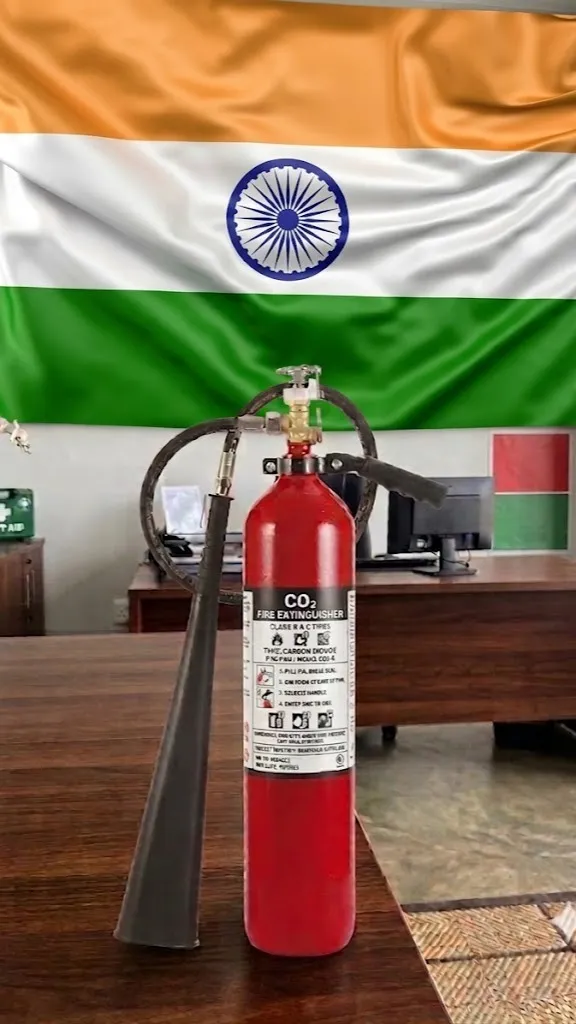
- Carbon dioxide CO₂ extinguishers
- Water-type fire extinguishers
- Mechanical foam fire extinguishers
- Clean-agent fire extinguishers
- Wet chemical extinguishers
- Wheeled fire extinguishers
- Specialized extinguishing solutions for specific risks
The correct extinguisher should be selected according to the class of fire and the nature of the equipment present.
For example, the extinguisher suitable for an electrical control room may differ significantly from the equipment required in a hospital kitchen.
2. Fire Alarm and Detection Systems for Hospitals
Early fire detection is one of the most important components of hospital fire safety.
Healthcare facilities require reliable alarm systems capable of identifying a developing incident rapidly and providing sufficient time for staff to initiate the appropriate emergency procedure.
Hospital fire alarm systems may include:
- Smoke detectors
- Heat detectors
- Multi-criteria detectors
- Beam detectors where applicable
- Manual call points
- Addressable fire alarm panels
- Conventional fire alarm panels
- Hooters
- Sounders
- Sounder with flashers
- Visual alarm devices
- Repeater panels
- Input/output modules
- Control modules
- Monitoring modules
- Annunciation systems
- Emergency communication interfaces
Depending on the fire strategy, alarm systems may also interface with other building services.
These can include:
- HVAC shutdown
- Fire dampers
- Smoke-control equipment
- Elevators
- Access-control systems
- Fire doors
- Suppression systems
- Emergency systems
3. Aspirating Smoke Detection Systems
Critical hospital areas may benefit from very early smoke detection.
Aspirating smoke detection systems, including VESDA-type technology, continuously draw air samples through a pipe network and analyse them for smoke particles.
These systems can be particularly useful in:
- Hospital server rooms
- Data centres
- Medical IT rooms
- Communication rooms
- Electrical control rooms
- UPS rooms
- Sensitive equipment areas
- High-value diagnostic support areas
Early warning allows facility personnel to investigate abnormal conditions before they develop into a serious fire emergency.
4. Clean Agent Fire Suppression Systems for Hospitals
Hospitals contain many rooms where water-based firefighting systems may not be the preferred primary suppression solution because of sensitive electronic equipment.
A professionally engineered clean-agent fire suppression system may be suitable for:
- Server rooms
- Data centres
- Control rooms
- UPS rooms
- Electrical rooms
- Communication rooms
- Medical records IT facilities
- Electronic equipment rooms
- Specialized diagnostic support areas
Depending upon project specifications, clean-agent suppression systems can incorporate components such as:
- Fire suppression cylinders
- Cylinder valves
- Agent storage assemblies
- Manifolds
- Flexible discharge hoses
- Discharge piping
- Nozzles
- Pressure monitoring arrangements
- Gas-release panels
- Smoke detectors
- Manual release switches
- Abort switches
- Hooters and flashers
- Warning signage
Correct system engineering is critical.
The following parameters should be evaluated during design:
- Protected-room volume
- Design concentration
- Agent quantity
- Cylinder selection
- Pipe sizing
- Nozzle selection
- Nozzle placement
- Hydraulic calculations
- Discharge time
- Room integrity
- Pressure relief requirements where applicable
LIFEGUARD® supports engineered fire suppression requirements according to the selected system and project specifications.
5. Hospital Fire Hydrant Systems
Large hospitals, medical colleges and healthcare campuses may require comprehensive fire hydrant networks for manual firefighting.
A hospital hydrant system can include:
- Landing valves
- Hydrant valves
- Fire hose reels
- Fire hoses
- Branch pipes
- Nozzles
- Hose boxes
- Fire brigade connections
- Breeching inlets
- Fire pumps
- Jockey pumps
- Diesel engine-driven fire pumps
- Hydrant piping
- Fire-water storage arrangements
- Pressure monitoring equipment
Hydrant systems should be properly designed to provide the required water flow and pressure at the designated firefighting points.
6. Automatic Fire Sprinkler Systems for Hospitals
Automatic sprinkler systems are widely used as part of building fire protection.
Sprinklers can detect heat from a developing fire and discharge water over the affected area.
Depending upon building layout and approved fire strategy, hospital sprinkler protection can be considered for:
- Patient wards
- Corridors
- Administrative areas
- Stores
- Pharmacies
- Basements
- Parking areas
- Utility areas
- Service rooms
- Warehouses
- Laundry areas
- General occupied spaces
The sprinkler design should consider hazard classification, system pressure, pipe sizing, water demand, sprinkler coverage and hydraulic calculations.
7. Hospital Kitchen Fire Suppression Systems
Hospital kitchens often operate throughout the day and can include cooking oils, LPG or PNG installations, hot cooking surfaces and electrical appliances.
These conditions create a significant fire hazard.
Suitable protection can include:
- Wet chemical suppression systems
- Kitchen hood fire suppression
- Heat detection
- Manual release arrangements
- Gas shut-off interfaces
- Electrical shut-off interfaces
- Wet chemical extinguishers
- Fire blankets
Wet chemical systems are particularly relevant to suitable commercial cooking applications where burning oils and fats may be present.
8. Electrical Panel Fire Protection for Hospitals
Hospitals rely heavily on electrical infrastructure.
A fire in an electrical distribution system can interrupt critical medical services and create risks to patients dependent on continuous power.
Important areas may include:
- LT panels
- HT panels
- MCC panels
- Distribution boards
- UPS panels
- Generator panels
- Transformer installations
- Electrical cabinets
- Control panels
Depending on the application, fire protection solutions can include:
- CO₂ extinguishers
- Clean-agent extinguishers
- Automatic panel suppression systems
- Heat detection
- Smoke detection
- Linear heat sensing
- Specialized localized suppression systems
Panel-level protection may help detect and control a developing fire before it spreads to the surrounding room.
9. Fire Protection for Medical Gas and Oxygen Installations
Medical oxygen is essential for hospitals, but oxygen-rich environments require careful fire-risk management.
Oxygen itself does not burn, but it can support combustion and increase the intensity of burning materials.
Fire-safety planning for medical gas areas should therefore consider:
- Appropriate cylinder storage
- Ignition-source control
- Ventilation
- Gas pipeline safety
- Separation from incompatible hazards
- Leak detection where required
- Warning signage
- Fire detection
- Suitable extinguishing equipment
- Emergency shutdown arrangements
All installations should follow the approved project design and applicable medical gas and fire-safety requirements.
10. Fire Safety for Hospital Laboratories
Hospital laboratories may contain flammable chemicals, electrical testing equipment, gases and combustible materials.
The protection strategy should therefore be selected according to the individual laboratory hazards.
Possible systems can include:
- Smoke detection
- Heat detection
- Flame detection
- Gas detection
- Portable extinguishers
- Automatic fire suppression
- Emergency alarms
- Manual call points
- Specialized hazard-control systems
11. Fire Protection for Server and Data Rooms
Modern hospitals depend on digital infrastructure for:
- Patient records
- Laboratory information
- Radiology
- Medical imaging
- Billing
- Pharmacy management
- Communication
- Building management systems
- Security systems
A server-room fire can therefore interrupt critical hospital operations.
Suitable solutions can include:
- Aspirating smoke detection
- Conventional or addressable smoke detection
- Clean-agent suppression
- Gas-release control panels
- Manual release
- Abort switches
- Audible and visual warning devices
The system should be designed to suppress fire while minimizing unnecessary damage to sensitive IT equipment.
12. Fire Safety for Battery and UPS Rooms
UPS and battery backup systems play an important role in hospital power continuity.
Battery technology and fire risks vary depending on the installed system.
Hospital battery and UPS room protection may require:
- Early smoke detection
- Heat detection
- Gas detection where appropriate
- Specialized battery fire suppression
- Appropriate portable extinguishers
- Ventilation
- Thermal monitoring
- Emergency alarms
The protection method should be selected based on battery chemistry, equipment configuration and the approved project risk assessment.
Fire Safety Solutions for Different Hospital Departments
ICU Fire Protection
ICU patients may be difficult to move quickly during an emergency.
Protection measures can include:
- Reliable fire detection
- Automatic alarm systems
- Appropriate portable firefighting equipment
- Sprinkler protection where specified
- Smoke-control measures
- Emergency response procedures
Operation Theatre Fire Safety
Operation theatres require special attention because they contain:
- Medical electrical equipment
- Oxygen
- Surgical equipment
- Drapes and other combustible materials
- Sensitive electronic systems
Fire protection should be developed in coordination with healthcare engineering requirements and the hospital's emergency procedures.
MRI and Diagnostic Area Fire Protection
MRI and diagnostic rooms contain costly and highly sensitive medical systems.
Any firefighting equipment installed in these environments must be selected carefully, considering both fire safety and the equipment manufacturer's requirements.
Pharmacy Fire Safety
Hospital pharmacies may store:
- Medicines
- Packaging materials
- Aerosols
- Alcohol-based preparations
- Chemicals
- Other combustible materials
Suitable detection, extinguishing and storage-control measures should therefore be incorporated into the overall fire strategy.
Laundry Fire Safety
Hospital laundry areas may contain high quantities of combustible textiles and continuously operating electrical or heating equipment.
Possible protection can include:
- Smoke and heat detection
- Portable extinguishers
- Hydrant and hose-reel coverage
- Sprinkler systems where specified
Basement and Parking Fire Protection
Hospital basements and parking areas can involve vehicle fuel, electrical systems, stored materials and limited natural ventilation.
Depending on the project design, protection can include:
- Fire alarm systems
- Heat or smoke detection
- Hydrant systems
- Sprinklers
- Fire extinguishers
- Smoke extraction
- Emergency lighting
- Exit signage
Complete Hospital Fire Protection System Integration
The effectiveness of hospital fire safety depends on how different systems work together.
A complete approach may involve:
Fire Detection → Alarm → Notification → Fire Containment → Automatic Suppression → Manual Firefighting → Emergency Evacuation → System Monitoring
LIFEGUARD® can support different elements of this overall fire-protection architecture according to the project requirement.
Hospital Fire Safety Solutions for New and Existing Facilities
Our fire-protection equipment and systems can support:
- New hospital construction
- Hospital renovation
- Hospital expansion
- Fire-safety modernization
- Replacement of ageing equipment
- Specialized room protection
- Medical college projects
- Healthcare infrastructure developments
- Government hospital projects
- Private healthcare projects
Healthcare Facilities We Serve
LIFEGUARD® fire-safety solutions can be considered for:
- Multispecialty hospitals
- Super-specialty hospitals
- Government hospitals
- Private hospitals
- Medical colleges
- Nursing homes
- Diagnostic centres
- Clinics
- Day-care centres
- Dental hospitals
- Rehabilitation centres
- Research laboratories
- Pharmaceutical healthcare facilities
- Blood banks
- Pathology laboratories
- Healthcare campuses
Hospital Fire Safety Equipment System Provider Across India
LIFEGUARD® supports fire-protection requirements for healthcare projects across India, including major locations such as:
Delhi NCR | Mumbai | Maharashtra | Bengaluru | Karnataka | Chennai | Tamil Nadu | Hyderabad | Telangana | Kolkata | West Bengal | Ahmedabad | Gujarat | Pune | Jaipur | Rajasthan | Lucknow | Uttar Pradesh | Chandigarh | Punjab | Haryana | Kerala | Madhya Pradesh | Odisha and other regions across India
We work with requirements from:
- Hospital owners
- Healthcare groups
- Government departments
- Contractors
- MEP contractors
- Firefighting contractors
- Consultants
- Architects
- EPC companies
- Facility management organizations
- Procurement agencies
- Distributors
- System integrators
Indian Fire Safety Standards and Compliance
Hospital fire-protection systems in India should be selected and designed according to the approved building fire strategy, applicable statutory requirements, relevant Indian Standards and the requirements of the authority having jurisdiction.
Depending on the project and system, relevant requirements may include provisions associated with:
- National Building Code of India
- Bureau of Indian Standards
- Local Fire Service requirements
- State and municipal regulations
- Project specifications
- Applicable NFPA standards where specified
- Listed or approved system requirements where demanded by the project
The exact compliance requirements vary depending on hospital size, occupancy, height, location and fire-protection system.
For this reason, final product selection and system design should always be coordinated with the approved fire drawings, consultants and competent authorities.
Why Choose LIFEGUARD® as a Hospital Fire Safety Equipment System Provider in India?
Established Fire Safety Brand
LIFEGUARD® is the fire-protection brand of United Fire Equipments Pvt. Ltd., serving the fire-safety industry since 1991.
Wide Fire Protection Product Range
We can support different hospital fire-safety requirements through a broad portfolio that can include portable firefighting equipment, detection systems and specialized suppression technologies.
Engineered Fire Suppression Solutions
Fire suppression cannot be treated as a one-product-fits-all requirement.
Our focus is on selecting systems according to:
- Hazard type
- Room volume
- Equipment
- Fire load
- Operating conditions
- Project specifications
Technical Support
LIFEGUARD® can support project stakeholders with:
- Product selection
- BOQ assistance
- Technical specifications
- Drawings
- Data sheets
- System concepts
- Technical discussions
- Suppression-system design coordination
- Project documentation
Tender and Project Support
We can assist project and procurement teams with relevant documentation, subject to product and tender requirements, including:
- Technical catalogues
- Compliance documents
- Product certificates
- Technical data sheets
- Drawings
- Quotations
- BOQ support
- OEM documentation where applicable
- Technical submittals
Benefits of an Integrated Hospital Fire Safety System
A properly planned hospital fire-protection system can help provide:
Faster Fire Detection
Early detection can provide valuable response time.
Improved Patient Safety
Hospitals contain vulnerable occupants who require coordinated emergency planning.
Protection of Critical Medical Infrastructure
Diagnostic machines, servers and electrical infrastructure represent high-value assets.
Reduced Business Interruption
Early fire control can help reduce damage and disruption.
Better Emergency Coordination
Integrated detection, alarms and suppression can support faster decision-making.
Protection of Hospital Records
Sensitive digital infrastructure can be protected using appropriate detection and suppression technologies.
How LIFEGUARD® Approaches Hospital Fire Protection
Our approach focuses on understanding the actual hazard rather than recommending the same solution everywhere.
Step 1 – Understand the Facility
The hospital layout, occupancy and critical areas are identified.
Step 2 – Identify Fire Hazards
Different areas are assessed according to their probable fire risks.
Step 3 – Select Suitable Technologies
Appropriate detection and suppression solutions are considered.
Step 4 – Develop System Requirements
Equipment quantities, system capacity and technical specifications can be determined according to project needs.
Step 5 – Coordinate Technical Documentation
Drawings, data sheets, BOQs and technical documentation can be supported as required.
Step 6 – Installation and Commissioning Coordination
The final system should be installed, tested and commissioned according to project requirements by competent personnel.
Frequently Asked Questions – Hospital Fire Safety Equipment India
What fire safety systems are commonly required in hospitals?
Depending on the building and approved fire strategy, systems may include fire extinguishers, fire alarms, smoke detectors, hydrants, hose reels, sprinklers, emergency lighting and special-hazard fire suppression.
Which type of fire extinguisher should be used in hospitals?
The correct extinguisher depends on the hazard. Water, foam, ABC powder, CO₂, wet chemical and clean-agent extinguishers may be used in different hospital locations.
Which fire suppression system is suitable for hospital server rooms?
Clean-agent fire suppression systems are often considered for sensitive electronic environments because they can provide fire suppression without conventional water discharge directly onto electronic equipment.
Can clean-agent suppression be used for hospital electrical rooms?
It may be suitable for certain enclosed electrical and electronic risks, subject to proper system engineering, room conditions and project requirements.
What type of system is suitable for hospital kitchens?
Commercial kitchens may require wet chemical hood suppression along with suitable portable extinguishers and automatic or manual activation arrangements.
Why is early smoke detection important in hospitals?
Hospitals often contain patients who cannot evacuate quickly. Early warning can provide staff with additional time to investigate, respond and implement emergency procedures.
Does LIFEGUARD® provide fire safety solutions for large hospital projects?
Yes. LIFEGUARD® can support project requirements for hospitals, medical colleges, healthcare campuses, diagnostic centres and other medical infrastructure.
Can LIFEGUARD® support fire protection projects anywhere in India?
Yes. Project and supply requirements can be supported across India, subject to individual technical, logistical and commercial requirements.
One-Stop Hospital Fire Safety Equipment System Provider India
Modern hospital fire protection involves much more than supplying standalone firefighting products.
A comprehensive system needs to consider:
Detection + Alarm + Firefighting + Suppression + Emergency Response + Special Hazard Protection
LIFEGUARD® brings together a broad range of technologies to support these requirements for healthcare facilities.
Whether you are developing a new hospital, modernizing an existing healthcare facility or protecting a specialized medical area, our team can assist in identifying appropriate fire-protection solutions.
Looking for a Hospital Fire Safety Equipment System Provider in India?
If your project requires a reliable hospital fire safety equipment system provider in India, connect with LIFEGUARD® for comprehensive fire-protection products and specialized suppression solutions.
Our team can support requirements involving:
- Fire extinguishers
- Fire alarm and detection systems
- Aspirating smoke detection
- Clean-agent fire suppression
- Hospital hydrant systems
- Sprinkler systems
- Kitchen suppression
- Electrical panel protection
- Special-hazard fire suppression
- Fire-safety accessories and project equipment
Contact LIFEGUARD®
LIFEGUARD® – United Fire Equipments Pvt. Ltd.
Manufacturer of ISI Certified Fire Safety Equipment
Contact our team for hospital fire safety equipment enquiries, technical discussions, project quotations, BOQs, drawings, tender support and customized fire-protection requirements across India.
LIFEGUARD® – Protecting Healthcare Infrastructure with Reliable Fire Safety Solutions.
Keywords






