
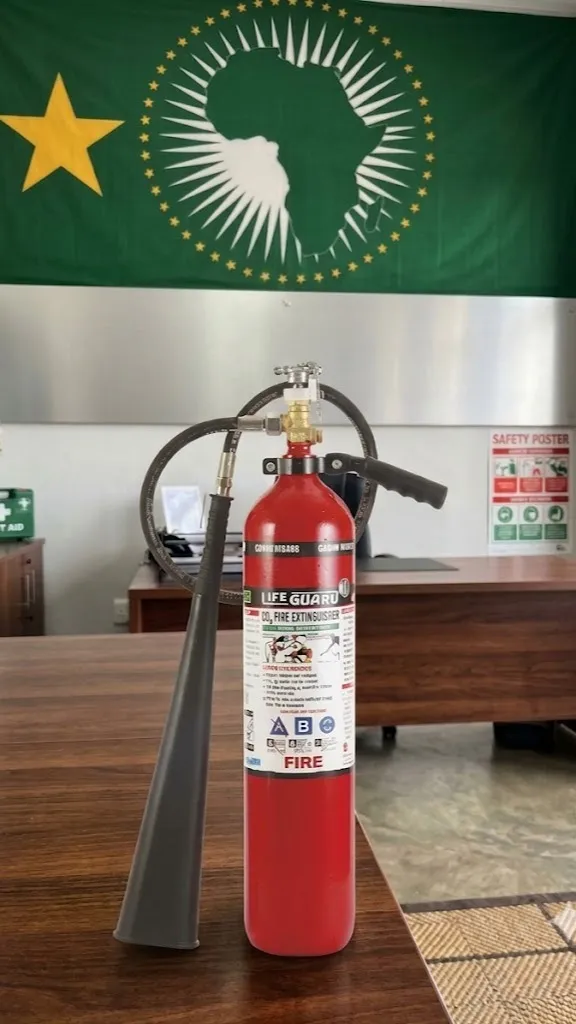
Hospital Fire Suppression Manufacturer Africa – LIFEGUARD®
Hospitals and healthcare facilities require a highly dependable fire protection strategy because they contain patients, sensitive medical equipment, electrical installations, laboratories, pharmacies, kitchens, medical gas systems, server rooms and critical-care environments that may present very different fire risks.
For healthcare developers, fire protection contractors, EPC companies, consultants and distributors searching for a reliable Hospital Fire Suppression Manufacturer in Africa, LIFEGUARD® – United Fire Equipments Pvt. Ltd. provides engineered fire suppression solutions designed around the specific hazards of modern healthcare facilities.
LIFEGUARD® supports hospital and medical infrastructure projects with solutions that can combine fire detection, alarm, control, automatic suppression, piping, discharge devices and system integration into a coordinated fire protection strategy.
Leading Hospital Fire Suppression Manufacturer Africa
Hospitals cannot rely on a single suppression technology for every area. The fire hazard inside an operating theatre may be very different from the hazard in a hospital kitchen, electrical room, pharmacy, laboratory or server room.
An effective hospital fire suppression design therefore starts with a detailed assessment of:
- Type of occupancy
- Fire load
- Electrical equipment
- Sensitive medical equipment
- Medical gas systems
- Flammable liquids
- Cooking facilities
- Laboratory chemicals
- Server and communication equipment
- Battery and UPS installations
- Emergency evacuation requirements
- Room dimensions and enclosure integrity
- Local fire safety regulations
- Consultant and project specifications
LIFEGUARD® provides project-specific solutions rather than applying one standard suppression system throughout the entire healthcare facility.
Why Hospitals Require Specialized Fire Suppression Systems
Hospitals are among the most critical buildings from a life-safety perspective. Unlike ordinary commercial buildings, many occupants may be unable to evacuate quickly without assistance.
Patients may be:
- Under intensive care
- Connected to life-support equipment
- Under anaesthesia
- Receiving oxygen
- Recovering from surgery
- Elderly
- Disabled
- Infants or children
- Unable to move independently
Because of these conditions, fire prevention, early detection and rapid suppression are particularly important.
A hospital fire suppression system should be engineered to help:
- Detect developing fire conditions quickly
- Control or suppress fire at an early stage
- Reduce fire spread
- Protect critical medical equipment
- Reduce disruption to hospital operations
- Protect electrical and communication systems
- Improve emergency response capability
- Support the hospital's overall life-safety strategy
Complete Hospital Fire Suppression Solutions
As a Hospital Fire Suppression System Manufacturer for Africa, LIFEGUARD® can support various fire hazards found throughout healthcare facilities.
Depending upon the application, a hospital fire protection system may include:
- Automatic fire detection
- Smoke detectors
- Heat detectors
- Multi-criteria detectors
- Fire alarm control panels
- Gas release panels
- Manual release stations
- Abort switches
- Audible alarms
- Visual alarm devices
- Fire suppression agent cylinders
- Cylinder valves and actuation systems
- Distribution piping
- Discharge nozzles
- Pressure monitoring devices
- Control modules
- Shutdown interfaces
- HVAC integration
- Electrical isolation interfaces
- Remote monitoring
The exact configuration should be developed according to the protected risk.
Clean Agent Fire Suppression Systems for Hospitals
Clean agent fire suppression can be particularly useful in hospital areas containing valuable electrical or electronic equipment.
Unlike conventional water-based systems, appropriately selected clean agent systems can provide fire suppression without leaving the type of residue associated with dry chemical powder.
Potential healthcare applications include:
- Hospital server rooms
- Data centres
- IT rooms
- Medical record server rooms
- Communication rooms
- Network operation rooms
- Electrical control rooms
- UPS rooms
- Sensitive equipment rooms
- Diagnostic equipment control areas
A clean agent system generally consists of detection, control equipment, agent storage cylinders, distribution piping and engineered discharge nozzles.
Hospital Server Room Fire Suppression
Modern hospitals depend on digital systems for patient records, medical imaging, laboratory reports, pharmacy management, billing, security, communication and building management.
A major fire in a hospital server room can therefore disrupt essential clinical and administrative services.
LIFEGUARD® can support engineered fire suppression solutions for:
- Hospital server rooms
- Network rooms
- IT equipment rooms
- Data processing rooms
- Communication centres
- Digital medical record facilities
- Hospital control rooms
System design can consider room volume, false ceilings, raised floors, ventilation and equipment arrangement.
Fire Suppression for Hospital Electrical Rooms
Electrical rooms represent an important fire risk within hospitals because uninterrupted power is critical for operating theatres, ICUs, diagnostic equipment, life-support systems and emergency services.
Fire protection may be required for:
- Main electrical panels
- Distribution panels
- Switchgear
- UPS systems
- Control cabinets
- Electrical substations
- Generator control rooms
- Battery rooms
The suppression system should be selected according to the electrical hazard, equipment sensitivity and room configuration.
Hospital Kitchen Fire Suppression Systems
Hospital kitchens operate for extended periods and often contain cooking oils, fats, ovens, fryers, grills, exhaust hoods and other high-temperature equipment.
These risks require fire protection specifically designed for commercial cooking applications.
Hospital kitchen fire suppression may include:
- Automatic fire detection
- Kitchen hood suppression
- Nozzles over cooking equipment
- Suppression agent storage
- Manual release facility
- Fuel or electrical shutoff interface
- Alarm activation
- Protection of cooking appliances
- Protection of exhaust hood areas
Typical applications include:
- Main hospital kitchens
- Staff kitchens
- Patient meal preparation areas
- Cafeterias
- Food courts
- Institutional catering facilities
Water Mist Fire Suppression for Hospitals
Water mist technology may be suitable for selected hospital and healthcare applications where fine water droplets can provide fire control through cooling and interaction with the developing fire.
Depending upon the project, water mist systems may be considered for:
- Machinery areas
- Generator spaces
- Selected plant rooms
- Technical rooms
- Equipment protection
- Specialized hospital areas
The suitability of water mist should always be determined through engineering evaluation and applicable project requirements.
Hospital Laboratory Fire Suppression
Hospitals and medical universities often contain diagnostic, pathology and research laboratories where the fire hazard may involve electrical equipment, chemicals, reagents and combustible materials.
Fire suppression planning should consider:
- Chemicals stored
- Quantity of flammable substances
- Laboratory equipment
- Ventilation systems
- Electrical installations
- Room configuration
- Occupancy
- Potential chemical compatibility
Different laboratories may require different suppression technologies.
LIFEGUARD® supports project teams in developing fire protection solutions based on the actual risk.
Fire Protection for MRI, CT and Diagnostic Areas
Diagnostic departments contain expensive and sensitive equipment that requires careful fire protection planning.
Healthcare facilities may require protection for:
- MRI equipment areas
- CT scan rooms
- Diagnostic imaging rooms
- Radiology control rooms
- Medical equipment control rooms
- Associated electrical areas
Suppression system selection should consider equipment sensitivity, electrical hazards and manufacturer requirements.
Fire Suppression for Hospital UPS and Battery Rooms
Hospitals rely on backup electrical power to maintain critical operations during mains power failures.
UPS and battery installations may therefore represent concentrated electrical and energy-storage hazards.
Fire protection planning should consider:
- Battery chemistry
- Battery capacity
- Charger equipment
- Electrical panels
- Ventilation
- Room volume
- Heat generation
- Fire detection requirements
- Suppression objectives
For lithium-ion battery installations, specialized thermal-event and fire protection strategies may be required.
Fire Suppression for Hospital Generator Rooms
Hospitals frequently operate diesel generator sets to provide emergency backup power.
Generator rooms may involve:
- Fuel
- Lubricants
- Hot engine surfaces
- Electrical equipment
- Exhaust systems
- Control panels
The fire suppression design should consider both fuel and electrical hazards.
Depending upon the risk assessment, protection may include suitable automatic suppression, detection and shutdown interfaces.
Hospital Pharmacy Fire Protection
Hospital pharmacies and medicine storage facilities may contain:
- Paper and packaging materials
- Pharmaceuticals
- Alcohol-based products
- Chemicals
- Refrigeration equipment
- Electrical systems
Fire protection solutions should be selected according to the quantities and types of materials stored.
Medical Gas Area Fire Safety
Medical oxygen and other gases are essential to hospital operations, but they require strict fire safety management.
Areas requiring careful assessment may include:
- Medical gas manifolds
- Cylinder storage areas
- Oxygen supply rooms
- Gas distribution points
- Technical service areas
Because oxygen can intensify combustion, fire prevention and system design in these areas require special attention.
A qualified project-specific risk assessment should always determine the appropriate protection measures.
Hospital ICU Fire Protection
Intensive care units contain high concentrations of electrical and life-support equipment.
Fire safety considerations may include:
- Early smoke detection
- Alarm integration
- Portable fire extinguishers
- Compartmentation
- Electrical safety
- Medical gas controls
- Emergency isolation
- Suppression for associated technical rooms
Fire suppression should always be designed so that patient safety remains the primary consideration.
Hospital Operating Theatre Fire Safety
Operating theatres are highly controlled medical environments containing electrical equipment, surgical systems, medical gases and, in some cases, combustible materials.
Fire safety engineering should evaluate:
- Ignition sources
- Oxygen-enriched conditions
- Surgical equipment
- Electrical systems
- Medical gas shutdown
- Fire detection
- Local fire response equipment
- Emergency procedures
Automatic suppression in or around such environments requires careful engineering and coordination with medical stakeholders.
Automatic Hospital Fire Suppression Systems
Automatic suppression can provide rapid response when a fire occurs in an unattended or critical technical area.
A typical automatic system may follow the sequence:
- Fire or smoke condition is detected.
- Signal is transmitted to the control panel.
- Audible and visual alarms are initiated.
- The control logic verifies the required activation condition.
- HVAC, power or other equipment is shut down where required.
- The suppression system is activated.
- Suppression agent is discharged through engineered nozzles.
- Alarm and system-status signals are transmitted to appropriate monitoring locations.
The final cause-and-effect sequence should always be developed according to the project specification.
Fire Detection and Suppression Integration
Effective hospital fire protection depends on coordination between detection and suppression.
LIFEGUARD® can support integrated configurations involving:
Detection → Control → Alarm → Equipment Shutdown → Suppression → Monitoring
Depending upon the application, integrated equipment may include:
- Smoke detectors
- Heat detectors
- Aspirating smoke detection
- Flame detectors
- Fire alarm panels
- Suppression release panels
- Manual release devices
- Abort stations
- Hooters
- Flashers
- Building management system interfaces
- HVAC shutdown
- Electrical shutdown
This integrated approach can help improve system response and supervision.
Hospital Fire Suppression System Design
A reliable suppression system should be engineered around actual project conditions.
Important design parameters can include:
- Room length
- Room width
- Ceiling height
- Gross volume
- False ceiling volume
- Raised floor volume
- Hazard classification
- Ambient temperature
- Ventilation
- Openings and leakage
- Fire load
- Suppression agent
- Required design concentration
- Agent quantity
- Cylinder arrangement
- Pipe dimensions
- Nozzle locations
- Discharge time
- Pressure requirements
- Detection zoning
- Control philosophy
These factors directly influence the performance of an engineered suppression system.
Hospital Fire Suppression Manufacturer for African Projects
LIFEGUARD® supports customers looking for hospital fire suppression equipment and engineered solutions for Africa.
Potential project markets include:
South Africa | Nigeria | Kenya | Ghana | Tanzania | Uganda | Ethiopia | Rwanda | Zambia | Zimbabwe | Botswana | Namibia | Mozambique | Angola | Egypt | Morocco | Algeria | Tunisia | Senegal | Ivory Coast | Mauritius and other African markets.
Each African country may have different building regulations, fire codes, certification requirements and approval processes. Product selection and system engineering should therefore be reviewed against the specific project and destination requirements.
Hospital Fire Suppression Manufacturer South Africa
Hospital developers, distributors and fire protection contractors in South Africa may require suppression systems for server rooms, electrical spaces, kitchens, laboratories and other critical hospital areas.
LIFEGUARD® can support project-specific equipment and technical solutions based on the submitted BOQ, drawings and specifications.
Hospital Fire Suppression Manufacturer Nigeria
Healthcare infrastructure in Nigeria includes hospitals, diagnostic centres, laboratories and medical institutions requiring reliable fire protection.
LIFEGUARD® can support suppression requirements for critical electrical, technical and healthcare environments.
Hospital Fire Suppression Manufacturer Kenya
For hospital projects in Kenya, suppression requirements may include clean agent systems, detection, alarm integration, technical room protection and other specialized fire safety solutions.
Hospital Fire Suppression Manufacturer Ghana
Healthcare contractors and distributors in Ghana can approach LIFEGUARD® for project-oriented fire suppression requirements, subject to final technical specifications and local requirements.
Fire Suppression Solutions for New Hospital Projects
LIFEGUARD® can support fire suppression requirements from the initial project stage.
Typical support may include:
- Review of BOQ
- Review of technical specifications
- Room data evaluation
- Equipment selection
- Suppression system engineering
- Cylinder sizing
- Piping layout
- Nozzle arrangement
- Detection system selection
- Control system configuration
- Technical data sheets
- System drawings
- Commercial quotation
- Installation guidance
- Testing and commissioning support
Early involvement can help ensure that suppression equipment is properly coordinated with architectural, MEP and electrical systems.
Fire Suppression Upgrades for Existing Hospitals
Existing hospitals may require fire safety upgrades due to:
- Expansion
- New electrical rooms
- New server installations
- New diagnostic equipment
- Revised fire safety assessments
- Replacement of old suppression systems
- Renovation
- Compliance upgrades
- Addition of battery installations
LIFEGUARD® can assist project teams in evaluating suitable replacement or additional suppression solutions.
Hospital Fire Suppression OEM and Project Supply
LIFEGUARD® supports requirements from:
- Fire protection contractors
- MEP contractors
- EPC companies
- Healthcare developers
- Hospital groups
- Consultants
- Facility management companies
- Distributors
- Government suppliers
- Institutional procurement agencies
Project requirements can be evaluated against drawings, specifications and quantity schedules.
Why Choose LIFEGUARD® as a Hospital Fire Suppression Manufacturer Africa?
Customers searching for a Hospital Fire Suppression Manufacturer in Africa require more than individual cylinders or components. Successful fire protection depends on correct hazard identification, engineering, system integration and professional installation.
LIFEGUARD® focuses on:
- Engineered fire suppression solutions
- Hospital-specific hazard assessment
- Multiple suppression technologies
- Clean agent fire suppression
- Detection and alarm integration
- Control and releasing systems
- Customized piping and nozzle layouts
- Technical documentation
- BOQ support
- Project-based equipment selection
- Installation and commissioning assistance
- Maintenance-oriented system design
- Support for contractors and distributors
- Bulk project requirements
Applications Across Healthcare Facilities
Our fire suppression solutions can be considered for:
- Multispecialty hospitals
- Government hospitals
- Private hospitals
- Medical colleges
- Nursing homes
- Diagnostic centres
- Pathology laboratories
- Cancer hospitals
- Cardiac hospitals
- Eye hospitals
- Dental hospitals
- Rehabilitation centres
- Research laboratories
- Blood banks
- Pharmacies
- Healthcare warehouses
- Hospital data centres
- Medical equipment rooms
- Hospital kitchens
- Electrical facilities
Hospital Fire Suppression Tender Support
Hospital fire protection projects frequently involve consultant-approved technical specifications and tender documentation.
LIFEGUARD® can support project requirements with applicable documentation such as:
- Technical data sheets
- Product catalogues
- System descriptions
- Equipment schedules
- Technical compliance statements
- Drawings
- BOQ support
- Commercial offers
- OEM authorization documentation where applicable
- Testing and commissioning documentation
Document availability will depend on the specific product and project.
Selecting the Right Hospital Fire Suppression System
No single suppression system should automatically be selected for every hospital application.
The final solution should consider:
Hazard + Occupancy + Equipment Sensitivity + Fire Load + Room Geometry + Suppression Objective + Local Regulations
For example:
- Server rooms may require clean agent suppression.
- Commercial kitchens may require specialized kitchen suppression.
- Generator areas may require systems designed for machinery and fuel hazards.
- Battery areas may need chemistry-specific fire protection.
- Laboratories may require individualized risk assessment.
- General hospital areas may rely on broader building fire protection measures.
A properly engineered system provides better protection than a generic equipment-based approach.
Frequently Asked Questions
What is a hospital fire suppression system?
A hospital fire suppression system is a combination of fire detection, control and extinguishing equipment designed to control or suppress fires in specific healthcare areas or equipment hazards.
Which fire suppression system is best for hospitals?
There is no single best system for an entire hospital. The correct solution depends on the protected area and hazard. Server rooms, kitchens, electrical rooms, laboratories and generator rooms may each require different suppression technologies.
Can clean agent suppression be used in hospital server rooms?
Clean agent systems are commonly considered for sensitive electrical and electronic areas where residue minimization is important, subject to the applicable system design and project requirements.
Do hospitals require automatic suppression systems?
Requirements depend on the building regulations, protected hazard and project specification. Automatic suppression is particularly valuable in critical technical areas where rapid response is required.
Can LIFEGUARD® support hospital fire suppression projects in Africa?
LIFEGUARD® can support healthcare fire suppression requirements for African projects, subject to technical specifications, destination regulations, approvals and commercial feasibility.
Can the fire suppression system integrate with a hospital fire alarm system?
Yes. Depending on system architecture, suppression panels can be integrated with fire alarm systems, HVAC shutdown, alarm devices and other interfaces according to an approved cause-and-effect sequence.
Do you provide customized fire suppression solutions?
Yes. Hospital suppression requirements can be engineered according to room dimensions, hazard classification, equipment layout and project specifications.
Partner With LIFEGUARD® for Hospital Fire Suppression in Africa
Healthcare buildings require fire protection systems that combine early detection, reliable control and appropriate suppression technology.
For organizations searching for a dependable Hospital Fire Suppression Manufacturer Africa, LIFEGUARD® provides project-oriented solutions for critical healthcare areas including server rooms, electrical rooms, UPS areas, kitchens, laboratories, technical spaces, generator rooms and other specialized hospital applications.
Whether the requirement is for a new hospital, healthcare expansion, medical college, diagnostic facility or fire protection upgrade, our technical team can evaluate the project requirements and propose a suitable suppression solution.
Contact LIFEGUARD®
United Fire Equipments Pvt. Ltd.
Manufacturer of ISI Certified Fire Safety Equipment
📞 8048034226
📧 ufe126@gmail.com | info@lifeguardindia.in
Contact LIFEGUARD® for requirements related to hospital fire suppression systems, healthcare fire suppression, clean agent fire suppression, hospital server room fire protection, kitchen suppression, electrical room suppression and hospital fire safety projects across Africa.
Suggested SEO Meta Title
Hospital Fire Suppression Manufacturer Africa | LIFEGUARD®
Suggested Meta Description
LIFEGUARD® is a hospital fire suppression manufacturer serving African project requirements with engineered clean agent, kitchen, electrical room, server room and healthcare fire suppression solutions.
Suggested URL Slug
/hospital-fire-suppression-manufacturer-africa/
Primary SEO Keywords
hospital fire suppression manufacturer Africa, hospital fire suppression system Africa, healthcare fire suppression manufacturer Africa, hospital fire protection manufacturer Africa, hospital clean agent suppression Africa, hospital server room fire suppression Africa, hospital kitchen suppression Africa, hospital electrical room fire suppression Africa, healthcare fire safety solutions Africa, medical facility fire suppression Africa, hospital automatic fire suppression Africa, hospital fire suppression supplier Africa, hospital fire suppression company Africa
Secondary SEO Keywords
hospital fire suppression South Africa, hospital fire suppression Nigeria, hospital fire suppression Kenya, hospital fire suppression Ghana, healthcare fire protection Africa, hospital clean agent system Africa, hospital fire alarm and suppression Africa, medical centre fire suppression Africa, hospital data centre fire suppression Africa, hospital UPS room fire suppression Africa
Keywords






