
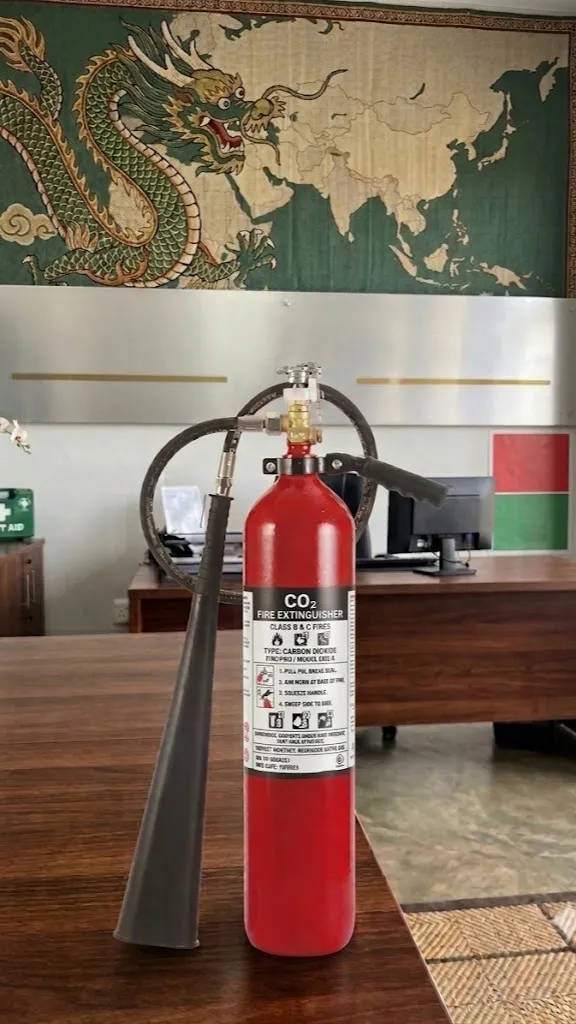
Hospital Fire Suppression Manufacturer Asia – LIFEGUARD®
Hospitals, medical colleges, diagnostic centres, laboratories and healthcare facilities require advanced fire-protection systems because fire incidents in these environments can directly affect patients, medical staff, critical equipment and continuity of healthcare services. Selecting an experienced hospital fire suppression manufacturer in Asia is therefore essential for designing reliable protection for critical hospital areas.
LIFEGUARD® – United Fire Equipments Pvt. Ltd. provides engineered fire suppression solutions for hospitals and healthcare infrastructure across Asian markets. Our solutions can be developed for server rooms, electrical panels, operation theatres, laboratories, UPS rooms, battery areas, medical equipment rooms, kitchens, archives and other critical hospital facilities.
As a professional hospital fire suppression system manufacturer in Asia, LIFEGUARD® focuses on early fire detection, automatic activation, rapid suppression and project-specific system engineering.
Advanced Hospital Fire Suppression Systems for Asia
Hospitals contain many different fire hazards within the same premises. A single suppression technology is not suitable for every protected area.
A hospital may simultaneously contain:
- Electrical and electronic equipment
- Medical devices
- Servers and communication systems
- Flammable liquids
- Kitchen oils and fats
- Battery backup systems
- Paper and textile materials
- Laboratories and chemical storage
- Generator and electrical rooms
- Critical care equipment
For this reason, LIFEGUARD® develops fire suppression solutions according to the actual hazard, room configuration, equipment sensitivity and operational requirements.
Depending on the application, hospital fire suppression may include:
- Clean agent fire suppression systems
- CO₂ fire suppression systems
- Water mist systems
- Local application suppression systems
- Kitchen fire suppression systems
- Electrical panel suppression
- Battery fire suppression
- Automatic detection and release systems
Why Hospitals Need Specialized Fire Suppression
Hospitals are different from ordinary commercial buildings because evacuation can be complicated and many occupants may not be able to move independently.
Critical considerations include:
Patients with Limited Mobility
Patients in ICUs, operation theatres and specialized wards may require medical assistance during evacuation.
Continuous Occupancy
Healthcare facilities commonly operate 24 hours a day, seven days a week.
Sensitive Medical Equipment
Modern hospitals depend on sophisticated electronic and diagnostic systems that can be damaged by unsuitable extinguishing media.
Electrical Fire Risks
Large quantities of energized electrical equipment are used throughout hospitals.
Critical Infrastructure
Server rooms, UPS rooms, electrical rooms, control rooms and communication facilities may be essential for uninterrupted hospital operation.
Special Hazard Areas
Laboratories, kitchens, generator rooms, battery rooms and medical storage areas may each require different suppression technologies.
These factors make professionally engineered hospital fire suppression systems an important component of overall healthcare fire safety.
LIFEGUARD® Hospital Fire Suppression Solutions
As a hospital fire suppression manufacturer Asia, LIFEGUARD® can provide solutions for a wide variety of healthcare applications.
Clean Agent Fire Suppression Systems
Clean agent fire suppression is particularly suitable for areas containing valuable electronic equipment where minimizing residue after discharge is important.
Typical hospital applications can include:
- Server rooms
- Data centres
- UPS rooms
- Communication rooms
- Control rooms
- Medical equipment rooms
- Electrical rooms
- Records and archive areas
Clean agent systems work by discharging a calculated quantity of extinguishing agent into the protected enclosure.
A typical system may include:
- Suppression cylinders
- Cylinder valves
- Distribution piping
- Discharge nozzles
- Fire detection system
- Gas release control panel
- Manual release station
- Abort switch
- Alarm devices
- Pressure monitoring
- Safety signage
The exact system configuration depends on the selected extinguishing agent and project requirement.
FK-5-1-12 Fire Suppression Systems
FK-5-1-12 clean agent systems can be considered for sensitive and high-value environments where rapid fire suppression and minimal residue are desired.
Hospital applications may include:
- IT rooms
- Server rooms
- Medical data centres
- Electronic equipment rooms
- Control rooms
- Specialized diagnostic facilities
System design should consider enclosure volume, design concentration, environmental conditions, piping arrangement and discharge requirements.
HFC-227ea Fire Suppression Systems
HFC-227ea systems are another clean-agent option used for suitable special-hazard applications.
Typical system components can include:
- Agent cylinders
- Discharge valves
- Manifold arrangements
- Distribution piping
- Engineered nozzles
- Detection devices
- Gas release panel
- Hooters and flashers
- Manual release and abort controls
LIFEGUARD® can assist with project-specific system configuration according to technical requirements.
CO₂ Fire Suppression Systems
Carbon dioxide fire suppression systems may be used in selected industrial and normally unoccupied or appropriately controlled hazard areas.
Potential applications may include:
- Generator rooms
- Electrical installations
- Machinery spaces
- Utility areas
- Certain plant rooms
Because CO₂ can present a serious life-safety hazard at fire-extinguishing concentrations, system design requires careful consideration of occupancy, alarms, delays, interlocks and applicable safety requirements.
Hospital Water Mist Fire Suppression Systems
Water mist technology uses fine water droplets to control fire through a combination of cooling, radiant heat attenuation and local oxygen displacement through steam generation.
Depending on the project and approved application, water mist systems may be considered for:
- Machinery spaces
- Hospital kitchens
- Generator rooms
- Selected patient areas
- Electrical and technical spaces
- Special healthcare applications
Benefits of water mist technology can include reduced water consumption compared with traditional water-based discharge in suitable engineered applications.
Electrical Panel Fire Suppression
Hospitals contain thousands of electrical circuits and distribution points.
Critical panels may include:
- Main LT panels
- Distribution boards
- UPS panels
- Control panels
- MCC panels
- Generator control panels
- HVAC control panels
- Medical equipment control cabinets
Localized automatic fire suppression can provide rapid intervention inside or around the protected electrical cabinet.
Depending on the application, systems can use heat-sensitive detection arrangements and localized discharge tubing or nozzles.
Server Room Fire Suppression for Hospitals
Hospital information systems store critical patient, clinical, billing and administrative data.
A fire in a hospital server room can therefore create both a physical safety issue and severe operational disruption.
LIFEGUARD® can provide engineered suppression solutions for:
- Hospital server rooms
- Data centres
- Network rooms
- Communication rooms
- IT control rooms
A typical clean-agent system may provide:
Automatic Detection: Smoke or other suitable detectors identify a potential fire condition.
Alarm Sequence: Occupants receive audible and visual warning.
Automatic Release: The suppression agent is released after the configured confirmation and delay sequence.
Rapid Distribution: Engineered piping and nozzles distribute the agent throughout the enclosure.
System Interface: Shutdown or integration signals can be configured for suitable HVAC, electrical and fire-alarm systems.
Hospital Kitchen Fire Suppression Systems
Commercial hospital kitchens present different hazards from patient and electrical areas.
Cooking appliances may include:
- Deep-fat fryers
- Cooking ranges
- Grills
- Exhaust hoods
- Duct systems
- Cooking-oil equipment
Kitchen fire suppression systems should be designed to control high-temperature cooking-oil fires and protect the associated cooking and extraction equipment.
Systems can include:
- Automatic detection
- Manual activation
- Suppression-agent cylinders
- Distribution piping
- Appliance nozzles
- Hood and duct protection
- Gas or electrical shutoff interface
Battery Fire Suppression in Hospitals
Hospitals increasingly depend on batteries for:
- UPS systems
- Emergency backup
- Medical equipment
- Communication systems
- Solar energy storage
- Battery Energy Storage Systems
Lithium-ion batteries can present thermal runaway hazards that require specialized risk assessment.
LIFEGUARD® can support battery fire-suppression projects involving:
- Battery racks
- Battery cabinets
- UPS battery areas
- Energy storage rooms
- Containerized BESS installations
Depending on the technology and project requirements, battery protection can combine detection, automatic suppression, cooling and thermal propagation control.
Hospital Areas That May Require Fire Suppression
LIFEGUARD® fire suppression solutions can be considered for different hospital zones, including:
- Operation theatres
- Intensive Care Units
- Server rooms
- Electrical rooms
- UPS rooms
- Generator rooms
- Control rooms
- Diagnostic centres
- Medical laboratories
- Pharmacy storage
- Medical record rooms
- Radiology areas
- Communication rooms
- Battery rooms
- Hospital kitchens
- Laundry areas
- Plant rooms
- Medical equipment rooms
- Administrative data centres
- Research laboratories
The appropriate suppression technology should always be selected according to the actual hazard.
Automatic Fire Detection and Suppression
An automatic hospital fire suppression system typically includes both detection and suppression equipment.
The sequence may involve:
Stage 1 – Fire Detection
Suitable detectors identify smoke, heat or other indicators associated with fire.
Stage 2 – Alarm
Audible and visual alarms provide warning to personnel.
Stage 3 – Confirmation
Where configured, multiple-zone or cross-zone logic can verify the fire condition before suppression discharge.
Stage 4 – Time Delay
A programmed delay may allow personnel to leave the protected area where required.
Stage 5 – Suppression Discharge
The selected extinguishing agent is released through the engineered nozzle network.
Stage 6 – System Interface
Outputs can be configured for equipment shutdown, HVAC control, fire-alarm monitoring and other project requirements.
Components of a Hospital Fire Suppression System
Depending on the technology, a complete system may include:
- Fire suppression cylinder
- Extinguishing agent
- Cylinder valve
- Manifold
- Flexible discharge hose
- Distribution piping
- Discharge nozzles
- Smoke detectors
- Heat detectors
- Gas release panel
- Manual release switch
- Abort switch
- Hooter
- Flasher
- Pressure switch
- Solenoid actuator
- Mechanical actuator
- Warning signage
- System interfaces
The final component list depends on the selected system and approved design.
Hospital Fire Suppression System Design
Professional system design is essential for effective fire suppression.
LIFEGUARD® evaluates project information such as:
- Room dimensions
- Protected volume
- False ceiling
- Raised floor
- Equipment layout
- Fire hazard
- Occupancy
- Ventilation
- Temperature
- Openings
- Agent selection
- Cylinder location
- Pipe routing
- Nozzle positioning
- Detection requirements
For total flooding clean-agent systems, factors such as enclosure integrity and agent retention are also important.
Nozzle and Piping Engineering
Correct piping and nozzle arrangement helps ensure that the extinguishing agent reaches the protected area within the required discharge characteristics.
Engineering considerations may include:
- Pipe diameter
- Pipe length
- Equivalent fittings
- Tee arrangements
- Nozzle quantity
- Nozzle orientation
- Discharge coverage
- Pressure distribution
- Agent flow
- Cylinder-to-nozzle distance
Hydraulic calculations may be required depending upon the selected suppression technology.
Fire Suppression for Operation Theatres
Operation theatres are highly sensitive environments containing medical equipment, electrical devices and patients under medical care.
Any fire-protection approach should consider:
- Patient safety
- Equipment sensitivity
- Electrical risks
- Medical procedures
- Occupancy
- Ventilation
- Hospital emergency procedures
Suppression selection must therefore form part of a comprehensive fire and life-safety assessment.
Hospital Laboratory Fire Suppression
Hospital and diagnostic laboratories can contain:
- Chemical reagents
- Electrical instruments
- Testing equipment
- Combustible materials
- Specialized gases
- Sensitive analytical equipment
Because laboratory hazards can differ substantially from one facility to another, suppression system selection should be based on a detailed risk assessment.
Fire Suppression for Hospital Electrical Rooms
Electrical rooms form part of the hospital's critical infrastructure.
A fire in an electrical room can affect:
- Patient care systems
- Lighting
- ICU equipment
- Ventilation
- Medical gases
- Communications
- Emergency services
Automatic suppression can help control a developing fire before it causes extensive equipment damage.
Customized Hospital Fire Suppression Solutions
There is no universal suppression system suitable for every healthcare facility.
LIFEGUARD® can develop project-specific solutions considering:
- Hospital type
- Building size
- Protected areas
- Equipment value
- Occupancy
- Fire load
- Local regulations
- Client specifications
- Consultant requirements
- System integration needs
Projects can range from one critical equipment room to complete hospital campuses.
Hospital Fire Suppression Manufacturer for New Projects
LIFEGUARD® can support:
- New hospital construction
- Hospital renovation
- Medical college projects
- Diagnostic centre projects
- Healthcare infrastructure expansion
- Server room upgrades
- Electrical-room protection
- Laboratory projects
- Hospital kitchen upgrades
- Battery-storage protection
Technical coordination during the early project stage can help optimize cylinder positioning, piping routes and equipment integration.
Hospital Fire Suppression Manufacturer Asia for EPC Contractors
EPC contractors and fire-protection companies require suppliers capable of supporting both commercial and technical project requirements.
LIFEGUARD® can assist with:
- Technical selection
- BOQ preparation
- Product datasheets
- System configuration
- Design inputs
- Drawings
- Hydraulic calculation support
- Compliance documentation
- Supply
- Installation guidance
- Testing and commissioning support
This makes LIFEGUARD® a suitable partner for healthcare fire-protection projects across Asia.
OEM Hospital Fire Suppression Manufacturing
For distributors, system integrators and project partners, LIFEGUARD® can also support suitable OEM requirements.
Depending upon the project, this may include:
- Customized system configurations
- Bulk supply
- Project-specific documentation
- Branding support
- Packaging
- Technical literature
- Suppression-system components
- Complete system supply
OEM arrangements are subject to applicable technical, certification and commercial requirements.
Healthcare Markets Served Across Asia
LIFEGUARD® can support hospital and healthcare fire-suppression enquiries from:
- India
- UAE
- Saudi Arabia
- Qatar
- Oman
- Kuwait
- Bahrain
- Bangladesh
- Nepal
- Sri Lanka
- Singapore
- Malaysia
- Indonesia
- Thailand
- Vietnam
- Philippines
- Other Asian markets
Applicable approvals and project requirements should be verified for each destination country.
Benefits of LIFEGUARD® Hospital Fire Suppression Systems
Customized Engineering
Suppression systems can be developed around actual room dimensions, hazard type and equipment layout.
Multiple Suppression Technologies
Different fire-protection technologies allow suitable solutions to be considered for different hospital hazards.
Automatic Fire Protection
Detection and release systems can provide automatic suppression of developing fires.
Rapid Response
Automatic systems can react significantly faster than relying entirely on manual intervention.
Protection of Critical Equipment
Suitable suppression technology can help minimize damage to valuable hospital infrastructure.
Project Documentation Support
Technical documents can be provided according to project and consultant requirements.
System Integration
Fire suppression can be interfaced with suitable alarm, HVAC and equipment shutdown systems.
Scalable Solutions
Protection can be designed for an individual panel, room, department or complete healthcare campus.
Why Choose LIFEGUARD® as a Hospital Fire Suppression Manufacturer in Asia?
Customers searching for a dependable hospital fire suppression manufacturer Asia need a partner capable of understanding both the fire hazard and the operational importance of healthcare environments.
LIFEGUARD® provides:
- Engineered fire-suppression solutions
- Clean-agent suppression systems
- CO₂ suppression systems
- Water mist solutions
- Electrical-panel fire protection
- Battery fire suppression
- Kitchen suppression solutions
- Automatic fire detection and release systems
- Technical design assistance
- Project-specific system configuration
- OEM and bulk supply support
- Installation and commissioning guidance
- After-sales technical assistance
Complete Hospital Fire Protection Approach
Automatic suppression should form part of a broader hospital fire-safety strategy.
A complete fire-protection approach may include:
- Portable fire extinguishers
- Fire alarm and detection systems
- Automatic suppression
- Fire hydrants
- Hose reels
- Sprinkler systems
- Emergency lighting
- Exit signage
- Smoke management
- Fire-rated compartmentation
- Emergency response procedures
- Regular inspection and maintenance
Coordination between these systems helps improve overall fire and life safety.
Maintenance of Hospital Fire Suppression Systems
Fire suppression equipment should be maintained in operational condition throughout its service life.
Routine inspection may include:
- Cylinder pressure
- Cylinder weight where applicable
- Valve condition
- Piping condition
- Nozzle condition
- Detection devices
- Release panel
- Backup batteries
- Manual release stations
- Abort switches
- Alarm devices
- Electrical interfaces
Periodic servicing should follow manufacturer recommendations and applicable regulations.
LIFEGUARD® – Hospital Fire Suppression System Manufacturer Asia
As healthcare infrastructure continues to grow throughout Asia, the requirement for reliable automatic fire-protection solutions is becoming increasingly important.
LIFEGUARD® provides engineered solutions for protecting critical hospital environments from fire while considering equipment sensitivity, operational continuity and project-specific safety requirements.
Whether the requirement is for a hospital server room fire suppression system, electrical-panel suppression, clean-agent system, kitchen suppression, battery fire protection or complete special-hazard fire suppression solution, our team can support the project with suitable technical and commercial solutions.
Organizations searching for a professional hospital fire suppression manufacturer in Asia can contact LIFEGUARD® for customized project support.
Contact LIFEGUARD®
United Fire Equipments Pvt. Ltd.
Manufacturer of ISI Certified Fire Safety Equipment
📞 8048034226
📧 ufe126@gmail.com | info@lifeguardindia.in
Contact LIFEGUARD® for requirements related to hospital fire suppression systems, clean-agent suppression, server room fire protection, electrical panel suppression, battery fire suppression, kitchen fire suppression and healthcare fire-safety solutions across Asia.
Suggested SEO Keywords
hospital fire suppression manufacturer Asia, hospital fire suppression system manufacturer Asia, hospital fire protection manufacturer Asia, hospital fire suppression supplier Asia, healthcare fire suppression system Asia, hospital clean agent fire suppression Asia, hospital server room fire suppression system, hospital electrical room fire suppression, hospital fire protection company Asia, healthcare fire suppression manufacturer, hospital automatic fire suppression Asia, hospital CO2 fire suppression system, hospital water mist fire suppression system, hospital kitchen fire suppression system Asia, hospital electrical panel fire suppression, medical facility fire suppression system, hospital fire safety solutions Asia, healthcare fire protection company Asia.
SEO Meta Title
Hospital Fire Suppression Manufacturer Asia | LIFEGUARD®
SEO Meta Description
LIFEGUARD® is a hospital fire suppression manufacturer serving Asia with clean agent, CO₂, water mist, electrical panel, kitchen, battery and automatic fire suppression solutions for hospitals, laboratories, server rooms and healthcare facilities.






