
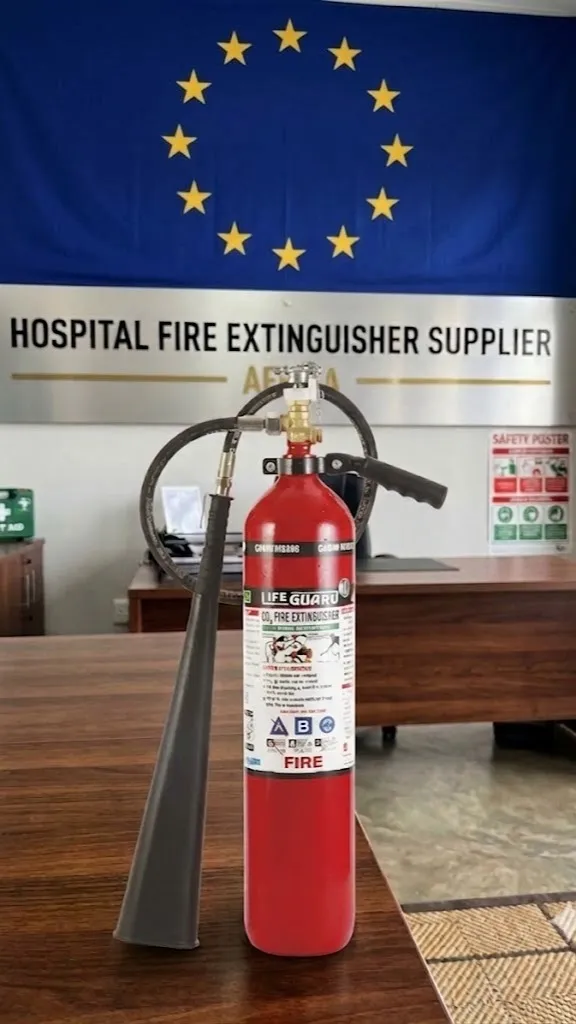
Hospital Fire Suppression Manufacturer Europe
Advanced Fire Suppression Solutions for Hospitals and Healthcare Facilities Across Europe
Hospitals and healthcare facilities require highly reliable fire protection because they accommodate patients, medical professionals, critical care equipment, electrical systems, laboratories, oxygen supplies, pharmaceutical storage, kitchens, data infrastructure and other sensitive areas.
LIFEGUARD® – United Fire Equipments Pvt. Ltd. provides engineered fire protection solutions for customers searching for a dependable hospital fire suppression manufacturer in Europe.
With extensive experience in fire safety equipment and specialized suppression technologies, LIFEGUARD® supports hospital projects, healthcare infrastructure companies, fire protection contractors, consultants, distributors and institutional buyers with customized fire suppression solutions for different hospital fire risks.
Our systems can be engineered for applications ranging from server rooms and electrical panels to laboratories, kitchens, medical equipment rooms, battery areas and other critical spaces.
Why Hospitals Need Specialized Fire Suppression Systems
Hospitals present a unique combination of fire hazards and evacuation challenges.
Unlike many commercial buildings, hospitals may contain patients who cannot evacuate independently. Fire protection systems therefore need to detect and suppress fire rapidly while minimizing risk to occupants, equipment and essential healthcare operations.
Common hospital fire hazards may include:
- Electrical faults
- Overloaded circuits
- Medical equipment failures
- Kitchen fires
- Flammable liquids
- Laboratory chemicals
- Oxygen-enriched environments
- Server and IT equipment
- UPS and battery systems
- Generator rooms
- HVAC equipment
- Storage areas
- Laundry facilities
- Electrical control panels
An effective hospital fire safety strategy should therefore combine early detection, alarm, automatic suppression and appropriate portable firefighting equipment.
LIFEGUARD® – Hospital Fire Suppression Manufacturer for Europe
LIFEGUARD® provides application-specific suppression solutions for hospitals and healthcare projects.
Depending on the protected hazard, our solutions may include:
- Clean agent fire suppression systems
- FK-5-1-12 fire suppression systems
- HFC-227ea / FM-200 type suppression systems
- CO₂ fire suppression systems
- Water mist systems
- Kitchen fire suppression systems
- Electrical panel suppression
- Battery fire suppression solutions
- Local application suppression systems
- Automatic detection and release systems
- Fire alarm and suppression integration
Each system should be selected according to the protected area, occupancy, fire load, equipment sensitivity and applicable project requirements.
Clean Agent Fire Suppression for Hospitals
Clean agent systems are particularly suitable for areas containing sensitive electrical, electronic and medical equipment where water or dry powder residue may cause unnecessary damage.
Typical hospital applications include:
- Server rooms
- Data centres
- Communication rooms
- Medical control rooms
- Diagnostic equipment rooms
- UPS rooms
- Electrical control rooms
- Specialized laboratories
Clean agent systems are designed to suppress fire rapidly while leaving little or no residue after discharge.
This makes them suitable for critical environments where maintaining equipment availability and minimizing post-fire cleanup are important.
FK-5-1-12 Fire Suppression Systems
FK-5-1-12 systems may be used for total flooding protection of enclosed critical spaces.
A complete engineered system can include:
- Agent cylinders
- Cylinder valves
- Manifolds
- Distribution piping
- Discharge nozzles
- Detection system
- Gas release control panel
- Manual release station
- Abort switch
- Sounders and visual alarms
The quantity of suppression agent and nozzle arrangement are determined through engineering calculations based on enclosure volume and design conditions.
HFC-227ea Fire Suppression Systems
HFC-227ea systems are commonly used for enclosed areas where rapid fire suppression and minimal residue are required.
Potential applications in healthcare infrastructure can include:
- Server rooms
- UPS rooms
- Electrical rooms
- Communication facilities
- Records rooms
- Control rooms
The final system design depends on the required design concentration, room volume, enclosure integrity and applicable standards.
CO₂ Fire Suppression Systems
Carbon dioxide suppression may be appropriate for selected industrial or normally unoccupied hospital support areas.
Possible applications can include:
- Generator rooms
- Mechanical equipment
- Specialized machinery
- Electrical equipment areas
- Certain local application hazards
Because carbon dioxide can create serious life-safety risks in occupied areas, CO₂ systems require careful engineering, warning arrangements and strict consideration of occupancy conditions.
Water Mist Fire Suppression Systems
Water mist technology uses fine water droplets to control or suppress fire through cooling, oxygen displacement near the flame and reduction of radiant heat.
Water mist systems may be considered for applications such as:
- Machinery spaces
- Selected electrical areas
- Generator rooms
- Technical rooms
- Specialized healthcare infrastructure
One advantage of water mist is its comparatively low water consumption compared with conventional water-based systems in suitable applications.
Hospital Kitchen Fire Suppression Systems
Commercial kitchens within hospitals can present significant fire hazards due to:
- Cooking oils
- Deep-fat fryers
- Cooking ranges
- Exhaust hoods
- Grease accumulation
- High-temperature cooking equipment
Automatic kitchen suppression systems can provide localized protection for:
- Cooking appliances
- Exhaust hoods
- Duct systems
- Fryers
- Grills
- Cooking surfaces
Wet chemical suppression is commonly used for high-temperature cooking oil and fat fire hazards.
Electrical Panel Fire Suppression
Hospitals contain large numbers of electrical panels operating continuously.
A localized electrical panel fire can affect critical medical services and cause significant operational disruption.
LIFEGUARD® can provide fire detection and localized suppression solutions for:
- LT panels
- HT panels
- MCC panels
- UPS panels
- Control panels
- Distribution boards
- Electrical cabinets
Depending on the application, suppression arrangements may use heat-sensitive tubing, local discharge nozzles or other automatic detection mechanisms.
Fire Suppression for Server and Data Rooms
Modern hospitals depend heavily on digital infrastructure.
Critical systems may include:
- Hospital management systems
- Electronic health records
- Medical imaging servers
- Communication networks
- Patient monitoring infrastructure
- Security and access-control systems
A fire in a server or data room can disrupt essential hospital functions.
Total flooding clean agent systems can provide rapid suppression while helping minimize damage to electronic equipment.
Fire Protection for Medical Laboratories
Hospital laboratories may contain a combination of:
- Electrical equipment
- Chemicals
- Flammable liquids
- Medical gases
- Sensitive instruments
- Specialized testing equipment
Fire suppression systems for laboratories should therefore be selected only after evaluating the specific hazard.
Solutions may include clean agent systems, local suppression, appropriate portable extinguishers or other engineered technologies.
Fire Suppression for Battery and UPS Areas
Hospitals increasingly depend on battery-backed power systems for critical operations.
Battery areas may include:
- UPS battery banks
- Lithium-ion batteries
- Energy storage systems
- Emergency backup systems
Lithium-ion batteries can present thermal runaway risks requiring specialized detection and suppression strategies.
LIFEGUARD® can support customized battery fire protection requirements based on battery chemistry, enclosure configuration, capacity and installation environment.
Automatic Detection and Suppression Integration
An effective suppression system usually relies on fast and reliable fire detection.
Detection options may include:
- Smoke detectors
- Heat detectors
- Aspirating smoke detection
- Linear heat detection
- Multi-criteria detectors
- Flame detection
- Specialized gas detection where required
Detection systems can be integrated with suppression control panels to initiate alarms and, where appropriate, automatic discharge.
Typical Fire Suppression Sequence
A hospital suppression system may operate through the following sequence:
1. Fire Detection
Sensors identify smoke, heat or other signs of developing fire.
2. Alarm Initiation
The fire alarm or suppression panel generates audible and visual warnings.
3. Verification or Cross-Zone Logic
Where required, two independent detection signals may be used before automatic release.
4. Pre-Discharge Warning
Occupants are alerted before suppression agent discharge.
5. Suppression Agent Release
The selected agent is released automatically or manually.
6. Fire Suppression
The agent is distributed through engineered piping and nozzles.
7. System Monitoring
Post-discharge procedures may include ventilation control, fire brigade response and system reset.
Importance of Proper Engineering Design
Fire suppression systems should not be selected solely on the basis of room size.
A professional design should consider:
- Protected volume
- Occupancy
- Fire load
- Equipment type
- Ventilation
- Ceiling and raised floor voids
- Openings
- Leakage
- Temperature
- Required design concentration
- Agent quantity
- Piping arrangement
- Nozzle placement
- Discharge time
- Detection strategy
- Emergency controls
For total flooding systems, enclosure integrity can also play an important role in maintaining the required suppression concentration.
Hospital Areas That May Require Fire Suppression
LIFEGUARD® solutions can be considered for:
- Operation theatres
- ICUs
- Server rooms
- Data centres
- UPS rooms
- Electrical rooms
- Control rooms
- Laboratories
- Medical equipment rooms
- Diagnostic centres
- Generator rooms
- Battery rooms
- Kitchens
- Pharmacies
- Records rooms
- Storage facilities
- Communication rooms
- Technical service areas
The suppression technology should always be matched to the specific hazard.
Fire Suppression for Critical Healthcare Infrastructure
Hospitals need continuity of operation.
Fire damage to critical infrastructure can affect:
- Emergency services
- Intensive care operations
- Patient monitoring
- Diagnostic systems
- Communication systems
- Electrical distribution
- Data access
- Medical records
- Surgical procedures
Automatic fire suppression can help limit the extent of damage and support business continuity.
Customized Hospital Fire Suppression Engineering
LIFEGUARD® provides customized solutions rather than relying solely on generic system configurations.
Customers may share:
- Room dimensions
- Layout drawings
- Equipment details
- Fire hazard information
- Ceiling height
- Raised floor details
- HVAC information
- Required standards
- Preferred suppression technology
- Project specification
- Local approval requirements
Our technical team can then evaluate the appropriate suppression system configuration.
Hospital Fire Suppression Manufacturer for European Markets
LIFEGUARD® supports enquiries from healthcare projects and fire protection companies across European markets, including:
Germany | France | Italy | Spain | Netherlands | Belgium | Poland | Austria | Portugal | Romania | Ireland | Sweden | Denmark | Finland | Greece | Czech Republic and other European countries
All projects should be evaluated against the applicable local standards, certifications and regulatory requirements of the destination country.
Quality and Documentation Support
Depending on the system and project requirements, documentation support may include:
- Technical data sheets
- Product catalogues
- System drawings
- Bill of quantities
- Agent calculations
- Piping layouts
- Nozzle layouts
- Installation instructions
- Testing documentation
- Commissioning support
- Operation and maintenance information
Proper documentation helps consultants, contractors and clients evaluate the proposed system before installation.
Why Choose LIFEGUARD®?
LIFEGUARD® – United Fire Equipments Pvt. Ltd. has been associated with fire protection solutions since 1991.
Customers searching for a reliable hospital fire suppression manufacturer Europe can consider LIFEGUARD® for:
- Specialized fire suppression engineering
- Multiple suppression technologies
- Customized system design
- Clean agent expertise
- Electrical panel suppression solutions
- Battery fire protection capabilities
- Fire alarm and suppression integration
- Technical documentation support
- Project-based engineering
- OEM fire safety equipment manufacturing
- International enquiry support
Applications Beyond Hospitals
Our suppression systems can also be considered for:
- Medical colleges
- Research laboratories
- Diagnostic centres
- Pharmaceutical facilities
- Nursing homes
- Clinics
- Blood banks
- Healthcare data centres
- Medical warehouses
- Rehabilitation centres
- Government healthcare facilities
- Private healthcare institutions
- Medical research facilities
Frequently Asked Questions
What type of fire suppression system is suitable for hospitals?
The appropriate system depends on the hazard. Clean agent systems may be suitable for sensitive electronic areas, water mist for selected applications, wet chemical systems for kitchens and specialized local suppression for equipment and electrical panels.
Can clean agent suppression be used in hospital server rooms?
Yes. Clean agent systems are commonly considered for enclosed server and IT rooms where rapid suppression and minimal residue are important.
Can fire suppression systems operate automatically?
Yes. Automatic suppression systems can be integrated with suitable detection and control panels to release the agent when predefined conditions are met.
Do hospitals need separate systems for different risks?
Often, yes. A hospital kitchen, electrical panel, server room and generator area can require different suppression technologies.
Can LIFEGUARD® provide customized hospital suppression systems?
Yes. Systems can be engineered according to room volume, protected equipment, hazard type, piping requirements and project specifications.
Do you provide systems for hospital electrical panels?
Yes. Localized detection and suppression solutions can be configured for electrical panels and control cabinets.
Can you support hospital projects in Europe?
Yes. LIFEGUARD® can support European project enquiries subject to technical requirements, applicable standards, certifications and destination-country regulations.
SEO Keywords
Primary Keyword:
Hospital fire suppression manufacturer Europe
Related Keywords:
hospital fire suppression system manufacturer Europe, hospital fire protection manufacturer Europe, healthcare fire suppression manufacturer Europe, hospital clean agent suppression Europe, hospital fire suppression company Europe, hospital fire suppression supplier Europe, hospital server room fire suppression Europe, hospital electrical panel suppression Europe, hospital kitchen fire suppression Europe, hospital fire safety solutions Europe, medical facility fire suppression system Europe, healthcare fire protection solutions Europe.
Suggested SEO Meta Title
Hospital Fire Suppression Manufacturer Europe | LIFEGUARD®
Suggested Meta Description
LIFEGUARD® is a hospital fire suppression manufacturer serving Europe with clean agent, FK-5-1-12, HFC-227ea, CO₂, water mist, kitchen, electrical panel and customized healthcare fire protection solutions.
Suggested URL Slug
/hospital-fire-suppression-manufacturer-europe/
Contact LIFEGUARD®
United Fire Equipments Pvt. Ltd.
Manufacturer of ISI Certified Fire Safety Equipment
For hospital fire suppression systems, clean agent protection, electrical panel suppression, kitchen fire suppression, battery fire safety and customized healthcare fire protection requirements across Europe, contact LIFEGUARD®.
📞 8048034226
📧 ufe126@gmail.com | info@lifeguardindia.in
LIFEGUARD® – Engineered Fire Suppression Solutions for Hospitals, Healthcare Facilities and Critical Infrastructure.
Keywords






