
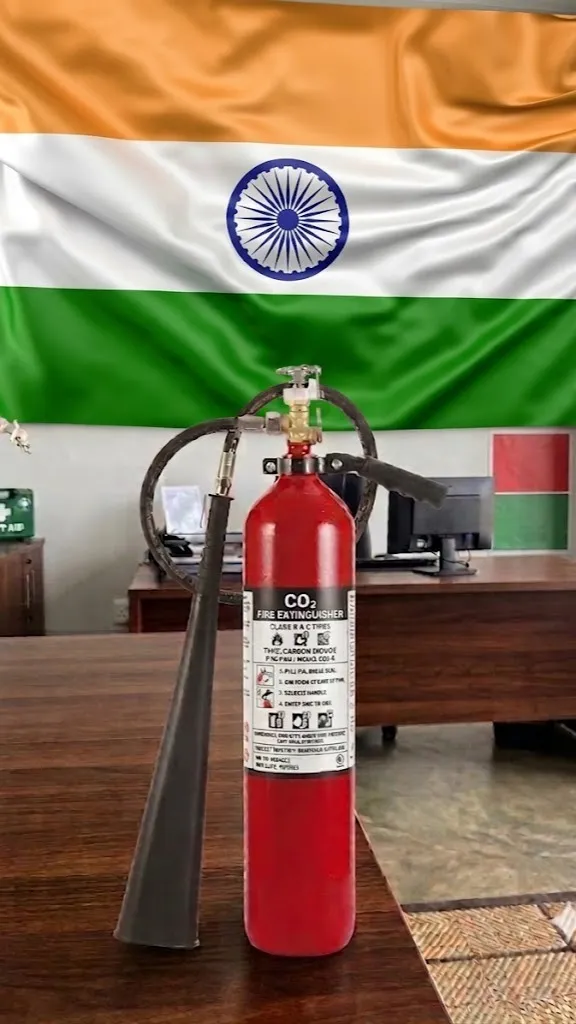
Hospital Fire Suppression OEM Manufacturer India
Hospitals and healthcare facilities require a highly reliable approach to fire protection because they operate continuously and contain patients, medical professionals, life-support equipment, sensitive electronics, oxygen systems, laboratories, electrical rooms, kitchens, data infrastructure and other critical services.
LIFEGUARD®, a brand of United Fire Equipments Pvt. Ltd., provides engineered fire detection and suppression solutions for healthcare applications. As a hospital fire suppression OEM manufacturer in India, LIFEGUARD® supports hospitals, medical colleges, diagnostic centres, healthcare campuses, nursing homes, laboratories, pharmaceutical facilities, contractors, consultants and system integrators with application-specific fire protection solutions.
Rather than treating every hospital area in the same manner, LIFEGUARD® focuses on selecting suppression technologies according to the actual hazard, room configuration, equipment sensitivity, fire load and operational requirements.
LIFEGUARD® – Hospital Fire Suppression OEM Manufacturer India
Modern hospitals contain a wide variety of fire risks. A solution that may be appropriate for an electrical room may not be suitable for an operation theatre, kitchen, server room or generator area.
As a hospital fire suppression OEM manufacturer in India, LIFEGUARD® can support engineered fire protection requirements for critical healthcare areas through a combination of:
- Fire detection
- Automatic suppression
- Alarm and control
- Clean agent systems
- Local application suppression
- Portable extinguishers
- Specialized detection
- Fire alarm integration
- Manual release provisions
- Emergency shutdown interfaces
- Customized system engineering
The objective is to provide a coordinated fire safety solution appropriate to the protected hazard.
Why Hospitals Need Automatic Fire Suppression Systems
Hospitals differ from many commercial buildings because evacuation may be complicated.
Patients may:
- Be unable to walk independently
- Be connected to medical equipment
- Require oxygen support
- Be under anaesthesia
- Be undergoing surgery
- Require continuous monitoring
- Need assistance during evacuation
Because evacuation can take time, rapid fire detection and suppression are especially important in healthcare environments.
Automatic suppression systems can help control a developing fire during its early stages and reduce the possibility of fire spreading into adjoining critical areas.
Major Fire Risks in Hospitals
Hospitals contain multiple potential ignition sources and combustible materials.
Typical risks include:
- Electrical short circuits
- Electrical panels
- UPS equipment
- Battery systems
- Server equipment
- Medical electronics
- Generator rooms
- Fuel systems
- Commercial kitchens
- Laboratories
- Flammable chemicals
- Pharmacy storage
- Laundry facilities
- Boiler areas
- Medical gas installations
- Cable shafts
- Record storage
- Parking areas
- EV charging points
This diversity of hazards makes engineered suppression system selection essential.
Hospital Areas That May Require Fire Suppression
Server and Data Rooms
Hospitals increasingly depend on digital systems for:
- Patient records
- Imaging data
- Hospital management systems
- Communication
- Billing
- Laboratory information systems
- Medical equipment interfaces
Fire in a server or data room can affect hospital operations even if the incident itself is relatively small.
Clean agent suppression systems may be considered for suitable data and server room applications because they can provide automatic fire suppression while minimizing residue on sensitive electronic equipment.
Electrical Rooms
Electrical rooms may contain:
- LT panels
- HT panels
- Switchgear
- Control panels
- Distribution boards
- UPS equipment
- Electrical cables
Appropriate suppression technology can be selected according to equipment configuration, room dimensions and electrical risk.
UPS Rooms
Hospitals require uninterrupted electrical power for critical medical services.
UPS areas can contain substantial electrical equipment and battery banks. Fire protection design may therefore consider:
- Early detection
- Automatic alarm
- Suitable extinguishing medium
- Battery configuration
- Electrical isolation
- Ventilation
- Suppression system integration
Battery Rooms
Battery installations require careful fire safety assessment because battery chemistry and technology influence fire behaviour.
The protection method should be selected according to:
- Battery chemistry
- Capacity
- Charging arrangement
- Enclosure configuration
- Ventilation
- Potential heat generation
- Fire propagation risk
Lithium-ion battery installations in particular require specialized risk evaluation because thermal runaway behaviour differs from conventional fires.
Operation Theatres
Operation theatres contain critical medical equipment and may operate in environments where medical gases are present.
Fire safety planning should consider:
- Electrical equipment
- Medical gases
- Surgical equipment
- Combustible materials
- Occupant safety
- Emergency procedures
- Equipment sensitivity
The suppression solution must be selected carefully so that the technology is appropriate for the clinical environment.
Diagnostic Equipment Rooms
Healthcare facilities may contain expensive equipment such as:
- CT scanners
- Digital imaging systems
- Laboratory analyzers
- Control systems
- Medical electronics
Protection strategies for these environments should consider both fire suppression effectiveness and possible damage caused by extinguishing residue.
Hospital Laboratories
Laboratories can contain:
- Electrical equipment
- Chemicals
- Reagents
- Flammable materials
- Testing instruments
- Stored samples
A detailed hazard assessment is important before selecting the suppression method.
Hospital Kitchens
Commercial hospital kitchens contain multiple fire hazards associated with:
- Cooking oils
- Fryers
- Gas appliances
- Electrical appliances
- Hot surfaces
- Exhaust hoods
- Grease accumulation
Kitchen suppression systems may be required to provide rapid localized protection around high-risk cooking equipment.
Generator Rooms
Generator rooms can present:
- Fuel fire risks
- Electrical hazards
- Hot surfaces
- Mechanical equipment
- Lubricating oil hazards
The suppression system should be designed according to the generator configuration, fuel type, enclosure and ventilation arrangement.
Clean Agent Fire Suppression for Hospitals
Clean agent fire suppression can be useful for suitable hospital areas where electronic equipment and continuity of operation are important.
Typical applications may include:
- Data rooms
- Server rooms
- Control rooms
- UPS rooms
- Communication rooms
- Selected diagnostic equipment rooms
- Sensitive electronics areas
A clean agent system typically consists of:
- Agent storage cylinder
- Cylinder valve
- Discharge piping
- Discharge nozzles
- Detection system
- Gas release control panel
- Manual release station
- Abort provision where required
- Audio-visual alarm
- Pressure monitoring components
- System signage and accessories
The final arrangement should be engineered according to the protected enclosure and selected suppression agent.
Hospital Fire Suppression System Working Principle
A typical automatic suppression sequence may operate as follows:
1. Fire Detection
Suitable detectors identify smoke, heat or another fire signature.
2. Signal Confirmation
The fire alarm or suppression control panel processes detection signals according to the programmed sequence.
3. Pre-Discharge Warning
Audio-visual alarms may activate to warn occupants or authorized personnel before suppression discharge.
4. Shutdown or Interlocking
Where required, ventilation, air-conditioning or associated equipment may be controlled according to the approved cause-and-effect philosophy.
5. Suppression Activation
The system releases the suppression agent automatically after the specified confirmation and delay sequence.
6. Agent Distribution
The agent flows through engineered piping to discharge nozzles positioned within the protected area.
7. Fire Control
The suppression medium helps control or extinguish the fire according to the capabilities and design criteria of the selected system.
The actual operating sequence should always be developed according to the system design, protected hazard and project requirements.
Fire Detection for Hospital Suppression Systems
Fast detection is essential for effective automatic suppression.
Depending on the application, detection options can include:
- Smoke detectors
- Heat detectors
- Multi-criteria detectors
- Aspirating smoke detection
- Flame detection
- Linear heat sensing
- Specialized gas or condition monitoring
Critical electronic spaces may benefit from very early warning detection where rapid identification of a developing fire is important.
Aspirating Smoke Detection for Critical Hospital Areas
Aspirating smoke detection systems continuously draw air samples through a network of sampling pipes and analyze them for smoke particles.
This approach can be particularly useful in environments where very early warning is required.
Potential healthcare applications include:
- Server rooms
- Data centres
- Control rooms
- Electrical rooms
- Critical communication facilities
- High-value equipment areas
Very early detection can provide additional response time before a developing incident becomes a larger fire.
Fire Suppression Control Panel
The suppression control panel acts as the central control element for an automatic suppression system.
Depending on the project configuration, it can coordinate:
- Fire detector inputs
- Alarm signals
- Cross-zone confirmation
- Pre-discharge alarm
- Release signals
- Manual release
- Abort functions
- Equipment shutdown
- Ventilation interfaces
- Building fire alarm interfaces
- System fault monitoring
Proper cause-and-effect programming is important to ensure that the suppression system operates as intended.
Manual Release and Abort Arrangements
Hospital suppression installations may incorporate suitable manual control provisions.
A manual release station can allow authorized personnel to initiate suppression where appropriate.
An abort switch, when included in the approved system design, can provide a controlled means of delaying an automatic release while the specified conditions are met.
These controls should be installed only according to the approved fire safety philosophy and applicable project requirements.
Hospital Fire Suppression OEM Solutions
LIFEGUARD® can support OEM and project-specific requirements for healthcare fire protection.
Potential OEM support can include:
- Customized system configuration
- Cylinder assemblies
- Detection integration
- Piping and nozzle arrangement
- Control panel interfaces
- Project-specific labeling
- Technical documentation
- Drawings
- Bill of quantities
- Product data sheets
- Testing documentation
- Installation guidance
- Commissioning support
- Maintenance guidance
This approach is beneficial for EPC contractors, hospital developers, consultants, MEP contractors and fire system integrators requiring coordinated project support.
Fire Suppression System Design Considerations for Hospitals
An engineered suppression system should be based on project-specific design data.
Important parameters can include:
- Room dimensions
- Protected volume
- False ceiling volume
- Raised floor volume
- Fire hazard classification
- Fire load
- Ambient temperature
- Equipment configuration
- Ventilation conditions
- Leakage openings
- Door arrangements
- Agent selection
- Agent quantity
- Cylinder location
- Pipe routing
- Nozzle quantity
- Nozzle positioning
- Detection strategy
- Alarm sequence
- Shutdown requirements
- Maintenance access
Engineering calculations and system configuration should be completed in accordance with the selected technology and applicable requirements.
Importance of Room Integrity for Total Flooding Systems
Where a total flooding suppression system is used, enclosure integrity is an important design consideration.
Excessive leakage through:
- Doors
- Cable penetrations
- Duct openings
- Raised floors
- False ceilings
- Unsealed wall openings
may affect the ability of the enclosure to retain the required suppression concentration.
Proper sealing and enclosure evaluation can therefore form an important part of commissioning a total flooding system.
Fire Suppression for Hospital Server Rooms
Server rooms are among the most common hospital applications for automatic clean agent suppression.
A complete protection arrangement may include:
- Early smoke detection
- Automatic fire alarm
- Clean agent cylinders
- Engineered piping
- Discharge nozzles
- Gas release panel
- Manual release
- Abort switch
- Sounder
- Flasher
- Warning signage
- HVAC shutdown interface
- Main fire alarm interface
The system should be engineered around the actual server room dimensions and equipment arrangement.
Hospital Kitchen Fire Suppression
Hospital kitchens require a different protection approach from data rooms.
Potential high-risk equipment includes:
- Deep-fat fryers
- Cooking ranges
- Griddles
- Exhaust hoods
- Duct systems
A suitable kitchen fire suppression system may incorporate:
- Heat detection or mechanical activation
- Suppression agent storage
- Discharge piping
- Local application nozzles
- Manual activation
- Fuel or energy shutdown interfaces
System design should be based on the cooking equipment arrangement and applicable kitchen protection requirements.
Fire Suppression for Electrical Panels
Localized fire suppression can also be considered for selected electrical cabinets or panels.
This may be useful where early control of a localized electrical fire is required without unnecessarily flooding a larger room.
Possible protected equipment includes:
- Electrical panels
- Control cabinets
- Automation panels
- Distribution boards
- Equipment enclosures
- UPS cabinets
The suppression technology should be chosen according to enclosure size and electrical risk.
Integrated Hospital Fire Protection
Effective hospital fire safety often requires multiple systems working together.
A comprehensive healthcare fire protection strategy may include:
- Portable fire extinguishers
- Automatic fire detection
- Addressable or conventional alarm systems
- Automatic sprinklers
- Fire hydrants
- Hose reels
- Clean agent suppression
- Kitchen suppression
- Specialized equipment suppression
- Emergency lighting
- Fire signage
- Fire doors
- Smoke management
- Emergency response procedures
Suppression systems should therefore be coordinated with the hospital's overall fire and life safety design.
New Hospital Projects
For new hospitals, suppression planning should begin during the design stage.
Early coordination can help finalize:
- Cylinder locations
- Fire panel locations
- Pipe routes
- Cable routes
- Detector positions
- Nozzle positions
- Room sealing requirements
- Ventilation shutdown
- Fire alarm interfaces
- Maintenance access
Early engineering can reduce site modifications and coordination issues during installation.
Fire Suppression Upgrades for Existing Hospitals
Existing hospitals may require suppression system upgrades due to:
- Addition of new equipment
- Expansion of server facilities
- Increased electrical loads
- New diagnostic departments
- Renovation
- Fire audit observations
- New battery systems
- New kitchen equipment
- Changes in room configuration
- Replacement of outdated fire systems
A site assessment can help identify areas where additional or upgraded suppression is appropriate.
Why Choose LIFEGUARD® as a Hospital Fire Suppression OEM Manufacturer in India?
LIFEGUARD® provides fire safety equipment and engineered solutions with a focus on project-specific technical support.
Key advantages include:
- Indian OEM fire safety expertise
- Application-specific engineering
- Fire detection and suppression integration
- Customized system solutions
- Technical drawings and documentation
- Project BOQ support
- System selection assistance
- Contractor and consultant coordination
- Nationwide project support
- OEM supply capability
- Installation and commissioning assistance
- After-sales technical support
Hospital Fire Suppression Solutions for Different Stakeholders
LIFEGUARD® can support:
Hospital Owners
Selection of suppression technologies suitable for critical hospital areas.
Architects and Consultants
Technical specifications, drawings and system design information.
MEP Contractors
Fire suppression equipment, system configuration and project documentation.
EPC Contractors
Project-specific system packages and coordinated supply support.
Fire System Integrators
OEM equipment and technical assistance for integrated healthcare fire protection projects.
Government and Institutional Buyers
Technical and commercial support for healthcare infrastructure projects.
Applications
LIFEGUARD® hospital fire suppression solutions can be considered for:
- Multi-speciality hospitals
- Government hospitals
- Private hospitals
- Medical colleges
- Nursing homes
- Diagnostic centres
- Pathology laboratories
- Cancer treatment centres
- Blood banks
- Research laboratories
- Pharmaceutical facilities
- Healthcare campuses
- Critical care facilities
- Hospital data centres
- Medical warehouses
Frequently Asked Questions
What is a hospital fire suppression system?
A hospital fire suppression system is an engineered system designed to detect and automatically control or extinguish fire within a protected healthcare area using a suitable suppression medium.
Which hospital areas may require automatic fire suppression?
Applications may include server rooms, data rooms, electrical rooms, UPS areas, certain equipment rooms, kitchens, generator areas and other high-risk or critical spaces.
Which suppression system is suitable for a hospital server room?
A properly engineered clean agent suppression system may be considered for suitable server and data room applications where minimizing extinguishing residue is important.
Can one suppression system protect every hospital area?
Not necessarily. Different hazards may require different suppression technologies. Kitchen fires, electrical equipment fires and sensitive data-room fires can require different protection strategies.
Can a suppression system operate automatically?
Yes. Automatic suppression systems can be activated through compatible detection and control arrangements according to the approved design.
Does LIFEGUARD® provide customized hospital fire suppression systems?
LIFEGUARD® can support application-specific suppression configurations based on the protected hazard, room dimensions, equipment arrangement and project requirements.
Can fire suppression integrate with the main fire alarm system?
Where required and technically compatible, suppression control systems can be interfaced with the building's main fire alarm and associated control systems.
Why is early detection important in hospitals?
Early detection provides more time for warning, emergency response and automatic suppression, which is especially important where patients may require assistance during evacuation.
Looking for a Hospital Fire Suppression OEM Manufacturer in India?
If you are developing a hospital, medical college, diagnostic centre, healthcare campus or critical medical infrastructure project and require a dependable hospital fire suppression OEM manufacturer in India, LIFEGUARD® can support your requirement with engineered detection, alarm and suppression solutions.
Our team can assist with system selection, design considerations, technical documentation, drawings, project quantities and application-specific fire protection requirements.
Contact LIFEGUARD®
United Fire Equipments Pvt. Ltd.
Manufacturer of ISI Certified Fire Safety Equipment
📞 8048034226
📧 ufe126@gmail.com | info@lifeguardindia.in
Suggested SEO Meta Title
Hospital Fire Suppression OEM Manufacturer India | LIFEGUARD®
Suggested SEO Meta Description
LIFEGUARD® is a hospital fire suppression OEM manufacturer in India providing engineered clean agent, automatic detection and specialized fire suppression solutions for server rooms, electrical areas, kitchens, laboratories and healthcare facilities.
Primary SEO Keyword
Hospital fire suppression OEM manufacturer India
Related SEO Keywords
- Hospital fire suppression manufacturer India
- Hospital fire suppression system manufacturer India
- Hospital fire protection OEM India
- Healthcare fire suppression manufacturer India
- Hospital clean agent suppression system India
- Hospital server room fire suppression India
- Hospital automatic fire suppression system
- Healthcare fire protection system manufacturer
- Hospital fire safety OEM manufacturer India
- Hospital kitchen fire suppression system India
- Hospital electrical room fire suppression
- Medical facility fire suppression system India
- Hospital fire detection and suppression system
- Healthcare fire safety equipment manufacturer India
Keywords






