
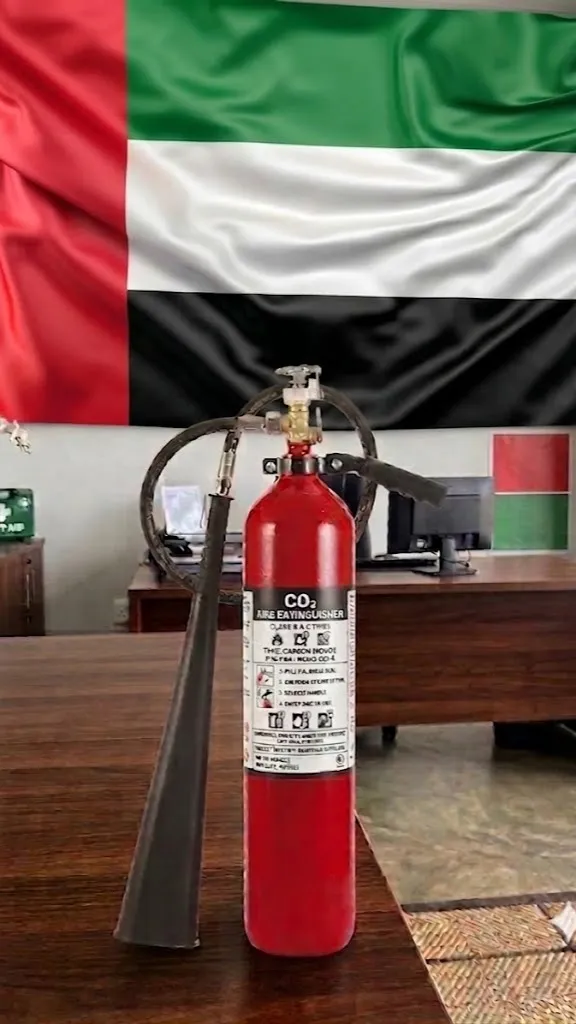
Hospital Fire Suppression OEM Manufacturer UAE – LIFEGUARD®
Hospitals and healthcare facilities require highly dependable fire protection because they operate continuously and contain patients, healthcare professionals, visitors, sophisticated medical equipment, electrical systems, pharmaceuticals, medical gases and critical life-support infrastructure. A developing fire in a healthcare environment can therefore create serious risks to both life safety and uninterrupted medical operations.
For organizations searching for a dependable hospital fire suppression OEM manufacturer UAE, LIFEGUARD®, a brand of United Fire Equipments Pvt. Ltd., provides engineered fire suppression and fire protection solutions for hospitals, medical centres, laboratories, diagnostic facilities and other healthcare infrastructure.
LIFEGUARD® supports OEM, project and customized fire protection requirements with solutions that can include portable extinguishers, automatic fire suppression systems, clean agent systems, detection and alarm interfaces, piping, nozzles, control equipment and associated fire safety components.
Our approach is based on understanding the individual fire risks within each hospital area and selecting the appropriate detection and suppression technology accordingly.
LIFEGUARD® – Hospital Fire Suppression OEM Manufacturer for UAE
Modern hospitals contain multiple fire hazards within a single building. A general ward may primarily contain ordinary combustible materials, while an electrical room, data centre, laboratory or commercial kitchen may require an entirely different suppression approach.
As a hospital fire suppression OEM manufacturer for UAE projects, LIFEGUARD® can support customized protection requirements for:
- Government hospitals
- Private hospitals
- Multispecialty hospitals
- Super-specialty hospitals
- Medical colleges
- Diagnostic centres
- Clinical laboratories
- Dental hospitals
- Eye hospitals
- Maternity hospitals
- Children’s hospitals
- Rehabilitation centres
- Medical research facilities
- Clinics
- Day-care medical centres
- Healthcare complexes
Fire suppression system selection should always be based on the hazard, room configuration, equipment sensitivity, project specifications and applicable local requirements.
Why Hospitals Need Specialized Fire Suppression Systems
Healthcare facilities present a unique fire safety challenge because patient evacuation may be difficult or delayed, while critical hospital functions must often continue even during emergencies.
A properly engineered hospital fire suppression strategy should therefore consider several important factors.
Continuous Occupancy
Hospitals operate 24 hours a day, seven days a week. Fire protection equipment must therefore remain continuously available and ready for operation.
Patients with Limited Mobility
Some patients may be unconscious, undergoing treatment, dependent on life-support equipment or unable to evacuate independently. Rapid fire detection and suppression can therefore be particularly important.
Sensitive Medical Equipment
Hospitals contain expensive electronic and diagnostic equipment that may be damaged by inappropriate extinguishing media.
Electrical Infrastructure
UPS systems, electrical control panels, distribution boards, transformers, communication equipment and server systems can create significant electrical fire risks.
Medical Gases
Oxygen and other medical gases require carefully coordinated fire safety measures because oxygen-enriched environments can intensify combustion.
Laboratories and Chemicals
Hospital laboratories may contain chemicals, solvents, electrical instruments and other materials requiring hazard-specific protection.
Kitchen Fire Hazards
Commercial hospital kitchens contain cooking oils, fats and high-temperature appliances that may require specialized wet chemical fire protection.
For these reasons, hospital fire safety should use a combination of appropriate extinguishing and suppression technologies instead of relying on one universal solution.
Hospital Fire Suppression Solutions Offered by LIFEGUARD®
Depending on the application and project requirements, LIFEGUARD® can support different fire suppression technologies for healthcare facilities.
Clean Agent Fire Suppression Systems
Clean agent fire suppression systems are commonly considered for critical rooms containing sensitive electronic equipment where minimizing residue after discharge is important.
Potential hospital applications include:
- Server rooms
- Data centres
- Hospital IT rooms
- UPS rooms
- Communication rooms
- Electrical control rooms
- Medical equipment rooms
- Critical electronic infrastructure
An engineered clean agent system typically includes:
- Agent storage cylinder
- Cylinder valve
- Distribution piping
- Discharge nozzles
- Fire detection system
- Gas release control panel
- Audible and visual alarms
- Manual release station
- Abort switch
- Pressure monitoring components
- Associated accessories
The exact agent, concentration, quantity, piping arrangement and discharge configuration should be determined through project-specific engineering.
CO₂ Fire Suppression Systems
Carbon dioxide suppression may be considered for certain industrial, electrical or equipment hazards where its application is technically suitable.
However, because CO₂ can create a serious life-safety hazard in occupied spaces, its use requires careful engineering, safeguards and compliance with applicable requirements.
Potential non-occupied or specifically engineered applications may include selected machinery or equipment areas.
The suitability of CO₂ must always be assessed against occupancy and project safety requirements.
Local Application Fire Suppression Systems
Certain hospital equipment may require localized protection instead of total-room flooding.
A local application system is designed to direct suppression onto a specific identified hazard.
Potential applications may include:
- Specialized electrical equipment
- Machinery
- Generator-related hazards
- Technical equipment enclosures
- Selected process equipment
The design depends on equipment geometry, fuel type, ventilation and fire risk.
Hospital Kitchen Fire Suppression
Hospital kitchens operate for long hours and may contain deep-fat fryers, cooking oils, grease and high-temperature cooking appliances.
A kitchen suppression strategy may include:
- Wet chemical extinguishing media
- Automatic detection
- Localized discharge
- Hood and duct protection where applicable
- Manual release arrangement
- Fuel or power shutdown interface
- Portable wet chemical extinguishers
The system should be engineered according to the specific kitchen layout and cooking equipment.
Portable Fire Extinguishers
Portable fire extinguishers remain an essential first-response component of hospital fire safety.
Depending on identified fire hazards, LIFEGUARD® can support requirements involving:
- ABC dry chemical powder extinguishers
- CO₂ extinguishers
- Water-based extinguishers
- Foam extinguishers
- Wet chemical extinguishers
- Portable extinguishers
- Wheeled fire extinguishers
Different extinguisher types should be positioned according to the fire risks in individual hospital areas.
Fire Suppression for Critical Hospital Areas
Intensive Care Units
ICUs contain patient monitoring equipment, ventilators, infusion systems, electrical devices and other life-support technology.
Fire protection planning should consider:
- Early fire detection
- Electrical hazards
- Patient evacuation limitations
- Equipment sensitivity
- Appropriate extinguisher selection
- Integration with the hospital fire alarm system
Suppression equipment should be selected carefully because both patient safety and equipment protection are critical.
Operation Theatres
Operating theatres may contain:
- Electrical surgical equipment
- Medical gases
- Oxygen
- Drapes and other combustible materials
- Electronic monitoring devices
Because of these factors, fire safety requirements for operating theatres should be based on a detailed hazard assessment rather than a generic suppression approach.
Server and Data Rooms
Modern hospitals depend heavily on digital infrastructure for:
- Patient records
- Diagnostic data
- Medical imaging
- Communication
- Billing
- Hospital management systems
- Laboratory information
- Emergency operations
For suitable critical IT environments, clean agent suppression can provide rapid automatic protection while minimizing residue on sensitive electronic equipment.
Electrical and UPS Rooms
Hospitals require continuous electrical power. Their electrical infrastructure may include:
- Main electrical panels
- Distribution panels
- UPS systems
- Control cabinets
- Battery systems
- Emergency power systems
Appropriate automatic suppression and portable extinguishers can be considered depending on the equipment and room risk.
Diagnostic Laboratories
Laboratories may contain electrical equipment, combustible materials, solvents and chemicals.
Fire suppression design should consider:
- Materials handled
- Chemical compatibility
- Electrical hazards
- Ventilation
- Occupancy
- Fire load
- Equipment sensitivity
Pharmacy and Medical Storage Areas
Hospital pharmacies and stores may contain substantial quantities of packaging and pharmaceutical products.
Protection may include suitable portable extinguishers, detection and building-level suppression systems depending on the fire risk and project requirements.
Hospital Kitchens and Cafeterias
Cooking oils and grease fires behave differently from many ordinary combustible fires.
Wet chemical suppression solutions can help provide specialized protection for suitable cooking equipment applications.
OEM Fire Suppression Manufacturing Capabilities
As an OEM hospital fire suppression manufacturer, LIFEGUARD® can support customized project requirements rather than limiting customers to a fixed standard package.
Depending on the project, OEM support can include:
- Fire risk evaluation
- System concept development
- Suppression equipment selection
- Cylinder sizing
- Agent quantity calculation
- Piping design
- Nozzle selection
- Nozzle positioning
- Detection system integration
- Control panel integration
- Manual release arrangement
- Abort arrangement
- Alarm interfaces
- Technical datasheets
- System drawings
- BOQ support
- Product documentation
- Customized system configuration
This project-oriented approach is particularly useful for hospitals where different departments require different fire protection strategies.
Integrated Detection and Suppression
Automatic suppression is most effective when coordinated with reliable fire detection and control equipment.
A typical engineered system may include:
Detection Devices: Smoke, heat or other suitable fire detection technologies.
Control Panel: Receives detector signals and processes the programmed release sequence.
Alarm Devices: Provides audible and visual warning before and during suppression discharge where required.
Suppression Cylinder: Stores the selected extinguishing agent.
Distribution Network: Carries the extinguishing agent from storage containers to discharge points.
Nozzles: Distribute the agent throughout the protected hazard or enclosure.
Manual Release: Enables authorized personnel to activate the suppression system manually where designed.
Abort Switch: Allows programmed suppression release to be interrupted according to the approved system logic where applicable.
Shutdown Interfaces: Can initiate appropriate equipment, ventilation or power shutdown functions depending on the system design.
Customized Hospital Fire Suppression System Design
Every healthcare facility is different. LIFEGUARD® can support customized fire suppression concepts according to parameters such as:
- Protected room dimensions
- Room volume
- Ceiling height
- False ceiling volume
- Raised floor volume
- Equipment layout
- Occupancy
- Ventilation
- Fire load
- Electrical equipment
- Sensitive medical devices
- Hospital operational requirements
- Client specification
- Consultant specification
- Applicable codes and standards
Correct engineering is especially important for gaseous suppression systems because agent quantity, concentration, piping configuration, nozzle arrangement and discharge performance directly influence system effectiveness.
Hospital Fire Suppression OEM Solutions Across UAE
LIFEGUARD® can support hospital and healthcare fire protection requirements across the United Arab Emirates, including:
Dubai | Abu Dhabi | Sharjah | Ajman | Ras Al Khaimah | Fujairah | Umm Al Quwain
Our solutions can support stakeholders such as:
- Hospital owners
- Healthcare developers
- MEP contractors
- Fire fighting contractors
- EPC companies
- Fire protection consultants
- Project management consultants
- Facility management companies
- Fire safety distributors
- Importers
- System integrators
- Healthcare infrastructure contractors
New Hospital Construction Projects
Fire protection should ideally be coordinated during the engineering and construction stages of a healthcare project.
LIFEGUARD® can support new hospital projects with:
- Technical product selection
- Fire suppression equipment
- Suppression system engineering
- Drawings
- BOQ assistance
- Technical datasheets
- Product catalogues
- Commercial offers
- Detection and control components
- Portable extinguishers
- Specialized suppression systems
- Customized project documentation
- OEM supply support
Early coordination can help ensure that cylinder locations, piping routes, nozzle locations, control interfaces and other requirements are properly integrated into the building design.
Fire Suppression for Existing Hospitals
Existing hospitals may require upgrading due to:
- Expansion
- New departments
- Additional server rooms
- Electrical upgrades
- Installation of new medical equipment
- Fire risk reassessment
- Replacement of existing suppression equipment
- Renovation
- Modification of protected rooms
LIFEGUARD® can support modernization and retrofit requirements based on the revised fire risk and project specifications.
Why Choose LIFEGUARD® as a Hospital Fire Suppression OEM Manufacturer UAE?
OEM Manufacturing Experience
LIFEGUARD® is backed by United Fire Equipments Pvt. Ltd., with manufacturing and technical capabilities for diverse fire protection applications.
Customized Engineering
Fire suppression solutions can be developed around the actual hazard instead of relying exclusively on standardized packages.
Multiple Suppression Technologies
Different protection technologies can be considered for electrical rooms, IT infrastructure, kitchens and other hospital hazards.
Complete System Approach
LIFEGUARD® can support detection, control, suppression, piping, nozzles and related fire protection equipment according to project requirements.
Technical Documentation
Technical datasheets, drawings, catalogues and related documentation can be supported for consultant and project review.
Support for Large Healthcare Projects
OEM supply and technical support can be coordinated for hospitals requiring multiple protected rooms and different fire safety systems.
UAE Project Requirements
Solutions can be developed according to the project specification and should be coordinated with applicable UAE authority, consultant and approval requirements.
Benefits of Automatic Fire Suppression in Hospitals
A properly engineered automatic suppression system can provide important benefits, including:
- Rapid response to developing fires
- Automatic operation
- Protection of critical equipment
- Reduced dependence on manual intervention
- Potential reduction in fire spread
- Better protection for inaccessible equipment areas
- Integration with alarm and shutdown systems
- Support for continuity of critical infrastructure
However, automatic suppression should always be part of a complete hospital fire safety strategy that also includes detection, evacuation planning, compartmentation, alarms and appropriate firefighting infrastructure.
Fire Suppression Is More Than an Extinguisher
Portable extinguishers are important, but healthcare fire protection extends beyond first-response equipment.
A modern hospital may require coordination between:
- Fire extinguishers
- Automatic suppression systems
- Fire detection
- Fire alarm
- Gas release control
- Hydrant systems
- Hose reels
- Sprinkler systems
- Smoke management
- Fire compartmentation
- Emergency evacuation procedures
- Fire safety training
Using a coordinated approach can provide a more comprehensive level of protection for patients, staff, equipment and hospital operations.
Choose LIFEGUARD® – Hospital Fire Suppression OEM Manufacturer UAE
If your organization is searching for a reliable hospital fire suppression OEM manufacturer in UAE, LIFEGUARD® can support customized healthcare fire protection requirements with engineered suppression equipment and project-oriented technical assistance.
From clean agent suppression systems and automatic detection to specialized kitchen protection and portable fire extinguishers, our solutions can be configured according to the unique fire risks of hospitals and healthcare facilities.
Whether you are a hospital developer, MEP contractor, consultant, distributor, system integrator or facility management company, LIFEGUARD® can support your technical and commercial requirements for healthcare fire protection projects.
Contact LIFEGUARD®
United Fire Equipments Pvt. Ltd.
Manufacturer of ISI Certified Fire Safety Equipment
📞 8048034226
📧 ufe126@gmail.com | info@lifeguardindia.in
Suggested SEO Meta Title
Hospital Fire Suppression OEM Manufacturer UAE | LIFEGUARD®
Suggested Meta Description
Looking for a hospital fire suppression OEM manufacturer in UAE? LIFEGUARD® provides customized clean agent, automatic suppression, detection and fire protection solutions for hospitals, medical centres and healthcare projects across the UAE.
Primary SEO Keyword
Hospital fire suppression OEM manufacturer UAE
Secondary SEO Keywords
- Hospital fire suppression manufacturer UAE
- Hospital fire suppression system UAE
- Hospital fire protection OEM manufacturer UAE
- Hospital fire safety system manufacturer UAE
- Healthcare fire suppression system UAE
- Hospital clean agent suppression UAE
- Hospital fire suppression company Dubai
- Hospital fire suppression supplier Dubai
- Hospital fire suppression manufacturer Dubai
- Hospital fire suppression company Abu Dhabi
- Hospital clean agent system supplier UAE
- Hospital fire protection system provider UAE
- Healthcare fire safety OEM UAE
- Medical facility fire suppression system UAE
- Hospital automatic fire suppression UAE
- Hospital firefighting system manufacturer UAE
- Healthcare fire protection solutions UAE
- Hospital server room fire suppression UAE
Frequently Asked Questions
What is a hospital fire suppression system?
A hospital fire suppression system is a fire protection arrangement designed to automatically or manually control a fire using a suitable extinguishing medium. The system may include detection, controls, agent storage cylinders, piping and discharge nozzles.
Which fire suppression systems can be used in hospitals?
Depending on the hazard, hospitals may use clean agent suppression, appropriate water-based systems, specialized kitchen suppression, local application systems and portable extinguishers. The correct solution depends on the protected area and project requirements.
Where can clean agent suppression be used in hospitals?
Clean agent systems may be considered for suitable sensitive areas such as server rooms, data rooms, UPS rooms, communication rooms and certain electrical control rooms.
Does LIFEGUARD® provide customized hospital fire suppression systems?
Yes. LIFEGUARD® can support customized system requirements based on room dimensions, equipment layout, fire risk, project specifications and the selected suppression technology.
Can LIFEGUARD® support hospital projects in Dubai and Abu Dhabi?
Yes. LIFEGUARD® can support technical and commercial requirements for healthcare projects across Dubai, Abu Dhabi and other UAE locations, subject to project specifications and applicable local approval requirements.
Can LIFEGUARD® work with MEP and fire protection contractors?
Yes. LIFEGUARD® can support MEP contractors, fire contractors, consultants, system integrators, distributors and healthcare developers with OEM fire suppression equipment and technical documentation.
Can hospital fire suppression systems be integrated with fire alarm systems?
Yes. Depending on the project design, automatic suppression systems can be integrated with detection, fire alarm, audible/visual warnings, equipment shutdown and other control functions.
Why is fire suppression important in hospital server and electrical rooms?
These rooms support critical hospital operations and contain valuable electrical or electronic equipment. Suitable automatic suppression can provide rapid fire control while reducing the possibility of extensive equipment damage and operational disruption.
Keywords






