
Hospital Fire Suppression Solutions Asia – LIFEGUARD®
Hospitals, medical colleges, diagnostic centres, laboratories, healthcare campuses and specialty clinics require highly reliable fire-protection systems because a fire incident can threaten patients, medical personnel, critical equipment and the continuous operation of essential healthcare services.
LIFEGUARD® – United Fire Equipments Pvt. Ltd. provides engineered hospital fire suppression solutions across Asia for healthcare facilities requiring automatic detection, rapid fire suppression and specialized protection of critical areas.
From clean-agent suppression for server and electrical rooms to kitchen fire protection, electrical-panel suppression, battery fire protection and water mist applications, LIFEGUARD® can support customized solutions based on the specific fire hazard and operational environment.
For healthcare organizations searching for hospital fire suppression solutions Asia, LIFEGUARD® provides project-oriented fire-protection support for hospitals, laboratories, medical facilities and healthcare infrastructure.
Advanced Hospital Fire Suppression Solutions in Asia
Hospitals contain many different fire hazards within a single building. A general patient ward, operation theatre, laboratory, kitchen, server room and generator room cannot necessarily be protected using the same suppression technology.
An effective hospital fire-suppression strategy should therefore evaluate:
- Occupancy and patient mobility
- Fire load
- Electrical hazards
- Sensitive medical equipment
- Room dimensions and protected volume
- Ventilation conditions
- Combustible materials
- Critical services
- Evacuation requirements
- Fire detection requirements
- Suppression-agent compatibility
- Applicable project specifications
LIFEGUARD® develops fire-suppression solutions according to the actual risk rather than adopting a single system for every hospital area.
Why Hospitals Need Specialized Fire Suppression Systems
Healthcare facilities present unique fire-safety challenges because many occupants may be unable to evacuate independently.
Hospitals also operate continuously and depend on uninterrupted electrical, communication and medical infrastructure.
Important considerations include:
Limited Patient Mobility
Patients in ICUs, operating theatres, recovery areas and specialized treatment facilities may require assistance during evacuation.
This makes early detection and rapid fire control particularly important.
Critical Medical Equipment
Hospitals use sophisticated medical equipment that may be expensive, electronically sensitive and essential for patient care.
The choice of suppression technology should therefore consider the possibility of secondary damage caused by extinguishing agents.
Continuous Operation
Hospitals generally operate around the clock. A fire affecting a server room, electrical system or control room may disrupt critical hospital services even if the fire itself is relatively small.
Multiple Fire Hazards
A hospital may contain:
- Electrical equipment
- Electronic systems
- Cooking oils
- Combustible furnishings
- Chemicals
- Laboratory materials
- Batteries
- Fuel-powered generators
- Records and documents
Each risk requires appropriate fire-protection evaluation.
LIFEGUARD® Hospital Fire Suppression Solutions
Depending on the protected area and project requirements, LIFEGUARD® can provide different suppression technologies.
These may include:
- Clean-agent fire suppression systems
- FK-5-1-12 suppression systems
- HFC-227ea suppression systems
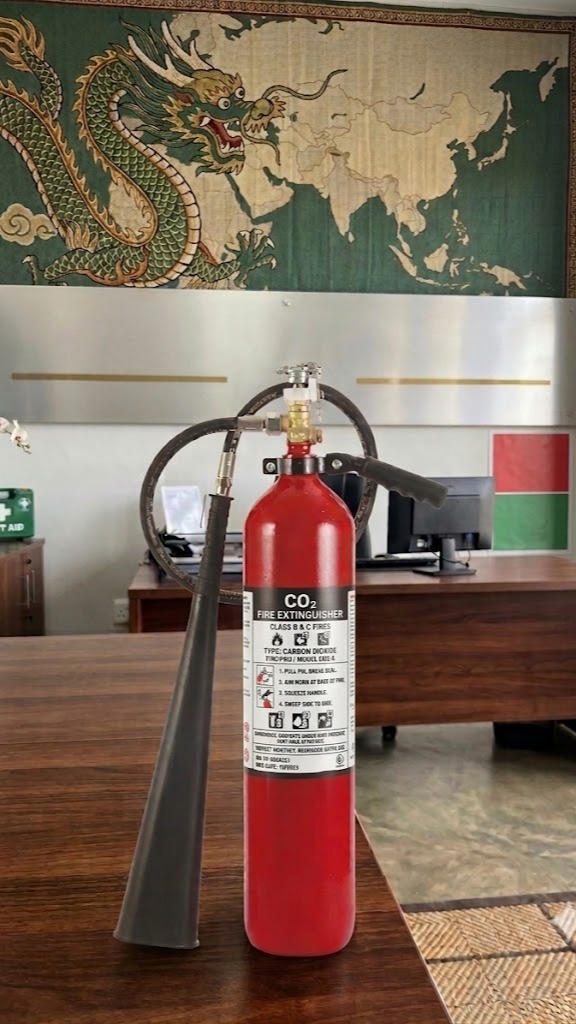
- CO₂ suppression systems
- Water mist systems
- Electrical-panel fire suppression
- Kitchen fire suppression
- Battery fire suppression
- Automatic detection and release systems
- Local application fire suppression
Clean Agent Fire Suppression for Hospitals
Clean-agent suppression is widely considered for sensitive rooms where residue-free fire control is desirable.
Typical healthcare applications can include:
- Server rooms
- Data centres
- Network rooms
- Communication rooms
- UPS rooms
- Electrical control rooms
- Medical equipment rooms
- Archive rooms
- Critical electronic installations
A clean-agent suppression system can be designed to discharge a calculated concentration of extinguishing agent into the protected enclosure.
Typical components may include:
- Agent cylinders
- Cylinder valves
- Distribution piping
- Engineered discharge nozzles
- Detection devices
- Gas release control panel
- Manual release station
- Abort switch
- Hooter
- Flasher
- Pressure switch
- System interfaces
The final system configuration depends upon the selected agent and project requirements.
FK-5-1-12 Hospital Fire Suppression
FK-5-1-12 clean-agent fire suppression can be considered for critical hospital environments containing electronic and electrical equipment.
Possible applications include:
- Hospital server rooms
- Communication rooms
- Medical data centres
- Control rooms
- Diagnostic equipment rooms
- Electrical spaces
System engineering should consider factors such as:
- Protected room volume
- Design concentration
- Agent quantity
- Cylinder selection
- Pipe routing
- Nozzle positioning
- Discharge characteristics
- Enclosure condition
- Ventilation interfaces
The system should be developed according to the actual protected risk and applicable project criteria.
HFC-227ea Hospital Fire Suppression Systems
HFC-227ea systems can also be used for suitable total-flooding applications where rapid suppression of fire around sensitive equipment is required.
A complete system may include:
- HFC-227ea cylinders
- Discharge valves
- Manifold arrangements
- Flexible hoses
- Distribution piping
- Discharge nozzles
- Smoke detection
- Gas release panel
- Manual release
- Abort switch
- Audible and visual alarm devices
These systems can be considered for suitable server, electrical and communication rooms in healthcare facilities.
Hospital Server Room Fire Suppression Solutions
Modern hospitals depend heavily on information technology for:
- Patient records
- Billing
- Medical imaging
- Laboratory information
- Communication
- Clinical systems
- Pharmacy management
- Administration
A fire in a hospital server room can therefore cause major operational disruption.
LIFEGUARD® can provide engineered server-room suppression solutions incorporating:
- Early fire detection
- Automatic alarm
- Cross-zone confirmation where required
- Controlled discharge
- Clean-agent suppression
- Manual release
- Abort facility
- HVAC shutdown interface
- Fire-alarm integration
Protection may be designed for:
- Main room
- Raised floor
- False ceiling
- Cable spaces
- Equipment cabinets
Hospital Electrical Room Fire Suppression
Electrical rooms are among the most important technical areas within a hospital.
Electrical faults can originate from:
- Short circuits
- Overheating
- Loose connections
- Cable faults
- Component failure
- Electrical overload
LIFEGUARD® can support suppression solutions for:
- LT panels
- Distribution panels
- UPS panels
- MCC panels
- Control panels
- Electrical cabinets
- Generator control systems
- Critical power distribution areas
Suitable protection may involve total-flooding or localized suppression depending on the application.
Electrical Panel Fire Suppression for Hospitals
Localized electrical-panel suppression can provide early protection close to the source of a developing fire.
Depending on project requirements, a system may use:
- Heat-sensitive detection tubing
- Linear detection
- Automatic release mechanism
- Agent cylinder
- Fixed discharge nozzles
- Direct discharge arrangements
- Alarm interface
Such systems can be considered for critical electrical cabinets where immediate local suppression is desirable.
Hospital Kitchen Fire Suppression Solutions
Commercial hospital kitchens present specialized fire hazards involving:
- Cooking oils
- Deep-fat fryers
- Gas equipment
- Grills
- Cooking ranges
- Extraction hoods
- Grease deposits
- Ventilation ducts
Kitchen fire suppression systems should be designed around the cooking appliances and associated extraction equipment.
A typical kitchen suppression arrangement may include:
- Automatic detection
- Manual release
- Suppression-agent cylinder
- Distribution pipework
- Appliance nozzles
- Hood protection
- Duct protection
- Gas shutoff interface
- Electrical shutoff interface
The aim is to rapidly suppress cooking-related fires and reduce the possibility of re-ignition.
Water Mist Fire Suppression for Healthcare Facilities
Water mist systems use finely divided water droplets to suppress or control fire.
Depending on the approved application and project design, water mist may be considered for:
- Plant rooms
- Machinery areas
- Generator rooms
- Certain technical spaces
- Specialized healthcare applications
Water mist can provide strong cooling performance while using relatively small quantities of water compared with conventional large-droplet discharge in suitable engineered applications.
The specific system should always be selected according to the protected hazard.
CO₂ Fire Suppression in Hospital Utility Areas
CO₂ suppression can be suitable for selected industrial or technical hazards, particularly where equipment protection is important and the protected space can be appropriately controlled.
Possible applications may include:
- Generator enclosures
- Machinery spaces
- Certain plant rooms
- Selected electrical hazards
However, carbon dioxide at fire-extinguishing concentrations can be dangerous to people.
For this reason, hospital CO₂ systems require careful evaluation of:
- Occupancy
- Evacuation
- Warning alarms
- Time delay
- Safety interlocks
- Access control
- Emergency procedures
CO₂ should only be used where appropriate for the specific risk.
Battery Fire Suppression Solutions for Hospitals
Hospitals increasingly rely on battery systems for backup power and critical services.
Applications can include:
- UPS battery banks
- Lithium-ion battery cabinets
- Emergency backup systems
- Energy storage rooms
- Battery Energy Storage Systems
- Communication backup systems
Lithium-ion batteries can present thermal runaway risks involving rapid temperature increase, gas generation, fire and potential propagation.
LIFEGUARD® can support battery fire-protection concepts incorporating:
- Early detection
- Automatic activation
- Localized suppression
- Cooling support
- Thermal propagation control
- Alarm interfaces
- Control-system integration
The protection strategy should be matched to the battery chemistry, configuration and installation environment.
Hospital Laboratory Fire Suppression
Medical and research laboratories can present complex fire hazards because they may contain:
- Electrical instruments
- Chemical reagents
- Flammable materials
- Testing equipment
- Sensitive analytical systems
- Combustible packaging
Fire-suppression selection should therefore be based on the actual chemicals and equipment present.
LIFEGUARD® can support customized fire-protection solutions for:
- Diagnostic laboratories
- Pathology laboratories
- Research laboratories
- Medical testing facilities
- Healthcare R&D centres
Fire Suppression for Medical Equipment Rooms
Modern healthcare equipment can represent significant financial and operational value.
Specialized medical equipment rooms may contain:
- Diagnostic systems
- Imaging equipment
- Electronic controls
- Power-conditioning equipment
- Computers
- Communication systems
Where appropriate, clean-agent suppression can provide rapid fire control while reducing residue-related damage to sensitive equipment.
Hospital Data Centre Fire Protection
Large hospital groups and medical institutions increasingly operate dedicated data centres.
A data-centre suppression solution may incorporate:
- Aspirating smoke detection
- Conventional or addressable smoke detection
- Clean-agent suppression
- Gas release panel
- Alarm systems
- Shutdown interfaces
- Engineered piping
- Multiple discharge nozzles
System design should account for airflow, raised floors, false ceilings and equipment arrangement.
Automatic Detection and Release Sequence
A hospital fire-suppression system can be configured to operate through a controlled sequence.
Stage 1 – Fire Detection
Suitable detectors identify smoke, heat or other fire indicators.
Stage 2 – Alarm
Audible and visual warnings alert nearby personnel.
Stage 3 – Fire Confirmation
Where required, the system can use cross-zone or multi-detector confirmation before automatic agent release.
Stage 4 – Time Delay
A programmed delay can allow safe evacuation of the protected space where required.
Stage 5 – Agent Release
The suppression agent is automatically discharged through the engineered distribution system.
Stage 6 – System Interface
The release panel may send signals to:
- Main fire alarm system
- HVAC system
- Dampers
- Electrical controls
- BMS
- Emergency shutdown systems
The precise sequence should be developed according to project requirements.
Components of Hospital Fire Suppression Systems
A complete hospital suppression system may include:
- Suppression cylinder
- Extinguishing agent
- Cylinder valve
- Solenoid actuator
- Mechanical actuator
- Manifold
- Discharge hose
- Distribution piping
- Discharge nozzles
- Detection devices
- Gas release panel
- Manual release switch
- Abort switch
- Hooter
- Flasher
- Pressure switch
- Warning signage
- Control modules
- System interfaces
Not every system requires every component; equipment is selected according to the suppression technology.
Fire Suppression System Design for Hospitals
Professional engineering is essential for dependable suppression performance.
LIFEGUARD® can evaluate:
- Room dimensions
- Room volume
- False ceiling
- Raised floor
- Equipment arrangement
- Occupancy
- Fire risk
- Temperature
- Ventilation
- Door and opening conditions
- Cylinder location
- Pipe routing
- Nozzle coverage
- Detection layout
- Release logic
For total-flooding systems, enclosure conditions can be particularly important.
Hydraulic Calculation and Pipe Network Design
For applicable suppression systems, engineering calculations help determine whether the agent can be distributed effectively through the proposed piping network.
Factors may include:
- Agent quantity
- Pipe diameter
- Pipe length
- Fittings
- Equivalent pipe length
- Tee configuration
- Nozzle size
- Nozzle quantity
- Pressure
- Discharge time
- Flow distribution
Proper hydraulic design helps ensure that the suppression agent reaches the required discharge points correctly.
Nozzle Placement for Hospital Fire Suppression
Nozzle position is a critical element of suppression design.
Nozzle layout should consider:
- Room geometry
- Obstructions
- Ceiling height
- Equipment arrangement
- Discharge coverage
- Pipe configuration
- Protected sub-floor or ceiling voids
For complex rooms, multiple nozzles may be required.
Fire Suppression Solutions for Different Hospital Areas
LIFEGUARD® can support fire-protection requirements for:
- Intensive Care Units
- Operation theatres
- Server rooms
- Data centres
- UPS rooms
- Electrical rooms
- Communication rooms
- Laboratories
- Diagnostic centres
- Pharmacy areas
- Record rooms
- Kitchens
- Generator rooms
- Plant rooms
- Battery rooms
- Medical equipment areas
- Administrative technical rooms
Each area should be evaluated individually to determine the most appropriate fire-protection method.
Fire Suppression for New Hospital Projects
Fire protection is most effective when planned during the design stage of a hospital.
Early coordination helps identify:
- Cylinder locations
- Pipe routes
- Detection device positions
- Nozzle locations
- Control-panel location
- Interface requirements
- Service access
- Alarm requirements
LIFEGUARD® can work with consultants, architects, contractors and hospital project teams during the planning stage.
Hospital Renovation and Retrofit Fire Suppression
Existing healthcare facilities may also require upgraded fire protection.
Retrofit requirements can arise due to:
- Expansion of server rooms
- Installation of new medical equipment
- Electrical-system upgrades
- Addition of battery storage
- New kitchen facilities
- Regulatory upgrades
- Changes in room usage
LIFEGUARD® can support customized suppression solutions designed around existing building conditions.
Hospital Fire Suppression Solutions for EPC Contractors
LIFEGUARD® supports EPC contractors, MEP contractors, fire-protection companies and system integrators with project-specific fire-suppression requirements.
Support can include:
- Technical selection
- BOQ assistance
- Equipment datasheets
- Design inputs
- System drawings
- Hydraulic calculation support
- Agent quantity calculations
- Nozzle selection
- Project documentation
- Supply coordination
- Installation guidance
- Testing and commissioning support
OEM and Project-Based Hospital Fire Suppression Solutions
LIFEGUARD® can also support suitable OEM, bulk and project-based requirements for:
- Fire-protection contractors
- Distributors
- Healthcare groups
- EPC companies
- Facility-management companies
- International buyers
- System integrators
Depending upon technical and commercial requirements, support may include:
- Customized system configuration
- Project-specific documentation
- Bulk component supply
- Complete suppression-system packages
- Branding and OEM requirements
- Technical literature
Hospital Fire Suppression Solutions Across Asia
LIFEGUARD® can cater to hospital and healthcare fire-protection enquiries from Asian markets including:
- India
- UAE
- Saudi Arabia
- Qatar
- Oman
- Kuwait
- Bahrain
- Bangladesh
- Nepal
- Sri Lanka
- Singapore
- Malaysia
- Indonesia
- Thailand
- Vietnam
- Philippines
- Other Asian countries
The actual system configuration, approvals and documentation should be evaluated according to destination-country and project requirements.
Benefits of LIFEGUARD® Hospital Fire Suppression Solutions
Customized System Engineering
Fire suppression can be designed around the actual hospital area, risk and equipment configuration.
Multiple Suppression Technologies
Different technologies can be considered for different healthcare risks rather than relying on a single extinguishing method.
Rapid Automatic Response
Automatic detection and release can provide early intervention before a fire develops further.
Protection of Critical Infrastructure
Server rooms, electrical systems, medical technology and communication facilities can receive specialized fire protection.
Integration Capability
Suitable suppression systems can interface with fire alarms, HVAC, BMS and other building controls.
Technical Project Support
LIFEGUARD® can assist with design information, documentation, system configuration and installation requirements.
Scalable Solutions
Systems can range from individual electrical panels to complete room protection and large healthcare campuses.
Why Choose LIFEGUARD® for Hospital Fire Suppression Solutions in Asia?
Healthcare fire protection requires careful coordination between fire safety, life safety and uninterrupted medical operations.
LIFEGUARD® provides specialized solutions for:
- Hospital clean-agent suppression
- Server room suppression
- Electrical room suppression
- Electrical-panel protection
- Water mist applications
- Kitchen suppression
- Battery fire protection
- Automatic detection and release systems
- Special-hazard fire protection
Our approach focuses on understanding the specific hazard and developing an appropriate solution rather than applying a generic system.
Complete Hospital Fire Safety Approach
Automatic suppression should operate as part of a complete hospital fire-safety strategy.
Other systems may include:
- Portable fire extinguishers
- Fire alarm systems
- Smoke detection
- Sprinkler systems
- Hydrant systems
- Hose reels
- Emergency lighting
- Exit signage
- Smoke management
- Fire compartmentation
- Emergency response procedures
- Periodic inspection and maintenance
Integration and maintenance of these systems are essential for dependable fire protection.
Maintenance of Hospital Fire Suppression Systems
Suppression equipment should be inspected and maintained throughout its service life.
Maintenance activities may include checking:
- Cylinder pressure
- Agent quantity where applicable
- Valve condition
- Discharge hoses
- Piping
- Nozzles
- Smoke detectors
- Control panel
- Backup batteries
- Manual release
- Abort switch
- Audible alarms
- Visual alarms
- Pressure switches
- Interface functions
Periodic maintenance should follow system requirements and applicable regulations.
LIFEGUARD® – Hospital Fire Suppression Solutions Asia
Hospitals require reliable fire-protection systems capable of protecting patients, employees, medical equipment and essential infrastructure.
LIFEGUARD® – United Fire Equipments Pvt. Ltd. provides customized hospital fire suppression solutions in Asia for new hospitals, existing healthcare facilities, medical institutions, diagnostic centres, laboratories and critical technical rooms.
Whether your project requires clean-agent suppression, server-room fire protection, electrical-panel suppression, water mist, kitchen suppression, battery fire protection or specialized automatic fire-suppression systems, LIFEGUARD® can support the requirement with suitable technical and project-based solutions.
Contact LIFEGUARD®
United Fire Equipments Pvt. Ltd.
Manufacturer of ISI Certified Fire Safety Equipment
📞 8048034226
📧 ufe126@gmail.com | info@lifeguardindia.in
Contact LIFEGUARD® for enquiries regarding hospital fire suppression solutions, healthcare fire protection systems, clean-agent suppression, electrical-room protection, hospital kitchen suppression and specialized fire-safety solutions across Asia.
Suggested SEO Keywords
hospital fire suppression solutions Asia, hospital fire suppression system Asia, healthcare fire suppression solutions Asia, hospital fire protection solutions Asia, hospital clean agent suppression Asia, hospital server room fire suppression, hospital electrical room fire suppression, hospital electrical panel suppression, hospital kitchen fire suppression Asia, hospital water mist fire suppression, healthcare fire protection system Asia, hospital automatic fire suppression system, medical facility fire suppression solutions, hospital special hazard fire suppression, hospital fire safety solutions Asia, hospital fire suppression company Asia, hospital fire suppression supplier Asia, hospital fire suppression manufacturer Asia.
SEO Meta Title
Hospital Fire Suppression Solutions Asia | LIFEGUARD®
SEO Meta Description
LIFEGUARD® provides hospital fire suppression solutions across Asia, including clean-agent systems, server and electrical-room suppression, kitchen protection, water mist, battery fire suppression and automatic fire detection and release systems for healthcare facilities.