
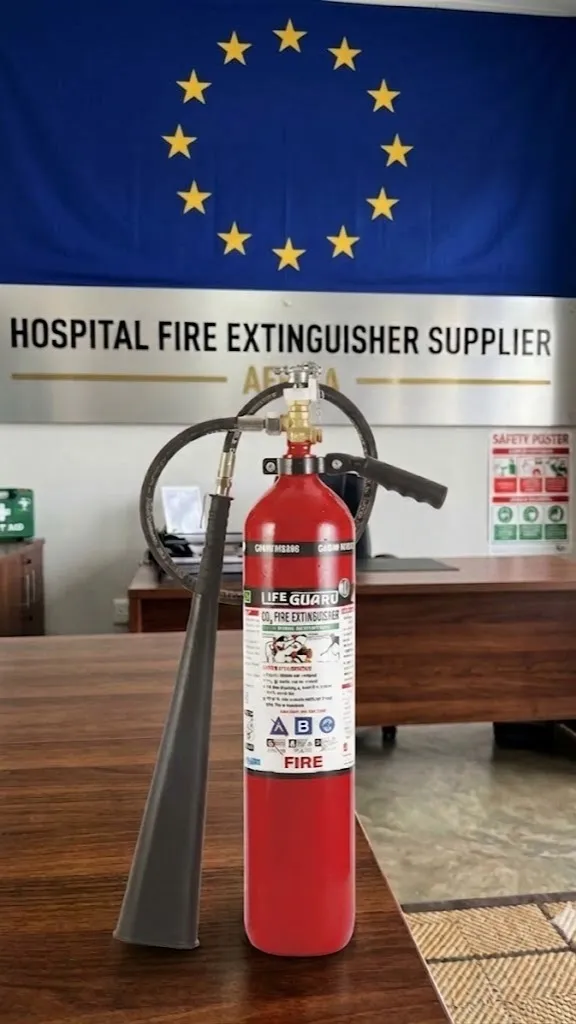
Hospital Fire Suppression solution Europe – LIFEGUARD® Advanced Fire Protection Solutions
Hospitals and healthcare facilities demand highly reliable fire protection because they operate continuously, accommodate vulnerable occupants, and contain critical medical equipment, electrical systems, laboratories, pharmacies, kitchens, server infrastructure, oxygen-related systems, battery installations, and other specialised risk areas.
For organisations searching for a dependable hospital fire suppression exporter in Europe, LIFEGUARD® – United Fire Equipments Pvt. Ltd. offers a comprehensive portfolio of fire suppression and fire protection solutions for healthcare projects.
With decades of experience in the fire safety industry, LIFEGUARD® supports hospitals, clinics, diagnostic centres, medical colleges, pharmaceutical facilities, laboratories, healthcare infrastructure companies, EPC contractors, MEP contractors, distributors, and fire protection specialists with project-oriented suppression solutions.
Reliable Hospital Fire Suppression Exporter in Europe
Hospital fire protection cannot depend on a single suppression technology. Different areas of a healthcare facility may require different detection and suppression strategies depending on the hazard, equipment sensitivity, occupancy, fire load, room configuration, and project requirements.
As a hospital fire suppression exporter Europe, LIFEGUARD® can support applications such as:
- Server and data rooms
- Electrical switch rooms
- UPS rooms
- Control rooms
- Medical equipment rooms
- Laboratories
- Diagnostic facilities
- Generator rooms
- Battery rooms
- Medical storage areas
- Hospital kitchens
- Utility rooms
- Pharmaceutical storage
- Archive and record rooms
- Communication rooms
- Control panels
- Critical infrastructure areas
The suppression system should be selected only after evaluating the specific fire risk, protected volume, equipment type, environmental conditions, and applicable regulations.
Fire Suppression Solutions for Hospitals
LIFEGUARD® provides access to multiple fire protection technologies that can be integrated according to project-specific requirements.
Clean Agent Fire Suppression Systems
Clean agent systems are commonly considered for critical areas where protecting sensitive electrical and electronic equipment is a priority.
Potential hospital applications include:
- Server rooms
- Data centres
- Communication rooms
- Medical IT rooms
- UPS rooms
- Electrical control rooms
- Diagnostic equipment rooms
- Critical control panels
Clean agent suppression systems are designed to discharge an extinguishing agent into a protected enclosure, helping control fire while limiting residue on sensitive equipment.
Depending on project specifications, solutions may involve suitable gaseous or clean-agent technologies.
FK-5-1-12 Fire Suppression Systems
FK-5-1-12-based suppression systems can be considered for selected high-value and sensitive environments where clean fire suppression is required.
Possible healthcare applications include:
- Hospital server rooms
- Data processing rooms
- Control centres
- Medical equipment areas
- Archive rooms
- Electrical rooms
- Communication infrastructure
The system design may include:
- Agent cylinders
- Cylinder valves
- Distribution piping
- Discharge nozzles
- Detection system
- Releasing control panel
- Manual release station
- Abort switch
- Audible and visual alarms
- Pressure monitoring accessories
System sizing and discharge arrangement should be based on the protected enclosure and applicable design requirements.
HFC-227ea Fire Suppression Systems
HFC-227ea gaseous fire suppression systems may also be specified for selected enclosed critical areas.
Typical hospital applications may include:
- IT rooms
- Control rooms
- Electrical rooms
- UPS rooms
- Communication centres
- Medical data facilities
The final suppression concentration, agent quantity, pipe network, nozzle arrangement, and release sequence should be determined through appropriate system design calculations.
CO₂ Fire Suppression Systems
Carbon dioxide fire suppression systems can be considered for suitable industrial and unoccupied or controlled-access risk areas where the system is permitted by applicable safety requirements.
Potential applications may include selected:
- Generator facilities
- Electrical equipment areas
- Mechanical installations
- Utility spaces
- Equipment enclosures
Because CO₂ can create a serious life-safety hazard in occupied spaces, application and system design require careful risk assessment, safety interlocks, warning arrangements, and compliance with applicable regulations.
Water Mist Fire Suppression Systems
Water mist technology can be considered for specific fire protection applications where fine water droplets are used to control heat and suppress fire.
Depending on system design and approval requirements, water mist solutions may be suitable for selected:
- Machinery areas
- Utility spaces
- Equipment rooms
- Generator areas
- Special healthcare infrastructure
Water mist systems should be engineered according to the protected hazard, nozzle arrangement, water supply, pressure requirements, and applicable system approvals.
Local Application Fire Suppression
Certain hospital risks may require localised protection rather than complete room flooding.
Local application fire suppression can be considered for:
- Electrical cabinets
- Control panels
- Battery enclosures
- Small equipment compartments
- Specialised machinery
- Critical electrical assemblies
A local suppression arrangement can help detect and control a fire near the source before it develops into a larger incident.
Hospital Kitchen Fire Suppression
Commercial hospital kitchens have unique fire risks involving cooking oils, fats, heated appliances, exhaust hoods, and electrical or gas-operated cooking equipment.
Hospital kitchen fire protection can include appropriate suppression equipment for:
- Cooking ranges
- Fryers
- Grills
- Kitchen hoods
- Exhaust ducts
- Commercial cooking areas
The system should be designed according to the cooking hazard and applicable fire safety standards.
Battery and Energy Storage Fire Protection
Modern hospitals increasingly use battery-backed power and energy storage solutions to support essential operations.
Battery-related facilities may include:
- UPS battery banks
- Lithium-ion battery rooms
- Emergency power systems
- Energy storage installations
- Medical equipment battery systems
Battery fires can involve thermal runaway and require specialised detection, cooling, suppression, and emergency-response strategies.
LIFEGUARD® can support project discussions involving specialised battery fire protection requirements based on the identified hazard.
Why Fire Suppression Is Critical in Hospitals
Fire incidents in healthcare facilities can have consequences far beyond property damage.
Hospital occupants may include:
- Intensive care patients
- Patients undergoing surgery
- Elderly persons
- Children
- Patients with restricted mobility
- Patients connected to life-support systems
- Unconscious patients
- Emergency-care patients
Immediate evacuation may therefore be difficult.
An effective hospital fire protection strategy should focus on:
- Early fire detection
- Rapid alarm
- Automatic suppression
- Fire containment
- Protection of critical medical infrastructure
- Protection of sensitive electrical equipment
- Safe evacuation and relocation
- Continuity of essential healthcare services
Automatic suppression systems can provide an additional layer of protection where rapid intervention is required.
Hospital Fire Suppression Solutions for Critical Areas
Server and Data Rooms
Hospital information systems manage:
- Electronic patient records
- Diagnostics
- Medical imaging
- Communication
- Billing
- Security systems
- Monitoring systems
- Administrative functions
Fire damage in a hospital data room can seriously disrupt medical operations.
Clean agent suppression is therefore commonly considered for suitable data and IT environments.
Electrical Rooms
Hospitals depend on uninterrupted power for life-support systems, operation theatres, diagnostic equipment, elevators, emergency systems, and communication infrastructure.
Electrical rooms may contain:
- Switchgear
- Distribution boards
- Transformers
- Control panels
- UPS equipment
- Electrical cabinets
Appropriate fire detection and suppression systems can help reduce the risk of extensive electrical fire damage.
UPS and Battery Rooms
Hospitals often rely on UPS systems for continuous power.
Depending on battery chemistry and room conditions, the fire protection strategy may require:
- Early detection
- Temperature monitoring
- Gas detection
- Automatic suppression
- Cooling arrangements
- Alarm integration
- Emergency shutdown logic
Medical Laboratories
Laboratories can contain electrical instruments, combustible materials, chemicals, testing equipment, and specialised processes.
Suppression technology should therefore be selected after a detailed hazard assessment.
Diagnostic Equipment Areas
MRI, CT, laboratory automation, monitoring systems, and other specialised medical installations may represent a significant capital investment.
Fire protection should be planned with consideration for both life safety and equipment protection.
Medical Storage and Pharmacy Areas
Healthcare storage areas may contain medicines, packaging, equipment, consumables, and other materials contributing to the overall fire load.
A suitable combination of detection, suppression, extinguishers, and fire compartmentation may be required.
Integrated Hospital Fire Suppression System
A comprehensive suppression solution can include various components working together to detect, signal, and control a fire.
Depending on project requirements, an integrated system can include:
- Smoke detectors
- Heat detectors
- Aspirating smoke detection
- Fire alarm control panels
- Gas releasing control panels
- Suppression agent cylinders
- Cylinder valves
- Distribution manifolds
- Discharge piping
- Fire suppression nozzles
- Manual release switches
- Abort switches
- Pressure switches
- Sounders
- Flashers
- Warning signage
- Emergency shutdown integration
The exact system architecture should be developed according to the protected hazard and consultant-approved design.
Aspirating Smoke Detection for Critical Healthcare Areas
Very early warning smoke detection can be particularly useful in sensitive spaces where an early-stage fire indication is desirable.
Aspirating smoke detection may be considered for:
- Server rooms
- Data centres
- Electrical rooms
- Communication rooms
- Control rooms
- Healthcare IT facilities
Early warning systems can help initiate investigation and response before a fire grows significantly.
Export Support for European Hospital Projects
As a hospital fire suppression exporter Europe, LIFEGUARD® can support project and bulk requirements from European customers, subject to applicable technical specifications, approvals, and destination-country requirements.
Potential markets include:
- Germany
- France
- Italy
- Spain
- Netherlands
- Belgium
- Austria
- Poland
- Portugal
- Ireland
- Sweden
- Denmark
- Finland
- Greece
- Romania
- Hungary
- Czech Republic
- Croatia
- Other European markets
Fire suppression standards, product approvals, environmental requirements, installation regulations, and certification obligations can vary across Europe. Products and systems should therefore be selected according to the specific requirements of each project and destination.
LIFEGUARD® Hospital Fire Suppression Export Capabilities
LIFEGUARD® can support requirements from:
- Hospitals
- Hospital chains
- Healthcare groups
- Medical institutions
- Diagnostic centres
- Pharmaceutical companies
- Healthcare infrastructure developers
- EPC contractors
- MEP contractors
- Fire protection contractors
- Engineering consultants
- System integrators
- Fire safety distributors
- Dealers
- Institutional buyers
- Government healthcare organisations
Project support may include equipment selection, technical documentation, system-component supply, and export-oriented coordination according to the agreed scope.
Benefits of Choosing LIFEGUARD® as a Hospital Fire Suppression Exporter
Key advantages include:
- Extensive fire safety industry experience
- Multiple fire suppression technologies
- Solutions for critical healthcare applications
- Project-based equipment selection
- OEM manufacturing capability
- Bulk supply support
- Export-oriented project support
- Fire detection and suppression integration
- Technical product assistance
- Solutions for both new and existing healthcare facilities
- Support for contractors, consultants, and system integrators
Fire Suppression for New Hospital Projects
New hospital developments provide an opportunity to integrate suppression systems into the fire safety design from the planning stage.
Early design coordination allows consideration of:
- Hazard classification
- Protected room volume
- Suppression agent selection
- Cylinder location
- Distribution piping
- Nozzle positioning
- Detection layout
- Control panel integration
- Alarm sequences
- Ventilation shutdown
- Electrical shutdown
- Equipment interfaces
- Maintenance accessibility
This can help achieve a more coordinated fire protection system.
Fire Suppression for Existing Hospital Upgrades
Existing hospitals may also require suppression upgrades due to:
- Expansion of IT infrastructure
- Addition of electrical equipment
- New diagnostic machinery
- Installation of UPS systems
- New battery storage
- Hospital renovation
- Fire audit recommendations
- Changes in risk profile
- Replacement of ageing suppression equipment
LIFEGUARD® can support equipment requirements for retrofit and system-upgrade projects based on the available site information and technical scope.
Designing a Hospital Fire Suppression System
Important design considerations include:
- Protected Hazard
- Determine what equipment, room, or process requires protection.
- Room Dimensions
- Accurate length, width, height, false ceiling, and raised-floor information may be required.
- Hazard Classification
- The type of fire risk influences suppression technology.
- Agent Selection
- The extinguishing medium should be appropriate for both the hazard and occupied environment.
- Agent Quantity
- Required agent quantity should be determined through appropriate engineering calculations.
- Cylinder Location
- Cylinders should be positioned according to system design and accessibility requirements.
- Piping Network
- Pipe sizes, lengths, fittings, branches, and pressure losses should be considered.
- Nozzle Layout
- Nozzle quantity, location, coverage, and discharge characteristics are critical.
- Detection System
- Reliable detection should provide timely initiation of the suppression sequence.
- Control Logic
- Releasing panels, alarms, delays, shutdowns, manual release, and abort functions should be coordinated.
- Room Integrity
- For certain gaseous systems, the ability of the enclosure to retain the required concentration can be an important design consideration.
- Compliance
- The completed system should follow the applicable codes, approvals, consultant requirements, and local regulations.
Quality-Focused Fire Suppression Solutions
Hospital projects require dependable products because fire protection equipment may remain inactive for long periods but must perform correctly when required.
A quality-focused suppression solution should consider:
- Suitable materials
- Correct equipment selection
- Reliable valves and cylinders
- Proper piping
- Correct nozzle selection
- Effective detection
- Appropriate control systems
- Accurate system design
- Documentation
- Inspection and maintenance requirements
Hospital Fire Suppression Exporter for EPC and MEP Contractors
LIFEGUARD® supports contractors involved in hospital infrastructure projects with fire suppression equipment and related technical requirements.
Typical project enquiries may involve:
- Technical specifications
- BOQ requirements
- Equipment datasheets
- Suppression cylinder sizing
- Nozzle requirements
- Detection components
- Releasing control panels
- Accessories
- Drawings
- Technical compliance documents
- Project quantities
- Export requirements
This project-oriented approach is useful for consultants, EPC companies, MEP contractors, fire contractors, and healthcare developers.
Complete Fire Protection Portfolio for Hospitals
In addition to automatic suppression systems, hospital fire safety may involve:
- Portable fire extinguishers
- Fire alarm systems
- Smoke detectors
- Heat detectors
- Aspirating smoke detection
- Manual call points
- Alarm sounders
- Fire hose reels
- Hydrant systems
- Water-based suppression
- Clean-agent systems
- CO₂ systems
- Specialised local application suppression
- Fire detection and release systems
A coordinated fire protection strategy helps address multiple fire risks within a healthcare facility.
Why Choose LIFEGUARD® for Hospital Fire Suppression in Europe?
Companies searching for a dependable hospital fire suppression exporter in Europe can approach LIFEGUARD® for specialised fire protection requirements.
Our focus is on delivering solutions that combine:
Engineering Support + Fire Detection + Fire Suppression + Reliable Equipment + Project Coordination
Whether the requirement is for a hospital server room, electrical facility, laboratory, UPS room, healthcare data centre, medical equipment area, battery installation, or other specialised risk, LIFEGUARD® can support the project based on the specified fire protection requirements.
Frequently Asked Questions
What fire suppression system is suitable for hospitals?
There is no single suppression system suitable for every hospital area. Clean agent, gaseous, water-based, local application, and other systems may be selected depending on the protected hazard, occupancy, equipment, and applicable requirements.
Which fire suppression system can be used for hospital server rooms?
Clean agent fire suppression systems are commonly considered for suitable server and IT environments because they can suppress fire without leaving significant residue on sensitive electronic equipment.
Can fire suppression be provided for hospital electrical rooms?
Yes. Appropriate suppression solutions can be developed for electrical rooms depending on the electrical equipment, room design, occupancy, and applicable fire protection requirements.
Is automatic fire suppression useful for hospital UPS rooms?
Automatic detection and suppression may form part of the protection strategy for UPS installations. The appropriate system depends on battery technology, electrical configuration, ventilation, and room conditions.
Does LIFEGUARD® export hospital fire suppression systems to Europe?
LIFEGUARD® can cater to international and European project enquiries for fire suppression equipment and associated fire protection solutions, subject to project specifications and applicable destination-country regulatory requirements.
Can LIFEGUARD® support complete hospital fire suppression projects?
LIFEGUARD® can support project requirements involving suppression equipment, detection systems, release controls, cylinders, nozzles, accessories, and related technical coordination according to the agreed project scope.
Can LIFEGUARD® supply suppression systems in bulk?
Yes. Project-based and bulk equipment requirements can be supported for hospital chains, contractors, distributors, healthcare developers, system integrators, and institutional buyers.
SEO Keywords
Primary Keyword: Hospital Fire Suppression Exporter Europe
Secondary Keywords:
hospital fire suppression exporter in Europe, hospital fire suppression system exporter Europe, healthcare fire suppression exporter Europe, hospital fire protection exporter Europe, hospital clean agent suppression exporter Europe, hospital gaseous fire suppression exporter Europe, medical facility fire suppression exporter Europe, healthcare fire protection company Europe, hospital automatic fire suppression Europe, hospital fire suppression supplier Europe, hospital fire suppression manufacturer Europe, hospital fire suppression solutions Europe, hospital server room fire suppression Europe, hospital electrical room fire suppression Europe.
Suggested SEO Meta Title
Hospital Fire Suppression Exporter Europe | LIFEGUARD®
Suggested Meta Description
LIFEGUARD® is a hospital fire suppression exporter serving European project requirements with clean-agent, gaseous and specialised fire protection solutions for hospitals, server rooms, electrical areas and healthcare facilities.
Suggested URL Slug
/hospital-fire-suppression-exporter-europe/
Suggested H1
Hospital Fire Suppression Exporter Europe
Contact LIFEGUARD®
United Fire Equipments Pvt. Ltd.
Manufacturer of ISI Certified Fire Safety Equipment
📞 8048034226
📧 ufe126@gmail.com | info@lifeguardindia.in
Contact LIFEGUARD® for hospital fire suppression systems, healthcare fire protection projects, clean-agent suppression requirements, bulk procurement, distributor enquiries, EPC requirements, and international projects across Europe.
Keywords






