
Hospital Fire Suppression Solutions India
Advanced Fire Protection Solutions for Hospitals and Healthcare Facilities
Hospitals are critical facilities that operate 24 hours a day and accommodate patients, doctors, nurses, visitors, sophisticated medical equipment, electrical installations, medical gases, laboratories, pharmacies, kitchens, server rooms and other essential infrastructure. Fire protection in such environments requires more than conventional firefighting equipment—it demands an integrated, risk-based fire suppression strategy capable of responding quickly while protecting people, medical equipment and continuity of healthcare operations.
LIFEGUARD® – United Fire Equipments Pvt. Ltd. provides specialised hospital fire suppression solutions in India for government hospitals, private hospitals, medical colleges, nursing homes, diagnostic centres, laboratories, healthcare institutions and other medical facilities.
Our hospital fire protection approach can combine early detection, automatic fire suppression, alarm and release control, equipment shutdown, fire alarm integration and application-specific engineering to protect critical hospital areas.
LIFEGUARD® Hospital Fire Suppression Solutions India
Every hospital contains different fire risks. A system suitable for a server room may not be appropriate for a kitchen, generator room, electrical room or general patient area.
For this reason, LIFEGUARD® focuses on selecting fire suppression technology according to the individual hazard.
Hospital fire suppression solutions can be developed for areas including:
- Server rooms
- Data centres
- UPS rooms
- Electrical rooms
- Control rooms
- Communication rooms
- Medical equipment rooms
- Diagnostic areas
- Laboratories
- Pharmacy stores
- Medical stores
- Hospital kitchens
- Generator rooms
- Battery rooms
- Utility rooms
- Record and archive rooms
- IT infrastructure
- Selected operation theatre support areas
- Plant rooms
- Critical equipment enclosures
Our objective is to provide a coordinated fire suppression solution rather than applying one standard system to every hospital area.
Why Hospitals Need Specialised Fire Suppression Solutions
Fire safety in hospitals presents unique challenges because many occupants may not be capable of immediate evacuation.
Hospital occupants can include:
- Bedridden patients
- ICU patients
- Patients under anaesthesia
- Newborn babies
- Elderly patients
- Patients using life-support equipment
- Persons with limited mobility
- Patients requiring assisted evacuation
At the same time, hospitals contain expensive and mission-critical infrastructure that needs continuous operation.
An effective hospital fire suppression solution should therefore aim to:
- Detect fire at an early stage
- Provide rapid alarm notification
- Control fire development
- Initiate automatic suppression where required
- Protect sensitive medical and electrical equipment
- Minimise smoke, heat and fire damage
- Support safe evacuation
- Protect important hospital data
- Reduce operational disruption
- Interface with ventilation and electrical systems where necessary
Types of Hospital Fire Suppression Solutions
LIFEGUARD® can support a range of suppression technologies depending on the fire hazard, protected equipment, occupancy and project requirements.
1. Clean Agent Fire Suppression Solutions
Clean agent fire suppression is particularly suitable for spaces containing sensitive electronic and electrical equipment where conventional water or dry powder could cause unwanted secondary damage.
Typical hospital applications include:
- Server rooms
- Data centres
- UPS rooms
- Communication rooms
- Hospital IT rooms
- Electrical control rooms
- Medical equipment control areas
- Digital record storage rooms
Clean agent systems can provide fast suppression without leaving significant extinguishing residue.
A complete solution may incorporate:
- Clean agent cylinders
- Cylinder valves
- Distribution piping
- Discharge nozzles
- Smoke detection
- Gas release control panel
- Manual release
- Abort switch
- Audible alarms
- Visual alarms
- Pressure switches
- HVAC shutdown interfaces
- Main fire alarm integration
FK-5-1-12 Fire Suppression Solutions for Hospitals
FK-5-1-12 can be used in engineered clean agent total-flooding systems for suitable critical spaces.
Potential hospital applications include:
- Server rooms
- Data processing rooms
- Medical record centres
- Electrical rooms
- UPS rooms
- Control rooms
- Communication facilities
- Sensitive equipment rooms
A properly engineered system considers factors such as:
- Protected enclosure volume
- Hazard classification
- Design concentration
- Agent quantity
- Cylinder capacity
- Piping configuration
- Nozzle location
- Discharge performance
- Room leakage
- Ventilation shutdown
- Detection and release sequence
The system should be designed specifically for the protected enclosure rather than selected only on the basis of floor area.
HFC-227ea Fire Suppression Solutions
HFC-227ea clean agent suppression systems may also be considered for suitable hospital applications where specified and permitted by project requirements.
Possible protection areas include:
- Server rooms
- UPS rooms
- Electrical control rooms
- Telecommunications rooms
- Data storage facilities
- Sensitive electronic equipment spaces
The extinguishing agent is stored in cylinders and discharged through an engineered network of piping and nozzles after the suppression release system confirms a fire condition.
Hospital Server Room Fire Suppression Solutions
Hospitals increasingly depend on digital infrastructure for day-to-day healthcare services.
Hospital servers may support:
- Electronic patient records
- Medical imaging
- Diagnostic reports
- Laboratory information
- Pharmacy systems
- Billing
- Communication
- Security systems
- Building management systems
- Clinical information systems
A fire in a server room can therefore affect much more than the room itself.
For such risks, LIFEGUARD® can provide an integrated clean agent suppression solution consisting of:
Detection → Alarm → Confirmation → Pre-Discharge Warning → Equipment Interlocking → Agent Release → Discharge Confirmation
Depending on project requirements, detection may be integrated with conventional or advanced early-warning systems.
Hospital Electrical Room Fire Suppression
Electrical installations are critical to continuous hospital operation.
Potential electrical fire risks include:
- Main LT panels
- Distribution boards
- Switchgear
- Transformers
- Control panels
- Cable installations
- UPS systems
- Power conditioning equipment
- Battery-backed electrical systems
The selection of suppression technology should take into account both firefighting effectiveness and potential damage to electrical equipment.
Possible solutions may include:
- Clean agent suppression
- Local application suppression
- Water mist for suitable applications
- Automatic fire detection
- Electrical shutdown interfaces
- Alarm integration
UPS Room Fire Suppression Solutions
Hospitals use UPS systems to maintain power continuity for critical medical and IT equipment.
UPS rooms can contain:
- Electrical power electronics
- Battery systems
- Cabling
- Control components
- High-value electrical equipment
Fire suppression design should consider the type of UPS, battery chemistry, ventilation arrangement and associated electrical hazards.
Where lithium-ion batteries are present, the risk should be evaluated specifically for potential battery overheating and thermal runaway rather than treating it only as a conventional electrical fire.
Hospital Kitchen Fire Suppression Solutions
Hospital kitchens often operate for long periods and may contain high-temperature cooking equipment, grease and cooking oils.
Typical hazards include:
- Deep-fat fryers
- Cooking ranges
- Grills
- Gas burners
- Electrical cooking appliances
- Cooking oil
- Grease accumulation
- Exhaust hoods
- Filters
- Duct systems
A dedicated kitchen suppression system may include:
- Wet chemical suppression agent
- Agent storage cylinder
- Detection mechanism
- Distribution piping
- Special discharge nozzles
- Manual release arrangement
- Gas shut-off interface
- Electrical isolation
- Alarm interface
The objective is to suppress the fire at the cooking appliance and associated hood area while also removing the continuing heat or fuel source where possible.
Water Mist Fire Suppression Solutions for Hospitals
Water mist technology uses fine water droplets to provide cooling and fire control in suitable applications.
Depending on the engineering design, water mist may be considered for:
- Generator areas
- Machinery spaces
- Utility areas
- Equipment rooms
- Selected electrical risks
- Special hazard areas
Advantages for suitable applications can include:
- Efficient heat absorption
- Reduced water consumption compared with certain conventional water systems
- Lower water-related secondary damage
- Rapid cooling
The suitability of water mist should be evaluated separately for each hospital hazard.
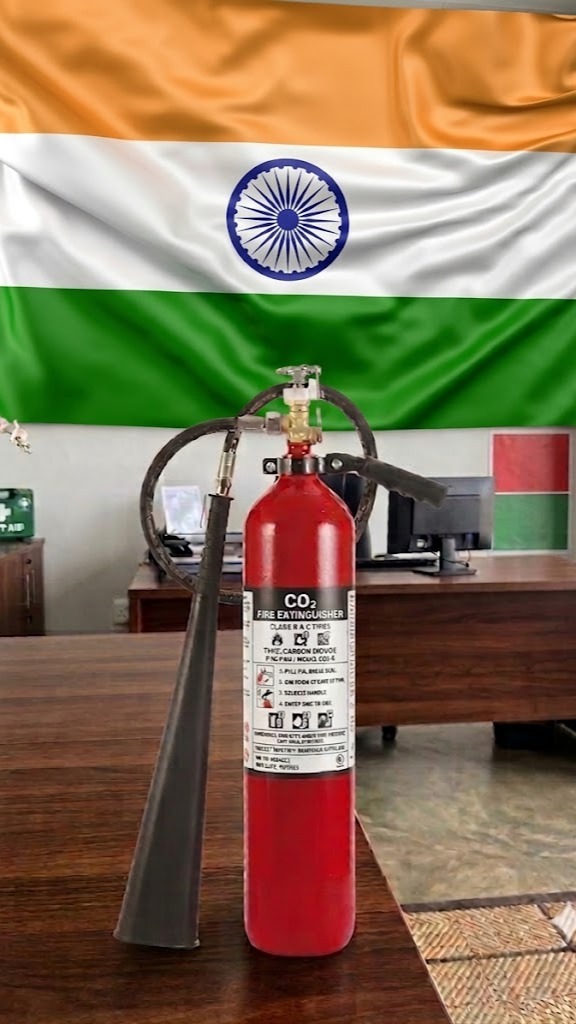
CO₂ Fire Suppression for Selected Hospital Utility Areas
CO₂ can provide effective fire suppression for certain equipment and industrial hazards. However, because carbon dioxide can create a dangerous atmosphere for people, its use requires strict life-safety considerations.
Potential applications may include selected:
- Generator enclosures
- Machinery rooms
- Normally unoccupied utility spaces
- Industrial support equipment
A CO₂ system may require:
- Automatic and manual release
- Pre-discharge alarms
- Time delay
- Ventilation interlocking
- Safety signage
- Emergency controls
- Personnel safety procedures
CO₂ should not be treated as a general-purpose solution for occupied hospital areas.
Fire Suppression Solutions for Hospital Laboratories
Hospital laboratories may contain combinations of:
- Flammable liquids
- Chemicals
- Solvents
- Electrical equipment
- Diagnostic instruments
- Refrigeration equipment
- Combustible packaging
Because laboratory risks vary significantly, the fire suppression approach should be based on the actual materials and processes present.
Possible solutions can include:
- Early fire detection
- Automatic suppression
- Sprinkler protection
- Clean agent suppression for suitable equipment
- Local application systems
- Emergency shutdown
- Portable extinguishers
Fire Protection for Hospital Pharmacy and Medical Stores
Pharmacies and medical storage areas can contain medicines, cartons, plastic packaging, alcohol-based products and other materials with different fire characteristics.
Fire safety provisions may include:
- Smoke detection
- Automatic sprinklers
- Portable extinguishers
- Alarm systems
- Special suppression for identified hazards
- Compartmentation and storage controls
The quantity and nature of stored materials should be considered when determining protection requirements.
Generator Room Fire Suppression Solutions
Standby generators are essential to hospital emergency operations but can create additional fire hazards through:
- Diesel fuel
- Lubricating oil
- Hot surfaces
- Electrical systems
- Batteries
- Fuel piping
Depending on the generator arrangement, protection can include:
- Flame or heat detection
- Automatic suppression
- Local application systems
- Water mist
- CO₂ for suitable controlled applications
- Fuel shut-off
- Electrical shutdown
- Alarm integration
Fire Suppression for Hospital Data Centres
Large hospitals and healthcare groups may operate dedicated data centres containing extensive IT infrastructure.
Critical requirements can include:
- Very early fire detection
- Rapid suppression
- Minimum residue
- Minimal downtime
- HVAC integration
- Controlled system shutdown
- Room integrity
Clean agent suppression can be particularly valuable where continuity and protection of electronics are important.
Advanced Fire Detection for Hospital Critical Areas
Automatic suppression becomes more effective when combined with reliable fire detection.
Depending on application requirements, detection technologies may include:
- Smoke detectors
- Heat detectors
- Multi-criteria detectors
- Aspirating smoke detection
- Linear heat detection
- Flame detection
- Gas detection for specialised hazards
For critical electronic spaces, early-warning detection can identify developing fire conditions before they become a major incident.
Automatic Fire Suppression Release Sequence
A typical clean agent fire suppression system may use a controlled multi-stage operating sequence.
Stage 1 – Initial Detection
The first detector senses smoke or another defined fire condition.
Stage 2 – First Alarm
The control panel generates an initial warning.
Stage 3 – Confirmed Fire
A second detector or cross-zone confirmation identifies a confirmed condition.
Stage 4 – Pre-Discharge Alarm
Hooters and visual warning devices operate.
Stage 5 – Time Delay
A predetermined delay can allow personnel to leave the protected enclosure.
Stage 6 – Equipment Interlocking
Depending on design, the system can initiate:
- HVAC shutdown
- Damper closure
- Electrical isolation
- Door-related control functions
- Signals to the main fire alarm system
Stage 7 – Suppression Agent Release
The selected agent is discharged through the piping and nozzles.
Stage 8 – Discharge Confirmation
Pressure-switch or system status signals provide discharge indication.
Importance of Room Integrity in Hospital Clean Agent Systems
A total-flooding clean agent system depends on the protected enclosure retaining sufficient agent concentration for the required period.
Potential leakage paths include:
- Doors
- Windows
- Cable penetrations
- Pipe penetrations
- HVAC ducts
- Raised floors
- False ceilings
- Wall openings
Where necessary, an enclosure integrity test can help determine whether excessive leakage could affect suppression performance.
Sealing uncontrolled openings is therefore an important part of effective clean agent protection.
Customised Hospital Fire Suppression System Design
Hospitals differ significantly in layout, medical services, equipment and fire load.
LIFEGUARD® can support project-specific engineering activities including:
- Site survey
- Hazard assessment
- Protected-volume calculation
- Fire suppression technology selection
- Agent quantity calculation
- Cylinder sizing
- Piping layout
- Hydraulic calculation where applicable
- Nozzle selection and positioning
- Detection layout
- Control logic
- Cause-and-effect preparation
- Alarm integration
- HVAC interlocking
- Technical drawings
- BOQ preparation
- Installation support
- Testing and commissioning
This engineering-based approach helps ensure that the system is designed around the actual hospital risk.
Fire Suppression System Components
Depending on system type, hospital suppression solutions can include:
Agent Storage Cylinder
Stores the required extinguishing agent.
Cylinder Valve
Controls release of the suppression agent.
Flexible Discharge Hose
Provides connection between the cylinder and distribution arrangement where applicable.
Distribution Piping
Transfers the extinguishing agent to the protected space.
Discharge Nozzles
Provide engineered distribution of the agent.
Detection Devices
Monitor the protected area for a developing fire.
Gas Release Control Panel
Receives detection signals and manages the release sequence.
Manual Release Switch
Allows authorised manual activation.
Abort Switch
Provides a controlled abort function where included in the approved design.
Hooter and Flasher
Provides audible and visual warning.
Pressure Switch
Indicates that agent discharge has occurred.
Solenoid / Actuator
Initiates the cylinder discharge mechanism.
Installation and Commissioning of Hospital Fire Suppression Systems
Proper installation is critical to system performance.
Installation activities can include:
- Cylinder positioning
- Cylinder mounting
- Pipe fabrication
- Pipe supports
- Nozzle installation
- Detector installation
- Control panel installation
- Cable laying
- Manual release installation
- Abort switch installation
- Hooter and flasher installation
- HVAC integration
- Fire alarm integration
- Electrical interlocking
- Pressure testing
- Functional testing
After installation, commissioning can verify that detection, alarms, release circuits and associated interlocks operate according to the approved sequence.
Hospital Fire Suppression System Maintenance
A fire suppression system must remain operational throughout its service life.
Preventive maintenance may include:
- Cylinder-pressure inspection
- Agent quantity checks
- Valve inspection
- Pipework inspection
- Nozzle inspection
- Detector testing
- Control-panel testing
- Battery testing
- Alarm testing
- Manual release testing
- Abort switch testing
- Pressure-switch testing
- Electrical circuit verification
- HVAC interlock testing
- Fire alarm interface testing
Periodic maintenance helps identify faults before an emergency occurs.
Hospital Fire Suppression Solutions for New Projects
For new hospital developments, fire suppression planning can begin during the design stage.
Early coordination can help integrate:
- Architectural requirements
- Mechanical services
- Electrical systems
- HVAC
- Medical equipment layouts
- Fire alarm systems
- Fire suppression piping
- Cylinder locations
- Access requirements
Proper planning can reduce modifications during later stages of the project.
Fire Suppression Solutions for Existing Hospitals
Existing hospitals may also require suppression upgrades because of:
- Expansion
- New equipment
- Addition of server rooms
- Replacement of UPS systems
- New diagnostic facilities
- Fire audit observations
- Updated risk assessments
- Increased electrical load
- Kitchen renovations
- Infrastructure modernisation
LIFEGUARD® can support assessment and development of appropriate retrofit fire suppression solutions.
Hospitals and Healthcare Facilities We Serve
Our fire suppression solutions can support:
- Government hospitals
- Private hospitals
- Multi-speciality hospitals
- Super-speciality hospitals
- District hospitals
- Medical colleges
- Nursing homes
- Diagnostic centres
- Pathology laboratories
- Cancer hospitals
- Eye hospitals
- Dental hospitals
- Rehabilitation centres
- Research centres
- Healthcare institutions
- Medical laboratories
Hospital Fire Suppression Solutions Across India
LIFEGUARD® supports healthcare fire suppression requirements across major locations in India, including:
Delhi, Delhi NCR, Noida, Greater Noida, Gurugram, Faridabad, Ghaziabad, Mumbai, Navi Mumbai, Pune, Ahmedabad, Vadodara, Surat, Jaipur, Lucknow, Chandigarh, Ludhiana, Bengaluru, Hyderabad, Chennai, Coimbatore, Kochi, Kolkata, Bhubaneswar, Nagpur, Indore, Bhopal and other locations across India.
We can support hospitals, healthcare groups, consultants, EPC contractors, fire protection contractors, facility managers and institutional buyers with project-specific requirements.
Why Choose LIFEGUARD® for Hospital Fire Suppression Solutions in India?
LIFEGUARD® combines fire safety equipment with application-focused engineering to develop solutions for critical healthcare environments.
Key advantages include:
- Application-specific fire suppression solutions
- Clean agent suppression systems
- FK-5-1-12 solutions
- HFC-227ea solutions
- Water mist solutions
- Kitchen fire suppression
- Special hazard protection
- Detection and release systems
- Piping and nozzle engineering
- Cause-and-effect integration
- Fire alarm integration
- Technical drawings and documentation
- Installation support
- Testing and commissioning support
- Maintenance assistance
- Nationwide project support
Integrated Hospital Fire Safety Solutions
A complete hospital fire safety strategy can combine suppression systems with other fire protection equipment and services.
Depending on project requirements, solutions may include:
- Portable fire extinguishers
- Fire detection systems
- Fire alarm panels
- Smoke detectors
- Heat detectors
- Aspirating smoke detection
- Manual call points
- Clean agent suppression
- Water mist
- Kitchen suppression
- Automatic sprinklers
- Fire hydrants
- Hose reels
- Fire pumps
- Emergency lighting
- Exit signage
- Fire doors
- Gas detection
- Alarm and evacuation systems
An integrated approach helps provide multiple layers of protection rather than depending on a single system.
Frequently Asked Questions
What are hospital fire suppression solutions?
Hospital fire suppression solutions are engineered systems designed to detect, control or extinguish fires in hospital risk areas such as server rooms, electrical rooms, kitchens, laboratories, generator rooms and other critical spaces.
Which fire suppression system is best for hospital server rooms?
Clean agent fire suppression is commonly considered for server rooms because it provides rapid suppression while avoiding the residue associated with dry powder. The final system should be selected according to the room design and project requirements.
Can hospitals use FK-5-1-12 fire suppression?
FK-5-1-12 can be used for suitable total-flooding clean agent applications such as server rooms, electrical control rooms and other sensitive equipment spaces, subject to proper engineering and applicable requirements.
Are hospital fire suppression systems automatic?
They can be. Automatic suppression systems use detection and control equipment to initiate alarms, interlocks and suppression-agent release according to a predetermined sequence.
Which suppression system is suitable for hospital kitchens?
Dedicated wet chemical kitchen suppression may be used for suitable commercial cooking hazards, particularly where cooking oils and high-temperature appliances are present.
Can suppression systems be connected with the hospital fire alarm system?
Yes. Fire suppression panels can be interfaced with the main fire alarm system and other building services according to the approved cause-and-effect logic.
Is room integrity important for clean agent systems?
Yes. Total-flooding clean agent systems depend on maintaining an adequate extinguishing concentration within the protected enclosure. Excessive leakage can reduce system performance.
Can LIFEGUARD® provide customised hospital fire suppression solutions?
Yes. Solutions can be developed according to the protected hazard, room dimensions, equipment type, occupancy and project specifications.
Your Partner for Hospital Fire Suppression Solutions in India
Hospital fire protection requires careful coordination between life safety, early detection, automatic suppression, equipment protection and continuity of critical medical operations.
LIFEGUARD® provides application-focused hospital fire suppression solutions in India for new healthcare developments as well as existing hospitals requiring fire safety upgrades.
Whether your requirement is for a server room, data centre, UPS room, electrical room, hospital kitchen, laboratory, generator room, medical equipment room or another critical hospital area, our team can support the project with fire suppression system selection, engineering, equipment supply, installation assistance, testing and commissioning.
SEO Meta Title
Hospital Fire Suppression Solutions India | LIFEGUARD®
SEO Meta Description
LIFEGUARD® provides hospital fire suppression solutions in India, including clean agent, FK-5-1-12, water mist, kitchen suppression and automatic fire protection systems for healthcare facilities.
Primary SEO Keyword
Hospital fire suppression solutions India
Suggested Secondary SEO Keywords
- Hospital fire suppression system India
- Hospital fire protection solutions India
- Healthcare fire suppression solutions India
- Hospital clean agent fire suppression India
- Hospital FK-5-1-12 fire suppression
- Hospital automatic fire suppression system India
- Hospital server room fire suppression
- Hospital data centre fire suppression
- Hospital UPS room fire suppression
- Hospital electrical room fire suppression
- Hospital kitchen fire suppression India
- Hospital fire safety solutions India
- Healthcare fire protection systems India
- Medical facility fire suppression India
- Hospital gas suppression system India
- Hospital special hazard fire suppression
- Fire suppression solution provider for hospitals India
Suggested URL Slug
/hospital-fire-suppression-solutions-india/
Contact LIFEGUARD®
United Fire Equipments Pvt. Ltd.
Manufacturer of ISI Certified Fire Safety Equipment
📞 8048034226