
Manufacturing operations depend heavily on continuity. Even short periods of downtime can disrupt production schedules, supply chains, inventory movement, and customer commitments.
For industrial facilities across Delhi, fire suppression systems play an important role not only in safety compliance but also in operational continuity.
Many manufacturing businesses focus primarily on extinguishing fire risks after incidents occur. Modern fire protection strategies, however, emphasize early detection, rapid suppression, and damage minimization.
Industrial environments contain multiple fire hazards, including:
- Electrical systems
- Combustible materials
- Industrial machinery
- Battery-powered equipment
- Chemical storage
- High-temperature operations
Without appropriate suppression systems, small incidents can quickly escalate into prolonged shutdowns.
Automatic fire detection and suppression systems help reduce downtime by responding immediately when abnormal heat, smoke, or flame conditions are detected.
Fast suppression response helps:
- Contain fire spread
- Protect production equipment
- Reduce smoke damage
- Prevent operational shutdown expansion
- Improve employee evacuation safety
Manufacturing plants in Delhi increasingly use integrated suppression systems connected to centralized alarms and emergency controls.
This allows facilities to isolate affected zones quickly while maintaining operations in unaffected sections.
Another important factor is equipment protection.
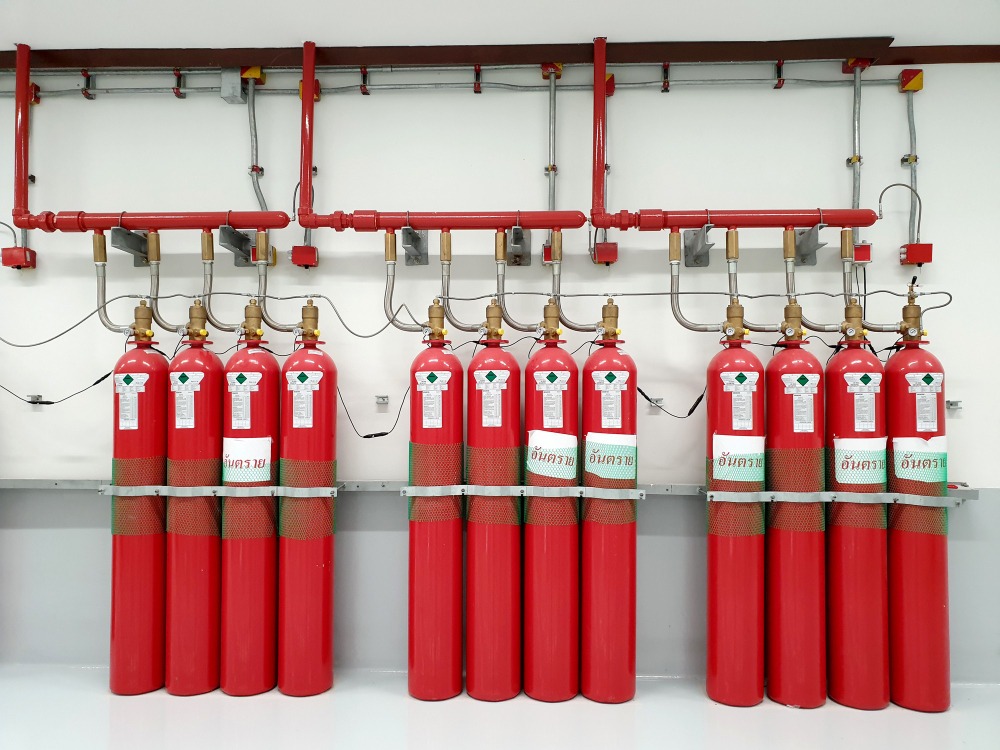
Electrical control rooms, automation systems, and production servers often require clean agent fire suppression systems because water-based methods may damage sensitive machinery.
Non-conductive suppression solutions help protect industrial electronics while minimizing restoration time.
Warehousing and logistics operations connected to manufacturing facilities also benefit from suppression planning.
High-density inventory storage can accelerate fire spread without proper hydrant systems, extinguishers, and automatic suppression coverage.
Battery-powered industrial equipment is another growing concern.
Forklifts, automated guided vehicles, and backup energy systems using lithium-ion batteries require specialized fire protection approaches.
Manufacturers that delay suppression upgrades often face:
- Extended production interruptions
- Equipment replacement costs
- Inventory losses
- Regulatory investigations
- Insurance complications
Routine maintenance is equally important for minimizing downtime risks.
Suppression systems should undergo regular inspections covering:
- Detection sensors
- Alarm integration
- Cylinder pressure
- Pipe integrity
- Discharge nozzles
- Control panels
Another operational advantage of modern suppression systems is targeted activation.
Instead of shutting down entire facilities, advanced systems can isolate and suppress fires within specific operational zones.
This approach reduces unnecessary disruption and allows faster recovery.
United Fire Equipments Pvt. Ltd. provides industrial fire safety solutions for manufacturing plants, warehouses, and production facilities requiring advanced suppression systems and integrated fire protection infrastructure.
The manufacturer supports businesses dealing with evolving industrial risks, including electrical hazards, battery systems, and automation environments.
For manufacturers in Delhi’s competitive industrial landscape, fire suppression systems are increasingly viewed as productivity protection tools as much as safety infrastructure. Facilities that invest in rapid-response fire protection are better prepared to reduce operational disruption and protect long-term business continuity.