
Lithium Battery Fire Protection Supplier Germany
Advanced Lithium Battery Fire Protection Solutions in Germany
The rapid growth of lithium-ion batteries, electric vehicles (EVs), battery energy storage systems (BESS), renewable energy, data centers, telecommunications, industrial automation and battery manufacturing has created a growing need for specialized lithium battery fire protection in Germany.
Lithium-ion battery incidents can involve thermal runaway, rapid temperature increase, smoke and flammable gas generation, fire and thermal propagation. Because of these characteristics, conventional fire protection alone may not be sufficient for every battery application. A comprehensive strategy can combine early detection, temperature monitoring, cooling, suppression, electrical isolation, containment and emergency response.
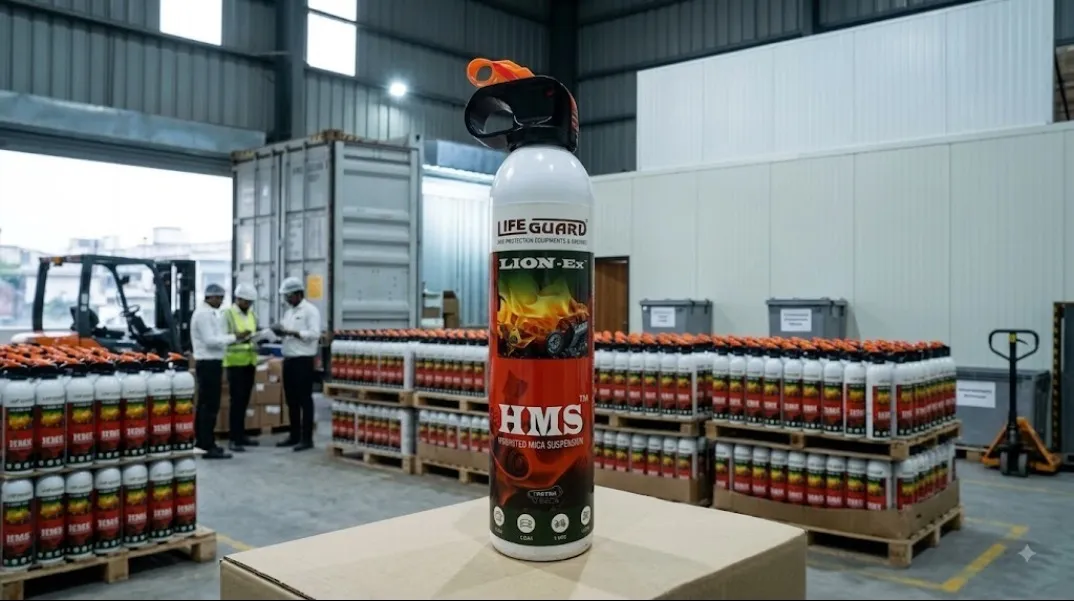
LIFEGUARD® – United Fire Equipments Pvt. Ltd. provides fire-safety equipment and application-focused fire-protection solutions for suitable lithium battery applications.
As a lithium battery fire protection supplier in Germany, LIFEGUARD® can support suitable requirements for battery manufacturers, EV companies, BESS integrators, EPC contractors, fire-protection companies, system integrators, warehouses, data centers, laboratories and industrial facilities.
What Is Lithium Battery Fire Protection?
Lithium battery fire protection is a specialized approach to protecting battery cells, modules, packs, cabinets, racks and energy-storage installations against fire-related hazards.
A lithium-ion battery can store a substantial amount of electrical energy. Under certain abnormal conditions—including overheating, internal cell failure, electrical faults, mechanical damage or overcharging—a cell may enter thermal runaway.
A simplified hazard progression is:
Battery Fault → Temperature Rise → Thermal Runaway → Gas/Smoke Generation → Fire → Thermal Propagation
A suitable protection strategy may therefore include:
Detection + Alarm + Cooling + Suppression + Electrical Isolation + Containment + Emergency Response
LIFEGUARD® – Lithium Battery Fire Protection Supplier Germany
LIFEGUARD® – United Fire Equipments Pvt. Ltd. supplies fire-safety equipment and application-focused fire-protection solutions for suitable lithium battery installations.
Depending on the application, a battery fire-protection solution can incorporate:
- Smoke detection
- Heat detection
- Temperature monitoring
- Flame detection where appropriate
- Fire alarm and control systems
- Battery Management System (BMS) interface
- Electrical isolation
- Watermist cooling
- Suitable suppression technologies
- Emergency shutdown
- Thermal propagation management
- Fire containment
- Alarm and monitoring systems
The exact solution should be selected according to the battery chemistry, capacity, enclosure, installation environment, fire scenario and applicable requirements.
Why Lithium Battery Fire Protection Is Important in Germany
Germany has a major industrial and technology ecosystem involving:
- Automotive manufacturing
- Electric vehicles
- Battery manufacturing
- EV charging
- Battery energy storage
- Renewable energy
- Solar energy
- Data centers
- Warehousing
- Logistics
- Industrial automation
- Robotics
- Electronics
- Research and development
As lithium battery use increases across these industries, appropriate fire protection becomes important during battery manufacturing, charging, testing, storage, transportation and operation.
LIFEGUARD® supports organizations looking for application-focused lithium battery fire protection solutions in Germany.
Lithium Battery Fire Protection for EV Applications
Germany's automotive sector is rapidly adopting electric mobility, making EV battery protection an important consideration.
Potential applications include:
- Electric cars
- Electric buses
- Electric commercial vehicles
- Electric two-wheelers
- EV battery packs
- Battery assembly facilities
- EV service centers
- Battery testing laboratories
- EV charging infrastructure
A typical protection concept can involve:
Battery Monitoring → Early Detection → Alarm → Electrical Isolation → Cooling/Suppression → Continued Monitoring
LIFEGUARD® can support suitable EV battery fire-protection applications according to the battery architecture and project requirements.
Lithium Battery Fire Protection for BESS
Battery Energy Storage Systems are becoming increasingly important for renewable-energy integration, energy management and backup power.
A typical BESS configuration includes:
Cells → Modules → Racks → Cabinets → Containers
Potential applications include:
- Solar energy storage
- Renewable-energy projects
- Commercial energy storage
- Industrial energy storage
- Microgrids
- Backup power
- Critical infrastructure
A comprehensive BESS protection strategy can combine:
- Smoke detection
- Heat detection
- Temperature monitoring
- BMS integration
- Fire alarm
- Electrical isolation
- Cooling
- Watermist or suitable suppression
- Emergency shutdown
- Containment
Lithium Battery Fire Protection for Battery Manufacturing
Battery manufacturing facilities can have multiple areas requiring different protection strategies.
Applications may include:
- Cell manufacturing
- Cell assembly
- Module assembly
- Battery-pack production
- Battery charging
- Formation
- Electrical testing
- Quality-control areas
- Battery storage
- R&D laboratories
Each area should be individually assessed based on its battery chemistry, process and fire hazard.
A comprehensive concept can combine:
Detection + Alarm + Electrical Isolation + Cooling + Suppression + Containment + Emergency Response
Lithium Battery Fire Protection for Warehouses
Lithium battery warehouses can contain significant amounts of stored electrical energy.
Important considerations include:
- Battery chemistry
- Battery capacity
- State of charge
- Storage quantity
- Storage height
- Rack configuration
- Packaging
- Ventilation
- Fire compartmentation
- Detection
- Emergency access
- Suppression strategy
LIFEGUARD® can support suitable fire-protection concepts for battery storage environments based on the specific application.
Lithium Battery Fire Protection for Data Centers
Modern data centers rely on batteries for:
- UPS systems
- Backup power
- Critical power infrastructure
- Energy storage
Battery rooms and battery cabinets should be assessed according to their battery technology and installation configuration.
A suitable protection concept can integrate:
Detection → Alarm → Electrical Isolation → Cooling/Suppression → Emergency Response
The final system should consider both the battery hazard and the need to protect critical electronic equipment.
Lithium Battery Fire Protection for Renewable Energy
Germany's renewable-energy infrastructure increasingly relies on battery energy storage to improve energy management and grid flexibility.
Potential applications include:
- Solar BESS
- Commercial energy storage
- Industrial energy storage
- Hybrid renewable systems
- Microgrids
- Backup battery systems
LIFEGUARD® can support suitable fire-protection concepts for these battery installations.
Lithium Battery Cooling & Thermal Runaway Protection
Cooling is an important component of many lithium battery fire-protection strategies.
A properly engineered cooling system may help manage temperatures around affected battery components and reduce heat transfer to adjacent cells or modules.
Depending on the application, technologies may include:
- Watermist
- Battery cooling systems
- Temperature monitoring
- Thermal detection
- Dedicated suppression systems
- Fire containment
No single technology should be considered suitable for every lithium battery installation. System selection should be based on application-specific engineering, testing and validation.
Lithium Battery Watermist Fire Protection
Watermist can be considered for suitable lithium battery applications where cooling and heat absorption are important objectives.
Fine water droplets can absorb heat as they warm and evaporate, providing cooling in appropriate fire scenarios.
Potential applications include:
- Battery rooms
- Battery cabinets
- BESS containers
- Battery racks
- Battery testing facilities
- Suitable EV battery installations
Important engineering parameters include:
- Nozzle characteristics
- Nozzle positioning
- Water flow
- Operating pressure
- Discharge duration
- Coverage
- Detection response
- Battery configuration
Watermist suitability should be determined through application-specific engineering and appropriate testing.
Lithium Battery Thermal Runaway Protection Strategy
Thermal runaway is one of the key hazards associated with lithium-ion batteries.
A layered protection strategy can include:
1. Battery Monitoring
Monitor battery temperature and operating conditions.
2. Early Detection
Identify abnormal heat, smoke or temperature changes.
3. Alarm
Transmit an alarm to the fire alarm/control system.
4. Electrical Isolation
Where appropriate, disconnect or isolate affected equipment.
5. Cooling & Suppression
Activate the engineered cooling/suppression system where applicable.
6. Containment
Limit the potential spread of fire and heat.
7. Continued Monitoring
Continue monitoring after an event for residual heat and possible re-ignition.
This layered approach can provide more comprehensive protection than relying on suppression alone.
Industries Served by Lithium Battery Fire Protection Solutions
LIFEGUARD® can support suitable applications across:
Automotive
EV battery manufacturing and battery-pack applications.
Battery Manufacturing
Cell, module and battery-pack production facilities.
BESS
Battery energy storage and renewable-energy projects.
Data Centers
UPS and critical battery installations.
Warehousing
Lithium battery storage facilities.
Logistics
Battery handling and storage operations.
Telecommunications
Backup battery installations.
Electronics
Battery-powered equipment and manufacturing.
Robotics
High-energy battery systems for automation.
Research & Development
Battery testing and laboratory facilities.
Lithium Battery Fire Protection Supplier for OEM Applications
LIFEGUARD® can support suitable OEMs, EPC contractors, distributors and system integrators requiring lithium battery fire-protection solutions.
Potential support includes:
- Application assessment
- System configuration
- Detection integration
- Control integration
- Cooling integration
- Suppression integration
- Technical documentation
- Project support
- Customized solutions
OEM systems should be engineered around the customer's specific battery design, operating environment and fire scenario.
Why Choose LIFEGUARD® as Your Lithium Battery Fire Protection Supplier?
Application-Focused Solutions
LIFEGUARD® can develop solutions according to the specific battery hazard rather than relying on a generic approach.
Customized Fire Protection
The system concept can consider:
- Battery chemistry
- Battery capacity
- Enclosure
- Rack configuration
- Detection requirements
- Cooling requirements
- Suppression requirements
Integrated Protection
Detection, alarm, control, cooling and suppression can be coordinated within an appropriate system architecture.
OEM & Project Support
LIFEGUARD® can support OEM customers, EPC contractors, distributors and system integrators.
International Supply Capability
LIFEGUARD® can support suitable lithium battery fire-protection requirements in Germany and other international markets.
Lithium Battery Fire Protection Across Germany
LIFEGUARD® can support suitable project requirements across major German industrial and commercial markets.
Berlin
- Data centers
- EV infrastructure
- Commercial facilities
- Battery-storage applications
Munich
- Automotive
- EV technology
- Battery R&D
- Data centers
- Industrial facilities
Frankfurt
- Data centers
- Logistics
- Critical infrastructure
- BESS
Hamburg
- Logistics
- Warehousing
- Renewable energy
- Industrial facilities
Stuttgart
- Automotive
- EV manufacturing
- Battery technology
- Industrial facilities
Cologne
- Logistics
- Manufacturing
- Commercial facilities
- Energy-storage applications
Düsseldorf
- Industrial facilities
- Manufacturing
- Warehousing
- Commercial infrastructure
Leipzig & Dresden
- Battery manufacturing
- Automotive
- Electronics
- Industrial technology
The final protection system should always be selected based on the actual battery hazard, facility configuration and applicable German and European requirements.
Germany & European Compliance Considerations
Lithium battery fire-protection projects in Germany should be evaluated against applicable:
- German fire-safety requirements
- Local authority requirements
- Applicable European requirements
- Project specifications
- Relevant DIN standards
- Relevant EN standards
- VdS requirements where specified
- Applicable NFPA standards where specified
- Manufacturer recommendations
- Electrical safety requirements
- Authority Having Jurisdiction (AHJ) requirements
For watermist applications, NFPA 750 may be relevant where specified by a project. European or German guidance may also apply depending on the installation.
The exact compliance pathway depends on the equipment, application, project specification and applicable authority.
Certification claims should always relate to the specific product or system and its actual certification status.
Lithium Battery Fire Protection System Design Process
Step 1 – Application Assessment
Identify battery chemistry, capacity, configuration and operating environment.
Step 2 – Hazard Assessment
Evaluate thermal runaway, fire and thermal propagation scenarios.
Step 3 – Detection
Keywords






