
Lithium Battery Fire Protection System Provider Germany – Advanced BESS & Battery Fire Safety Solutions
The rapid growth of Battery Energy Storage Systems (BESS), electric vehicles, renewable energy projects, UPS systems, data centres and industrial battery applications has significantly increased the use of lithium-ion batteries across Germany. While lithium-ion technology delivers excellent energy density and storage efficiency, it also introduces a specialised fire risk known as thermal runaway.
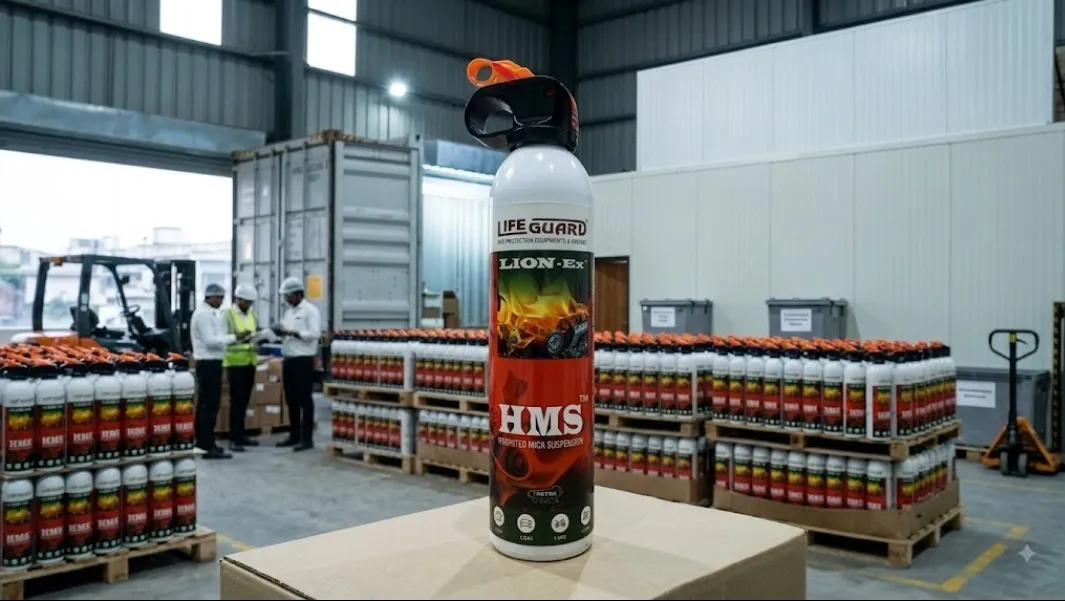
LIFEGUARD® – United Fire Equipments Pvt. Ltd. provides engineered Lithium Battery Fire Protection Systems for Germany, offering integrated solutions for early detection, alarm, automatic suppression, cooling, shutdown and monitoring of lithium-ion battery installations.
As a specialised Lithium Battery Fire Protection System Provider Germany, LIFEGUARD® develops project-specific fire safety concepts for applications ranging from individual battery cabinets and UPS rooms to large-scale containerised BESS projects.
Why Lithium Battery Fire Protection Is Critical in Germany
Germany is one of Europe's major markets for renewable energy, electric mobility, industrial automation and energy storage. Lithium-ion batteries are increasingly used in:
- Battery Energy Storage Systems
- Solar and renewable energy projects
- EV charging infrastructure
- Electric vehicle facilities
- Data centres
- UPS battery rooms
- Telecom facilities
- Industrial manufacturing plants
- Battery warehouses
- Logistics facilities
- Commercial buildings
- Critical infrastructure
Unlike many conventional combustible materials, lithium-ion batteries can experience an internal electrochemical reaction that generates substantial heat.
If the heat cannot escape, one cell may enter thermal runaway, potentially causing neighbouring cells and modules to overheat.
Therefore, lithium battery fire protection requires much more than conventional smoke detection. An engineered solution should consider early warning, temperature monitoring, gas detection, fire suppression, cooling and emergency control logic.
What Is Lithium Battery Thermal Runaway?
Thermal runaway is an uncontrolled rise in temperature inside a lithium-ion battery cell.
Possible initiating factors include:
- Internal electrical short circuit
- Battery overcharging
- Mechanical impact or penetration
- Manufacturing defect
- Excessive operating temperature
- Charger malfunction
- Battery Management System failure
- Electrical insulation failure
- External fire exposure
- Ageing or damaged battery cells
As the cell temperature increases, internal chemical reactions can generate additional heat.
The process can result in:
- Rapid temperature escalation
- Smoke generation
- Release of flammable gases
- Fire
- Cell rupture
- Propagation to neighbouring batteries
- Re-ignition risk
For high-capacity installations, the consequences can affect not only the battery equipment but also personnel, buildings, adjacent electrical systems and business continuity.
Complete Lithium Battery Fire Protection System Germany
LIFEGUARD® provides a multi-layered approach for lithium-ion battery fire safety.
A typical system may include:
Battery Monitoring → Gas Detection → Smoke Detection → Heat Detection → Alarm → Shutdown → Fire Suppression → Cooling → Continuous Monitoring
Each layer contributes to faster identification and control of an abnormal battery event.
1. Early Warning Smoke Detection
Early smoke detection is an important component of a lithium battery fire protection strategy.
For sensitive battery installations, aspirating smoke detection or Very Early Warning Smoke Detection systems can continuously sample the air within:
- BESS containers
- Battery rooms
- Battery cabinets
- Data centres
- UPS rooms
- Electrical equipment rooms
Aspirating detection can provide an early warning of developing smoke conditions so that operators can investigate before the incident develops into a major fire.
Early detection can also be integrated with other emergency actions such as:
- Local alarm
- Remote alarm
- Battery shutdown
- HVAC shutdown
- Ventilation operation
- Electrical isolation
- Suppression activation
2. Lithium Battery Off-Gas Detection
Lithium-ion cells may release gases when they begin to fail.
Depending upon the project requirements and battery chemistry, appropriate gas or multi-gas detection systems can be installed to monitor abnormal conditions.
Gas detection may provide an additional layer of warning before visible fire develops.
Signals from gas detectors can be connected to the fire suppression control panel, BMS or SCADA system to initiate programmed emergency actions.
A combined detection strategy involving gas, smoke and temperature monitoring provides greater visibility into developing battery incidents.
3. Linear Heat Detection for Battery Racks
Linear Heat Sensing Cable can be installed along battery racks, modules or cabinets to detect abnormal temperature conditions.
This technology is particularly useful because the sensing element can follow the physical configuration of the protected battery installation.
Typical applications include:
- BESS battery racks
- Battery cabinets
- Containerised energy storage systems
- UPS battery installations
- Electrical enclosures
- Industrial battery storage
- EV battery facilities
The heat detection system can be connected to a control panel for alarm, shutdown and suppression logic.
4. Automatic Lithium Battery Fire Suppression System
LIFEGUARD® designs automatic suppression systems according to the specific battery hazard.
Depending upon the installation, the proposed system may incorporate an appropriate:
- Water-based suppression system
- Water-mist arrangement
- Liquid-agent system
- Local application suppression system
- Engineered cooling arrangement
- Other project-specific suppression technology
The appropriate suppression method must be selected after considering the battery chemistry, enclosure, capacity, ventilation and fire protection objective.
The goal may include:
- Controlling visible fire
- Reducing heat release
- Cooling adjacent battery modules
- Restricting propagation
- Protecting nearby equipment
- Supporting emergency response
5. Battery Cooling and Thermal Runaway Control
Cooling is one of the most important considerations when dealing with lithium battery thermal runaway.
Even after visible flames have been suppressed, a damaged battery may continue generating heat internally.
This heat can expose adjacent cells, causing additional batteries to enter thermal runaway.
A properly engineered cooling arrangement aims to reduce heat exposure to neighbouring:
- Cells
- Modules
- Battery racks
- Cabinets
- BESS equipment
Therefore, effective lithium battery fire safety must consider both fire suppression and heat management.
Engineered Nozzle Arrangement for Battery Protection
Nozzle position and distribution must be engineered according to the geometry of the protected area.
LIFEGUARD® considers factors such as:
- Battery rack dimensions
- Battery cabinet arrangement
- Module spacing
- Container dimensions
- Room geometry
- Obstructions
- Required discharge pattern
- Suppression agent
- Required coverage
- Piping network
- Hydraulic requirements
Proper nozzle placement is particularly important in installations containing multiple battery racks because the suppression or cooling medium must reach the required hazard areas effectively.
Lithium Battery Fire Suppression Control Panel
The control panel forms the central control point of an automatic fire protection system.
Depending on the approved system design, the panel can receive signals from:
- Smoke detectors
- Aspirating smoke detectors
- Heat detectors
- Linear Heat Sensing cables
- Gas detectors
- Flame detectors
- Manual release stations
- Battery monitoring interfaces
The panel can initiate outputs for:
- Audible alarms
- Visual alarms
- Fire suppression activation
- Battery shutdown
- Charger shutdown
- HVAC shutdown
- Emergency ventilation
- Electrical isolation
- BMS integration
- SCADA communication
- Main fire alarm panel integration
The exact cause-and-effect sequence should be developed according to the project risk analysis and operational requirements.
Manual Release and Abort Functions
Automatic suppression installations may also incorporate manual controls.
Typical devices include:
- Manual release switches
- Abort switches
- Emergency stop stations
- Sounders
- Hooters
- Flashers
- Status indicators
These provide authorised operators with additional control during emergency situations.
BESS Fire Protection System Provider Germany
Battery Energy Storage Systems can contain hundreds or thousands of interconnected lithium-ion cells in a relatively compact space.
For this reason, BESS fire protection in Germany requires a carefully coordinated approach.
A typical BESS fire protection architecture may include:
Battery Management System
↓
Off-Gas Detection
↓
Very Early Smoke Detection
↓
Temperature / Linear Heat Detection
↓
Fire Alarm & Suppression Control Panel
↓
Battery / Electrical Isolation
↓
Automatic Suppression & Cooling
↓
Remote Monitoring
This multi-layer approach helps identify developing battery abnormalities and initiate appropriate protective measures.
Containerised BESS Fire Protection
LIFEGUARD® can develop fire protection systems for containerised BESS installations.
Design considerations include:
- Container dimensions
- Number of battery racks
- Battery chemistry
- Energy storage capacity
- Module arrangement
- Airflow
- Ventilation system
- Access doors
- Detection arrangement
- Suppression distribution
- Nozzle positions
- Emergency shutdown requirements
Protection can be zoned according to the size and arrangement of the installation.
Lithium Battery Fire Protection for Data Centres in Germany
Modern data centres depend on uninterrupted electrical power and frequently use lithium-ion UPS batteries.
A battery incident can threaten:
- Critical IT infrastructure
- Servers
- Network equipment
- UPS systems
- Electrical switchgear
- Business continuity
LIFEGUARD® can provide battery fire protection concepts integrating:
- Aspirating smoke detection
- Gas detection
- Temperature monitoring
- Automatic suppression
- Fire alarm integration
- UPS shutdown
- BMS integration
Early warning is particularly valuable in data centres because intervention before significant flame development can help reduce damage to critical equipment.
Lithium Battery Fire Protection for EV Facilities
Germany has a major automotive and electric vehicle industry, creating increased demand for safe lithium battery handling.
Fire protection solutions may be considered for:
- EV battery manufacturing
- EV assembly plants
- Battery testing facilities
- EV charging stations
- Battery storage warehouses
- Battery service centres
- Battery recycling facilities
- Fleet charging locations
Because the hazards vary considerably between these applications, each system should be designed according to the specific risk.
Lithium Battery Protection for Solar Energy Storage
Germany's renewable energy sector increasingly uses batteries to store solar-generated electricity.
Lithium-ion energy storage installations can be located in:
- Commercial facilities
- Industrial installations
- Solar projects
- Renewable energy plants
- Utility-scale storage facilities
A complete fire protection strategy can combine battery monitoring with early fire detection, shutdown and suppression.
Industrial Lithium Battery Fire Protection
Industrial facilities use lithium-ion batteries for applications including:
- Automated Guided Vehicles
- Material handling equipment
- Backup power systems
- Industrial machinery
- Energy storage
- Robotics
- Warehouse automation
LIFEGUARD® can provide customised fire protection solutions based on the layout, battery quantity and operational environment.
Multi-Layer Fire Protection Philosophy
A strong lithium battery fire protection strategy can be divided into several protection levels.
Level 1 – Battery Management
Battery voltage, current and temperature parameters are monitored through the Battery Management System.
Level 2 – Off-Gas Detection
Sensors identify abnormal gases associated with developing battery failure.
Level 3 – Early Smoke Detection
Aspirating smoke detection provides warning of developing smoke.
Level 4 – Heat Detection
Heat detectors or Linear Heat Sensing identify abnormal temperatures.
Level 5 – Alarm
Local and remote alarms warn personnel.
Level 6 – Automatic Shutdown
Battery charging, electrical systems, HVAC or other equipment may be isolated according to the approved logic.
Level 7 – Suppression and Cooling
Automatic fire suppression is activated to control the fire and reduce thermal exposure.
Level 8 – Post-Event Monitoring
The affected battery system continues to be monitored because damaged lithium-ion batteries can retain significant stored energy.
Fire Detection Technologies for Lithium Battery Installations
A lithium battery fire protection system may incorporate multiple detection technologies.
Aspirating Smoke Detection
Provides very early warning by continuously sampling air.
Linear Heat Sensing Cable
Provides temperature monitoring across battery racks or extended equipment areas.
Gas Detection
Detects selected gases associated with battery failure or abnormal operating conditions.
Heat Detection
Provides alarm when temperatures exceed predefined thresholds.
Flame Detection
UV/IR or IR3 flame detectors may be considered where rapid detection of open flame is required.
Using multiple detection methods can create a more resilient safety architecture.
Custom Engineering for German Battery Projects
There is no universal fire protection system suitable for every lithium-ion battery application.
LIFEGUARD® evaluates project-specific information including:
- Battery chemistry
- Cell technology
- Battery capacity
- Number of modules
- Energy storage capacity
- Battery rack dimensions
- Room dimensions
- BESS container dimensions
- Ventilation
- Environmental conditions
- Fire load
- Required alarm philosophy
- Electrical shutdown requirements
- Required suppression method
- Piping arrangement
- Nozzle coverage
- BMS/SCADA interface
Based on these details, a customised fire protection concept can be developed.
Applications Across Germany
LIFEGUARD® lithium battery fire protection solutions can be considered for projects in major German industrial and commercial centres including:
- Berlin
- Munich
- Hamburg
- Frankfurt
- Stuttgart
- Düsseldorf
- Cologne
- Leipzig
- Bremen
- Hanover
- Dresden
- Dortmund
Solutions can be developed for both new installations and suitable fire safety upgrades for existing battery facilities.
Industries Served
Our lithium battery fire protection solutions can support:
- BESS developers
- Renewable energy companies
- Solar power projects
- Automotive manufacturers
- EV infrastructure operators
- Data centres
- Telecom operators
- Industrial plants
- Warehouses
- Logistics companies
- Utility providers
- Commercial facilities
- Critical infrastructure
- Battery manufacturers
- Battery testing facilities
- Energy storage integrators
Why Choose LIFEGUARD® as a Lithium Battery Fire Protection System Provider Germany?
Comprehensive Fire Protection Approach
We focus on more than suppression alone by considering:
Detection + Alarm + Shutdown + Suppression + Cooling + Monitoring
Customised System Engineering
Each battery installation is evaluated according to its unique hazard and layout.
Advanced Early Detection
Systems can incorporate gas detection, aspirating smoke detection and temperature monitoring to identify abnormal conditions as early as practicable.
Automatic Fire Suppression
Automatic suppression can be integrated with the detection and control system according to the approved cause-and-effect philosophy.
Thermal Runaway Protection
The system design considers thermal propagation as well as visible flame control.
BESS-Specific Solutions
Solutions can be engineered for both containerised and indoor Battery Energy Storage Systems.
Integration Capability
Systems can be integrated with:
- BMS
- SCADA
- Fire alarm systems
- HVAC controls
- Battery Management Systems
- Emergency shutdown circuits
Technical Project Support
Project support can include:
- Fire protection concept development
- Technical data sheets
- System drawings
- Detection layouts
- Piping layouts
- Nozzle layouts
- Equipment selection
- BOQ preparation
- Cause-and-effect philosophy
- Installation guidance
- Testing support
- Commissioning assistance
What Information Is Required for System Design?
For developing an appropriate lithium battery fire protection proposal, clients can provide:
- Battery type and chemistry
- Battery manufacturer
- Number of cells/modules
- Total battery capacity
- BESS capacity
- Rack dimensions
- Room/container dimensions
- General arrangement drawing
- Battery layout
- Ventilation details
- Existing fire detection system
- Existing BMS/SCADA arrangement
- Required fire protection philosophy
This information allows the engineering team to develop a more accurate system configuration.
Frequently Asked Questions
What fire protection system is suitable for lithium-ion batteries?
The appropriate system depends on battery chemistry, installation size, enclosure configuration and project fire safety objectives. A combination of early detection, suppression, cooling and monitoring is often considered.
Why is lithium battery cooling important?
Lithium-ion cells experiencing thermal runaway can continue producing heat even after flames are reduced. Cooling surrounding batteries can help reduce heat exposure and the risk of propagation.
Can a conventional smoke detector alone protect a BESS?
Smoke detection is an important layer, but high-capacity BESS installations may require additional gas detection, temperature monitoring, suppression, cooling and emergency shutdown functions.
Can LIFEGUARD® provide a system for containerised BESS in Germany?
Yes. Fire detection, alarm, shutdown, suppression and cooling concepts can be developed according to the BESS container dimensions, battery layout and project requirements.
Can the fire suppression system connect with SCADA?
Yes. Suitable interfaces can be incorporated for communication with SCADA, BMS, the main fire alarm panel and other building or plant systems according to project requirements.
Is automatic activation possible?
Yes. An engineered control system can automatically initiate alarm and suppression actions based on the approved detection and activation logic. Manual release and abort controls can also be provided where required.
Your Lithium Battery Fire Protection System Partner for Germany
As lithium-ion batteries become increasingly important for renewable energy, electric mobility, data centres and industrial applications, protecting these high-energy systems requires a specialised approach.
An effective Lithium Battery Fire Protection System in Germany should focus on the earliest practicable detection of abnormal battery behaviour, appropriate emergency shutdown, controlled fire suppression, thermal management and continuous monitoring.
LIFEGUARD® – United Fire Equipments Pvt. Ltd. provides customised solutions for:
- Battery Energy Storage Systems
- Lithium-ion battery rooms
- EV battery facilities
- Data centres
- UPS battery rooms
- Solar energy storage systems
- Telecom facilities
- Industrial battery installations
- Battery warehouses
From early detection through automatic suppression and cooling, LIFEGUARD® provides an integrated approach to lithium battery fire safety.
Contact LIFEGUARD®
United Fire Equipments Pvt. Ltd.
Manufacturer of ISI Certified Fire Safety Equipment
📞 8048034226
Contact LIFEGUARD® for project-specific requirements related to Lithium Battery Fire Protection System Provider Germany, BESS Fire Suppression Germany, Lithium Battery Thermal Runaway Protection, Battery Cooling Systems and Energy Storage Fire Safety Solutions.
Suggested SEO Meta Title
Lithium Battery Fire Protection System Provider Germany | LIFEGUARD®
Suggested Meta Description
Looking for a lithium battery fire protection system provider in Germany? LIFEGUARD® offers advanced BESS fire detection, suppression, cooling and thermal runaway protection solutions for energy storage, EV, data centre and industrial battery applications.
Suggested URL Slug
/lithium-battery-fire-protection-system-provider-germany/
Primary SEO Keyword
Lithium Battery Fire Protection System Provider Germany
Secondary SEO Keywords
- Lithium battery fire protection Germany
- Lithium ion battery fire suppression Germany
- BESS fire protection system Germany
- BESS fire suppression Germany
- Battery energy storage fire protection Germany
- Lithium battery thermal runaway protection Germany
- Lithium battery cooling system Germany
- Battery room fire suppression Germany
- Energy storage fire safety Germany
- Lithium ion battery safety system Germany
- BESS thermal runaway suppression Germany
- EV battery fire protection Germany
- Battery fire detection system Germany
- Lithium battery suppression system Germany
- BESS fire safety solutions Germany
Keywords






