
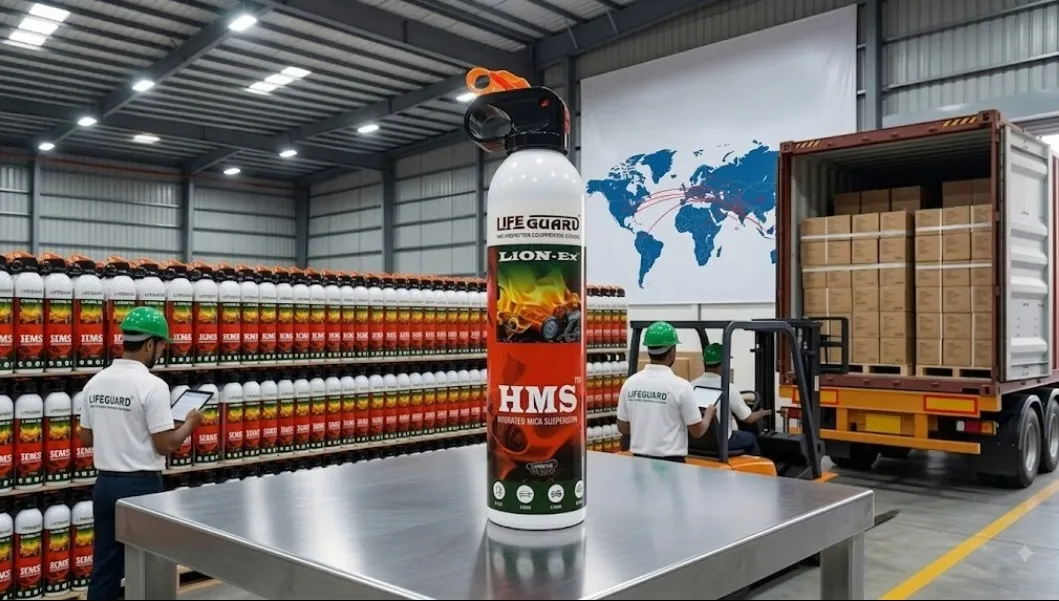
Lithium Battery Thermal Runaway Suppression Company India – LIFEGUARD®
As lithium-ion batteries become increasingly common across electric vehicles, Battery Energy Storage Systems (BESS), data centres, industrial facilities, warehouses, telecom installations and renewable-energy projects, the need for specialized fire protection has become more important than ever.
LIFEGUARD® – United Fire Equipments Pvt. Ltd. provides specialized lithium battery fire protection and thermal runaway suppression solutions for industrial and commercial applications across India.
If you are searching for a reliable Lithium Battery Thermal Runaway Suppression Company in India, LIFEGUARD® offers engineered solutions focused on early detection, rapid suppression, cooling and mitigation of fire propagation associated with lithium-ion battery systems.
What Is Lithium Battery Thermal Runaway?
Thermal runaway is a hazardous condition in which a lithium-ion battery cell experiences an uncontrolled rise in temperature.
Once initiated, the heat generated inside the battery can accelerate internal chemical reactions, potentially resulting in:
- Rapid temperature rise
- Release of flammable gases
- Smoke generation
- Cell venting
- Fire
- Re-ignition
- Propagation from one battery cell to adjacent cells
- Damage to complete battery modules, racks or enclosures
Conventional fire protection approaches may not always be sufficient for lithium-ion battery hazards because suppressing visible flames alone does not necessarily stop the internal heat generation taking place inside the battery cells.
A properly engineered lithium battery thermal runaway suppression system therefore needs to consider detection, suppression, cooling, fire containment and possible re-ignition.
LIFEGUARD® Lithium Battery Thermal Runaway Suppression Solutions India
LIFEGUARD® provides application-specific fire protection solutions designed according to the type of lithium battery installation, battery chemistry, enclosure configuration and overall fire risk.
Our solutions can be considered for:
Battery Energy Storage Systems – BESS
Large-scale BESS installations contain significant quantities of lithium-ion batteries arranged in modules, racks and containers.
A fire originating in a single cell can potentially develop into module or rack-level thermal runaway if not controlled quickly.
LIFEGUARD® provides engineered fire protection solutions for:
- BESS battery rooms
- Containerized BESS
- Battery racks
- Energy storage cabinets
- PCS and electrical rooms
- Utility-scale battery installations
- Solar energy storage projects
- Industrial energy storage applications
Electric Vehicle Battery Fire Protection
Lithium-ion batteries are widely used in electric mobility.
LIFEGUARD® can develop suppression concepts for applications including:
- Electric vehicles
- Electric buses
- Commercial EV fleets
- EV battery packs
- EV battery test laboratories
- Battery charging facilities
- EV parking facilities
- Battery assembly areas
Fire protection systems can be engineered around the specific battery location, available installation space and identified hazard zones.
Lithium Battery Manufacturing Facilities
Battery manufacturing and assembly operations can involve considerable fire risk during production, testing, charging and storage.
LIFEGUARD® provides fire protection solutions for areas such as:
- Battery cell manufacturing
- Battery module assembly
- Battery pack assembly
- Battery testing laboratories
- Charging and discharging areas
- Battery ageing rooms
- Battery storage warehouses
- Finished battery storage areas
Lithium Battery Warehouses
A fire within stored lithium batteries can become particularly challenging because numerous batteries may be stored close together.
Our lithium battery suppression solutions can be engineered for:
- Lithium-ion battery warehouses
- EV battery storage
- Battery pallet storage
- Battery distribution centres
- Battery spare-part warehouses
- Battery recycling facilities
How a Lithium Battery Thermal Runaway Suppression System Works
An effective lithium-ion battery fire protection strategy generally involves multiple stages.
1. Early Fire and Off-Gas Detection
Early detection is extremely important in lithium battery applications.
Depending on the risk assessment and system configuration, detection technologies may include:
- Smoke detection
- Aspirating smoke detection
- Very Early Smoke Detection Apparatus – VESDA
- Heat detection
- Linear Heat Sensing Cable
- Multi-gas detection
- Hydrogen detection
- Carbon monoxide detection
- Flame detection
- UV/IR or IR3 flame detectors
Early identification of abnormal conditions allows suppression and emergency procedures to begin before the event develops into a larger battery fire.
2. Automatic Suppression Activation
Once the predefined detection logic is satisfied, the suppression system can automatically initiate.
The suppression medium is discharged through strategically positioned piping and nozzles to provide protection to the identified hazard zone.
System configuration depends on:
- Battery chemistry
- Battery capacity
- Battery module arrangement
- Rack spacing
- Room volume
- Enclosure dimensions
- Ventilation conditions
- Electrical configuration
- Required discharge duration
- Fire load
- Risk assessment
3. Cooling of the Battery
One of the critical objectives in lithium-ion battery fire protection is reducing temperature.
The suppression system should assist in controlling the heat surrounding the affected battery and reducing the possibility of additional cells entering thermal runaway.
Cooling can be particularly important where batteries are installed in tightly packed modules or racks.
4. Reduction of Fire Propagation
Thermal runaway can propagate from one cell to another.
A properly designed suppression system aims to restrict the spread of heat and fire from:
Cell → Module → Pack → Rack → Adjacent Rack
Reducing propagation can help limit damage to the installation and surrounding equipment.
5. Re-Ignition Protection
Lithium battery fires may re-ignite even after the visible flames have been extinguished because significant heat may remain within damaged cells.
For this reason, lithium battery fire protection should not be evaluated only on initial flame extinguishment.
The design should consider:
- Continued cooling
- Temperature monitoring
- Re-ignition risk
- Extended suppression requirements
- Emergency isolation
- Post-discharge monitoring
Customized Lithium Battery Fire Suppression Systems
There is no universal suppression system suitable for every lithium-ion battery installation.
LIFEGUARD® therefore follows an application-specific engineering approach.
Before proposing a system, technical factors such as the following may be evaluated:
Battery Information
- Lithium battery chemistry
- Cell type
- Battery capacity
- Number of cells
- Module configuration
- Rack configuration
- State of charge
- Battery voltage
Installation Information
- Room dimensions
- Battery enclosure dimensions
- Rack dimensions
- Number of battery racks
- Rack spacing
- Ventilation arrangement
- Air-conditioning system
- Electrical isolation arrangement
Fire Protection Requirements
- Detection philosophy
- Suppression philosophy
- Cooling requirements
- Nozzle arrangement
- Piping network
- Agent quantity
- Discharge duration
- Alarm requirements
- Manual release requirement
- Emergency shutdown interlocking
This engineering-based approach enables LIFEGUARD® to develop a solution suitable for the actual battery hazard rather than relying on a generic fire protection arrangement.
Detection Technologies for Lithium Battery Thermal Runaway
Early warning can dramatically improve the effectiveness of a battery fire protection strategy.
Depending on the application, LIFEGUARD® systems can incorporate various detection technologies.
VESDA – Aspirating Smoke Detection
VESDA systems continuously draw air samples from the protected area through a network of sampling pipes.
They are useful in applications where very early smoke detection is required, including:
- BESS rooms
- Battery test laboratories
- Electrical rooms
- Data centres
- Battery storage areas
Linear Heat Sensing Cable
Linear Heat Sensing Cable can be routed close to battery racks or identified hazard zones.
It can provide temperature-related detection across a continuous length and is useful where point detectors may not provide sufficient localized coverage.
Multi-Gas Detection
Battery cells undergoing abnormal conditions may release gases before a fully developed fire.
Appropriate gas detection technologies may therefore be incorporated where required by the fire protection strategy.
Flame Detection
UV/IR and IR3 flame detectors can provide rapid detection where open flames may develop within the protected area.
Automatic Control and Alarm System
The suppression system can be integrated with a dedicated fire suppression/releasing control panel.
Depending upon the project requirements, the control system may provide:
- Automatic detection
- Cross-zone detection logic
- Pre-discharge alarm
- Audio-visual alarm
- Manual release
- Abort facility
- Automatic suppression discharge
- HVAC shutdown
- Electrical isolation signal
- Battery Management System interface
- Fire alarm system interface
- Remote alarm indication
- Emergency shutdown interlocking
Integration requirements are finalized according to the project design and client requirements.
Applications of Lithium Battery Thermal Runaway Suppression Systems
LIFEGUARD® provides lithium battery fire protection solutions for a broad range of sectors across India.
Battery Energy Storage
- BESS rooms
- Containerized battery systems
- Solar energy storage
- Wind energy storage
- Grid-scale storage
- Microgrids
Electric Mobility
- Electric buses
- Electric cars
- Electric commercial vehicles
- EV charging stations
- EV service facilities
- Battery swapping stations
Battery Industry
- Battery manufacturing plants
- Cell production facilities
- Module assembly facilities
- Pack assembly lines
- Battery testing laboratories
- Battery R&D centres
Industrial Applications
- Factories
- Manufacturing facilities
- Power plants
- Substations
- Control rooms
- Telecom installations
- UPS battery rooms
Storage and Logistics
- Battery warehouses
- Distribution centres
- Lithium battery storage rooms
- Logistics facilities
- Battery recycling centres
Why Choose LIFEGUARD® for Lithium Battery Thermal Runaway Suppression in India?
Experienced Fire Protection Manufacturer
United Fire Equipments Pvt. Ltd. is an established Indian manufacturer and supplier of fire fighting equipment and engineered fire protection systems under the LIFEGUARD® brand.
Engineered Solutions
Lithium battery projects require more than simply selecting a fire extinguisher.
Our approach includes evaluation of:
- Hazard characteristics
- Battery configuration
- Detection requirements
- Suppression requirements
- Nozzle positioning
- Piping layout
- Control philosophy
- Alarm requirements
- System integration
Complete Fire Protection Solution
LIFEGUARD® can support projects involving:
- Fire detection
- Gas detection
- Suppression systems
- Piping networks
- Discharge nozzles
- Control panels
- Manual release stations
- Abort switches
- Audio-visual alarms
- System integration
- Testing and commissioning
Customized Solutions
Every battery installation is different.
The system can be customized for:
- Individual battery cabinets
- Battery modules
- Battery racks
- Complete battery rooms
- BESS containers
- Large industrial installations
Pan-India Project Support
LIFEGUARD® can support lithium battery fire protection requirements across major Indian industrial regions including:
Delhi NCR, Noida, Greater Noida, Gurugram, Faridabad, Manesar, Mumbai, Pune, Bengaluru, Chennai, Hyderabad, Ahmedabad, Vadodara, Surat, Kolkata and other locations throughout India.
Lithium Battery Thermal Runaway Suppression Company Delhi NCR
With operations based in Delhi, LIFEGUARD® is strategically positioned to support lithium battery fire protection projects throughout Delhi NCR, Noida, Greater Noida, Gurugram, Faridabad and Manesar.
Our team can support projects from the initial technical discussion through engineering, supply, installation and commissioning requirements depending upon the project scope.
Lithium Battery Thermal Runaway Suppression for BESS India
India's growing deployment of renewable energy and energy storage infrastructure is creating increasing demand for specialized BESS fire protection.
Battery storage projects require a coordinated safety approach covering:
- Early warning
- Fire detection
- Thermal detection
- Gas detection
- Suppression
- Cooling
- Emergency shutdown
- Battery isolation
- Ventilation management
- Fire alarm integration
LIFEGUARD® develops suppression arrangements based on the particular BESS configuration and project fire safety requirements.
Lithium Battery Fire Suppression System Design
Proper engineering is critical for achieving effective suppression coverage.
The design process can include:
- Collection of battery technical data
- Review of battery chemistry
- Hazard assessment
- Review of battery racks and modules
- Selection of detection technology
- Selection of suppression methodology
- Calculation of suppression quantity
- Piping and nozzle design
- Fire alarm and suppression logic
- Preparation of technical drawings
- Installation
- Testing
- Commissioning
- Client training and documentation
Information Required for Lithium Battery Suppression System Selection
For preparing a suitable technical proposal, clients may share:
- Battery chemistry
- Battery manufacturer
- Battery model
- Battery capacity in kWh/MWh
- Number of battery modules
- Number of racks
- Battery rack dimensions
- Battery room dimensions
- BESS container dimensions
- Layout drawing
- Electrical single-line diagram, where relevant
- HVAC details
- Existing fire alarm system
- Required fire protection philosophy
After reviewing the above information, an appropriate suppression concept can be developed.
Frequently Asked Questions
Can a Normal Fire Extinguisher Stop Lithium Battery Thermal Runaway?
A portable extinguisher may help control surrounding flames in some circumstances, but lithium-ion battery thermal runaway involves internal heat generation and possible re-ignition.
Large battery installations therefore require a properly engineered fire detection, suppression and cooling strategy.
Why Is Cooling Important in Lithium Battery Fires?
Even after flames are suppressed, damaged cells may remain at elevated temperatures.
Reducing the battery temperature helps lower the possibility of heat propagation to adjacent cells.
Can Lithium Batteries Re-Ignite?
Yes. Damaged lithium-ion battery cells can retain considerable heat and may re-ignite after initial suppression.
For this reason, post-fire temperature monitoring and cooling are important considerations.
Is One Suppression System Suitable for Every Lithium Battery?
No.
Battery chemistry, capacity, module design, enclosure construction and application can vary considerably. The suppression system should therefore be selected based on the specific hazard.
Can LIFEGUARD® Provide a Solution for BESS Projects?
Yes. LIFEGUARD® provides engineered fire detection and suppression solutions for battery rooms, battery racks and containerized BESS projects based on project-specific technical requirements.
LIFEGUARD® – Lithium Battery Thermal Runaway Suppression Company India
Lithium-ion battery safety requires a specialized approach.
From early detection and automatic suppression to cooling, alarm integration and propagation control, LIFEGUARD® provides engineered solutions to help protect lithium battery installations against thermal runaway-related fire hazards.
Whether your requirement is for a:
- BESS project
- Lithium battery manufacturing plant
- EV battery facility
- Battery testing laboratory
- EV charging facility
- Battery storage warehouse
- Industrial battery room
- Battery rack
- Energy storage container
our technical team can evaluate the application and develop an appropriate fire protection solution.
Contact LIFEGUARD®
United Fire Equipments Pvt. Ltd.
LIFEGUARD® Fire Safety Solutions
Manufacturer of Fire Fighting Equipment & Engineered Fire Protection Systems
Phone: 8048034226
Email: ufe126@gmail.com
Email: info@lifeguardindia.in
Office:
LIFEGUARD Tower, K-960, Rithala,
Rohini, Delhi – 110085, India
Keywords






