Manufacturing Plant Automatic Fire Suppression System Manufacturer in India – LIFEGUARD®
Advanced Automatic Fire Suppression Solutions for Manufacturing Plants Across India
Manufacturing plants operate in environments where machinery, electrical installations, combustible materials, flammable liquids, production equipment, and industrial processes can create significant fire hazards. A fire incident in a manufacturing facility can lead to equipment damage, production downtime, material losses, employee safety risks, and disruption to the entire supply chain. Implementing a suitable automatic fire suppression system is an important part of a comprehensive industrial fire protection strategy.
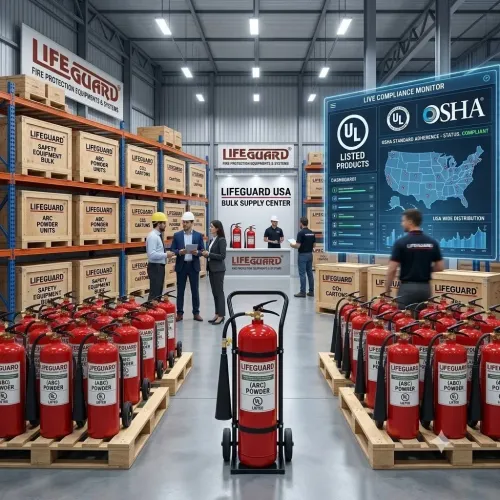
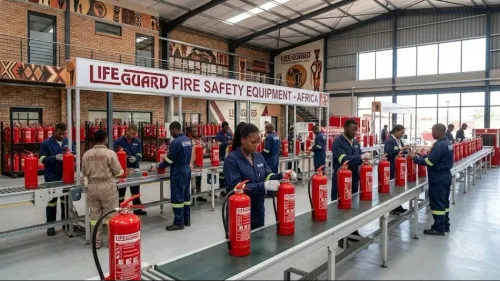
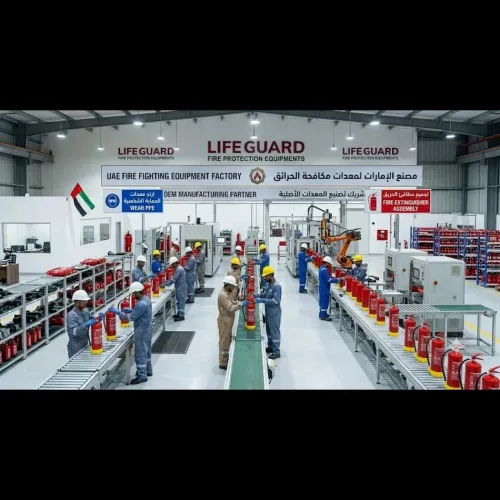
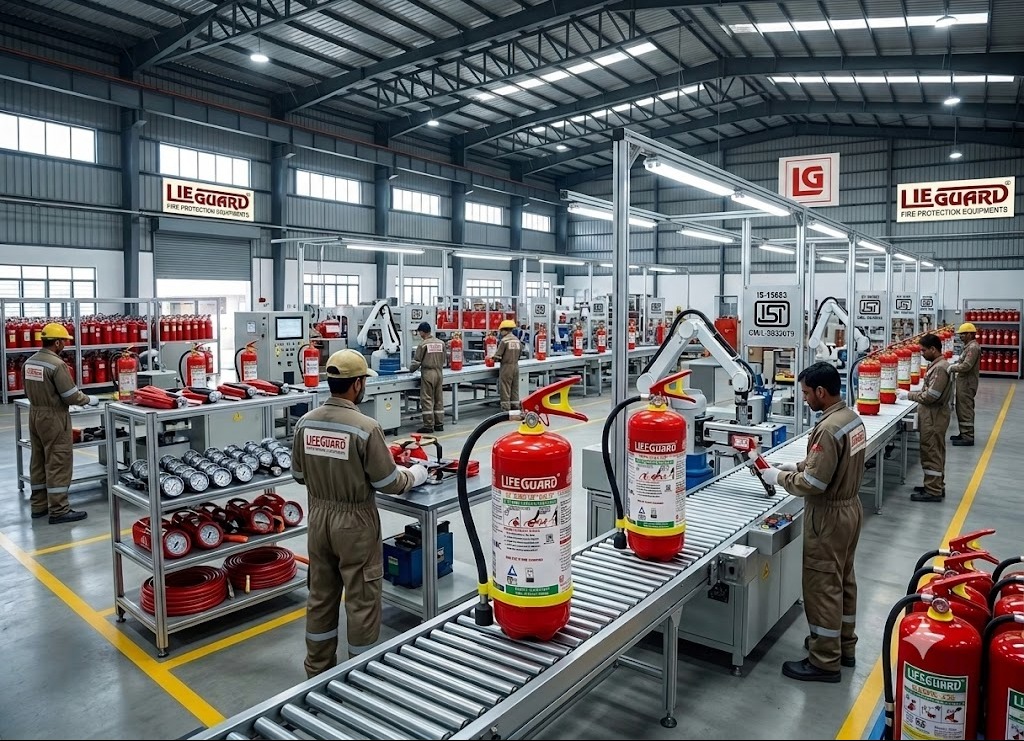
LIFEGUARD®, manufactured by United Fire Equipments Pvt. Ltd. (UFEPL), offers fire safety equipment and supports specialised fire suppression applications for industrial and commercial environments. As a fire safety equipment manufacturer in India, LIFEGUARD® serves customers seeking dependable firefighting products and application-specific protection solutions for manufacturing plants, factories, industrial warehouses, electrical installations, and critical equipment.
Automatic fire suppression systems are designed to respond to a fire through an appropriate detection and release arrangement, helping control or suppress a fire in a protected area or item of equipment. Depending on the application, these systems may use gaseous agents, water-based agents, foam, dry chemical powder, or other specialised extinguishing technologies.
For manufacturing companies searching for a manufacturing plant automatic suppression manufacturer in India, LIFEGUARD® provides a platform for discussing fire suppression equipment requirements, evaluating suitable product options, and coordinating project-specific technical requirements.
Why Manufacturing Plants Need Automatic Fire Suppression Systems
Manufacturing facilities often operate continuously, with machinery and critical equipment running during multiple shifts. Some areas may be unmanned for periods, while others contain sensitive electronics, high-value production equipment, or hazardous materials. In such environments, relying exclusively on portable fire extinguishers may not provide sufficient protection for every identified hazard.
An appropriately engineered automatic fire suppression system can help address these challenges by providing automatic or automatically initiated suppression in designated protected areas.
Key benefits include:
- Early fire response: Suitable detection and release arrangements can initiate suppression without waiting for an employee to discover the fire.
- Protection of critical machinery: Equipment-specific suppression may help reduce fire damage to selected machines, enclosures, and production assets.
- Support for operational continuity: Effective fire protection planning can help limit the potential impact of fire-related downtime.
- Protection of sensitive installations: Appropriate clean agent systems can be considered where minimising extinguishing-agent residue is important.
- Improved emergency preparedness: Suppression systems can be integrated with alarms, equipment shutdowns, and other safety controls.
- Application-specific protection: Different extinguishing agents can be evaluated according to the fuel, equipment, fire risk, and operating conditions.
- Integration with broader fire safety measures: Automatic suppression can complement fire detection, alarms, hydrants, sprinklers, portable extinguishers, and evacuation procedures.
Actual performance depends on correct hazard assessment, system engineering, installation, commissioning, maintenance, and the suitability of the extinguishing agent for the fire scenario.
LIFEGUARD® – Industrial Automatic Fire Suppression Equipment and Solutions in India
United Fire Equipments Pvt. Ltd. manufactures firefighting equipment under the LIFEGUARD® brand and has operated in the fire safety industry since 1991. The company focuses on firefighting equipment and application-oriented fire protection requirements across industrial and commercial sectors.
Manufacturing plants differ considerably in their processes, building arrangements, fire loads, electrical systems, and operating temperatures. Consequently, an automatic suppression solution should be selected according to the actual hazard rather than through a one-size-fits-all approach.
LIFEGUARD® can support enquiries for automatic fire suppression equipment and related industrial fire safety products for applications such as:
- Manufacturing machinery and production lines
- Electrical control panels and switchgear
- CNC machines and industrial machine tools
- Hydraulic power packs and lubrication systems
- Generator rooms and selected utility areas
- Electrical and instrumentation rooms
- Server rooms and control centres
- Industrial warehouses and storage facilities
- Paint shops and compatible flammable-liquid applications
- Battery-related installations and selected energy storage applications
- Enclosed process equipment and specialised machinery
The final system configuration must be established through a documented risk assessment, technical design, product compatibility checks, and verification of applicable approvals.
Types of Automatic Fire Suppression Systems for Manufacturing Plants
1. Automatic Gas Fire Suppression Systems
Automatic gaseous fire suppression systems are commonly considered for enclosed spaces and equipment where the use of an appropriate gaseous extinguishing agent is advantageous.
These systems may incorporate fire detection, a control panel, agent cylinders, piping, discharge nozzles, alarms, and release mechanisms. The system can be designed to activate automatically when the approved detection and release conditions are met.
Potential applications include:
- Electrical and control rooms
- Server rooms and data centres
- Instrumentation and automation facilities
- Selected enclosed electrical equipment
- Critical process control installations
- Other suitably designed enclosed hazards
System selection should consider enclosure integrity, agent concentration, discharge time, personnel exposure, ventilation, pressure-relief requirements, and safe evacuation arrangements.
LIFEGUARD® supports gas suppression applications, including projects involving Kidde fire suppression technology through its authorised channel relationship, subject to the particular product, system configuration, and project requirements.
2. Clean Agent Fire Suppression Systems
Clean agent suppression systems may be suitable for selected manufacturing environments where minimising residue and protecting sensitive equipment are important considerations.
Depending on the design and applicable approvals, these systems may use approved gaseous agents such as FK-5-1-12 or other suitable clean agents. The agent must be selected according to the protected hazard, environmental considerations, personnel safety requirements, and project specifications.
Applications may include:
- Electronic manufacturing facilities
- Automation and control rooms
- Electrical and instrumentation areas
- Data processing and server rooms
- Sensitive production support equipment
- Selected enclosed technical installations
A clean agent system does not eliminate the need for appropriate fire detection, enclosure preparation, evacuation planning, equipment shutdown interfaces, and post-discharge safety procedures.
3. Automatic Dry Chemical Powder Suppression Systems
Dry chemical powder suppression may be considered for certain industrial machinery and process hazards involving compatible combustible materials or flammable liquids.
Depending on the application, a system may incorporate automatic detection, a suppression cylinder, discharge pipework or distribution arrangements, and suitable nozzles.
Potential applications include selected machinery enclosures, industrial process equipment, and other hazards for which the agent and discharge arrangement have been validated.
Because powder can contaminate machinery and sensitive components, the decision to use this technology should consider clean-up requirements, equipment compatibility, and the possibility of secondary damage.
4. Automatic Water-Based Fire Suppression Systems
Water-based suppression, including appropriately designed sprinkler, water mist, or other approved systems, can provide protection for compatible industrial hazards.
The correct system depends on the fuel, fire load, equipment arrangement, available water supply, ambient conditions, and the applicable design standard.
Potential applications may include selected manufacturing halls, warehouses, production spaces, and equipment areas where water-based protection is appropriate.
Water should not be assumed suitable for every industrial fire, particularly where reactive materials, incompatible chemicals, or certain electrical hazards are involved. Specialised systems must be designed and tested for their intended applications.
5. Automatic Foam Fire Suppression Systems
Foam-based systems may be appropriate for certain flammable-liquid hazards where the selected foam concentrate and discharge method are compatible with the fuel and applicable fire protection requirements.
Potential applications may include selected liquid storage areas, process installations, and industrial facilities handling suitable flammable liquids.
The design must account for the liquid involved, containment arrangements, drainage, environmental considerations, and the required extinguishing performance.
6. Automatic Machinery Fire Suppression Systems
Industrial machinery can contain hydraulic oil, lubricants, electrical components, hot surfaces, and moving parts. These conditions can create localised fire hazards that may require equipment-specific protection.
A machinery suppression arrangement may include suitable detection devices, an agent storage cylinder, distribution pipework, discharge nozzles, alarms, and automatic machine shutdown interfaces.
Such systems can be evaluated for selected CNC machines, hydraulic systems, industrial presses, machining centres, and other machinery where the hazard assessment justifies automatic protection.
The system must be designed around the machine's actual layout, ventilation, operating temperature, fuel source, and maintenance access.
Automatic Fire Suppression for Different Manufacturing Industries
Automotive Manufacturing Plants
Automotive production facilities may contain robotic equipment, assembly lines, paint shops, electrical cabinets, hydraulic machinery, lubricants, and battery-related operations.
Automatic suppression may be evaluated for selected machine enclosures, electrical installations, paint-related hazards, and critical process equipment. The extinguishing agent and detection method must be matched to the actual fire risk.
Pharmaceutical Manufacturing Plants
Pharmaceutical facilities can involve specialised production equipment, solvents, electrical installations, packaging materials, and controlled environments.
Fire suppression planning should consider chemical compatibility, contamination sensitivity, ventilation, hazardous-area classification, and applicable process safety requirements. Clean agent or other engineered systems may be considered for suitable protected spaces.
Chemical and Process Manufacturing Plants
Chemical manufacturing presents diverse hazards, including flammable liquids, combustible dust, reactive materials, and process equipment operating under elevated temperatures or pressure.
The fire protection strategy must be developed by competent specialists who understand the chemical inventory, process conditions, potential fire scenarios, and applicable safety regulations. No extinguishing agent should be selected without confirming its compatibility with the substances involved.
Electronics and Electrical Equipment Manufacturing
Electronics manufacturing facilities may contain sensitive components, automation systems, electrical cabinets, test equipment, and control infrastructure.
Appropriately engineered clean agent systems may be considered for selected enclosed areas, while other production hazards may require different suppression technologies. System design should address equipment protection, personnel safety, and operational continuity.
Textile and Packaging Manufacturing
Textile mills and packaging plants may contain combustible fibres, fabrics, paper, plastics, and accumulated production waste.
The overall fire protection plan may require a combination of detection, automatic suppression, sprinklers or other approved fixed systems, portable extinguishers, and appropriate storage controls. The system must reflect the commodity characteristics and storage arrangement.
Food Processing and Industrial Packaging
Food processing facilities can include electrical equipment, packaging materials, refrigeration systems, heated machinery, and cooking operations.
Automatic suppression may be considered for selected equipment and process hazards, provided the agent is compatible with the operation, food safety requirements, and the applicable fire protection standard.
Engineering, Steel, and Heavy Manufacturing
Heavy industrial plants may contain furnaces, hydraulic systems, generators, electrical substations, conveyor equipment, and machinery exposed to dust, vibration, or elevated ambient temperatures.
Suppression equipment must be selected for these operating conditions, with suitable detection technology, protected-area coverage, and integration with the plant's emergency controls.
Automatic Fire Suppression for Electrical Panels and Critical Equipment
Electrical panels and control cabinets may experience overheating, electrical faults, insulation failure, and ignition of nearby combustible materials. Where a risk assessment identifies the need for specialised protection, an automatic suppression system designed for the specific enclosure may be considered.
An equipment-level solution may include:
- Compatible fire detection or heat detection
- Automatic release controls
- An appropriate extinguishing agent
- Engineered distribution nozzles
- Alarm and monitoring interfaces
- Electrical or process shutdown interfaces, where required
- Inspection and maintenance provisions
The design must consider the cabinet volume, ventilation openings, cable entries, internal obstructions, electrical hazards, and the equipment manufacturer's requirements.
A suppression system for an electrical cabinet should not be assumed to protect the entire room or prevent every form of electrical failure. It is one part of a broader electrical fire prevention and protection strategy.
Automatic Fire Suppression for Lithium-Ion Battery and Energy Storage Hazards
Lithium-ion batteries are increasingly used in industrial equipment, electric vehicles, battery charging areas, and battery energy storage systems. These installations can present specialised fire challenges, including thermal runaway, cell-to-cell propagation, hazardous gas release, and reignition.
An effective protection strategy may need to combine:
- Battery management and thermal monitoring
- Suitable fire and gas detection
- Electrical isolation and emergency shutdown
- Appropriate cooling or extinguishing measures
- Containment and separation provisions
- Emergency ventilation and evacuation planning
- A response plan based on the battery chemistry and system design
LIFEGUARD® offers specialised firefighting products for selected battery-related applications. The suitability of any automatic suppression system must be established using relevant test evidence, battery manufacturer guidance, and a documented hazard assessment.
A conventional gas or powder suppression system should not be assumed to stop battery thermal runaway or eliminate the possibility of reignition.
Components of an Automatic Fire Suppression System
A properly engineered automatic suppression system may include several coordinated components, depending on the technology and application.
Fire detection devices: Detect the specified fire indicators, such as smoke, heat, or flame, according to the approved system design.
Suppression control panel: Processes detection signals and controls system release, alarms, and related interfaces where applicable.
Extinguishing agent cylinders or storage equipment: Hold the specified agent at the required design conditions.
Piping and discharge nozzles: Deliver the agent to the protected area or equipment according to the engineered distribution arrangement.
Alarm and warning devices: Alert personnel to system activation and relevant emergency conditions.
Shutdown and interlock interfaces: Where required, initiate designated actions such as stopping machinery, closing valves, or controlling ventilation.
Manual release and abort facilities: May be provided where required by the selected technology, risk assessment, and applicable standard.
Monitoring and maintenance provisions: Support inspection, fault identification, servicing, and readiness verification.
Not every system contains every component. The final configuration depends on the approved design, hazard, agent, and applicable code.
Design, Installation, and Compliance Considerations in India
Manufacturing plants should select automatic fire suppression systems in accordance with applicable Indian regulations, relevant BIS standards, the National Building Code of India where applicable, local fire authority requirements, and the project owner's specifications.
For systems involving specialised agents or international technologies, additional design standards and manufacturer requirements may apply.
Before placing an order, industrial buyers should verify:
- The exact protected hazard and design objective.
- The suitability and compatibility of the extinguishing agent.
- The detection and automatic release arrangement.
- Required system capacity, discharge duration, and coverage.
- Personnel safety and evacuation requirements.
- Equipment shutdown and alarm integration.
- Installation, testing, commissioning, and acceptance requirements.
- Product certifications and approvals applicable to the exact model and configuration.
- Inspection, maintenance, refilling, and replacement requirements.
Any claimed BIS, UL, FM, LPCB, or other certification should be verified against the specific product and system configuration. A company's general credentials should not be treated as proof that every product or engineered system carries the same approval.
Why Choose LIFEGUARD® for Manufacturing Plant Fire Suppression Requirements?
Established Fire Safety Manufacturing Background
LIFEGUARD® is the firefighting equipment brand of United Fire Equipments Pvt. Ltd., with manufacturing experience dating to 1991.
Broad Fire Safety Equipment Portfolio
The company's product range includes fire extinguishers and specialised firefighting equipment that can support different industrial fire protection requirements.
Specialised Suppression Technology Access
Through its authorised channel relationship for Kidde fire suppression technology, LIFEGUARD® can evaluate relevant gas suppression requirements for suitable projects, subject to product availability, approvals, and technical scope.
Quality Management Credentials
United Fire Equipments Pvt. Ltd. identifies ISO 9001:2015 and ISO 45001:2018 among its management system certifications. Customers should verify the current certificate scope and validity during vendor qualification.
Application-Oriented Project Evaluation
Manufacturing plant fire suppression requirements vary considerably. LIFEGUARD® can evaluate customer enquiries using information about the protected equipment, process hazards, site conditions, specifications, and applicable approvals to identify suitable product categories and technical requirements.
How to Select the Right Automatic Fire Suppression Manufacturer in India
When evaluating an automatic fire suppression manufacturer or system provider, industrial procurement teams should consider more than the initial equipment price.
Important evaluation criteria include:
- Experience with the relevant industrial hazard
- Product-specific certifications and test reports
- Availability of technical datasheets and design documentation
- Compatibility with the protected machinery and process
- Detection, release, alarm, and shutdown integration
- Installation and commissioning capability
- Maintenance, inspection, and agent refill support
- Availability of spare parts and replacement components
- Compliance with applicable project and statutory requirements
- Clear definition of manufacturer, supplier, system integrator, and installation responsibilities
For complex suppression projects, the buyer should confirm who is responsible for system design, hydraulic or agent calculations, equipment supply, installation, testing, commissioning, and ongoing maintenance.
Frequently Asked Questions
1. Who is a manufacturing plant automatic suppression manufacturer in India?
LIFEGUARD®, the firefighting equipment brand of United Fire Equipments Pvt. Ltd., manufactures firefighting equipment and supports enquiries for specialised fire suppression applications. The exact manufacturing and system integration scope should be confirmed for the required suppression technology and project.
2. What is an automatic fire suppression system?
An automatic fire suppression system is designed to detect a fire or specified fire condition and release an appropriate extinguishing agent automatically, according to its approved operating sequence. It may protect an enclosed room, machinery, a cabinet, or a defined industrial hazard.
3. Which automatic suppression system is best for a manufacturing plant?
There is no single best system for every plant. Clean agent, water-based, foam, dry chemical powder, and other technologies may be suitable for different hazards. The decision should be based on the fuel, equipment, protected volume, personnel safety, applicable standards, and documented fire risk assessment.
4. Can automatic suppression systems protect industrial machinery?
Yes, suitably designed systems can be used for selected machinery and equipment. The system must be designed for the specific fire hazard, operating conditions, and equipment layout.
5. Are gas suppression systems suitable for manufacturing plants?
Gas suppression can be appropriate for selected enclosed hazards, such as control rooms and certain electrical installations. Suitability depends on the agent, enclosure integrity, personnel exposure, and the approved system design.
6. Does every manufacturing plant require automatic fire suppression?
Not necessarily. The requirement depends on the facility's hazards, applicable regulations, building and process design, insurance conditions, and the findings of a competent fire risk assessment.
7. What information is required for a suppression system quotation?
A preliminary enquiry should include the plant location, protected equipment or room dimensions, nature of the hazard, combustible or flammable materials, operating temperature, required standards, project drawings, and any existing fire protection specifications. Additional details may be required after technical review.
Contact LIFEGUARD® for Manufacturing Plant Automatic Fire Suppression Requirements in India
Protecting a manufacturing facility requires a fire safety strategy that considers people, processes, machinery, buildings, and business continuity. Automatic suppression can be an important element of this strategy when the technology is properly selected, engineered, installed, and maintained.
LIFEGUARD®, manufactured by United Fire Equipments Pvt. Ltd., welcomes enquiries from manufacturing companies, industrial facility managers, EPC contractors, consultants, OEMs, and project procurement teams seeking firefighting equipment and specialised suppression solutions in India.
Contact the LIFEGUARD® team to discuss your plant's fire suppression requirements, review suitable product options, and establish the technical documentation needed for your project.
United Fire Equipments Pvt. Ltd. (UFEPL)
LIFEGUARD® – Manufacturer of ISI Certified Fire Safety Equipment
Phone: 8048034226
Email: ufe126@gmail.com
Email: info@lifeguardindia.in
Website: www.lifeguardindia.in
Factory Address:
B-38, Mangolpuri Industrial Area, Phase-II, New Delhi – 110034, India.
Corporate Office:
K-960, LIFEGUARD Tower, Rithala, Opposite SBI, Rohini, New Delhi – 110085, India.
Contact LIFEGUARD® for manufacturing plant automatic fire suppression equipment enquiries, industrial fire extinguishers, and application-specific fire safety requirements across India.
SEO Metadata for LIFEGUARD® Website
SEO Title: Manufacturing Plant Automatic Fire Suppression Manufacturer India | LIFEGUARD®
Meta Description: Looking for manufacturing plant automatic fire suppression in India? Explore LIFEGUARD® fire safety equipment and specialised suppression solutions for industrial machinery, electrical rooms, and factories.
Recommended URL Slug:
/manufacturing-plant-automatic-fire-suppression-manufacturer-india/
Primary SEO Keyword:
Manufacturing plant automatic suppression manufacturer India
Secondary SEO Keywords:
- Automatic fire suppression manufacturer India
- Manufacturing plant fire suppression system
- Industrial automatic fire suppression system India
- Factory automatic fire suppression manufacturer
- Automatic fire suppression equipment supplier India
- Industrial machinery fire suppression system
- Manufacturing facility fire protection solutions
- Automatic gas fire suppression system India
- Clean agent fire suppression for factories
- Electrical panel fire suppression system
- Industrial fire suppression equipment manufacturer
- Fire suppression solutions for manufacturing plants
Suggested Image Alt Text:
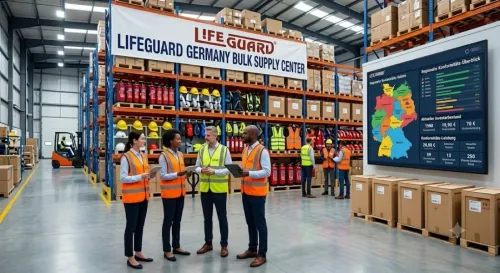
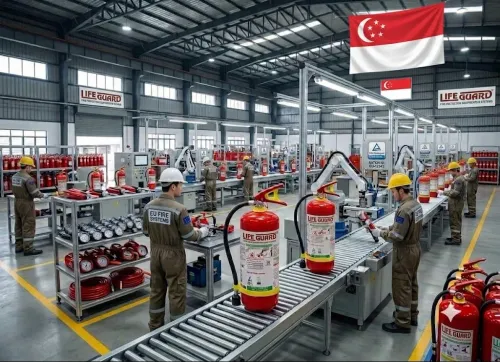
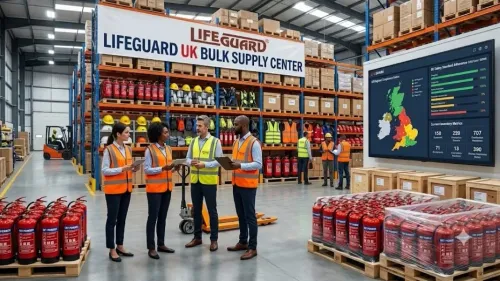
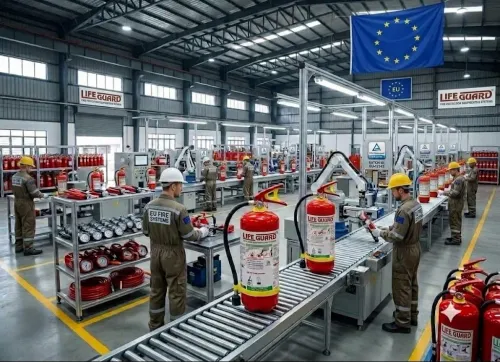
- LIFEGUARD manufacturing plant automatic fire suppression solutions India
- Automatic fire suppression equipment for industrial manufacturing plants
- Industrial machinery fire suppression system by LIFEGUARD
- Automatic gas fire suppression for manufacturing facility
- Fire protection equipment for factories in India
Recommended CTA:
Contact LIFEGUARD® today to discuss automatic fire suppression equipment for your manufacturing plant in India.
SEO publishing note: Use the primary keyword naturally in the page title, H1, opening paragraph, one or two subheadings, and meta description. Add internal links to relevant LIFEGUARD® pages for industrial fire extinguishers, gas suppression systems, fire protection equipment, and manufacturing plant fire safety solutions. Publish only product-specific certification and system capability claims that can be supported by current documentation.
Reduce repetition and tighten the copyAdd a clearer lead-generation CTA
Keywords