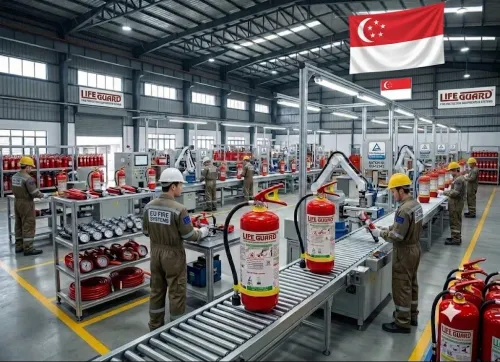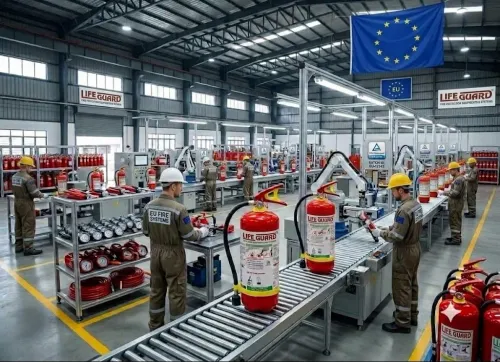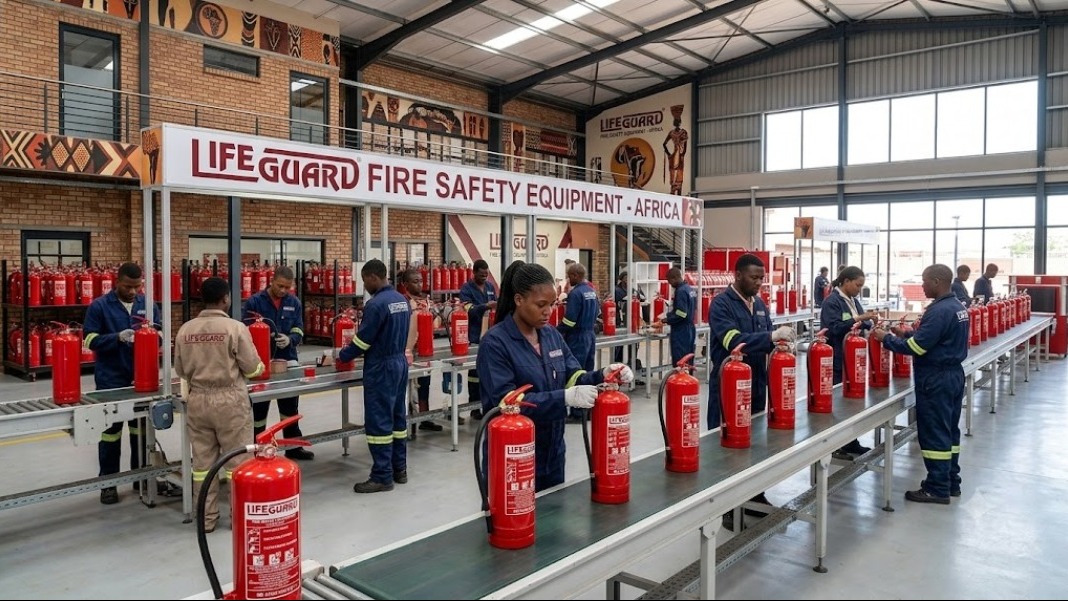
Manufacturing Plant Automatic Fire Suppression System Supplier in Africa | LIFEGUARD®
Advanced Automatic Fire Suppression Solutions for Manufacturing Plants Across Africa
Manufacturing plants are the backbone of industrial development across Africa, supporting sectors such as automotive, pharmaceuticals, food processing, textiles, chemicals, mining, oil and gas, cement, power generation, electronics, and heavy engineering. As industrial operations become increasingly automated and production facilities expand, the need for reliable fire prevention, early detection, and automatic fire suppression systems becomes more important than ever.
Fire incidents involving electrical control panels, industrial machinery, production lines, flammable liquids, hydraulic systems, conveyor equipment, battery installations, and enclosed technical spaces can cause serious injuries, equipment damage, production interruptions, and financial losses. An appropriately designed automatic fire suppression system helps control identified fire hazards and can reduce the consequences of an incident when integrated with suitable detection, alarms, emergency procedures, and other fire protection measures.
LIFEGUARD®, a fire safety brand manufactured by United Fire Equipments Pvt. Ltd. (UFEPL), provides fire safety equipment and supports industrial fire protection requirements. For manufacturing plants across African markets, LIFEGUARD® can be approached to discuss suitable automatic fire suppression solutions, fire extinguishers, and application-specific firefighting equipment, subject to project requirements, product availability, and local regulatory approvals.
As an automatic fire suppression supplier for manufacturing plant projects, LIFEGUARD® aims to help industrial buyers, EPC contractors, engineering consultants, project developers, and facility management teams evaluate suitable fire protection equipment for their operational environments.
Why Manufacturing Plants in Africa Need Automatic Fire Suppression Systems
Manufacturing facilities contain a combination of ignition sources, combustible materials, electrical infrastructure, high-temperature processes, and valuable machinery. In some areas, a fire can develop rapidly before personnel can reach the affected equipment with a portable extinguisher.
Automatic fire suppression systems are designed to respond to specified fire conditions through compatible detection and control arrangements. Depending on the system, suppression may be activated automatically when a suitable detection device identifies a fire or when an approved releasing mechanism operates.
Key reasons to consider automatic suppression include:
- Rapid response to detected fire conditions: An appropriately designed system can initiate suppression without requiring someone to manually operate a portable extinguisher.
- Protection of critical industrial equipment: Localized systems may protect selected machinery, electrical enclosures, and other high-value assets.
- Reduced operational disruption: Early intervention may limit damage and help reduce downtime, although outcomes depend on the incident and system performance.
- Protection of selected enclosed spaces: Specialized suppression systems can be designed for compatible electrical rooms, control rooms, and equipment enclosures.
- Integration with other fire protection measures: Automatic suppression can work alongside detection, alarms, emergency shutdowns, and facility emergency response procedures.
- Support for industrial risk management: Properly selected systems can form part of a broader strategy for worker safety, asset protection, and business continuity.
Automatic suppression does not eliminate every fire risk or replace the need for evacuation, emergency response, maintenance, and other required fire protection systems.
LIFEGUARD® — Automatic Fire Suppression Supplier for Industrial Applications
United Fire Equipments Pvt. Ltd. manufactures LIFEGUARD® fire safety equipment and has been active in the fire safety industry since 1991. The company offers firefighting products for industrial and institutional applications and supports enquiries involving different fire protection requirements.
For African manufacturing projects, buyers can discuss automatic fire suppression requirements for suitable applications, including machinery protection, electrical installations, technical rooms, industrial production facilities, and other identified fire hazards.
The selection of an automatic fire suppression system should be based on the protected hazard, enclosure dimensions, operating conditions, fire detection requirements, suppression agent compatibility, environmental considerations, and the standards applicable in the destination country.
Types of Automatic Fire Suppression Systems for Manufacturing Plants
1. Automatic Clean Agent Fire Suppression Systems
Clean agent suppression systems are commonly considered for suitable enclosed spaces containing sensitive electrical or electronic equipment. Depending on the agent and system design, they can suppress fires without leaving the type of solid residue associated with dry chemical powder.
Potential applications include:
- Electrical control rooms.
- Server and data rooms.
- Instrumentation and automation rooms.
- Selected electrical equipment enclosures.
- Critical electronic installations.
- Other compatible enclosed technical spaces.
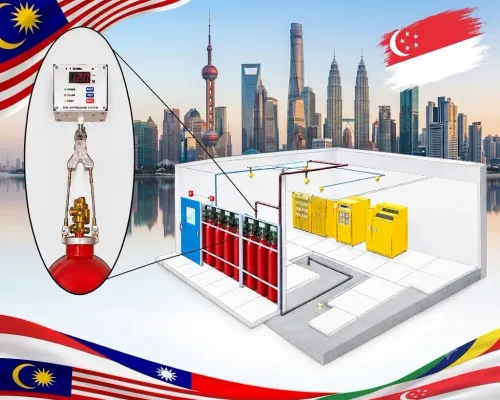
Clean agent systems may use an approved gaseous agent and a designed network of cylinders, piping, discharge nozzles, detection equipment, control panels, and release mechanisms.
LIFEGUARD® works as an authorized channel partner for Kidde gas suppression solutions in India. African project enquiries involving specific gas suppression products, including FK-5-1-12 systems, should be evaluated individually to confirm supply eligibility, technical compatibility, certification, and local installation support.
Clean agent systems must be designed according to applicable standards, including appropriate enclosure integrity, occupant safety, warning arrangements, ventilation controls, and post-discharge procedures.
2. Automatic Dry Chemical Fire Suppression Systems
Dry chemical suppression systems may be suitable for selected industrial hazards involving flammable liquids, gases, and other combustible materials, depending on the agent, system approval, and application.
Potential applications include certain process machines, specialized equipment enclosures, and designated industrial hazards where the selected dry chemical agent is compatible.
The design should account for the required agent quantity, discharge coverage, nozzle positioning, detection method, and potential effects of powder on machinery, electronics, production materials, and personnel.
Dry chemical systems are not universally suitable for all manufacturing equipment. Their use should be based on a documented hazard assessment.
3. Automatic Foam Fire Suppression Systems
Foam-based suppression may be appropriate for certain hazards involving flammable liquids and hydrocarbon-related processes. Depending on the application, a system may use foam concentrate, water, proportioning equipment, discharge devices, and suitable detection or release controls.
Possible applications include selected fuel handling areas, liquid storage installations, and industrial process zones.
The type of foam concentrate, discharge method, environmental restrictions, fire classification, and system design must be evaluated carefully. Foam should not be assumed suitable for every chemical, electrical hazard, or liquid fire scenario.
4. Automatic Water-Based Fire Suppression Systems
Water-based systems, including automatic sprinklers and specialized water spray or water mist installations, are widely used for suitable building and industrial fire hazards.
They may be considered for compatible production areas, warehouses, selected machinery, and other locations where the fire risk assessment and applicable codes support their use.
System selection must consider the materials involved, equipment sensitivity, water availability, drainage, electrical hazards, and the required fire performance. Water-based suppression should not be applied indiscriminately to fires involving incompatible chemicals or equipment.
5. Automatic Fire Suppression for Industrial Machinery
Industrial machinery can contain hydraulic oil, lubricants, combustible deposits, electrical components, and heated surfaces that create localized fire hazards.
Depending on the machinery and risk profile, a dedicated suppression arrangement may be considered for:
- CNC machines and machining centres.
- Industrial process machinery.
- Hydraulic power units.
- Selected conveyor systems.
- Enclosed production equipment.
- Specialized manufacturing installations.
A machinery protection system may incorporate compatible fire detection, an automatic releasing mechanism, suppression agent storage, discharge nozzles, and interfaces with machine shutdown controls.
The design must account for the machine's geometry, ventilation, operating temperature, potential fire scenarios, and the consequences of an unwanted discharge.
6. Automatic Fire Suppression for Electrical Panels and Control Cabinets
Electrical distribution boards, motor control centres, switchgear, and automation cabinets may contain ignition sources that threaten nearby equipment and production operations.
Depending on the enclosure and the fire risk assessment, a localized automatic suppression system may be considered to protect selected electrical panels or control cabinets.
Important design considerations include:
- The dimensions and internal layout of the enclosure.
- The selected detection and suppression technology.
- Compatibility with energized electrical equipment.
- The effects of discharge on sensitive components.
- Alarm transmission and equipment shutdown interfaces.
- Inspection, testing, and maintenance requirements.
A localized cabinet system is not a substitute for the building's required fire detection, sprinkler, hydrant, or other fixed fire protection provisions.
Automatic Fire Suppression for Different Manufacturing Industries in Africa
Automotive and Automotive Component Manufacturing
Automotive factories may involve welding, paint application, lubricants, hydraulic equipment, electrical systems, and battery-powered production equipment. Automatic suppression may be considered for selected machines, paint-related hazards, control cabinets, and other identified risks.
The system must be suitable for the actual fuel and ignition sources present in each protected area.
Chemical and Pharmaceutical Manufacturing
Chemical and pharmaceutical facilities may handle solvents, combustible liquids, reactive materials, powders, and specialized process chemicals. These environments require detailed hazard assessments before selecting a suppression agent.
Potential protection measures may include compatible fixed suppression, process-specific detection, emergency shutdown systems, and suitable portable firefighting equipment.
Food Processing and Beverage Manufacturing
Food manufacturing plants can contain packaging materials, heating equipment, electrical installations, refrigeration systems, cooking processes, and combustible dust hazards.
Automatic suppression requirements should be determined by the actual operation. Specialized cooking oil protection, dust hazard controls, sprinklers, or localized machinery protection may be necessary in particular circumstances.
Textile, Paper, and Packaging Manufacturing
Textile mills, paper processing units, and packaging facilities can contain significant quantities of combustible materials. Automatic fire protection may include appropriate detection, sprinklers, compartmentation, and other engineered systems.
Localized suppression may also be considered for selected machinery and equipment where justified by the risk assessment.
Electronics and Electrical Equipment Manufacturing
Electronics manufacturing facilities may contain sensitive equipment, automation systems, electrical cabinets, and enclosed technical rooms. Suitable detection and clean agent suppression can be evaluated for compatible applications.
The design must consider occupancy, enclosure integrity, ventilation, agent concentration, and the protection of personnel during discharge.
Mining-Related Manufacturing and Heavy Engineering
Heavy engineering and mining-related industrial operations may involve hydraulic oil, lubricants, electrical machinery, conveyors, motors, and high-temperature equipment.
Depending on the application, automatic suppression may be considered for selected equipment and localized hazards. Environmental conditions such as dust, vibration, heat, and corrosion should be included in equipment selection and maintenance planning.
Key Components of an Automatic Fire Suppression System
A complete automatic suppression installation may include several coordinated components, depending on the selected technology and protected hazard.
Fire detection devices: Identify specified fire conditions through suitable smoke, heat, flame, or other approved detection technologies.
Control and releasing panel: Processes detection signals and operates the approved suppression release sequence.
Suppression agent storage: Contains the approved extinguishing agent in the required quantity and configuration.
Piping and discharge nozzles: Deliver and distribute the agent within the protected area according to the engineered design.
Alarm and warning devices: Notify personnel of detected fire conditions and, where applicable, impending suppression discharge.
Equipment shutdown interfaces: Initiate approved shutdown or isolation functions where required by the system design.
Monitoring and maintenance provisions: Support inspection, testing, servicing, and fault identification.
Not every system uses all these components in the same configuration. The exact arrangement depends on the technology, protected enclosure, applicable standard, and project specifications.
How to Select an Automatic Fire Suppression Supplier for an African Manufacturing Plant
Selecting a supplier involves more than comparing equipment prices. Industrial buyers should evaluate technical suitability, documentation, regulatory compliance, installation arrangements, and long-term servicing.
1. Assess the Actual Fire Hazard
Identify combustible materials, ignition sources, machinery, enclosure conditions, occupancy, and the potential consequences of a fire.
2. Confirm the Suppression Technology
Choose the suppression method according to the identified fire risk. Clean agents, dry chemicals, foam, water-based systems, and specialized technologies have different capabilities and limitations.
3. Verify Product Standards and Certification
Review applicable product approvals, test reports, certification documents, and national regulatory requirements. Check the exact model and configuration rather than relying only on general company credentials.
4. Review Engineering and System Design
Confirm that the proposed system has been designed by qualified professionals for the protected hazard. Review agent quantity, detection arrangements, discharge coverage, enclosure requirements, occupant safety, and control interfaces.
5. Establish Installation and Maintenance Arrangements
Confirm who will undertake installation, commissioning, periodic inspection, cylinder servicing, refilling, replacement of components, and emergency support in the destination country.
6. Evaluate Export and Logistics Requirements
African destinations may have different customs procedures, import documentation, conformity requirements, and local standards. Confirm the delivery terms, lead times, documentation, and local support arrangements before placing an order.
Why Consider LIFEGUARD® for Manufacturing Plant Fire Suppression Requirements?
LIFEGUARD® combines a fire safety product portfolio with manufacturing experience through United Fire Equipments Pvt. Ltd. For industrial procurement teams, the company can be approached to discuss equipment selection and potential supply arrangements for manufacturing plant fire safety projects.
Key considerations include:
- Fire safety manufacturing experience dating to 1991.
- A range of firefighting equipment for industrial applications.
- Product-specific technical documentation, subject to availability.
- Support for evaluating suitable suppression technologies.
- Experience with industrial and institutional fire protection requirements.
- Enquiries for potential international supply, subject to destination-country requirements.
UFEPL has identified ISO 9001:2015 and ISO 45001:2018 certifications and multiple BIS licences among its company credentials. Buyers should verify the validity and scope of relevant certifications, as well as product-specific approvals, before procurement.
The availability of local installation, commissioning, and after-sales services in a particular African country must be confirmed separately.
African Markets for Manufacturing Plant Automatic Fire Suppression
LIFEGUARD® can be approached regarding automatic fire suppression equipment requirements associated with industrial projects in markets such as:
- South Africa: Industrial manufacturing, automotive production, mining-related operations, and warehousing.
- Nigeria: Industrial processing, consumer goods manufacturing, and oil and gas-related facilities.
- Kenya: Manufacturing, food processing, industrial parks, and logistics centres.
- Ghana: Manufacturing, industrial processing, and mining-related infrastructure.
- Egypt: Textiles, chemicals, food processing, and heavy industry.
- Morocco: Automotive components, industrial assembly, and manufacturing estates.
- Tanzania: Industrial processing, manufacturing, and storage facilities.
- Ethiopia: Textile manufacturing, industrial parks, and light engineering.
These countries represent potential target markets for industrial enquiries, not a claim that LIFEGUARD® maintains a local office or authorised distributor in every listed country. Product availability, applicable approvals, export arrangements, and service coverage should be confirmed for each project.
Frequently Asked Questions
What is an automatic fire suppression system for a manufacturing plant?
An automatic fire suppression system is a fixed or localized arrangement designed to detect specified fire conditions and discharge an extinguishing agent through an approved mechanism. Depending on the technology, it can protect selected machinery, enclosures, process hazards, or larger areas.
Which automatic fire suppression system is best for a manufacturing plant?
There is no single system suitable for every plant. Clean agents may be considered for compatible enclosed electronic spaces, while water-based systems, foam, dry chemicals, or specialized suppression may be appropriate for other hazards. A qualified fire risk assessment should determine the selection.
Can automatic fire suppression protect electrical panels?
Yes, suitable localized suppression systems may protect selected electrical cabinets and control panels. The system must be compatible with the enclosure, equipment, fire hazards, and applicable safety requirements.
Can LIFEGUARD® supply automatic fire suppression equipment to Africa?
African project enquiries can be discussed with United Fire Equipments Pvt. Ltd. Actual supply depends on product availability, export arrangements, destination-country regulations, project specifications, and any required local approvals.
What documents should buyers request from an automatic suppression supplier?
Depending on the project, buyers may require product datasheets, system design documents, approved drawings, test certificates, product approvals, installation requirements, operation and maintenance manuals, and inspection or commissioning records.
Does automatic suppression eliminate the need for fire extinguishers?
No. Automatic suppression systems are part of a wider fire protection strategy. Suitable portable extinguishers, detection and alarms, evacuation arrangements, fire access, and other required systems may still be necessary.
How can an African manufacturing plant request a quotation?
Provide the destination country, manufacturing process, protected equipment or area, approximate enclosure dimensions, preferred technology if specified, applicable standards, quantity, project schedule, and relevant drawings. These details help establish the technical and commercial requirements for further evaluation.
Contact LIFEGUARD® for Automatic Fire Suppression Enquiries in Africa
United Fire Equipments Pvt. Ltd. manufactures LIFEGUARD® fire safety equipment for industrial and institutional applications. Manufacturing companies, EPC contractors, project consultants, distributors, and industrial procurement teams can contact the company to discuss automatic fire suppression requirements and potential supply arrangements for African projects.
United Fire Equipments Pvt. Ltd. (UFEPL)
Brand: LIFEGUARD®
Manufacturer of ISI Certified Fire Safety Equipment
Phone: 8048034226
Email: ufe126@gmail.com | info@lifeguardindia.in
Website: www.lifeguardindia.in
Factory Address:
B-38, Mangolpuri Industrial Area, Phase-II, New Delhi – 110034, India.
Corporate Office:
K-960, LIFEGUARD Tower, Rithala, Opposite SBI, Rohini, New Delhi – 110085, India.
Contact LIFEGUARD® to discuss automatic fire suppression equipment, industrial fire safety products, technical specifications, and export possibilities for manufacturing plants across Africa.
SEO Metadata
SEO Title: Manufacturing Plant Automatic Fire Suppression Supplier Africa | LIFEGUARD®
Meta Description: Looking for a manufacturing plant automatic fire suppression supplier in Africa? Explore LIFEGUARD® industrial fire suppression solutions and firefighting equipment from United Fire Equipments Pvt. Ltd.
Suggested URL Slug:
/manufacturing-plant-automatic-fire-suppression-supplier-africa/
Primary SEO Keyword:
Manufacturing Plant Automatic Fire Suppression Supplier Africa
Secondary SEO Keywords:
- Automatic fire suppression supplier Africa
- Manufacturing plant fire suppression systems Africa
- Industrial automatic fire suppression company Africa
- Factory fire suppression equipment supplier Africa
- Automatic fire extinguishing systems for manufacturing plants
- Industrial fire suppression solutions Africa
- Automatic gas suppression systems for factories
- Electrical panel fire suppression systems
- Machinery fire suppression systems
- Industrial fire protection equipment supplier Africa
- Manufacturing plant fire safety company Africa
- Fire suppression system exporter for African industries
Suggested Image Alt Text:
LIFEGUARD® automatic fire suppression solutions for manufacturing plants and industrial facilities across Africa.
Recommended Internal Links:
- Industrial Fire Suppression Systems
- Clean Agent Fire Suppression Systems
- CO₂ Fire Extinguishers
- ABC Dry Powder Fire Extinguishers
- Industrial Fire Protection Equipment
- Fire Safety Equipment for Manufacturing Plants
- Contact LIFEGUARD®
SEO Strategy: Publish this as a dedicated Africa-focused landing page and link it to relevant product pages. Create additional country-specific pages only when they provide useful local information, such as applicable fire safety requirements, relevant industries, export arrangements, and confirmed service availability. Keep product certification and regional service claims accurate, and avoid keyword stuffing.
Tighten the page for SEO and conversionsAdd a stronger quotation-focused call to action
Keywords