Manufacturing Plant Fire Safety Equipment System Provider in Europe | LIFEGUARD®
Comprehensive Fire Safety and Fire Protection Systems for European Manufacturing Plants
Manufacturing plants are complex industrial environments where fire safety is essential for protecting employees, machinery, production lines, raw materials, finished goods, and business continuity. From automotive manufacturing and pharmaceutical production to chemical processing, electronics assembly, food processing, metalworking, and industrial warehousing, every facility requires a fire protection strategy tailored to its specific operational risks.
LIFEGUARD®, manufactured by United Fire Equipments Pvt. Ltd. (UFEPL), provides a portfolio of fire safety equipment and fire protection solutions for industrial applications. As a potential fire safety equipment system provider for manufacturing plants across Europe, LIFEGUARD® supports enquiries from industrial operators, EPC contractors, engineering consultants, fire protection companies, system integrators, distributors, and procurement teams seeking suitable firefighting equipment and integrated fire protection solutions.
Our approach focuses on the selection of appropriate fire extinguishers, specialized firefighting equipment, fire suppression systems, and related safety products according to the requirements of individual projects. By combining manufacturing experience with product-oriented support and system integration capabilities, LIFEGUARD® aims to help businesses develop effective fire safety arrangements for manufacturing and industrial facilities.
Whether a project involves a new manufacturing plant, an industrial expansion, a machinery upgrade, or improvements to an existing fire protection infrastructure, the right combination of fire detection, firefighting equipment, suppression technology, and maintenance planning can help reduce fire-related risks and support operational resilience.
Industrial Fire Safety Equipment System Provider for European Markets
European manufacturing facilities operate across diverse regulatory, industrial, and environmental conditions. Fire protection requirements can vary according to the industry, building design, occupancy, production processes, stored materials, and applicable national regulations.
An effective fire safety system is more than a collection of extinguishers. It involves identifying potential fire hazards, determining suitable protection measures, ensuring equipment accessibility, establishing emergency response procedures, and maintaining equipment in accordance with applicable requirements.
LIFEGUARD® supports industrial fire safety enquiries involving several equipment and solution categories, including:
- Portable fire extinguishers for designated workplace hazards.
- Wheeled and trolley-mounted fire extinguishers for selected industrial applications.
- Specialized firefighting equipment for identified fire risks.
- Engineered fire suppression systems for suitable protected spaces and equipment.
- Gas-based suppression solutions for appropriate enclosed applications.
- Water-based, water mist, and foam-based firefighting equipment where product ratings support the intended use.
- Fire safety equipment for electrical rooms, machinery areas, workshops, and warehouses.
- Product documentation and procurement coordination for industrial projects.
The final system configuration should be established through a competent fire risk assessment, appropriate engineering design, and verification of the relevant product certifications and destination-country requirements.
Complete Fire Protection Solutions for Manufacturing Plants
1. Industrial Fire Extinguisher Systems
Fire extinguishers provide an important first-response measure for many manufacturing environments. Their effectiveness depends on selecting equipment with the correct extinguishing medium, fire rating, capacity, and application suitability.
LIFEGUARD® offers different fire extinguisher categories for evaluation against industrial requirements, including ABC dry chemical powder, carbon dioxide, water-based, and foam-based extinguishers, subject to model availability and applicable approvals.
Potential applications include:
- General production and assembly areas.
- Industrial maintenance workshops.
- Electrical equipment rooms, where an appropriate extinguisher is specified.
- Packaging and dispatch areas.
- Administrative buildings and staff facilities.
- Suitable flammable-liquid handling locations.
- Designated warehouse and storage areas.
A properly developed extinguisher plan considers the expected fire classes, potential ignition sources, access routes, equipment spacing, signage, and employee training. The number and placement of extinguishers should follow the applicable risk assessment and local requirements.
2. Industrial Fire Suppression Systems
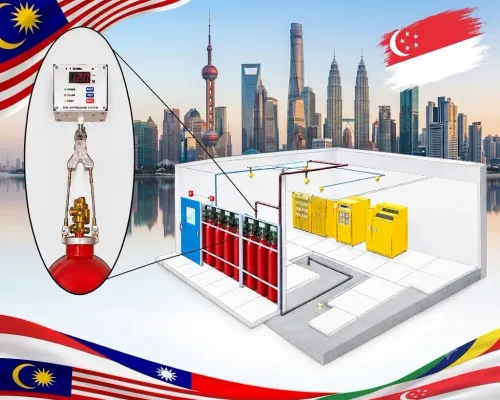
Certain manufacturing processes require more than portable firefighting equipment. Critical machinery, enclosed electrical installations, specialized production equipment, and other high-value assets may require dedicated fire suppression systems.
LIFEGUARD® supports enquiries for fire suppression solutions and system integration for suitable industrial applications.
Depending on the project's requirements, a suppression system may incorporate:
- Fire detection and initiating devices.
- A suppression control panel or suitable control arrangement.
- Agent storage cylinders or other suppression equipment.
- Piping, distribution networks, and discharge nozzles.
- Automatic or manual activation arrangements.
- Alarm and warning devices.
- Monitoring, inspection, and maintenance provisions.
The appropriate suppression technology depends on the hazard, enclosure characteristics, occupancy, ventilation, equipment configuration, and required performance.
For example, a clean-agent system may be considered for a suitable electrical or control room, while a different technology may be required for combustible materials, flammable liquids, industrial machinery, or specialized process hazards.
System design should be carried out by competent professionals in accordance with the applicable standards, product approvals, and project specifications.
3. Gas-Based Fire Suppression Solutions
Gas-based suppression systems can be suitable for certain enclosed spaces containing sensitive electronic equipment, control systems, communication infrastructure, and other critical assets.
LIFEGUARD® has an authorized channel partnership for Kidde gas suppression solutions and supports relevant system integration enquiries.
Potential applications include:
- Electrical and instrumentation rooms.
- Selected control rooms.
- Data and communication facilities.
- Suitable enclosed technical spaces.
- Critical equipment enclosures where an engineered system is appropriate.
The design must consider agent suitability, enclosure integrity, concentration requirements, discharge conditions, pressure relief, occupant safety, alarms, and emergency procedures.
European projects also require verification of applicable environmental rules, system standards, approvals, and restrictions on the particular extinguishing agent. Gas suppression should never be selected solely on the basis of equipment cost or the sensitivity of the protected equipment.
4. Wheeled and High-Capacity Fire Extinguishers
Large manufacturing facilities may contain extensive production halls, maintenance areas, industrial yards, and designated high-risk process locations.
Wheeled extinguishers can offer higher extinguishing-agent capacity than many portable units and may be appropriate where the fire risk assessment identifies a need for mobile, high-capacity equipment.
Depending on the model, options may include dry chemical powder, carbon dioxide, water mist, and foam-based firefighting equipment.
Important selection considerations include operator capability, equipment mobility, access width, storage location, fire rating, maintenance requirements, and compatibility with the anticipated hazard.
5. Electrical and Machinery Fire Protection
Modern manufacturing plants depend on electrical distribution systems, automated production equipment, industrial control panels, variable-frequency drives, robotics, and monitoring infrastructure.
Electrical faults, overheating, insulation failure, mechanical friction, and process abnormalities can contribute to fire risks.
A suitable fire protection plan may include:
- Appropriate extinguishers for designated electrical risks.
- Detection and alarm arrangements where required.
- Engineered suppression for suitable critical equipment.
- Preventive maintenance and electrical inspections.
- Emergency isolation procedures.
- Employee training and clearly identified emergency access routes.
The protection method must account for the energized or de-energized state of equipment, the materials involved, and the extinguishing medium's suitability. Water or other conductive agents must not be used on energized electrical equipment unless the equipment is specifically designed and approved for that application.
6. Fire Safety Solutions for Warehouses and Storage Facilities
Manufacturing plants often incorporate raw material stores, packaging warehouses, component storage areas, finished-goods facilities, and dispatch centres.
Storage-related fire risks depend on the nature of the stored goods, packaging materials, storage height, rack configuration, building dimensions, and the availability of fire detection and fixed suppression.
LIFEGUARD® equipment may form part of the overall firefighting arrangement, alongside appropriately engineered fixed systems where required.
A comprehensive warehouse fire protection strategy may address portable extinguishers, fire detection, sprinkler systems, access for emergency responders, emergency exits, housekeeping, and the segregation of incompatible or hazardous materials.
Fire Safety Systems for Different Manufacturing Industries Across Europe
Automotive Manufacturing Plants
Automotive manufacturing involves welding, cutting, painting, machining, assembly operations, electrical testing, and the handling of oils, coatings, and other industrial materials.
These activities create different fire hazards across the production line.
A manufacturing plant fire safety system may incorporate suitable portable extinguishers, specialized equipment for identified process hazards, suppression for selected machinery or enclosed spaces, and coordinated emergency response procedures.
Facilities manufacturing electric vehicles or handling lithium-ion batteries require additional assessment of thermal runaway, propagation between cells, toxic gases, and battery-specific incident management. Ordinary portable extinguishers should not be treated as a complete solution for every lithium-ion battery incident.
Pharmaceutical and Chemical Manufacturing
Pharmaceutical and chemical plants may handle solvents, flammable liquids, combustible packaging, reactive substances, and temperature-sensitive materials.
Fire protection planning should account for process hazards, chemical compatibility, ventilation, hazardous-area classification, storage conditions, and the potential consequences of a fire.
Depending on the process, suitable portable extinguishers may be supplemented by specialized detection, engineered suppression, and other fixed fire protection systems.
The choice of equipment must be based on the actual substances present and the facility's applicable process safety requirements.
Electronics and Semiconductor Manufacturing
Electronics and semiconductor facilities may contain sensitive production equipment, cleanrooms, control systems, testing laboratories, and electrical infrastructure.
Fire protection planning must balance effective suppression with the risk of equipment contamination, production disruption, and damage to sensitive components.
Appropriate solutions may include suitable portable extinguishers, early detection, and engineered suppression systems for selected enclosed spaces. Clean-agent or other specialized systems must be selected according to the specific hazard and applicable safety requirements.
Food Processing and Packaging Plants
Food processing facilities may involve industrial ovens, cooking equipment, refrigeration systems, conveyors, packaging machinery, electrical installations, and combustible packaging materials.
The fire protection strategy should consider the particular production process, combustible materials, cooking-related hazards, and the potential effects of an incident on food safety and business continuity.
Equipment selection should be based on a detailed assessment rather than applying the same extinguisher or suppression system throughout the entire facility.
Steel, Metalworking, and Heavy Engineering
Heavy industrial facilities may involve welding, cutting, machining oils, lubricants, electrical installations, and high-temperature processes.
Protection should distinguish between ordinary combustible materials, flammable liquids, energized equipment, and combustible-metal hazards. Certain combustible metals require specialized extinguishing agents and procedures.
LIFEGUARD® equipment can be evaluated for suitable applications as part of an integrated industrial fire protection plan.
Plastics, Rubber, and Packaging Manufacturing
Plastics, rubber, and packaging production can involve combustible raw materials, heated machinery, processing equipment, dust, and substantial quantities of stored finished goods.
The fire risk assessment should examine ignition sources, combustible dust where present, storage conditions, ventilation, machinery protection, and fire spread between production and storage areas.
Appropriate firefighting equipment and engineered protection should be selected according to the actual process and relevant regulations.
European Fire Safety Standards and Compliance
For manufacturing plants in Europe, compliance is a fundamental consideration in selecting fire safety equipment and designing suppression systems.
The exact requirements depend on the product category, intended use, destination country, applicable legislation, and project specification.
Relevant standards may include:
- EN 3: Portable fire extinguishers.
- EN 1866: Mobile fire extinguishers.
- EN 54 series: Fire detection and fire alarm system components.
- EN 15004 series: Certain gaseous fire-extinguishing systems.
- EN 13565 series: Certain fixed firefighting foam systems.
- Applicable European Union legislation: Including product-specific conformity assessment and CE marking requirements where relevant.
- National fire safety and building regulations: Including installation, inspection, maintenance, and authority requirements.
These are examples of potentially relevant standards and are not a claim that every LIFEGUARD® product complies with all the standards listed.
European buyers should verify the exact product model, applicable standard edition, test results, declarations of conformity, required third-party certification, and any country-specific approval before procurement.
An Indian ISI mark or an ISO management-system certificate does not automatically establish compliance with European product requirements. Compliance must be demonstrated for the particular equipment and intended application.
Fire Risk Assessment and System Selection for Manufacturing Plants
An effective fire safety arrangement begins with understanding the risks within the facility.
Step 1: Identify Fire Hazards
Review production processes, electrical equipment, flammable liquids, combustible materials, storage locations, hot work, machinery, and potential ignition sources.
Step 2: Determine Protection Requirements
Identify the appropriate combination of portable extinguishers, fixed firefighting systems, detection and alarms, and specialized suppression equipment.
Step 3: Verify Product Suitability
Confirm fire ratings, operating conditions, agent compatibility, certifications, installation requirements, and the intended application.
Step 4: Integrate Equipment into the Facility
Ensure that firefighting equipment and suppression systems are appropriately positioned and integrated with the building layout, emergency procedures, and other relevant safety systems.
Step 5: Establish Inspection and Maintenance
Plan inspection, testing, servicing, replacement, documentation, and employee training in accordance with the applicable standards and manufacturer instructions.
Step 6: Review and Improve
Reassess fire protection arrangements when production processes change, new machinery is installed, materials change, or the facility is expanded.
This structured approach helps businesses select equipment that reflects actual industrial hazards rather than relying on a one-size-fits-all solution.
Why Choose LIFEGUARD® as a Manufacturing Plant Fire Safety Equipment System Provider?
LIFEGUARD® is a fire safety equipment brand manufactured by United Fire Equipments Pvt. Ltd. (UFEPL), an Indian manufacturer operating in the fire safety sector since 1991.
The company has communicated ISO 9001:2015 and ISO 45001:2018 management-system credentials and multiple BIS licences for applicable products. Its portfolio includes fire extinguishers and other firefighting equipment, while its business capabilities include fire suppression system integration and an authorized channel partnership for Kidde gas suppression solutions.
Potential advantages for industrial customers and project partners include:
- Broad equipment portfolio: Multiple fire extinguisher categories and specialized firefighting equipment for different industrial applications.
- Manufacturing experience: Experience in fire safety equipment production and industrial procurement requirements.
- System integration capabilities: Support for suitable fire suppression projects, subject to technical scope and product availability.
- Project-focused engagement: Product discussions based on application, specifications, quantity, and destination-market requirements.
- Technical documentation: Availability of relevant product literature and supporting documents, subject to the model and approvals.
- International business enquiries: Coordination with distributors, importers, EPC contractors, and industrial procurement teams.
- Long-term partnership opportunities: Potential cooperation for industrial supply, distribution, and suitable OEM requirements.
Product certification, export availability, delivery schedules, local service arrangements, and system engineering responsibilities should be confirmed individually for each project.
Fire Safety Equipment Procurement for European Industrial Projects
European industrial customers typically require clear technical specifications and documented compliance before placing an order.
To help evaluate an appropriate solution, buyers can provide:
- Manufacturing industry and facility location.
- Type of fire hazard or equipment to be protected.
- Required extinguisher types, suppression technologies, or product categories.
- Applicable EN standards, approvals, and project specifications.
- Required quantities and expected delivery schedule.
- OEM, private-label, or standard LIFEGUARD® branding requirements.
- Required technical documents and inspection records.
- Installation, commissioning, and after-sales service expectations.
This information helps establish the scope of supply and identify the documentation needed to evaluate the proposed equipment for the European market.
Frequently Asked Questions
1. Who provides fire safety equipment systems for manufacturing plants in Europe?
Industrial fire safety systems can be supplied and integrated by qualified manufacturers, specialist contractors, and fire protection system integrators. LIFEGUARD®, manufactured by United Fire Equipments Pvt. Ltd. in India, welcomes enquiries concerning suitable firefighting equipment, suppression solutions, and industrial project requirements for European markets.
2. What fire safety equipment is required for a manufacturing plant?
Requirements depend on the facility's fire risk assessment. Equipment may include portable and wheeled fire extinguishers, detection and alarm systems, sprinkler installations, specialized suppression systems, emergency signage, and other protective measures. Not every facility requires every type of equipment.
3. Does LIFEGUARD® provide complete fire suppression systems?
LIFEGUARD® supports fire suppression system integration and enquiries for appropriate gas-based suppression solutions through its authorized channel partnership arrangements. The precise scope of supply, engineering, installation, commissioning, and maintenance must be confirmed for each project.
4. Are LIFEGUARD® products suitable for European markets?
Suitability depends on the specific product, intended use, applicable European legislation, standards, and destination-country requirements. Buyers should obtain and verify the documentation applicable to each model before ordering.
5. Can LIFEGUARD® support EPC contractors and industrial consultants?
LIFEGUARD® welcomes enquiries from EPC contractors, engineering consultants, system integrators, distributors, and industrial procurement teams seeking suitable firefighting equipment or suppression solutions. Project requirements and commercial arrangements can be discussed directly.
6. How do I choose the right fire suppression system for a manufacturing plant?
The selection should consider the materials involved, process conditions, enclosure characteristics, occupancy, equipment sensitivity, fire development scenarios, environmental requirements, and applicable standards. A competent fire protection engineer should determine the appropriate system design.
7. Can European distributors discuss OEM or private-label arrangements?
Yes, prospective partners can enquire about OEM and private-label possibilities. Feasibility depends on the product, order quantity, technical specifications, branding requirements, and applicable certification and conformity obligations.
Contact LIFEGUARD® for Manufacturing Plant Fire Safety Solutions in Europe
Protecting a manufacturing plant requires a coordinated approach to fire prevention, detection, firefighting equipment, suppression systems, employee training, and ongoing maintenance.
LIFEGUARD® invites European industrial businesses, distributors, EPC contractors, engineering consultants, and procurement organizations to discuss their requirements for manufacturing plant fire safety equipment and industrial fire protection solutions.
Whether you are planning a new industrial facility, upgrading existing protection, sourcing fire extinguishers, or evaluating suitable suppression technologies, our team welcomes enquiries for product information, technical documentation, and potential supply arrangements.
United Fire Equipments Pvt. Ltd. (UFEPL)
LIFEGUARD® – Manufacturer of ISI-Certified Fire Safety Equipment
Phone: 8048034226
Email: ufe126@gmail.com | info@lifeguardindia.in
Website: www.lifeguardindia.in
Factory Address: B-38, Mangolpuri Industrial Area, Phase-II, New Delhi – 110034, India.
LIFEGUARD® – Fire Safety Equipment and System Integration Solutions for Manufacturing Plants and Industrial Applications Across Europe.
SEO Metadata for the LIFEGUARD® Website
SEO Title: Manufacturing Plant Fire Safety Equipment System Provider Europe | LIFEGUARD®
Meta Description: Explore LIFEGUARD® fire safety equipment and suppression solutions for manufacturing plants in Europe. Contact UFEPL for industrial fire protection and project enquiries.
Suggested URL Slug:
/manufacturing-plant-fire-safety-equipment-system-provider-europe/
Primary Focus Keyword:
Manufacturing Plant Fire Safety Equipment System Provider Europe
Secondary Keywords:
- Manufacturing plant fire safety system provider Europe
- Industrial fire protection system provider Europe
- Manufacturing plant fire suppression system Europe
- Industrial fire safety equipment supplier Europe
- Factory fire protection equipment Europe
- Industrial fire extinguisher manufacturer Europe
- Fire suppression system integrator for manufacturing plants
- Fire safety solutions for European factories
- Industrial firefighting equipment for manufacturing plants
- Manufacturing plant fire protection solutions Europe
Suggested H1: Manufacturing Plant Fire Safety Equipment System Provider in Europe
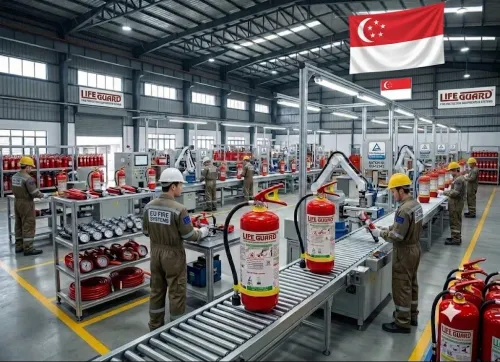
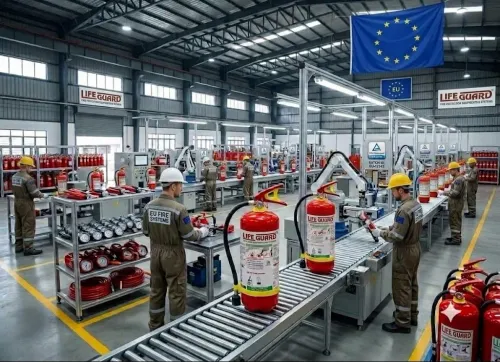
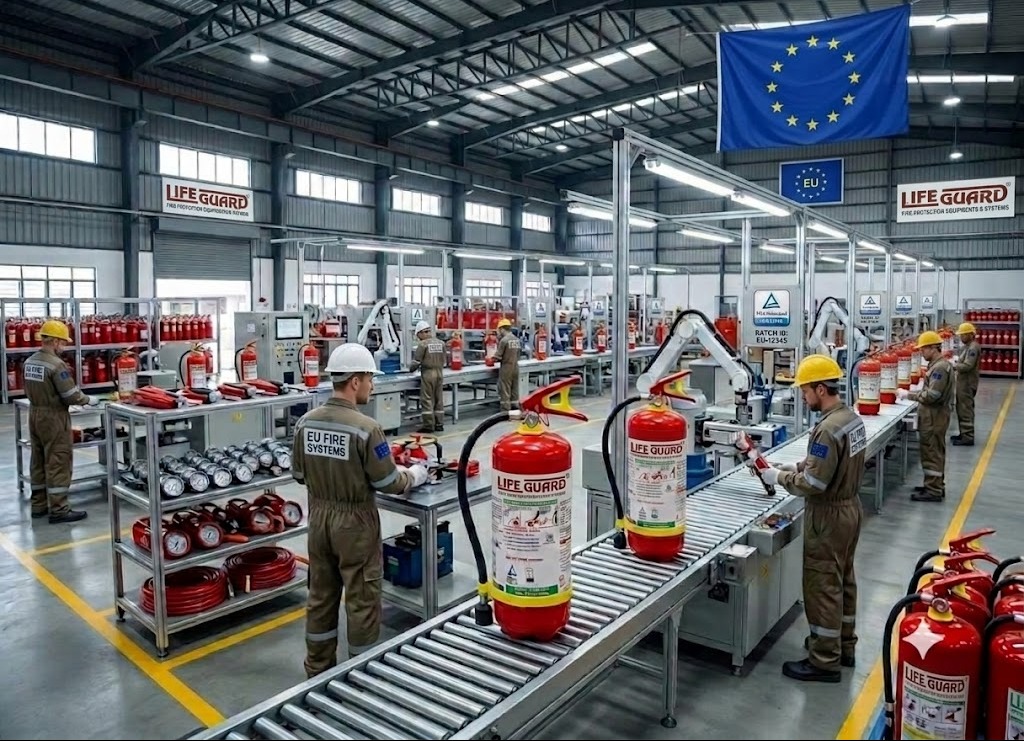
Suggested Image Alt Text: LIFEGUARD® fire safety equipment and fire suppression solutions for manufacturing plants and industrial facilities in Europe.
Recommended Internal Links:
- Industrial Fire Extinguishers
- Industrial Fire Suppression Systems
- Fire Protection Equipment
- Fire Safety Equipment Manufacturer
- Gas-Based Fire Suppression Solutions
- Fire Safety Solutions for Factories
- Contact LIFEGUARD®
SEO Strategy Recommendation: Build this page as a dedicated European industrial fire safety landing page. Link it to relevant product and suppression-system pages, use accurate product-specific certification information, and develop separate country-focused pages only where they provide meaningful local information. Avoid unsupported claims of European certification, offices, installation services, or established distribution networks.
Tighten my page for stronger SEOAdd a clearer European buyer CTA
Keywords