
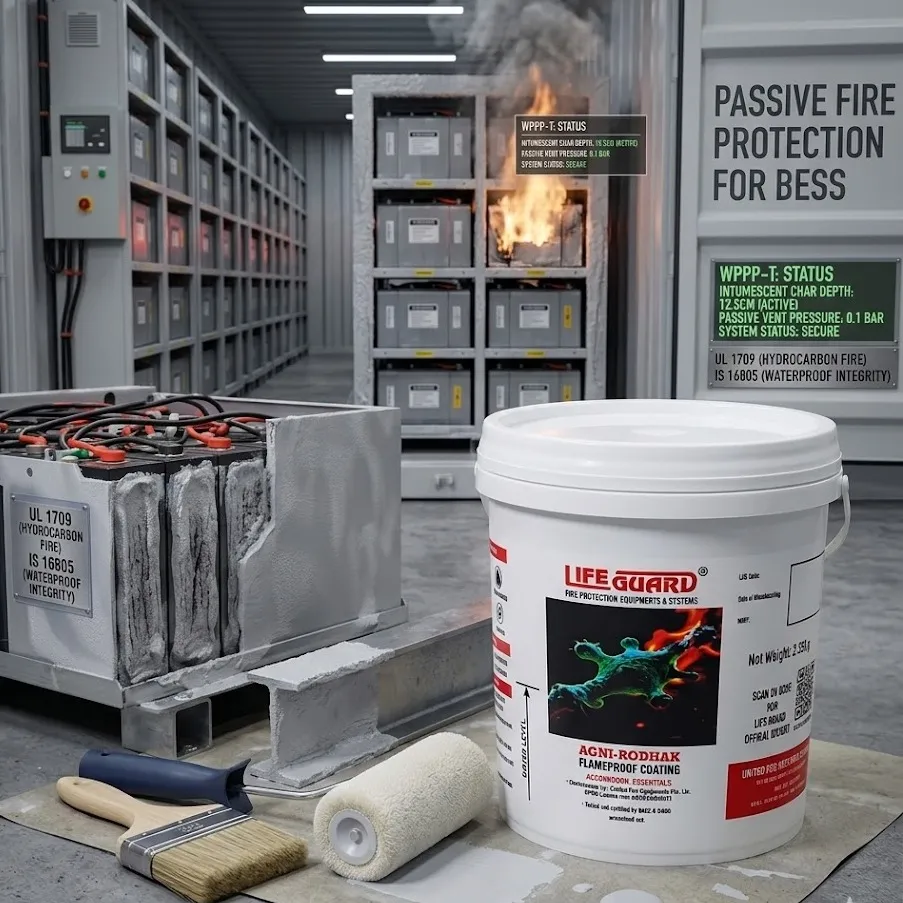
Passive Fire Protection for Battery Energy Storage Systems
Battery Energy Storage Systems (BESS) are rapidly transforming the global energy sector by supporting renewable energy integration, grid stability, industrial backup power, and electric mobility infrastructure. However, as lithium-ion battery systems become larger and more energy-dense, the risk of thermal runaway, battery fires, overheating, and explosion hazards also increases significantly.
To ensure operational safety and long-term reliability, passive fire protection for Battery Energy Storage Systems has become an essential part of modern energy infrastructure design. Advanced passive fire protection systems help contain fires, reduce thermal propagation, protect adjacent battery modules, and improve structural resilience during high-temperature incidents.
As India accelerates investments in renewable energy, electric vehicles, and energy storage projects, the demand for advanced BESS passive fire protection solutions continues to grow rapidly.
What is Passive Fire Protection for Battery Energy Storage Systems?
Passive fire protection (PFP) refers to integrated fire-resistant systems and materials designed to:
- Contain fire and heat
- Delay fire spread
- Protect structural components
- Reduce thermal transfer
- Improve evacuation safety
- Minimize infrastructure damage
Unlike active fire protection systems such as sprinklers or suppression units, passive fire protection systems remain continuously operational and automatically respond during fire exposure without external activation.
In Battery Energy Storage Systems, passive fire protection solutions are specifically engineered to address:
- Thermal runaway
- Battery fire propagation
- High heat release
- Structural fire resistance
- Electrical fire hazards
Understanding Thermal Runaway in BESS
Thermal runaway is one of the most critical fire risks associated with lithium-ion batteries. It occurs when excessive heat inside a battery cell triggers uncontrollable chemical reactions, leading to:
- Rapid temperature increase
- Fire ignition
- Explosion risk
- Toxic gas release
- Fire spread between battery modules
Thermal runaway can be caused by:
- Overcharging
- Internal short circuits
- Mechanical damage
- Manufacturing defects
- External heat exposure
- Electrical system failures
Because BESS installations often contain large numbers of densely packed battery cells, fire incidents can escalate rapidly without adequate passive protection systems.
Importance of Passive Fire Protection in BESS Facilities
Passive fire protection systems are critical for:
- Thermal containment
- Fire compartmentation
- Structural integrity
- Equipment protection
- Operational continuity
- Regulatory compliance
Modern BESS facilities require advanced fire-resistant materials capable of handling prolonged high-temperature exposure and limiting fire propagation between battery compartments.
Key Components of Passive Fire Protection for BESS
Thermal Runaway Barriers
Thermal barriers reduce heat transfer between battery modules and help prevent cascading thermal failures.
Fire Compartmentation Systems
Fire compartmentation systems divide battery storage areas into isolated fire-resistant zones to contain fire spread.
Fire Retardant Coatings
Specialized fire retardant coatings protect:
- Battery enclosures
- Structural steel
- Electrical infrastructure
- Control rooms
- Cable trays
These coatings reduce flame spread and improve overall fire endurance.
Intumescent Fireproof Coatings
Intumescent coatings expand under high temperatures to create an insulating char layer that protects structural systems and enclosures.
Structural Steel Fireproofing
Steel structures can lose strength rapidly during battery fires. Fireproofing systems help maintain structural stability under extreme heat exposure.
Cable Tray Fire Protection
Electrical cables are highly vulnerable during battery fires. Fire-resistant cable protection systems help reduce flame propagation and maintain system integrity.
High-Temperature Thermal Insulation
Advanced thermal insulation materials help minimize heat transfer and improve fire containment performance.
Features of Advanced BESS Passive Fire Protection Systems
High Fire Resistance
Engineered to withstand intense heat generated during lithium battery fires.
Thermal Insulation Performance
Reduces heat transfer between battery cells and compartments.
Low Smoke & Toxicity
Advanced materials help reduce smoke generation and toxic gas release.
Corrosion & Moisture Resistance
Suitable for indoor and outdoor energy storage environments.
Long-Term Durability
Provides reliable protection with minimal maintenance requirements.
Lightweight Fireproof Materials
Modern systems offer strong fire resistance without excessive structural load.
Waterproof Fire Protection Capability
Certain advanced coatings also provide waterproofing and environmental protection.
Applications of Passive Fire Protection in BESS
Utility-Scale Energy Storage Projects
Large renewable energy storage systems require advanced thermal containment and fire compartmentation solutions.
Solar Energy Storage Facilities
Battery storage systems supporting solar infrastructure require fire-resistant thermal management systems.
Wind Energy Storage Systems
Passive fire protection helps improve safety in renewable energy backup storage systems.
Industrial Energy Storage Installations
Factories and industrial facilities use BESS systems for backup power and load balancing, requiring advanced fireproofing solutions.
EV Charging Infrastructure
Electric vehicle charging and battery storage facilities benefit from thermal runaway protection systems.
Data Centres & Critical Power Systems
Battery backup systems in mission-critical facilities require reliable passive fire protection technologies.
Benefits of Passive Fire Protection for BESS
Enhanced Fire Safety
Helps contain battery fires and improve emergency response effectiveness.
Thermal Runaway Mitigation
Reduces the spread of heat and fire between battery modules.
Structural Protection
Protects buildings, battery containers, and infrastructure during fire incidents.
Reduced Operational Downtime
Minimizes disruption caused by battery fire emergencies.
Long-Term Asset Protection
Protects high-value battery systems and electrical infrastructure.
Improved Occupant Safety
Enhances evacuation conditions during fire emergencies.
Compliance with Safety Standards
Supports compliance with:
- NBC Part 4 Fire & Life Safety
- Industrial fire safety regulations
- Energy storage safety standards
- Infrastructure project requirements
Why Passive Fire Protection is Critical for Modern Energy Storage
As energy storage capacities continue to increase, passive fire protection systems are becoming indispensable for ensuring safe and sustainable battery operations.
Passive systems are preferred because they:
- Operate continuously
- Require no manual activation
- Improve system resilience
- Support active suppression systems
- Minimize catastrophic fire risks
- Enhance long-term operational reliability
Future of BESS Fire Protection Technologies
The future of Battery Energy Storage System fire protection will increasingly focus on:
- Intelligent thermal barrier systems
- Advanced fireproof composites
- AI-enabled thermal monitoring
- Hybrid active-passive fire protection systems
- High-performance thermal insulation materials
- Smart fire compartmentation technologies
These innovations will help improve the safety and scalability of next-generation energy storage infrastructure.
LIFEGUARD® Passive Fire Protection Solutions for BESS
LIFEGUARD® provides advanced passive fire protection solutions for Battery Energy Storage Systems, lithium-ion battery facilities, EV infrastructure, and renewable energy projects across India.
Our expertise includes:
- Thermal runaway protection systems
- Fire compartmentation solutions
- Fire retardant waterproof coatings
- Structural steel fireproofing
- Cable tray fire protection
- Thermal barrier systems
- Industrial passive fire protection technologies
- High-temperature insulation systems
We support:
- Renewable energy facilities
- BESS projects
- Battery manufacturing plants
- EV infrastructure
- Data centres
- Power plants
- Industrial electrical facilities
- Commercial energy storage systems
Conclusion
Passive fire protection for Battery Energy Storage Systems is essential for ensuring safe, reliable, and sustainable energy infrastructure. By controlling thermal runaway, containing fire spread, and protecting structural integrity, advanced passive fire protection systems significantly improve safety and operational continuity.
As India continues expanding its renewable energy and battery storage ecosystem, investing in high-performance BESS fire protection solutions is critical for long-term energy security and infrastructure resilience.
Contact LIFEGUARD®
United Fire Equipments Pvt. Ltd.
Manufacturer of ISI Certified Fire Safety Equipment
📞 8048034226
📧 ufe126@gmail.com | info@lifeguardindia.in
Keywords






