
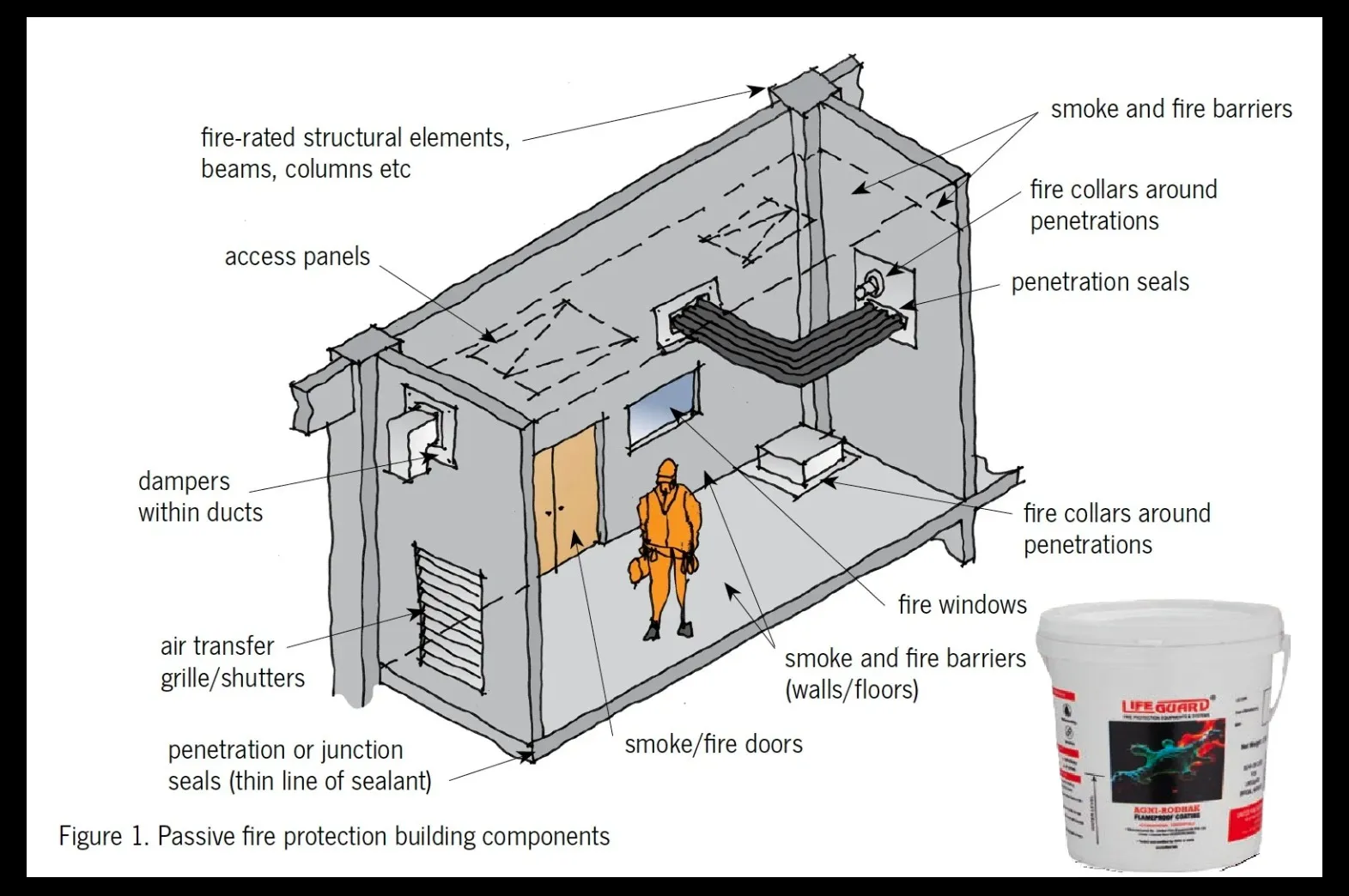
Passive Fire Protection for Industry: Advanced Fire Safety Solutions for Industrial Facilities
Passive Fire Protection for Industry – Safeguarding Critical Assets, Operations, and Workforce
Industrial environments are among the most fire-risk-prone sectors due to the presence of combustible materials, high-temperature processes, electrical systems, heavy machinery, and hazardous substances. A single fire incident can result in severe operational disruptions, financial losses, equipment damage, and risks to human life. To mitigate these dangers, industries require robust and reliable fire safety systems that provide continuous protection.
Passive Fire Protection for Industry (PFP) is a critical component of modern industrial safety strategies. Unlike active fire protection systems that require activation, passive fire protection works continuously to contain fire, protect structural integrity, and minimize damage during fire emergencies. At LIFEGUARD®, we provide advanced passive fire protection solutions specifically designed for industrial applications, helping organizations improve safety, ensure compliance, and protect valuable assets.
What is Passive Fire Protection for Industry?
Passive Fire Protection (PFP) refers to built-in fire safety measures that are integrated into industrial structures, equipment, and facilities to prevent the spread of fire and maintain structural stability during a fire event.
These systems operate without human intervention and remain active 24/7 throughout the lifespan of the facility.
The primary objectives of passive fire protection include:
- Protecting structural steel and critical infrastructure
- Containing fire and smoke spread
- Maintaining compartmentation
- Supporting safe evacuation
- Reducing fire-related damage
- Enhancing business continuity
- Improving industrial safety compliance
Why Passive Fire Protection is Essential for Industrial Facilities
Industrial operations often involve elevated fire risks due to:
- Flammable liquids and gases
- Chemical processing activities
- Electrical installations
- High-temperature manufacturing processes
- Fuel storage systems
- Heavy industrial machinery
- Power generation equipment
Without adequate fire protection, fire incidents can escalate rapidly and compromise entire facilities.
Passive fire protection helps industries:
Protect Personnel
Provides critical evacuation time and improves workplace safety.
Preserve Structural Integrity
Protects load-bearing structures from heat-induced weakening and collapse.
Minimize Operational Downtime
Reduces production interruptions and supports faster recovery after fire incidents.
Protect High-Value Assets
Safeguards equipment, machinery, storage systems, and infrastructure.
Support Regulatory Compliance
Helps meet industrial fire safety regulations, insurance requirements, and industry standards.
Components of Industrial Passive Fire Protection Systems
Intumescent Fire Coatings
Intumescent coatings are widely used to protect structural steel in industrial environments.
When exposed to fire, they expand to form a thick insulating char layer that delays heat transfer.
Benefits include:
- Enhanced fire resistance
- Lightweight application
- Long-lasting performance
- Architectural flexibility
Fire Resistant Coatings
Fire-resistant coatings create a thermal barrier that protects structures and equipment from high-temperature exposure.
Applications include:
- Steel structures
- Process equipment
- Industrial buildings
- Storage facilities
Fire Compartmentation Systems
Compartmentation systems divide facilities into fire-resistant zones to limit fire and smoke spread.
Advantages include:
- Improved life safety
- Controlled fire progression
- Reduced asset damage
Fire Stop Systems
Fire stop products seal penetrations, cable trays, pipe openings, and joints within fire-rated assemblies.
These systems help maintain the integrity of fire barriers throughout the facility.
Thermal Barrier Coatings
Thermal barrier systems reduce heat transfer and enhance overall fire resistance performance.
Industrial Applications of Passive Fire Protection
Oil & Gas Facilities
Protect refineries, processing plants, storage tanks, offshore platforms, and pipeline networks from fire hazards.
Petrochemical Plants
Enhance fire resilience in chemical manufacturing and processing environments.
Power Generation Facilities
Protect turbines, transformers, substations, and electrical infrastructure.
Manufacturing Plants
Safeguard production lines, machinery, and structural frameworks from fire-related risks.
Warehouses and Logistics Centers
Reduce fire spread and protect inventory, storage systems, and operational assets.
Data Centers
Maintain operational continuity by protecting critical IT infrastructure.
Mining and Heavy Industry
Improve fire safety in harsh industrial environments exposed to extreme operating conditions.
Renewable Energy Facilities
Protect solar plants, battery energy storage systems (BESS), and wind energy infrastructure.
Benefits of LIFEGUARD® Passive Fire Protection Solutions
Continuous Fire Protection
Provides round-the-clock protection without requiring activation or external power.
Enhanced Structural Fire Resistance
Helps maintain the integrity of critical industrial structures during fire exposure.
Long-Term Durability
Designed to perform in demanding industrial environments with minimal maintenance.
Corrosion and Environmental Resistance
Offers protection against moisture, chemicals, humidity, and harsh weather conditions.
Reduced Lifecycle Costs
Minimizes repair, maintenance, and asset replacement expenses.
Improved Business Continuity
Helps facilities recover more quickly following fire incidents.
Passive Fire Protection and Industrial Compliance
Industrial facilities must comply with numerous fire safety regulations and standards to ensure operational safety and legal compliance.
Passive fire protection supports compliance with:
- Industrial fire safety regulations
- Building and infrastructure codes
- Occupational safety requirements
- Insurance risk management standards
- Project-specific fire protection specifications
Integrating passive fire protection systems early in facility design and operation significantly improves safety performance and regulatory adherence.
Why Industries Choose LIFEGUARD®
Expertise in Industrial Fire Protection
LIFEGUARD® has extensive experience providing passive fire protection solutions for industrial, commercial, and infrastructure projects.
Advanced Fire Safety Technologies
Our fire-resistant coatings and protection systems are engineered for superior performance under extreme conditions.
Customized Solutions
We develop project-specific fire protection strategies based on facility risks and operational requirements.
Quality-Assured Products
All solutions undergo rigorous testing to ensure reliability, durability, and compliance.
Technical Support
Our experts assist clients with specification, installation guidance, and long-term fire safety planning.
Future-Proof Your Industrial Facility with Passive Fire Protection
As industries become more technologically advanced and operational risks continue to evolve, passive fire protection remains one of the most effective investments in safety and resilience. By integrating advanced fire-resistant coatings, compartmentation systems, and structural fire protection measures, organizations can significantly reduce fire risks while protecting people, assets, and operations.
LIFEGUARD® delivers comprehensive Passive Fire Protection Solutions for Industry that help create safer, more resilient, and compliant industrial environments.
Contact LIFEGUARD®
LIFEGUARD® – United Fire Equipments Pvt. Ltd.
Manufacturer of ISI Certified Fire Safety Equipment
📞 8048034226
Keywords






