
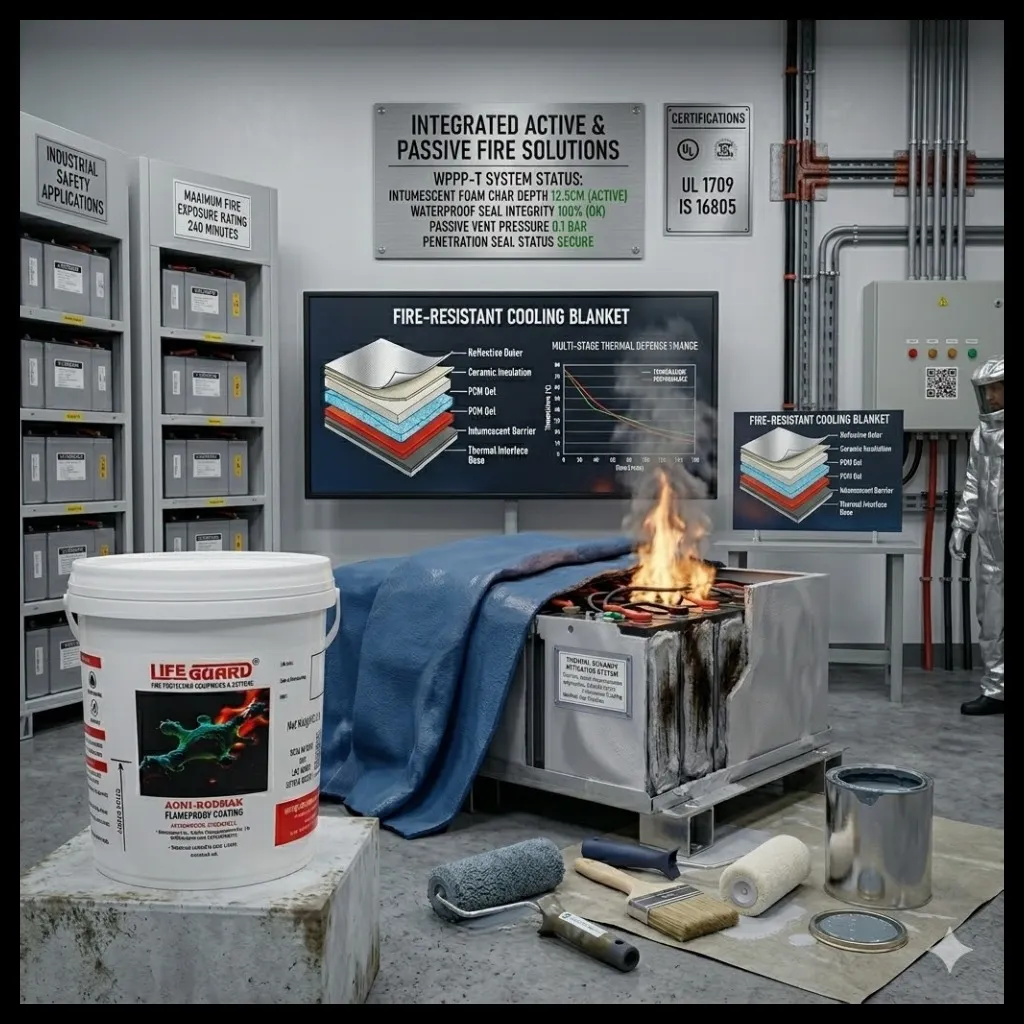
Fire Resistant Waterproof Coating for Architects
Modern architecture is no longer focused only on aesthetics and structural design — safety, sustainability, durability, and regulatory compliance have become equally critical. As commercial buildings, high-rise structures, smart cities, industrial complexes, and infrastructure projects continue to evolve across India, architects are increasingly adopting advanced fire resistant waterproof coatings to enhance building safety and long-term performance.
Fire resistant waterproof coatings provide dual protection by combining:
- Fire resistance
- Waterproofing capability
These advanced coating systems help architects create safer, more durable, and environmentally resilient structures while supporting modern passive fire protection strategies and NBC compliance requirements.
What is a Fire Resistant Waterproof Coating?
A fire resistant waterproof coating is a specialized protective coating designed to:
- Resist fire and high temperatures
- Reduce flame spread
- Prevent water penetration
- Protect surfaces from corrosion and environmental damage
- Improve structural durability
These coatings form a durable barrier over building surfaces and structural components, protecting them from both fire hazards and moisture exposure.
Architects widely use fire resistant waterproof coatings in:
- Commercial buildings
- High-rise towers
- Hotels
- Hospitals
- Airports
- Educational institutions
- Industrial facilities
- Infrastructure projects
Importance of Fire Resistant Waterproof Coatings in Architecture
Modern buildings face multiple environmental and operational challenges such as:
- Fire hazards
- Water seepage
- Humidity
- Corrosion
- Thermal stress
- Weather exposure
Traditional coatings often provide either fire resistance or waterproofing, but advanced fire resistant waterproof coatings offer integrated protection solutions.
For architects, these coatings help:
- Improve fire safety
- Enhance building longevity
- Protect structural systems
- Maintain architectural aesthetics
- Reduce maintenance costs
- Meet regulatory standards
Role of Passive Fire Protection in Modern Architecture
Passive fire protection systems are integrated into the building structure and operate continuously without manual activation. Fire resistant waterproof coatings form an essential part of passive fire protection strategies.
These coatings help:
- Contain fire spread
- Delay structural failure
- Improve evacuation time
- Protect critical building systems
- Enhance occupant safety
Architects increasingly incorporate passive fire protection materials into design planning for safer and more resilient infrastructure.
Key Features of Fire Resistant Waterproof Coatings
High Fire Resistance
Designed to withstand elevated temperatures and reduce flame propagation during fire incidents.
Waterproofing Performance
Prevents water ingress, leakage, seepage, and moisture-related structural damage.
Intumescent Fire Protection Technology
Certain advanced coatings expand under heat exposure to create an insulating char layer that protects structural elements.
Corrosion Resistance
Protects steel and metal surfaces from rust, oxidation, and environmental deterioration.
Thermal Insulation
Helps reduce heat transfer and improve thermal stability within structures.
UV & Weather Resistance
Suitable for both interior and exterior architectural applications.
Long-Term Durability
Engineered for extended service life with minimal maintenance requirements.
Aesthetic Compatibility
Available in finishes compatible with modern architectural designs and decorative systems.
Applications of Fire Resistant Waterproof Coatings
Structural Steel Fireproofing
Steel structures can lose strength rapidly during fire exposure. Fire-resistant coatings help maintain structural integrity and improve fire endurance.
Commercial Building Protection
Used extensively in:
- Office towers
- Shopping malls
- Hotels
- Business complexes
- Mixed-use developments
High-Rise Building Safety
Provides critical fireproofing and moisture protection for tall buildings exposed to environmental stress.
Roof & Exterior Surface Protection
Protects building exteriors from rain, humidity, UV exposure, and fire hazards.
Cable Tray & Electrical Protection
Electrical infrastructure is highly vulnerable during fire incidents. Fire-resistant coatings help reduce flame spread and protect cables.
Fire Compartmentation Systems
Supports fire-rated walls, barriers, and compartmentation systems to contain fire spread.
Data Centres & Critical Infrastructure
Mission-critical facilities require advanced thermal and moisture-resistant fire protection systems.
Benefits for Architects & Infrastructure Designers
Enhanced Building Safety
Improves overall fire performance and occupant protection.
Improved Structural Durability
Protects infrastructure from fire, water, and environmental deterioration.
Reduced Lifecycle Costs
Minimizes repair, maintenance, and corrosion-related expenses.
Sustainable Infrastructure Protection
Supports long-term building resilience and operational efficiency.
Regulatory Compliance
Supports compliance with:
- NBC Part 4 Fire & Life Safety
- Green building standards
- Commercial building regulations
- Infrastructure safety norms
Architectural Flexibility
Can be integrated into modern architectural designs without compromising aesthetics.
Fire Resistant Waterproof Coatings for Modern Building Challenges
Smart Cities & Urban Infrastructure
Urban infrastructure projects require advanced coatings capable of handling environmental and fire safety demands.
Green Buildings
Energy-efficient and sustainable buildings increasingly rely on passive fire protection materials.
Battery Energy Storage Systems (BESS)
Architects designing energy storage infrastructure require thermal runaway-resistant coatings and fire compartmentation systems.
Industrial & Commercial Complexes
Large mixed-use facilities require integrated waterproof and fireproof safety systems.
Choosing the Right Fire Resistant Waterproof Coating
Architects should consider:
- Fire resistance rating
- Waterproofing capability
- Surface compatibility
- Environmental exposure conditions
- Durability requirements
- Aesthetic finish
- Thermal insulation properties
- Compliance certifications
High-quality tested coating systems ensure reliable long-term performance.
LIFEGUARD® Fire Resistant Waterproof Coating Solutions
LIFEGUARD® provides advanced fire resistant waterproof coating solutions for architects, commercial infrastructure, industrial facilities, and high-performance construction projects across India.
Our expertise includes:
- Fire retardant waterproof coatings
- Structural steel fireproofing
- Fire compartmentation systems
- Cable tray fire protection
- Thermal runaway protection
- Passive fire protection technologies
- High-temperature thermal barrier systems
We support:
- Architects & consultants
- Commercial building projects
- Smart city developments
- High-rise infrastructure
- Industrial facilities
- Data centres
- Renewable energy projects
- Institutional buildings
Conclusion
Fire resistant waterproof coatings are becoming an essential element of modern architectural and infrastructure design. By combining advanced fire protection with superior waterproofing performance, these coatings help architects create safer, stronger, and longer-lasting structures.
As India continues to develop advanced commercial and industrial infrastructure, investing in high-performance passive fire protection coating systems is critical for ensuring building safety, sustainability, and long-term structural resilience.
Contact LIFEGUARD®
United Fire Equipments Pvt. Ltd.
Manufacturer of ISI Certified Fire Safety Equipment
📞 8048034226
📧 ufe126@gmail.com | info@lifeguardindia.in
Keywords






