
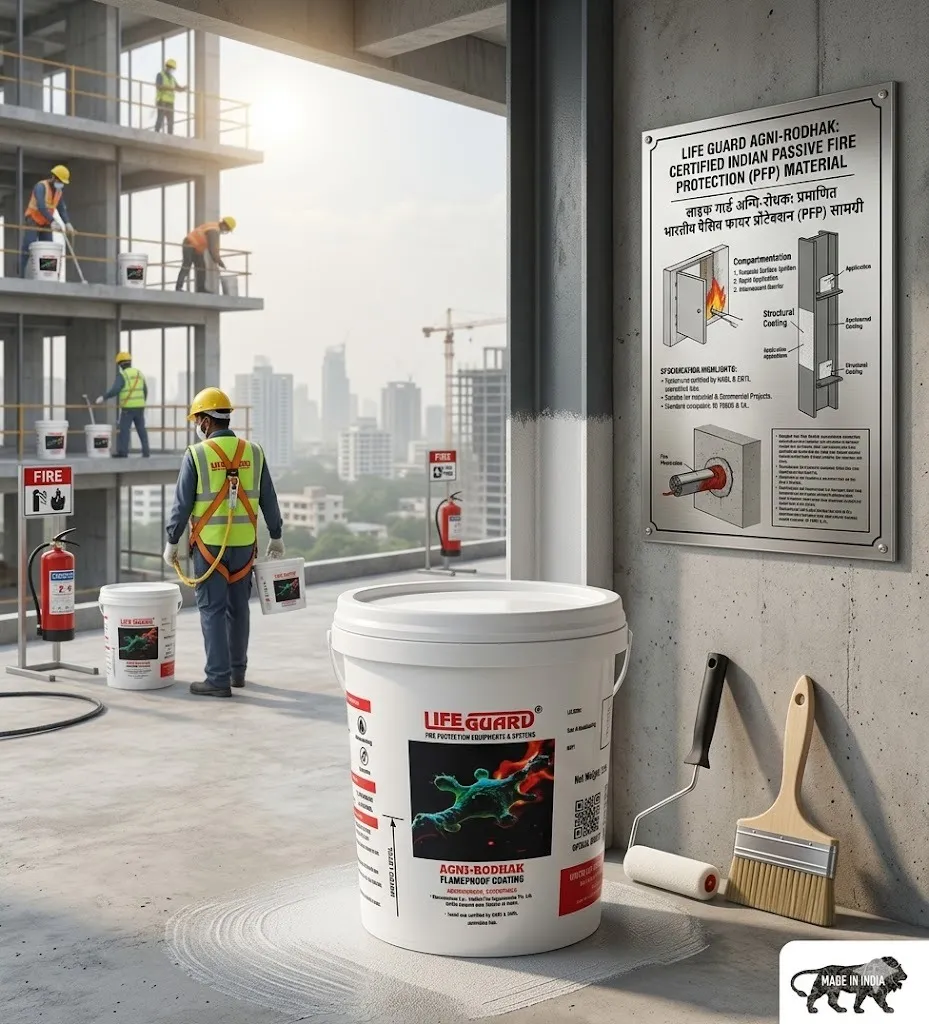
Passive Fire Protection Material India
Fire safety has become one of the most important requirements in modern infrastructure, industrial operations, commercial buildings, energy facilities, and manufacturing industries across India. As fire risks continue to increase due to high-density construction, electrical systems, lithium-ion battery installations, and industrial operations, the demand for advanced passive fire protection materials in India is growing rapidly.
Passive fire protection materials are specially engineered systems designed to contain fire, reduce heat transfer, delay structural failure, and protect critical infrastructure during fire emergencies. These materials form the foundation of modern fire safety strategies by improving building resilience and minimizing fire-related damage without requiring manual activation.
From commercial high-rises and industrial plants to Battery Energy Storage Systems (BESS), data centres, power plants, and infrastructure projects, passive fire protection materials are now essential for ensuring long-term safety and regulatory compliance.
What are Passive Fire Protection Materials?
Passive fire protection (PFP) materials are fire-resistant materials integrated into a structure or system to:
- Contain fire spread
- Resist high temperatures
- Protect structural integrity
- Improve evacuation safety
- Reduce smoke and heat transfer
- Support firefighting operations
Unlike active fire protection systems such as sprinklers and extinguishers, passive systems remain continuously operational and automatically perform during fire exposure.
Passive fire protection materials are widely used in:
- Commercial buildings
- Industrial facilities
- Warehouses
- Electrical infrastructure
- Data centres
- Battery storage systems
- Oil & gas facilities
- Renewable energy projects
Importance of Passive Fire Protection in India
India’s rapid infrastructure growth and industrial expansion have increased the need for advanced fire safety solutions. Fire incidents in industrial and commercial spaces can lead to:
- Structural collapse
- Property damage
- Operational downtime
- Business losses
- Electrical failures
- Safety hazards
Passive fire protection materials help reduce these risks by slowing fire progression and protecting critical building components.
These systems are especially important for:
- High-rise buildings
- Manufacturing industries
- Power generation facilities
- Battery Energy Storage Systems (BESS)
- Hospitals
- Shopping malls
- Transportation infrastructure
- Commercial complexes
Types of Passive Fire Protection Materials
Fire Retardant Coatings
Fire retardant coatings help reduce flame spread and improve fire resistance on structural surfaces.
Applications include:
- Structural steel
- Walls and ceilings
- Electrical rooms
- Industrial equipment
- Cable trays
Intumescent Coatings
Intumescent coatings expand under high temperatures to form an insulating char layer that protects structures from heat exposure.
Fire Resistant Thermal Barriers
Thermal barrier materials reduce heat transfer and help contain high-temperature fire conditions.
Fire Compartmentation Materials
These materials help divide buildings into fire-resistant sections to prevent fire spread between compartments.
Firestop Sealants
Firestop systems seal penetrations, joints, ducts, and cable openings to prevent smoke and flame migration.
Structural Steel Fireproofing Materials
Steel structures lose strength rapidly during fire exposure. Fireproofing materials improve structural fire endurance.
Cable Fire Protection Materials
Fire-resistant cable coatings and barriers help protect electrical infrastructure from flame spread.
Fire Resistant Insulation Systems
Specialized insulation materials improve thermal resistance and structural safety during fire incidents.
Features of Advanced Passive Fire Protection Materials
High Fire Resistance
Engineered to withstand elevated temperatures and prolonged fire exposure.
Thermal Insulation Capability
Helps reduce heat transfer and improve fire containment performance.
Waterproof & Corrosion Resistance
Advanced systems provide protection against moisture, humidity, and environmental damage.
Long-Term Durability
Industrial-grade passive fire protection materials are designed for extended service life.
Low Smoke Emission
Helps reduce toxic smoke generation during fire incidents.
Lightweight & Easy Application
Modern fireproof systems are engineered for efficient installation and structural compatibility.
Chemical & Weather Resistance
Suitable for harsh industrial and outdoor operating environments.
Applications of Passive Fire Protection Materials
Commercial Buildings
Used extensively in:
- High-rise towers
- Shopping malls
- Hotels
- Hospitals
- Educational institutions
- Office complexes
Industrial Facilities
Manufacturing plants and industrial facilities require passive fire protection systems for operational safety and infrastructure protection.
Battery Energy Storage Systems (BESS)
BESS facilities require specialized thermal runaway protection materials capable of controlling battery fire propagation.
Data Centres
Critical IT infrastructure requires advanced fire compartmentation and cable protection systems.
Power Plants & Electrical Infrastructure
Passive fire protection materials help protect:
- Transformers
- Cable tunnels
- Electrical rooms
- Switchgear systems
- Substations
Oil & Gas Industry
Hazardous industrial environments require highly durable fire-resistant systems for infrastructure safety.
Transportation Infrastructure
Airports, tunnels, metro systems, and railway stations use passive fire protection materials for structural safety and evacuation support.
Benefits of Passive Fire Protection Materials
Enhanced Fire Safety
Helps contain fire and improve emergency response effectiveness.
Structural Protection
Protects buildings and industrial systems from heat-induced damage.
Reduced Fire Spread
Minimizes flame propagation and compartment-to-compartment fire transfer.
Improved Occupant Safety
Supports safer evacuation conditions during emergencies.
Reduced Operational Downtime
Helps maintain business continuity after fire incidents.
Long-Term Asset Protection
Protects valuable infrastructure and industrial equipment.
Regulatory Compliance
Supports compliance with:
- NBC Part 4 Fire & Life Safety
- Industrial fire safety standards
- Infrastructure safety regulations
- Commercial building fire norms
Passive Fire Protection for Modern Industrial Risks
Thermal Runaway Protection
Lithium-ion battery systems require advanced thermal barriers and fire-resistant materials to control thermal runaway incidents.
Renewable Energy Infrastructure
Solar and wind energy storage systems require specialized fire-resistant insulation and compartmentation materials.
Smart Buildings & Urban Infrastructure
Modern smart infrastructure increasingly integrates passive fire protection systems into architectural and engineering designs.
Why Passive Fire Protection Matters
Passive fire protection systems are essential because they:
- Operate continuously
- Require no manual activation
- Improve fire containment
- Support structural integrity
- Enhance evacuation safety
- Reduce catastrophic fire risks
Unlike active systems that depend on sensors or water supply, passive fire protection materials provide reliable protection throughout the lifecycle of the infrastructure.
Future of Passive Fire Protection Materials in India
As India expands investments in:
- Smart cities
- Renewable energy
- EV infrastructure
- Battery manufacturing
- Industrial automation
- Commercial real estate
the need for high-performance passive fire protection materials will continue to grow significantly.
Future technologies are expected to include:
- Intelligent thermal barriers
- Advanced intumescent systems
- Lightweight fireproof composites
- Hybrid thermal-fire protection materials
- AI-integrated fire safety infrastructure
LIFEGUARD® Passive Fire Protection Solutions India
LIFEGUARD® provides advanced passive fire protection materials and fire safety solutions for industrial, commercial, and infrastructure projects across India.
Our expertise includes:
- Fire retardant coatings
- Structural steel fireproofing
- Fire compartmentation systems
- Thermal runaway protection
- Cable tray fire protection
- Fire retardant waterproof coatings
- Thermal barrier systems
- Industrial passive fire protection technologies
We support:
- Commercial buildings
- Industrial facilities
- Battery Energy Storage Systems (BESS)
- Renewable energy projects
- Data centres
- Power plants
- Warehouses
- Infrastructure developments
Conclusion
Passive fire protection materials are a critical component of modern fire safety infrastructure in India. By improving fire containment, reducing heat transfer, protecting structural systems, and supporting occupant safety, these advanced materials help industries and buildings achieve higher levels of safety, durability, and operational reliability.
As infrastructure and industrial operations continue to evolve, investing in high-quality passive fire protection materials is essential for creating safer, more resilient, and future-ready environments.
Contact LIFEGUARD®
United Fire Equipments Pvt. Ltd.
Manufacturer of ISI Certified Fire Safety Equipment
📞 8048034226
📧 ufe126@gmail.com | info@lifeguardindia.in
Keywords






