
Passive Fire Protection Material – Waterproof Fire Protection Coating & Cooling Agent Fire Protection Technology
Modern infrastructure and industrial environments demand advanced fire protection systems capable of handling extreme heat, structural fire risks, moisture exposure, and high-risk operational conditions. Passive Fire Protection Materials combined with Waterproof Fire Protection Coatings and Cooling Agent Fire Protection Technology provide comprehensive safety solutions for commercial buildings, industrial plants, oil & gas facilities, healthcare infrastructure, data centers, power plants, warehouses, and high-risk environments.
These advanced fire protection technologies are designed to prevent fire spread, reduce heat intensity, protect structural integrity, and improve evacuation safety during emergencies. They form an essential part of modern passive fire protection systems used across commercial, industrial, and infrastructure sectors.
At LIFEGUARD® United Fire Equipments Pvt. Ltd., we provide high-performance passive fire protection materials, waterproof fireproof coatings, and advanced cooling agent fire protection technologies engineered for maximum safety, durability, and regulatory compliance.
What is Passive Fire Protection Material?
Passive Fire Protection Material refers to fire-resistant products and systems integrated into buildings and industrial infrastructure to contain fire, slow down heat transfer, and reduce smoke spread.
Unlike active fire protection systems such as sprinklers and extinguishers, passive systems work continuously without activation.
Key Objectives of Passive Fire Protection:
- Prevent fire spread
- Protect structural steel and surfaces
- Maintain compartment integrity
- Reduce smoke propagation
- Increase evacuation time
- Enhance occupant safety
- Minimize property damage
Passive fire protection materials are essential for ensuring long-term building safety and structural resilience.
Waterproof Fire Protection Coating
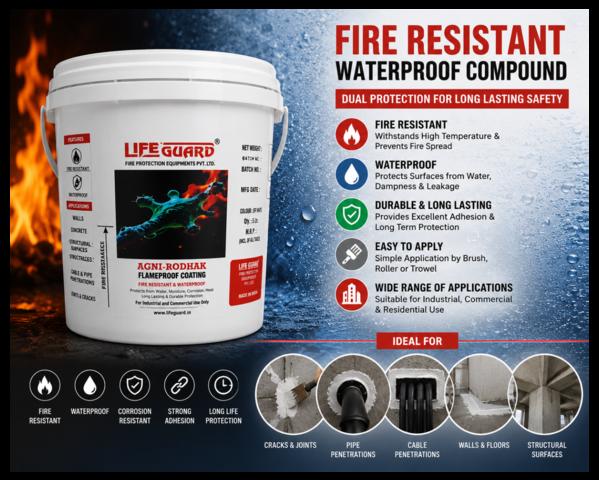
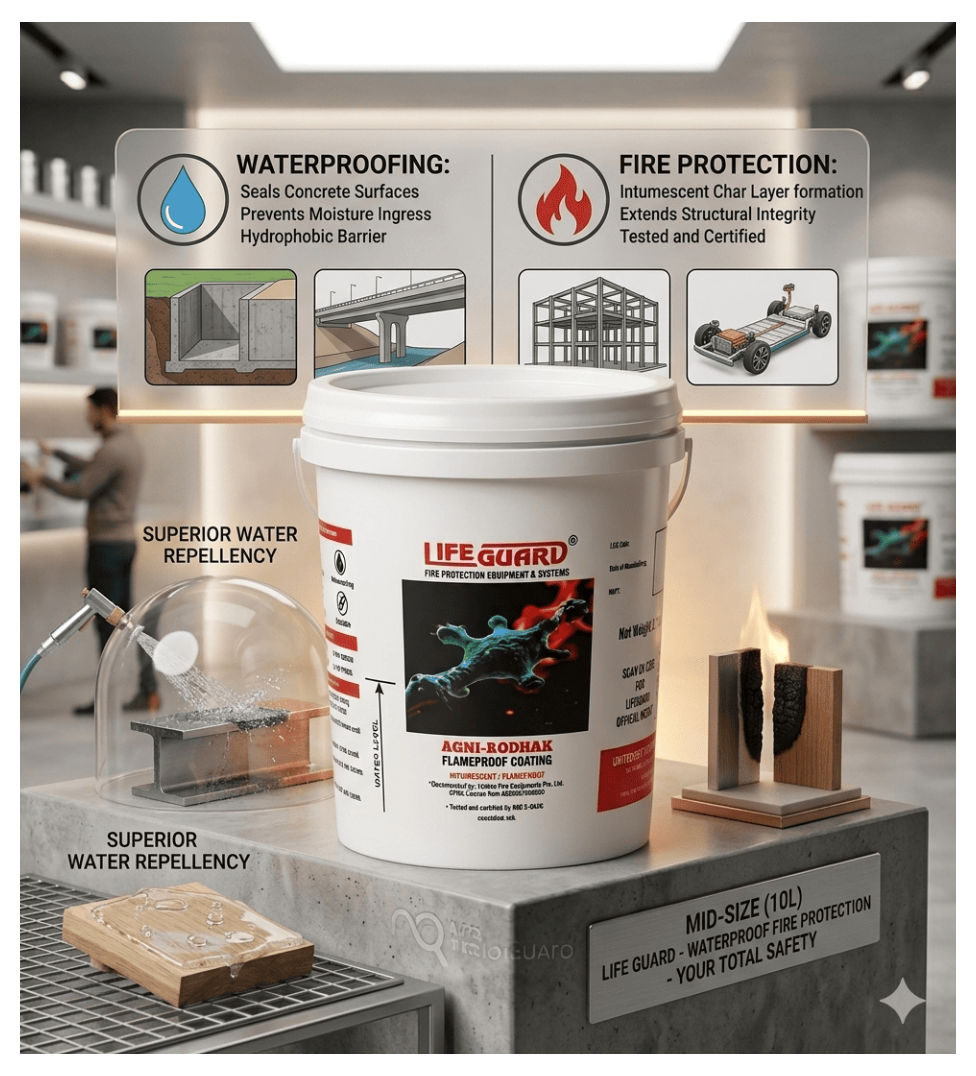
Waterproof Fire Protection Coating is an advanced fire-resistant coating system designed to provide both fireproofing and moisture protection. These coatings protect structures from extreme heat, corrosion, humidity, water penetration, and environmental damage.
Importance of Waterproof Fire Protection Coatings
Traditional fireproofing systems may lose effectiveness under harsh environmental conditions. Waterproof coatings ensure long-lasting fire resistance even in humid, wet, or corrosive environments.
Key Benefits Include:
- Fire resistance
- Waterproof protection
- Corrosion resistance
- UV resistance
- Thermal insulation
- Extended structural lifespan
- Reduced maintenance costs
- Enhanced durability
These coatings are ideal for both indoor and outdoor fire protection applications.
Types of Waterproof Fire Protection Coatings
Intumescent Fireproof Coatings
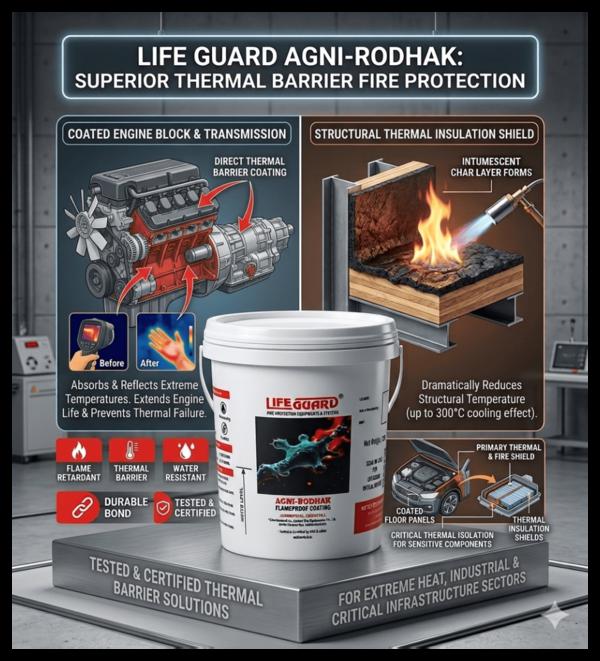
Intumescent coatings expand when exposed to heat, creating a thick insulating barrier that protects the substrate from extreme temperatures.
Applications Include:
- Structural steel
- Commercial buildings
- Industrial plants
- Warehouses
- Offshore structures
Advantages:
- Lightweight fireproofing
- High thermal insulation
- Smooth aesthetic finish
- Excellent fire resistance
Epoxy Fire Protection Coatings
Epoxy-based coatings provide superior fire resistance along with waterproofing and chemical protection.
Common Applications:
- Oil & gas facilities
- Petrochemical plants
- Offshore platforms
- Marine structures
- Industrial equipment
Features Include:
- Corrosion resistance
- Chemical resistance
- Waterproof performance
- Long-term durability
Cementitious Fireproof Coatings
Cement-based coatings provide durable fireproofing for industrial and infrastructure projects.
Ideal For:
- Power plants
- Industrial structures
- Tunnels
- Warehouses
- Basements
These coatings offer excellent heat resistance and weather durability.
Cooling Agent Fire Protection Technology
Cooling Agent Fire Protection Technology is an advanced fire suppression and heat reduction solution designed to rapidly absorb heat, reduce surface temperatures, and suppress fire intensity.
This technology is highly effective in environments with:
- High-temperature equipment
- Electrical fire risks
- Lithium battery fire hazards
- Industrial machinery
- Server rooms
- Chemical processing plants
Cooling agent technology helps prevent re-ignition while improving firefighting efficiency.
How Cooling Agent Fire Protection Technology Works
Cooling agents rapidly absorb thermal energy from flames and surrounding surfaces, reducing temperature levels and interrupting the combustion process.
Key Functions Include:
- Heat absorption
- Flame suppression
- Temperature reduction
- Prevention of thermal spread
- Re-ignition control
- Smoke reduction
These systems improve emergency response and minimize fire-related damage.
Applications of Cooling Agent Fire Protection Technology
Electrical Panels & Server Rooms
Protects sensitive electronic systems from overheating and fire damage.
Lithium Battery Storage Areas
Specialized cooling technologies help control thermal runaway in battery fires.
Industrial Machinery
Prevents equipment overheating and minimizes operational fire risks.
Data Centers
Protects critical IT infrastructure and improves fire suppression efficiency.
Oil & Gas Facilities
Reduces fire intensity in high-risk industrial environments.
Manufacturing Plants
Provides enhanced safety for production units and high-temperature processes.
Advantages of Cooling Agent Fire Protection Technology
Rapid Heat Reduction
Cooling agents quickly lower temperatures during fire emergencies.
Prevents Re-Ignition
Helps stop fires from restarting after suppression.
Improved Fire Suppression
Enhances the effectiveness of firefighting systems.
Protection for Sensitive Equipment
Reduces heat damage to electronics and industrial machinery.
Reduced Water Damage
Many cooling systems use minimal water compared to traditional methods.
Environmentally Safer Solutions
Modern cooling agents are designed to be eco-friendly and residue-free.
Industries Using Passive Fire Protection & Cooling Technologies
Commercial Buildings
Protection for offices, malls, hotels, and business complexes.
Industrial Facilities
Fireproofing for factories, warehouses, and manufacturing plants.
Oil & Gas Industry
Protection for pipelines, offshore structures, and petrochemical plants.
Power Plants
Fire-resistant solutions for turbines, cable systems, and electrical infrastructure.
Data Centers & IT Infrastructure
Advanced fire suppression and cooling systems for server rooms and control centers.
Healthcare Facilities
Protection for hospitals, laboratories, and medical equipment areas.
Transportation Infrastructure
Fireproofing for airports, tunnels, metro stations, and railway facilities.
Benefits of Integrated Fire Protection Solutions
- Enhanced fire resistance
- Reduced fire spread
- Improved structural integrity
- Waterproof and corrosion-resistant protection
- Faster heat reduction
- Increased evacuation safety
- Reduced operational downtime
- Long-term infrastructure protection
Compliance & Fire Safety Standards
Passive fire protection materials and cooling technologies must comply with:
- National Building Code (NBC)
- BIS Fire Safety Standards
- Industrial Safety Regulations
- International Fire Resistance Standards
- Fire Department Compliance Norms
Routine inspections and maintenance ensure long-term fire safety performance.
Why Choose LIFEGUARD® for Advanced Fire Protection Solutions?
LIFEGUARD® United Fire Equipments Pvt. Ltd. is a trusted provider of advanced passive fire protection materials, waterproof fireproof coatings, and cooling agent fire protection technologies in India.
Our Fire Protection Solutions Include:
- Passive fire protection systems
- Waterproof fireproof coatings
- Intumescent fire coatings
- Cooling agent fire suppression systems
- Structural steel fireproofing
- Cable fire protection systems
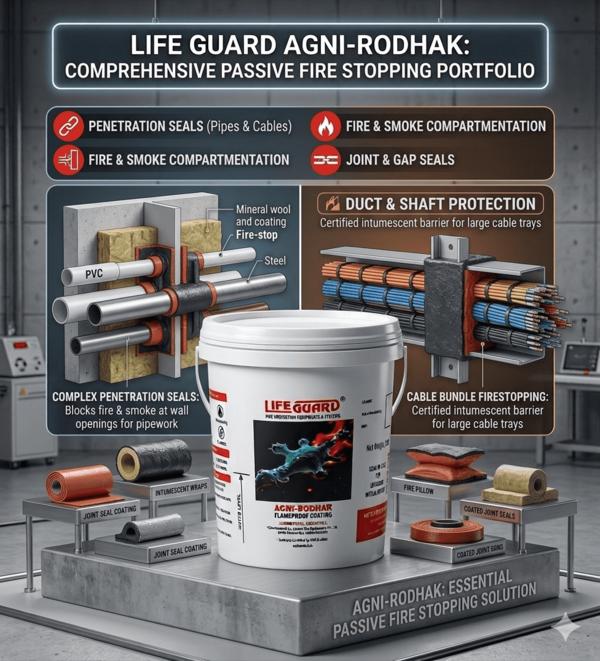
- Firestop systems
- Fire safety audits & consultation
Our expert technical team delivers reliable, certified, and high-performance fire protection systems tailored for modern infrastructure and industrial applications.
Future of Passive Fire Protection Technology
Modern fire safety technologies are rapidly evolving with innovations such as:
- AI-based fire monitoring
- Smart cooling suppression systems
- Nano-technology fireproof coatings
- Eco-friendly passive fire materials
- Intelligent thermal management systems
These advancements are improving safety, sustainability, and emergency response efficiency across industries.
Conclusion
Passive Fire Protection Materials, Waterproof Fire Protection Coatings, and Cooling Agent Fire Protection Technology are essential components of modern fire safety infrastructure. These advanced systems provide superior fire resistance, heat reduction, moisture protection, and structural safety for commercial, industrial, healthcare, and high-risk environments.
Investing in advanced fire protection technologies ensures long-term safety, regulatory compliance, operational continuity, and enhanced protection against fire-related risks.
Contact LIFEGUARD® United Fire Equipments Pvt. Ltd.
Manufacturer of ISI Certified Fire Safety Equipment
📞 8048034226
📧 ufe126@gmail.com | info@lifeguardindia.in