
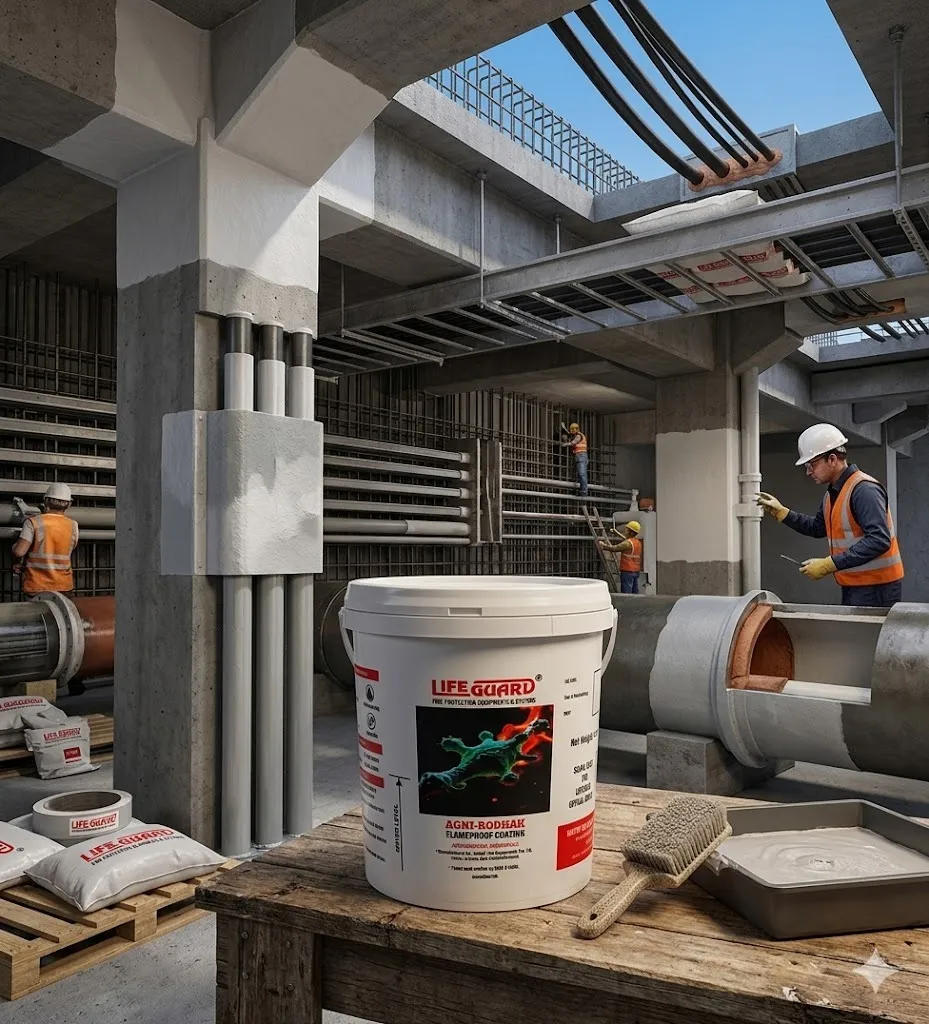
Passive Fire Safety for Infrastructure: Protecting Critical Assets Through Advanced Fire Protection Solutions
Passive Fire Safety for Infrastructure Projects and Critical Facilities
Modern infrastructure forms the backbone of economic growth, public safety, transportation, energy distribution, and urban development. From airports and metro stations to power plants, bridges, tunnels, data centers, and industrial facilities, infrastructure assets must be designed to withstand a wide range of risks—including fire.
Passive Fire Safety for Infrastructure plays a crucial role in protecting critical structures, minimizing fire-related damage, ensuring operational continuity, and safeguarding human lives. At LIFEGUARD®, we provide advanced passive fire protection solutions engineered to enhance the fire resilience of infrastructure projects while supporting long-term durability and regulatory compliance.
What is Passive Fire Safety for Infrastructure?
Passive Fire Safety refers to fire protection measures that are built directly into a structure and function automatically without requiring activation, power supply, or human intervention. These systems are designed to contain fire, limit smoke spread, protect structural components, and maintain the integrity of infrastructure during fire emergencies.
Unlike active fire protection systems such as sprinklers or alarms, passive fire protection remains operational 24/7, providing continuous protection throughout the lifespan of the structure.
Why Infrastructure Requires Advanced Fire Safety Protection
Infrastructure projects are often characterized by:
- Large public occupancy
- High-value assets
- Complex engineering systems
- Critical operational functions
- Extended service life requirements
A fire incident within critical infrastructure can lead to:
- Structural damage
- Service disruptions
- Economic losses
- Safety hazards
- Operational downtime
- Significant repair and restoration costs
Passive fire safety systems help mitigate these risks by improving the fire resistance and resilience of infrastructure assets.
Key Objectives of Passive Fire Safety for Infrastructure
Protect Human Life
Provide occupants and emergency responders with valuable time during evacuation and rescue operations.
Preserve Structural Integrity
Protect load-bearing elements from heat-induced weakening and collapse.
Contain Fire Spread
Prevent fire and smoke from rapidly spreading throughout a facility.
Maintain Operational Continuity
Reduce downtime and support faster recovery following fire incidents.
Protect Critical Assets
Safeguard equipment, systems, and infrastructure investments.
Ensure Regulatory Compliance
Support compliance with fire safety regulations, infrastructure standards, and project specifications.
Components of Passive Fire Safety Systems
Intumescent Fire Coatings
Intumescent coatings expand when exposed to high temperatures, creating an insulating char layer that protects structural steel and other building elements.
Benefits include:
- Enhanced fire resistance
- Lightweight protection
- Long-term durability
- Architectural flexibility
Fire Resistant Coatings
Specialized coatings designed to reduce heat transfer and improve fire performance of structural components.
Applications include:
- Structural steel
- Industrial facilities
- Power plants
- Transportation infrastructure
Fire Compartmentation Systems
Compartmentation divides infrastructure into fire-resistant zones that help contain fire and smoke.
Advantages include:
- Improved life safety
- Reduced fire spread
- Enhanced emergency response effectiveness
Fire Stop Systems
Fire stop solutions maintain the integrity of fire-rated walls, floors, and service penetrations.
Used for:
- Cable penetrations
- Pipe openings
- Expansion joints
- Mechanical services
Thermal Barrier Systems
Thermal barriers help reduce heat transfer and enhance structural fire protection performance.
Applications of Passive Fire Safety in Infrastructure
Airports
Protect terminals, operational facilities, control rooms, and passenger areas from fire-related risks.
Railway Stations and Metro Systems
Enhance safety within transportation hubs, underground stations, and transit infrastructure.
Road Tunnels
Provide critical fire protection that helps maintain tunnel integrity during fire incidents.
Bridges
Protect structural steel and critical load-bearing elements from extreme heat exposure.
Power Generation Facilities
Safeguard turbines, transformers, substations, and supporting infrastructure.
Oil & Gas Installations
Protect processing plants, storage facilities, offshore structures, and pipeline networks.
Data Centers
Maintain operational continuity by protecting mission-critical equipment and infrastructure.
Water Treatment and Utility Facilities
Enhance resilience and safety within essential public service infrastructure.
Benefits of Passive Fire Safety for Infrastructure
Continuous Protection
Functions at all times without requiring activation or external energy sources.
Increased Structural Resilience
Helps infrastructure withstand fire events while maintaining operational stability.
Extended Asset Life
Reduces fire-related deterioration and supports long-term durability.
Lower Lifecycle Costs
Minimizes repair, restoration, and maintenance expenses following fire incidents.
Enhanced Public Safety
Improves protection for occupants, workers, and emergency responders.
Compliance with Safety Standards
Supports adherence to infrastructure fire safety regulations and industry best practices.
Passive Fire Protection and Infrastructure Sustainability
Infrastructure projects are designed to serve communities for decades. Integrating passive fire protection contributes to sustainable asset management by:
- Extending infrastructure lifespan
- Reducing reconstruction requirements
- Minimizing resource consumption
- Improving resilience against emergencies
- Supporting long-term operational efficiency
Fire safety and sustainability work together to create infrastructure that is safer, stronger, and more reliable.
Why Choose LIFEGUARD®?
Expertise in Passive Fire Protection
LIFEGUARD® delivers advanced fire protection solutions for infrastructure, industrial, and commercial projects.
Innovative Fire Safety Technologies
Our fire-resistant coatings, intumescent systems, and compartmentation solutions are engineered for superior performance.
Infrastructure-Focused Solutions
We understand the unique fire protection challenges associated with critical infrastructure assets.
Quality-Assured Products
All products undergo rigorous testing to ensure long-term reliability and compliance.
Comprehensive Technical Support
Our team assists project owners, consultants, architects, engineers, and contractors throughout the project lifecycle.
Build Resilient Infrastructure with LIFEGUARD® Passive Fire Safety Solutions
As infrastructure projects become larger and more complex, the need for reliable fire protection becomes increasingly important. Passive Fire Safety systems provide continuous protection that helps preserve structural integrity, protect critical assets, and ensure public safety during fire emergencies.
LIFEGUARD® offers advanced passive fire protection solutions designed to meet the demanding requirements of modern infrastructure projects while supporting long-term resilience, sustainability, and operational continuity.
Contact LIFEGUARD®
LIFEGUARD® – United Fire Equipments Pvt. Ltd.
Manufacturer of ISI Certified Fire Safety Equipment
📞 8048034226
Keywords






