
https://updates.lifeguardindia.in/products/lg-611a-wsm-200-kg-with-collar-cable/13
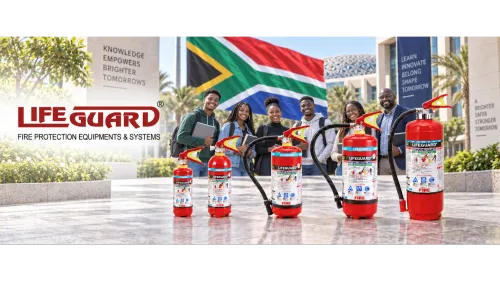
School Clean Agent Fire Suppression Solutions in Africa
Advanced Fire Protection for Schools, Colleges and Educational Institutions
LIFEGUARD® provides reliable school clean agent fire suppression solutions across Africa, protecting critical educational facilities from fire while minimizing damage to valuable equipment, documents and learning resources.
Modern schools depend on electrical infrastructure, computer systems, communication networks, digital classrooms and laboratory equipment. Traditional water-based firefighting systems may not be suitable for every risk because water can damage sensitive electronics and interrupt academic operations. A properly engineered clean agent fire suppression system detects and suppresses fire rapidly without leaving water, foam or powder residue.
United Fire Equipments Pvt. Ltd., the manufacturer of LIFEGUARD® fire safety equipment, offers project-specific clean agent suppression solutions for schools, universities, training institutes, research centres, libraries and other educational facilities throughout Africa.
Why Schools in Africa Need Clean Agent Fire Suppression
Educational institutions contain several high-value areas where conventional firefighting methods may cause significant secondary damage. These areas often include:
- Computer laboratories
- Server and network rooms
- School data centres
- Electrical and UPS rooms
- CCTV and security control rooms
- Digital classrooms
- Science and research laboratories
- Libraries and archive rooms
- Examination record rooms
- Communication and broadcasting rooms
- Museum and heritage collections
- Solar power control and inverter rooms
A clean agent system protects these critical spaces by discharging a gaseous extinguishing agent throughout the protected enclosure. The agent suppresses the fire quickly and reaches areas that may be difficult to access using portable fire extinguishers.
What Is a Clean Agent Fire Suppression System?
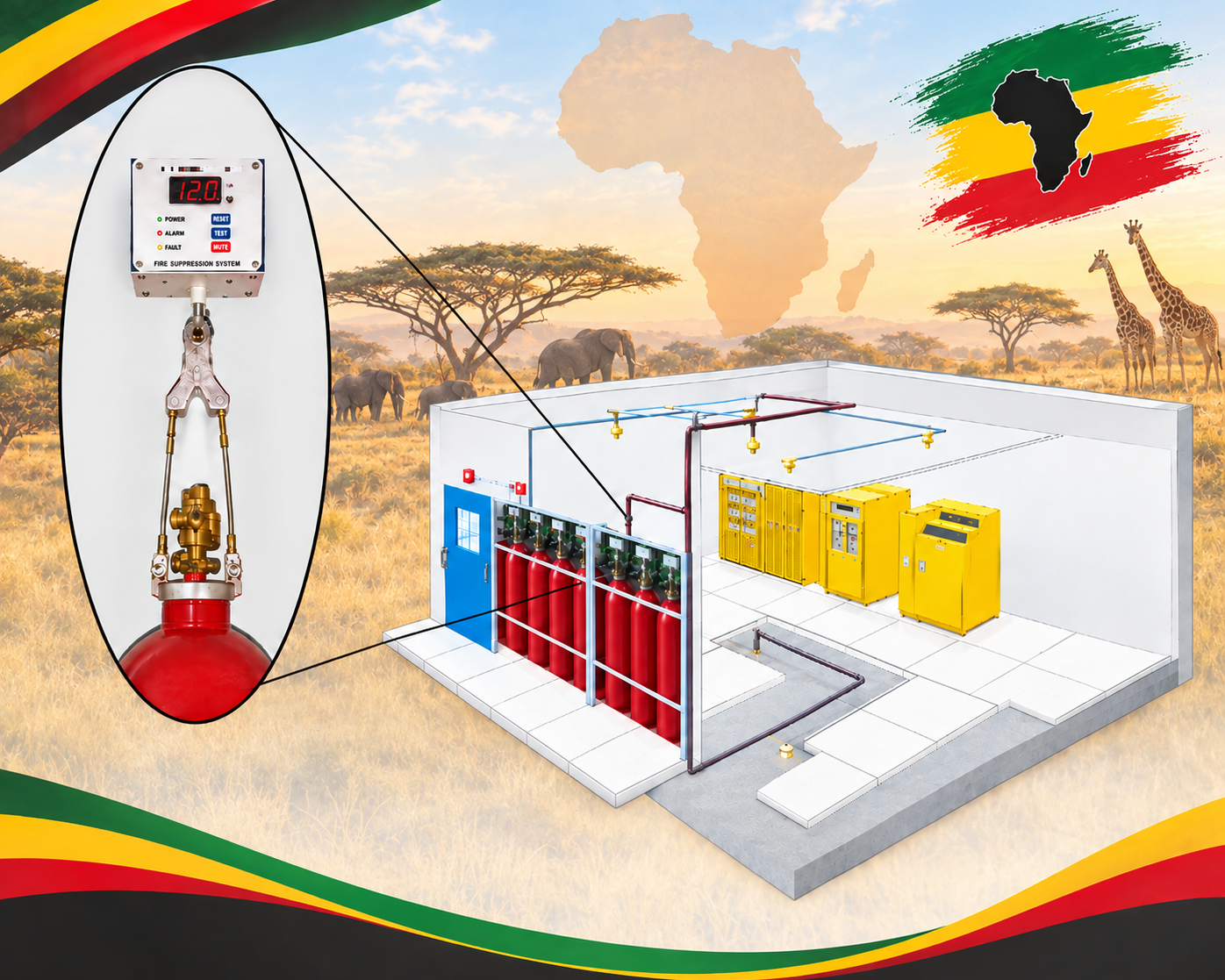
A clean agent fire suppression system is an automatic gaseous fire protection system designed for enclosed, high-value and electrically sensitive areas. It generally includes:
- Clean agent storage cylinder
- Cylinder valve and actuation assembly
- Agent discharge piping
- Engineered discharge nozzles
- Fire detection and alarm control panel
- Smoke or heat detectors
- Manual release station
- Abort switch
- Audible and visual alarms
- Pressure monitoring devices
- Warning and instruction signage
- Electrical interlocks
- Room integrity provisions
When the detection system identifies a fire condition, it initiates alarms and activates the required shutdown or safety sequence. Following the programmed time delay, the clean agent is discharged into the protected room to achieve the specified design concentration.
Benefits of Clean Agent Fire Suppression for Schools
Rapid Fire Suppression
Clean agent systems are engineered to suppress developing fires quickly, helping prevent flames from spreading to adjoining classrooms and buildings.
No Water Damage
The extinguishing agent does not rely on water. This makes clean agent protection suitable for computers, servers, electronic teaching equipment, books, records and electrical installations.
No Powder Residue
Unlike dry chemical powder extinguishing systems, clean agents do not leave corrosive or difficult-to-clean residue inside the protected room.
Electrically Non-Conductive
Appropriate clean agents are suitable for protecting energized electrical and electronic equipment when the complete system is designed, installed and maintained correctly.
Reduced Operational Disruption
Because no water or powder cleanup is normally required after a clean agent discharge, recovery and restoration may be faster, subject to inspection and safety clearance.
Automatic and Manual Operation
The system can be configured for automatic activation through fire detectors and manual activation through an approved release station.
Protection of Valuable Educational Assets
Clean agent technology helps protect equipment, academic records, research data, digital learning resources and institutional documents.
Clean Agent Applications in African Schools
Computer Laboratories
School computer laboratories may contain numerous computers, charging devices, networking equipment and electrical connections. A clean agent system can suppress fire without damaging surrounding electronics through water or powder contamination.
Server and Network Rooms
Server rooms support internet connectivity, student information systems, communication platforms, security systems and administrative operations. Automatic clean agent protection helps safeguard these essential services.
Libraries and Archives
Books, certificates, student records and historical documents can suffer irreparable damage from fire, smoke and firefighting water. Clean agent systems provide a residue-free suppression option for suitably enclosed archive and library areas.
Electrical and UPS Rooms
Electrical panels, UPS systems and distribution equipment can present significant fire risks. The suppression system should be engineered according to the equipment layout, fire hazard, ventilation conditions and electrical shutdown requirements.
Science and Research Laboratories
Educational laboratories may contain specialized instruments and sensitive equipment. Their fire protection requirements must be evaluated individually according to the materials, processes and hazards present.
CCTV and Security Control Rooms
A fire in a security control room can affect surveillance, access control and emergency communication. Clean agent suppression helps protect these centralized systems.
Solar Inverter and Control Rooms
Many African schools use solar power and battery-supported electrical systems. Inverter rooms, monitoring rooms and associated electrical spaces require a project-specific fire risk assessment. Battery hazards must be evaluated separately, because clean agent suppression alone may not address every battery failure or thermal-runaway scenario.
Clean Agent Options
Depending on project specifications, approvals and environmental requirements, LIFEGUARD® solutions may include clean agents such as:
FK-5-1-12 Clean Agent Systems
FK-5-1-12 is a residue-free extinguishing agent used for protecting sensitive equipment and high-value assets. It is commonly considered for server rooms, control rooms, laboratories, archives and other critical enclosures.
HFC-227ea Clean Agent Systems
HFC-227ea systems are used for total-flooding protection of electrical and electronic risk areas. Selection should consider applicable environmental regulations, project requirements and availability in the destination country.
The final clean-agent selection must be based on the hazard classification, required design concentration, room conditions, applicable regulations and approval of the relevant authority.
Complete School Clean Agent Suppression Solution
LIFEGUARD® can support educational fire protection projects with:
- Site information and hazard assessment
- Room-volume verification
- Clean-agent quantity calculation
- Cylinder-capacity selection
- Hydraulic flow calculation
- Pipe-network engineering
- Nozzle selection and positioning
- Detection and control-system planning
- Cause-and-effect preparation
- Ventilation and air-conditioning interlocks
- Alarm and time-delay sequence
- Installation guidance
- Testing and commissioning support
- Operation and maintenance documentation
- Training for facility and safety personnel
- Inspection, refilling and maintenance support
Engineered System Design
Every protected room requires an individual system design. The quantity of extinguishing agent cannot be selected only by room area. Important design considerations include:
- Net room volume
- Maximum and minimum ambient temperature
- Type of fire hazard
- Required extinguishing concentration
- Altitude of the project location
- Ceiling and raised-floor voids
- Equipment arrangement
- Door and ventilation openings
- Air-conditioning systems
- Pipe routing and equivalent pipe length
- Nozzle coverage and discharge characteristics
- Agent storage location
- Safety factors required by the applicable standard
Hydraulic calculations help determine pipe sizes, nozzle orifice sizes, system pressure and agent-discharge performance. The system should be designed so the required extinguishing concentration is achieved within the specified discharge time.
Fire Detection and Release Sequence
A school clean agent suppression system can be configured with a cross-zone detection arrangement to reduce the possibility of accidental discharge.
A typical sequence may include:
- The first detector activates a fire alarm.
- A second detector confirms the fire condition.
- Pre-discharge audible and visual alarms operate.
- Air-conditioning or ventilation equipment shuts down where required.
- Fire dampers or other interlocks operate according to the approved cause-and-effect matrix.
- A programmed evacuation delay begins.
- The clean agent discharges into the protected enclosure.
- The system indicates discharge and fault conditions at the control panel.
The exact sequence must follow the approved fire strategy, applicable standards and local authority requirements.
Room Integrity and Agent Retention
Clean agent protection depends on maintaining the required agent concentration inside the room for the necessary period. Excessive leakage through doors, cable openings, ducts and wall penetrations may reduce system effectiveness.
The protected enclosure should therefore be properly sealed, and a room-integrity or door-fan test should be considered where required. Any opening created after commissioning should be sealed and the enclosure reassessed.
Safety Considerations for Educational Facilities
School fire protection requires special attention because children, teachers, visitors and support staff may be present. The system design should include:
- Clear audible and visual pre-discharge warnings
- Sufficient evacuation delay where permitted
- Manual release and abort controls
- Emergency operating instructions
- Appropriate warning signage
- Defined evacuation procedures
- Staff training and emergency drills
- Controlled access to protected rooms
- Ventilation and re-entry procedures after discharge
- Regular inspection of detectors, cylinders and control equipment
A clean agent system intended for an occupiable area must be designed within the applicable exposure limits and approved by the relevant consultant and authority.
Standards and Compliance
School clean agent suppression systems may be designed with reference to internationally recognized requirements such as:
- NFPA 2001 – Standard on Clean Agent Fire Extinguishing Systems
- Applicable fire detection and alarm standards
- Manufacturer’s approved design and installation manuals
- Project-specific fire and life-safety requirements
- National building and fire regulations of the destination country
- Requirements of the local fire authority, consultant and insurance provider
Because regulations vary across Africa, compliance must be confirmed separately for each country and project.
Clean Agent Fire Suppression Solutions Across Africa
LIFEGUARD® supports school fire protection requirements across African markets, including:
- South Africa
- Kenya
- Nigeria
- Ghana
- Tanzania
- Uganda
- Rwanda
- Ethiopia
- Zambia
- Zimbabwe
- Botswana
- Namibia
- Mozambique
- Angola
- Senegal
- Côte d’Ivoire
- Cameroon
- Morocco
- Algeria
- Egypt
- Mauritius
- Seychelles
- Other African countries
Support is subject to project requirements, import regulations, local approvals and delivery feasibility.
Why Choose LIFEGUARD®?
- Established fire safety equipment manufacturer
- Experience in engineered fire suppression systems
- Project-specific clean agent system design
- Hydraulic flow calculation support
- Cylinder, valve, piping and nozzle solutions
- Fire detection and releasing-system integration
- Support for consultants, contractors and institutional clients
- Technical documentation and product data
- Installation and commissioning guidance
- Inspection and maintenance assistance
- Export-oriented support for African projects
- Customized solutions for different school environments
Solutions for New and Existing Schools
LIFEGUARD® clean agent systems can be considered for:
New Educational Projects
Clean agent suppression can be coordinated with architectural, electrical, mechanical and fire-alarm services during the design stage.
Existing School Buildings
A retrofit solution may be developed after reviewing room dimensions, existing detection systems, available cylinder space, cable penetrations, ventilation systems and pipe-routing limitations.
School Modernization Projects
When schools install smart-classroom equipment, new servers, digital records, CCTV systems or solar power infrastructure, the existing fire protection strategy should be reviewed and upgraded where necessary.
Inspection and Maintenance
Routine inspection is essential for reliable system performance. A planned maintenance programme should include:
- Cylinder-pressure inspection
- Agent-weight or quantity verification where applicable
- Valve and actuator inspection
- Detection-system testing
- Manual release and abort-switch testing
- Alarm and indicator verification
- Pipe and nozzle inspection
- Checking for corrosion or physical damage
- Confirmation that nozzles remain unobstructed
- Review of changes to room layout or volume
- Inspection of enclosure penetrations
- Verification of electrical and mechanical interlocks
- Maintenance records and service labels
Only trained and authorized personnel should inspect, service or recharge clean agent equipment.
Request a School Clean Agent System Proposal
For an accurate technical and commercial proposal, please provide:
- Country and project location
- Name and type of educational institution
- Protected-room dimensions
- False-ceiling and raised-floor details
- Maximum and minimum room temperatures
- Equipment and fire-hazard details
- Architectural drawings
- Preferred clean agent, if specified
- Applicable standards or consultant specifications
- Number of rooms requiring protection
- Requirement for main and standby cylinders
- Detection and fire-alarm requirements
- Expected project schedule
Our team can review the available information and recommend a suitable clean agent suppression system for the project.
Contact LIFEGUARD®
United Fire Equipments Pvt. Ltd.
Manufacturer of ISI-Certified Fire Safety Equipment
Telephone: 8048034226
Email: ufe126@gmail.com | info@lifeguardindia.in
Website: www.lifeguardindia.in
Contact LIFEGUARD® for school clean agent fire suppression systems in Africa, including technical selection, engineered design, product supply and project support.
Recommended SEO Details
SEO Title: School Clean Agent Fire Suppression Solutions Africa | LIFEGUARD®
Meta Description: Protect schools, computer labs, server rooms, libraries and electrical rooms with LIFEGUARD® school clean agent fire suppression solutions across Africa.
Suggested URL:
/school-clean-agent-fire-suppression-solutions-africa
Primary Keyword:
school clean agent suppression solutions Africa
Secondary Keywords:
- clean agent fire suppression system for schools
- school fire suppression company Africa
- clean agent system supplier Africa
- school server room fire suppression
- computer laboratory fire suppression system
- educational institution fire protection Africa
- FK-5-1-12 system for schools
- HFC-227ea suppression system Africa
- clean agent fire protection manufacturer
- automatic fire suppression system for schools
- library and archive fire suppression
- university clean agent suppression system
Suggested Image Alt Text:
- LIFEGUARD school clean agent suppression system in Africa
- Clean agent fire protection for school computer laboratory
- School server room fire suppression system
- Clean agent cylinder and discharge nozzle for educational facilities
- Fire detection and suppression system for African schools