
School Clean Agent Fire Suppression System Manufacturer for Africa
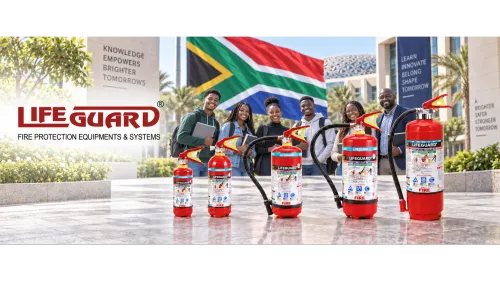
LIFEGUARD® is a trusted school clean agent suppression system manufacturer for Africa, providing engineered fire protection solutions for schools, colleges, universities, libraries, laboratories, data rooms and other educational facilities.
Manufactured by United Fire Equipments Pvt. Ltd., LIFEGUARD® clean agent fire suppression systems are designed to deliver rapid fire control while protecting sensitive electrical and electronic equipment. With fire safety industry experience since 1991, we support African educational projects, fire protection contractors, consultants, distributors, EPC companies and institutional procurement agencies.
Our solutions can be customised according to the protected enclosure, fire risk, environmental conditions, equipment layout, project specifications and applicable local regulations.
What Is a Clean Agent Fire Suppression System?
A clean agent fire suppression system is an engineered fire protection solution that uses a gaseous extinguishing medium to control a fire without leaving the substantial residue associated with dry chemical powder or water-based discharge.
Clean agents are particularly suitable for rooms containing computers, servers, communication devices, electrical controls, documents or other sensitive assets. After a discharge, the protected equipment is not normally subjected to the extensive clean-up associated with powder-based extinguishing systems.
Depending on the project specifications and regulatory requirements, solutions may use agents such as:
- FK-5-1-12 clean agent
- HFC-227ea clean agent
- Inert-gas extinguishing agents
- Other approved gaseous suppression technologies
The appropriate agent must be selected according to the protected hazard, room occupancy, environmental objectives and applicable regulations.
Why Schools Need Clean Agent Fire Suppression
Modern educational facilities depend heavily on digital and electrical infrastructure. Servers, networking equipment, CCTV systems, laboratory controls and examination records are essential to day-to-day operations.
A conventional water-based system may not be the preferred solution for every sensitive area. Clean agent fire suppression provides an effective option where controlling fire and limiting secondary damage are both important.
A properly designed clean agent system can help:
- Detect fire at an early stage
- Suppress fire rapidly
- Protect sensitive electronic equipment
- Minimise residue after discharge
- Reduce operational interruption
- Protect essential data and school records
- Limit damage to electrical installations
- Support the overall fire and life-safety strategy
- Provide automatic protection for unattended rooms
Clean agent suppression complements fire alarms, emergency exits, portable extinguishers, evacuation plans and trained emergency personnel.
Applications in Schools and Educational Campuses
LIFEGUARD® school clean agent suppression systems can be considered for:
- Server rooms
- Computer laboratories
- IT and network rooms
- Data centres
- CCTV surveillance rooms
- Communication rooms
- Electrical control rooms
- UPS rooms
- Audio-visual control rooms
- Examination record rooms
- Libraries and archives
- Research laboratories
- University laboratories
- Auditorium control rooms
- Museum and heritage collections
- Administrative data rooms
- Building-management system rooms
Every application should be evaluated individually to determine the correct agent, design concentration, cylinder capacity, piping arrangement and control sequence.
Components of a Clean Agent Suppression System
A complete engineered clean agent fire suppression system may include:
- Clean agent storage cylinder
- Cylinder valve assembly
- Pressure gauge or monitoring arrangement
- Electrical or mechanical actuator
- Discharge manifold
- Seamless piping network
- Approved discharge nozzles
- Smoke or heat detectors
- Gas-release control panel
- Manual-release station
- Abort switch
- Audible alarm
- Visual alarm indicator
- Discharge warning signage
- Pressure switch
- Equipment shutdown interfaces
- Cylinder mounting frame and accessories
The final system configuration depends on the room size, fire risk, number of protected zones and project requirements.
How the Automatic Suppression System Works
A typical clean agent system uses an automatic detection and release sequence:
- Fire detectors continuously monitor the protected room.
- The first detector initiates an alarm condition.
- A second independent detector confirms the fire condition in a cross-zoned arrangement.
- Audible and visual pre-discharge warnings operate.
- A programmed time delay allows evacuation, where required.
- The releasing control panel activates the cylinder valve.
- Clean agent flows through the piping network.
- Engineered nozzles distribute the agent throughout the enclosure.
- Equipment shutdown and ventilation interlocks operate according to the approved cause-and-effect sequence.
Manual-release and abort facilities may be provided according to the system design and applicable safety requirements.
Engineered Clean Agent System Design
A clean agent system should not be selected only according to the floor area. Proper engineering is essential for reliable performance.
System design should consider:
- Net enclosure volume
- Ceiling and floor voids
- Minimum and maximum room temperature
- Fire classification
- Minimum design concentration
- Occupancy conditions
- Agent safety limits
- Altitude correction
- Ventilation openings
- Enclosure leakage
- Discharge time
- Agent hold time
- Pipe sizes and lengths
- Nozzle location and coverage
- Pressure-relief requirements
- Detection and release logic
- Electrical and HVAC interlocks
- Standby-cylinder requirements
Hydraulic flow calculations may be required to confirm pipe sizes, nozzle orifices, pressure distribution and discharge performance.
Room Integrity and Agent Retention
The protected enclosure must retain the required extinguishing concentration for the specified period. Uncontrolled leakage through doors, windows, cable penetrations, ducts and construction joints can reduce system effectiveness.
Room integrity provisions may include:
- Sealing cable penetrations
- Closing doors and windows
- Shutting down ventilation
- Closing dampers
- Sealing service openings
- Conducting an enclosure integrity test
- Providing pressure-relief arrangements where required
The integrity of the room should be evaluated during commissioning and whenever significant building modifications are made.
Fire Detection and Release Control
Early and reliable detection is an essential part of a clean agent suppression system. Depending on the application, the system may incorporate:
- Optical smoke detectors
- Heat detectors
- Multi-criteria detectors
- Aspirating smoke-detection systems
- Cross-zoned detection
- Fire alarm control panels
- Gas-release control panels
- Manual-release stations
- Abort switches
- Sounders and visual indicators
- Cylinder pressure monitoring
- Discharge confirmation
- Fault and supervisory signals
- Building-management system interfaces
Aspirating smoke detection can be considered for critical server rooms and high-value technology spaces where very early warning is required.
Clean Agent Protection for School Server Rooms
School and university server rooms can contain valuable networking, communication and data-storage equipment. Fire, smoke, water or powder contamination can cause extensive operational disruption.
A clean agent system offers several advantages for these areas:
- Fast, three-dimensional fire suppression
- Minimal residue after discharge
- Protection of concealed spaces
- Automatic detection and release
- Compatibility with sensitive electronics
- Reduced post-fire clean-up
- Support for rapid restoration of operations
The enclosure should be properly sealed, and ventilation shutdown should be coordinated with the agent-discharge sequence.
Clean Agent Protection for Computer Laboratories
Computer laboratories contain numerous electrical devices, cables, power supplies and networking components. An automatic clean agent system can provide room-wide protection without directing water or powder onto electronic equipment.
The system design should consider:
- Number and arrangement of computers
- False ceiling or raised-floor spaces
- Air-conditioning systems
- Cable penetrations
- Room occupancy
- Evacuation time
- Detection sensitivity
- Equipment shutdown requirements
Clear warning signs and staff training should be included in the fire safety plan.
Clean Agent Protection for Libraries and Archives
Schools and universities may store examination records, historical documents, books, research materials and administrative data that cannot be easily replaced.
Clean agent suppression can help protect selected archive and record rooms while limiting secondary damage to stored materials. The suitability of the agent must be confirmed according to the type of collection, enclosure characteristics and project requirements.
Solutions Designed for African Conditions
School projects across Africa can face high ambient temperatures, dust, humidity, coastal exposure, unstable power supplies and remote locations. These conditions should be considered during system selection and installation.
Depending on the project, LIFEGUARD® can support requirements for:
- Suitable cylinder storage conditions
- Corrosion-resistant finishes
- Reliable mechanical and electrical components
- Clear operating and safety instructions
- Automatic and manual activation
- Battery-backed control equipment
- Accessible maintenance arrangements
- Recommended spare parts
- Export-worthy packaging
- Technical and installation documentation
Environmental conditions must be communicated before system design so that suitable corrections and protective measures can be considered.
Serving Educational Projects Across Africa
LIFEGUARD® welcomes enquiries from customers across East Africa, West Africa, Central Africa, Southern Africa and North Africa.
We support enquiries from countries including:
- South Africa
- Kenya
- Tanzania
- Uganda
- Rwanda
- Ethiopia
- Ghana
- Nigeria
- Senegal
- Côte d’Ivoire
- Cameroon
- Zambia
- Zimbabwe
- Mozambique
- Botswana
- Namibia
- Angola
- Egypt
- Morocco
- Algeria
- Other African markets
Project requirements, product acceptance and local authority approvals vary by country. Customers should provide the required standards and certification details with their enquiry.
Standards and Compliance
Clean agent suppression systems should be designed, installed, tested and maintained according to the approved project specifications and applicable standards.
Depending on the project, reference may be made to:
- NFPA 2001
- ISO 14520
- Relevant national fire regulations
- Local building and fire codes
- Authority having jurisdiction requirements
- Consultant-approved project specifications
- Manufacturer’s installation and maintenance instructions
Compliance depends on the exact agent, components, system configuration and certification required for the project. All mandatory approval requirements should be confirmed before ordering.
Testing and Commissioning
System commissioning may include:
- Verification of cylinder quantity and filling
- Inspection of cylinder pressure
- Confirmation of cylinder mounting
- Piping inspection and pressure testing
- Nozzle-orifice verification
- Detection-circuit testing
- Cross-zone release simulation
- Manual-release testing
- Abort-switch testing
- Audible and visual alarm testing
- Equipment shutdown verification
- Pressure-switch testing
- Control-panel battery testing
- Enclosure integrity evaluation
- Review of system labels and warning signs
- Submission of commissioning records
A live agent-discharge test should only be performed when specifically required and under an approved, controlled procedure.
Maintenance of School Clean Agent Systems
Regular inspection and servicing help maintain system reliability. Maintenance activities may include:
- Visual inspection of cylinders
- Cylinder-pressure verification
- Checking valves and actuators
- Inspection of piping and nozzles
- Testing detectors and alarm devices
- Verification of manual-release and abort functions
- Checking control-panel batteries
- Testing shutdown interlocks
- Inspection of room openings
- Review of maintenance records
- Replacement of damaged components
- Refilling after discharge
Only trained and competent personnel should service gaseous fire suppression systems.
Why Choose LIFEGUARD®?
Fire Safety Experience Since 1991
United Fire Equipments Pvt. Ltd. has more than three decades of experience in manufacturing and supplying fire protection equipment.
Engineered Project Solutions
Systems are selected according to enclosure volume, fire risk, environmental conditions and project specifications.
Comprehensive Technical Support
Our team can assist with system selection, calculations, technical submittals, bills of quantities and installation guidance.
Integrated Fire Protection Capability
LIFEGUARD® supplies clean agent systems, detection equipment, control panels, fire extinguishers and associated firefighting products.
OEM and Bulk Supply
We welcome requirements from African distributors, importers, EPC companies and fire protection contractors seeking bulk or OEM supply.
Export Support
We assist overseas customers with quotations, technical documents, packing details, commercial information and shipping-related documentation.
Information Required for a Quotation
For an accurate clean agent system proposal, please provide:
- Project name and location
- Destination country
- Type of educational facility
- Protected-room dimensions
- False-ceiling or raised-floor dimensions
- Minimum and maximum room temperature
- Type of equipment inside the room
- Fire-risk classification
- Occupancy details
- Door, window and ventilation information
- Required clean agent
- Required standards and approvals
- Electrical supply details
- Number of protected rooms
- Main and standby-cylinder requirements
- Installation and commissioning scope
- Project specifications or bill of quantities
Our technical team will evaluate the information and recommend an appropriate system configuration.
Frequently Asked Questions
What is the best clean agent system for a school server room?
The appropriate agent depends on the room volume, temperature, equipment, occupancy, environmental requirements and local regulations. A detailed technical evaluation is necessary before selecting the system.
Does clean agent damage computers or electronics?
Clean agents are commonly used for electronic-equipment areas because they do not produce the extensive residue associated with dry chemical powder. Suitability must still be confirmed for the selected agent and equipment.
Can the system operate automatically?
Yes. A clean agent system can use automatic fire detection and a releasing control panel. Manual-release and abort functions may also be incorporated.
Is room sealing necessary?
Yes. Excessive leakage can prevent the room from retaining the required extinguishing concentration. Openings and service penetrations should be assessed and properly treated.
Can one cylinder protect multiple rooms?
Multi-zone arrangements may be possible with suitable selector valves and engineered controls. The feasibility depends on system approval, room sizes, pipe networks and project specifications.
Does LIFEGUARD® supply clean agent systems across Africa?
Yes. LIFEGUARD® welcomes enquiries from schools, universities, consultants, contractors, distributors and institutional buyers throughout Africa.
Contact LIFEGUARD®
United Fire Equipments Pvt. Ltd.
Manufacturer of ISI Certified Fire Safety Equipment
📞 8048034226