
School Clean Agent Fire Suppression System Manufacturer in Asia
LIFEGUARD® – Advanced Clean Agent Fire Protection for Educational Institutions
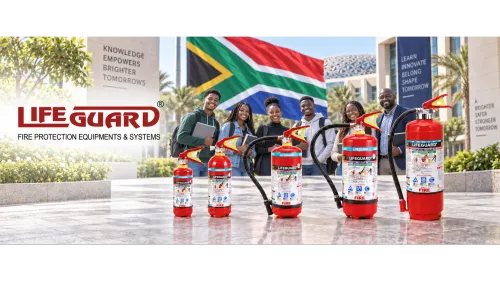
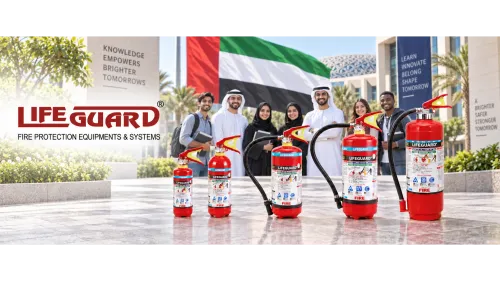
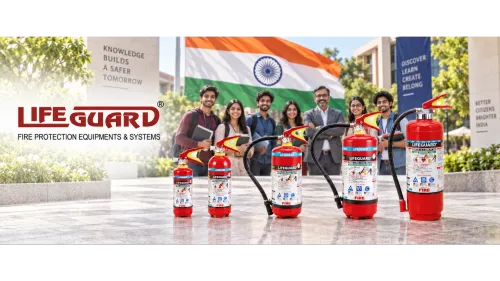
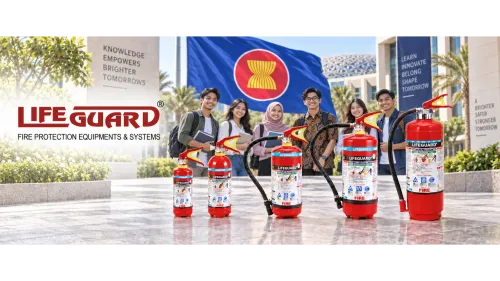
LIFEGUARD® is a trusted school clean agent suppression system manufacturer serving Asia, providing engineered fire protection solutions for schools, colleges, universities, laboratories, libraries, hostels and other educational institutions.
Manufactured by United Fire Equipments Pvt. Ltd., LIFEGUARD® clean agent systems are designed to detect and suppress fires rapidly while protecting sensitive electrical and electronic equipment from damage caused by water, foam or dry chemical residue.
With fire safety experience since 1991, we support educational institutions, government departments, architects, consultants, EPC contractors, system integrators, distributors and project developers across India and Asian markets.
What Is a Clean Agent Fire Suppression System?
A clean agent fire suppression system uses an electrically non-conductive gaseous extinguishing medium to suppress fire without leaving residue on the protected equipment.
Unlike water, foam or dry chemical powder, a suitable clean agent does not require extensive post-discharge cleaning. This makes clean agent technology particularly suitable for school areas containing computers, servers, communication systems, digital records and other sensitive assets.
A complete clean agent suppression system generally includes:
- Clean agent storage cylinder
- Cylinder valve and actuation assembly
- Discharge piping and fittings
- Engineered discharge nozzles
- Smoke or heat detectors
- Fire alarm and releasing control panel
- Manual release station
- Abort switch
- Pre-discharge audible and visual alarms
- Pressure-monitoring devices
- Equipment shutdown interlocks
- Warning and identification signage
The exact configuration depends on the protected hazard, room volume, selected agent, applicable standards and project specifications.
Why Schools Need Clean Agent Fire Suppression
Modern schools rely heavily on computers, smart-classroom equipment, servers, CCTV systems, communication networks and digital learning infrastructure. Conventional water-based suppression can damage this equipment, while dry chemical powder may contaminate delicate electronic components.
A properly designed clean agent system can help:
- Detect fire at an early stage
- Suppress fire rapidly
- Protect electrical and electronic equipment
- Avoid water damage
- Leave no powder or foam residue
- Reduce post-discharge cleaning
- Minimise operational interruption
- Protect important digital and academic records
- Provide automatic protection for unattended rooms
- Support the school’s emergency response programme
Clean agent systems are intended for defined hazards and enclosures. They do not replace the need for evacuation planning, portable fire extinguishers, alarms, emergency exits or other required fire safety measures.
School Areas Suitable for Clean Agent Protection
LIFEGUARD® clean agent fire suppression systems may be considered for:
- Computer laboratories
- Server and data rooms
- School IT rooms
- CCTV monitoring rooms
- Communication and networking rooms
- Smart-classroom control rooms
- Audio-visual equipment rooms
- UPS and electrical rooms
- Examination record rooms
- Digital archives
- Library data-storage rooms
- Research laboratories
- Auditorium control rooms
- Security control rooms
- Sensitive electrical-panel enclosures
Each area should be assessed individually to determine whether a total flooding or local application system is suitable.
Clean Agent Technologies
Depending on the project requirement and applicable approvals, clean agent suppression systems may use different extinguishing media.
FK-5-1-12 Clean Agent Systems
FK-5-1-12 is a clean extinguishing agent used to protect high-value electrical and electronic equipment. It suppresses fire rapidly and leaves no residue after discharge.
Typical applications include:
- Server rooms
- Computer laboratories
- Communication rooms
- Control rooms
- Digital archives
- Electrical equipment rooms
The required agent quantity must be determined through approved engineering calculations based on room volume, hazard classification, temperature and design concentration.
HFC-227ea Clean Agent Systems
HFC-227ea is another gaseous clean agent used for the protection of electronic and electrical hazards. It is electrically non-conductive and leaves no residue after discharge.
HFC-227ea systems may be configured for total flooding applications where permitted by project specifications, local regulations and environmental requirements.
Inert Gas Suppression Systems
Inert gas systems use naturally occurring gases or gas mixtures to reduce the oxygen concentration in a protected enclosure to a level at which combustion cannot continue.
These systems may be considered for selected institutional applications, subject to detailed engineering, space availability, pressure-relief requirements and life-safety assessment.
The choice of extinguishing agent should always be based on the fire hazard, occupancy, environmental requirements, availability, applicable regulations and approval conditions.
How a School Clean Agent Suppression System Works
Stage 1: Fire Detection
Smoke, heat or other approved detectors identify signs of fire within the protected room.
Stage 2: Alarm Confirmation
Where cross-zone detection is used, the control panel waits for confirmation from a second detection zone before initiating the release sequence.
Stage 3: Pre-Discharge Warning
Audible and visual warning devices operate to alert occupants. A programmed delay may be provided to allow evacuation, subject to the approved cause-and-effect logic.
Stage 4: Equipment Shutdown
The releasing panel may initiate required interlocks, such as shutting down air-conditioning systems, closing dampers or isolating selected equipment.
Stage 5: Agent Discharge
The control panel activates the cylinder valve. The clean agent travels through the piping network and discharges from engineered nozzles into the protected enclosure.
Stage 6: Fire Suppression
The agent reaches its calculated design concentration and suppresses the fire without leaving extinguishing residue.
System operation, time delay and interlocks must be established through an approved design and site-specific cause-and-effect sequence.
Total Flooding Clean Agent Systems
A total flooding system is designed to achieve a calculated extinguishing concentration throughout an enclosed room.
The design process generally considers:
- Net protected volume
- Maximum and minimum room temperature
- Fire hazard classification
- Selected extinguishing agent
- Required design concentration
- Altitude correction, where applicable
- Cylinder capacity and fill density
- Pipe sizes and lengths
- Nozzle quantity and location
- Discharge time
- Enclosure leakage
- Pressure-relief requirements
- Hold-time requirements
- Ventilation shutdown
- Occupancy and evacuation conditions
Because agent retention is important, penetrations, doors, ducts and other openings within the protected enclosure must be evaluated. Where required, an enclosure integrity or door-fan test should be conducted.
Clean Agent Protection for Electrical Panels
For smaller electrical enclosures, a compact clean agent system may provide direct or indirect protection.
Direct System
In a direct system, heat-sensitive tubing acts as the detector and discharge medium. When exposed to the designed activation temperature, it ruptures near the hottest point and releases the agent towards the fire.
Indirect System
In an indirect system, the detection tubing activates the cylinder valve. The clean agent is then discharged through separate piping and nozzles.
These systems may be suitable for:
- Distribution boards
- Control cabinets
- Server racks
- UPS enclosures
- Laboratory panels
- Solar inverter cabinets
- Generator control panels
The cylinder size, tube length, nozzle arrangement and agent quantity must be selected according to the enclosure volume and system design criteria.
Detection and Control Options
LIFEGUARD® clean agent suppression systems may be integrated with:
- Conventional smoke detectors
- Addressable smoke detectors
- Heat detectors
- Multi-criteria detectors
- Aspirating smoke detection
- Cross-zone detection
- Manual release stations
- Abort switches
- Hooters and sounder-strobes
- Fire alarm control panels
- Building management systems
- HVAC shutdown controls
- Door and damper interlocks
- Remote status indicators
The final control philosophy depends on the school’s operating requirements and approved fire strategy.
Advantages of LIFEGUARD® Clean Agent Systems
Depending on the selected configuration, the system can offer:
- Fast and automatic fire suppression
- Electrically non-conductive extinguishing medium
- No water, foam or powder residue
- Reduced risk of secondary equipment damage
- Low post-discharge cleaning requirements
- Compact cylinder arrangements
- Automatic and manual activation
- Audible and visual pre-discharge warnings
- Pressure monitoring
- Fire alarm integration
- Equipment shutdown capability
- Engineered nozzle distribution
- Local or remote system indication
- Flexible installation options
- Technical and maintenance support
Engineered System Design
A clean agent system should not be selected only on the basis of room area. Accurate engineering is essential for dependable suppression performance.
The LIFEGUARD® project-support process may include:
- Reviewing the room dimensions and drawings
- Calculating the net protected volume
- Identifying the fire hazard and equipment
- Selecting the suitable extinguishing agent
- Calculating the required agent quantity
- Selecting the cylinder size and location
- Developing the piping and nozzle arrangement
- Preparing hydraulic flow calculations, where applicable
- Establishing the detection and release sequence
- Identifying HVAC and electrical interlocks
- Preparing drawings and technical documents
- Supporting installation and commissioning
Any subsequent change to room dimensions, openings, ventilation or equipment arrangement should be reviewed because it may affect system performance.
Compliance and Quality Considerations
Clean agent suppression systems should be engineered, installed, tested and maintained according to the applicable project specifications and fire safety requirements.
Depending on the application, design references may include:
- NFPA 2001
- Applicable National Building Code requirements
- Relevant local fire authority regulations
- Manufacturer’s design and installation instructions
- Consultant-approved project specifications
Product certification, agent approval and component listing vary by model and system configuration. The applicable documentation should be confirmed before procurement.
Complete Fire Protection for Educational Campuses
Clean agent suppression is one part of a comprehensive school fire safety strategy. LIFEGUARD® also provides:
- Portable fire extinguishers
- ABC dry powder extinguishers
- CO₂ fire extinguishers
- Clean agent extinguishers
- Water and foam extinguishers
- Wet chemical extinguishers
- Automatic modular extinguishers
- Electrical-panel suppression systems
- Kitchen fire suppression systems
- Fire alarm and detection systems
- Smoke and heat detectors
- Manual call points
- Hooters and sounder-strobes
- Fire alarm control panels
- Fire hydrant systems
- Hose reels and fire hoses
- Automatic sprinkler systems
- Fire doors
- Fire buckets and stands
- Emergency and exit signage
- Firefighting accessories
Why Choose LIFEGUARD®?
Fire Safety Experience Since 1991
United Fire Equipments Pvt. Ltd. has been associated with fire safety equipment manufacturing and project support since 1991.
Application-Specific Engineering
Our team evaluates room volume, equipment sensitivity, fire hazards, environmental conditions and project requirements before recommending a system.
Comprehensive Project Assistance
We can support clients with:
- Technical datasheets
- System drawings
- Bill of quantities
- Design calculations
- Cause-and-effect requirements
- Product catalogues
- Compliance documents
- Installation guidance
- Testing and commissioning
- Operation and maintenance guidance
OEM and Private-Label Support
OEM branding, private labelling, customised packaging and project-specific configurations may be offered subject to technical feasibility, certification conditions, minimum quantities and commercial agreement.
Support for Asian Markets
We welcome enquiries from educational institutions, government departments, distributors, consultants, contractors and system integrators across Asia.
Serving Educational Projects Across Asia
LIFEGUARD® can support school clean agent suppression enquiries for projects in:
- India
- Nepal
- Bhutan
- Bangladesh
- Sri Lanka
- Maldives
- United Arab Emirates
- Saudi Arabia
- Oman
- Qatar
- Kuwait
- Bahrain
- Singapore
- Malaysia
- Indonesia
- Thailand
- Vietnam
- Philippines
- Other Asian markets
Product configuration, certification, supply, installation and commissioning support are subject to destination-country regulations and individual project requirements.
Inspection and Preventive Maintenance
Regular inspection is necessary to ensure the system remains ready for operation. Maintenance activities may include:
- Checking cylinder pressure or agent weight
- Inspecting the cylinder, valve and actuator
- Examining pipes, hoses, fittings and nozzles
- Testing detectors and alarm devices
- Verifying manual release and abort functions
- Checking releasing-panel indications
- Testing standby batteries
- Verifying HVAC and electrical interlocks
- Checking that discharge nozzles are unobstructed
- Reviewing changes to the protected enclosure
- Maintaining inspection and service records
Maintenance frequency should follow the manufacturer’s instructions, approved maintenance programme and applicable local requirements.
Information Required for a Technical Proposal
Customers may provide the following information:
- Country and project location
- Name and type of educational institution
- Protected room or equipment
- Room length, width and height
- Ceiling and raised-floor details
- Minimum and maximum temperature
- Door, window and ventilation details
- Electrical and electronic equipment information
- Preferred extinguishing agent
- Required certification
- Architectural or MEP drawings
- Installation and commissioning scope
- Delivery destination
- Tender or consultant specifications
Our technical team can review the information and propose a suitable clean agent suppression configuration.
Partner With LIFEGUARD®
Whether you are constructing a new school, upgrading an existing campus or preparing a fire safety tender, LIFEGUARD® can support your clean agent suppression requirements with engineered solutions, dependable equipment and responsive technical assistance.
Choose LIFEGUARD® as your school clean agent suppression system manufacturer serving Asia for professional fire protection of server rooms, computer laboratories, electrical rooms, digital archives and other critical educational facilities.
Contact LIFEGUARD®
United Fire Equipments Pvt. Ltd.
Manufacturer of ISI-Certified Fire Safety Equipment
📞 8048034226
📧 ufe126@gmail.com | info@lifeguardindia.in
Contact LIFEGUARD® for school clean agent suppression systems, electrical-panel protection and complete educational fire safety solutions across India and Asia.
Suggested SEO Details
Meta Title:
School Clean Agent Suppression Manufacturer Asia | LIFEGUARD®
Meta Description:
LIFEGUARD® is a school clean agent suppression manufacturer serving Asia with engineered protection for server rooms, computer laboratories and electrical areas.
Suggested URL Slug:
/school-clean-agent-suppression-manufacturer-asia
Primary Keyword:
School clean agent suppression manufacturer Asia
Secondary Keywords:
- School clean agent system manufacturer
- Clean agent fire suppression system Asia
- School server room fire suppression
- Computer laboratory fire suppression system
- Educational fire protection manufacturer Asia
- FK-5-1-12 suppression system
- HFC-227ea fire suppression system
- Electrical-panel clean agent suppression
- LIFEGUARD® clean agent system
Suggested Image Alt Text:
LIFEGUARD school clean agent fire suppression system manufacturer serving Asia