
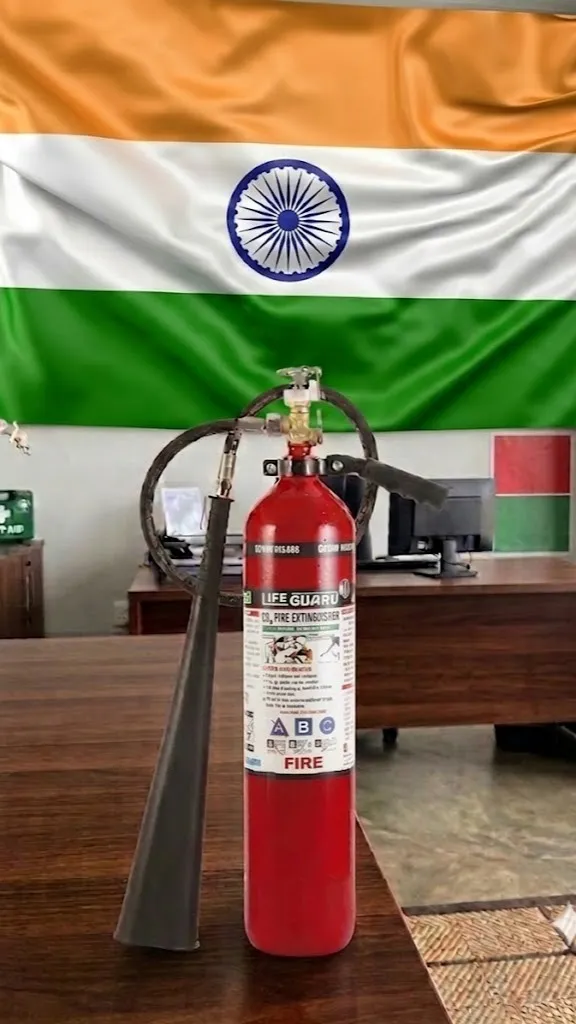
School Clean Agent Suppression Exporter in India
LIFEGUARD® is a reliable school clean agent suppression exporter in India, supplying professionally engineered fire suppression systems for schools, colleges, universities, training institutes and other educational facilities. Our clean-agent solutions are designed to protect sensitive equipment and critical spaces where water, foam or dry chemical powder could cause substantial secondary damage.
Backed by the manufacturing and technical expertise of United Fire Equipments Pvt. Ltd., LIFEGUARD® supports educational projects in India and international markets with system design assistance, equipment selection, agent calculations, manufacturing, export supply, technical documentation and commissioning guidance.
Our school clean-agent fire suppression systems can be configured for server rooms, computer laboratories, communication rooms, electrical rooms, control rooms, archives, libraries and other specialised areas.
What Is a Clean Agent Fire Suppression System?
A clean-agent fire suppression system uses an electrically non-conductive extinguishing medium that suppresses fire without leaving powder, foam or liquid residue. It is commonly selected for areas containing valuable electronic equipment, digital records or sensitive assets.
A typical system includes:
- Clean-agent storage cylinder
- Cylinder valve and discharge assembly
- Electric or pneumatic actuator
- Pressure gauge and monitoring accessories
- Distribution piping
- Engineered discharge nozzles
- Fire detection devices
- Gas-releasing control panel
- Manual release station
- Abort switch
- Audio-visual warning units
- Safety and operating signage
- Equipment-shutdown and ventilation interlocks
The clean agent, storage quantity, design concentration and discharge arrangement must be selected according to the protected hazard, enclosure volume and applicable technical requirements.
Why Schools Need Clean Agent Fire Suppression
Modern educational institutions depend on computers, networking equipment, smart-classroom technology, digital records and communication systems. A fire in one of these critical areas can affect school operations, examinations, security and student services.
Portable extinguishers remain important, but they depend on someone being present and trained to operate them. An automatic clean-agent system can detect and suppress a developing fire at an early stage, including when the protected area is unattended.
Key benefits include:
- Rapid response to an identified fire condition
- No powder or foam residue after discharge
- Protection for electrical and electronic equipment
- Reduced risk of water-related damage
- Three-dimensional protection within an enclosure
- Support for continuous operation of critical facilities
- Integration with fire alarms and building services
- Reduced post-fire cleaning requirements
- Automatic and manual operating modes
- Central monitoring and alarm indication
Applications in Schools and Educational Institutions
LIFEGUARD® clean-agent suppression systems can be considered for suitable enclosed spaces, including:
School Server Rooms
Server rooms support attendance systems, examinations, administration, security, communication and digital learning. A fire can cause expensive equipment damage and prolonged operational disruption.
A properly designed clean-agent system provides automatic detection and total-flooding protection for the enclosed room.
Computer Laboratories
Computer laboratories contain multiple electrical devices, power supplies, network switches and cables. Clean-agent suppression can protect these assets without covering them with water or dry powder.
Data and Communication Rooms
Network cabinets, communication racks, CCTV recording equipment and access-control systems are essential to campus operations. Clean-agent systems provide specialised protection for these sensitive installations.
Electrical and UPS Rooms
Electrical rooms may contain switchgear, UPS units, battery-support equipment and control panels. Clean agents can be considered where the identified fire risk and room conditions are compatible with the selected agent.
Libraries and Digital Archives
Schools and universities may store valuable records, manuscripts, examination documents and digital archives. Clean-agent solutions can help minimise secondary damage to selected protected assets.
Control and Security Rooms
Campus control rooms may monitor CCTV, access control, fire alarms and other safety systems. Protecting these areas helps maintain essential emergency functions.
Audio-Visual and Broadcasting Rooms
Educational institutions with recording studios, media laboratories or broadcasting facilities often contain sensitive and expensive electronic equipment. A residue-free suppression solution can be appropriate for these spaces.
Clean Agents Available for School Projects
Depending on the project specification and applicable requirements, clean-agent suppression solutions may include:
FK-5-1-12 Clean Agent Systems
FK-5-1-12 is a clean extinguishing agent used in total-flooding systems for protecting sensitive equipment and enclosed critical spaces. It suppresses fire without leaving residue and does not require extensive cleaning after discharge.
HFC-227ea Fire Suppression Systems
HFC-227ea, commonly associated with FM-200-type applications, is used in engineered total-flooding systems. Its suitability depends on the applicable regulations, environmental requirements, project specification and approval status in the destination market.
Inert Gas Fire Suppression Systems
Inert gas systems use suitable gases or gas blends to reduce the oxygen concentration in a protected enclosure to a level at which combustion cannot be sustained. System design must consider personnel safety, enclosure pressure, venting and storage-space requirements.
The availability and regulatory acceptance of individual agents can vary by country. The final agent should be confirmed with the consultant, buyer and relevant authority before ordering.
How an Automatic Clean Agent System Works
A typical system operates through a coordinated detection and release sequence:
- Fire detectors identify smoke, heat or another programmed fire condition.
- The releasing panel receives and verifies the alarm signals.
- Audio-visual alarms warn occupants of the developing emergency.
- A programmed time delay allows evacuation before discharge.
- Ventilation or related equipment is shut down where required.
- The actuator opens the cylinder valve.
- The clean agent travels through the distribution piping.
- Engineered nozzles discharge the agent throughout the enclosure.
- The required concentration is established to suppress the fire.
- The control panel records and indicates the system status.
The actual cause-and-effect sequence must follow the approved design, fire strategy and applicable safety requirements.
Major System Components
A complete school clean-agent suppression package can include:
- Seamless agent cylinder
- Clean extinguishing agent
- Cylinder valve
- Pressure gauge
- Pressure switch
- Solenoid actuator
- Manual actuator
- Flexible discharge hose
- Non-return valve
- Manifold for multi-cylinder systems
- Distribution piping
- Discharge nozzles
- Cylinder brackets
- Fire and gas-releasing control panel
- Smoke and heat detectors
- Manual release station
- Abort switch
- Hooter, sounder and strobe
- Discharge warning sign
- Emergency instructions
- Installation and maintenance documentation
The final component list depends on whether the system is modular, centralised, single-cylinder or multi-cylinder.
Engineered and Modular Clean Agent Systems
Modular Systems
A modular system generally uses a cylinder located inside or near the protected room. It can be suitable for small server rooms, communication spaces, laboratories and individual electrical rooms.
Benefits may include:
- Compact arrangement
- Shorter piping network
- Straightforward installation
- Localised protection
- Easier expansion for selected applications
Centralised Systems
A centralised system uses one or more cylinders connected to an engineered piping network. It may be selected for larger rooms or projects requiring multiple cylinders and a common manifold.
Benefits may include:
- Protection of larger enclosures
- Flexible cylinder-bank configurations
- Centralised equipment location
- Main and standby cylinder arrangements
- Engineered multi-nozzle distribution
System selection depends on room volume, pipe routing, discharge time, available cylinder space and project requirements.
Clean Agent System Design Process
Correct design is essential to achieve the required agent concentration throughout the protected enclosure.
Site and Hazard Assessment
The process begins with reviewing:
- Room length, width and height
- Raised-floor and false-ceiling volumes
- Protected equipment
- Fire hazard classification
- Door and ventilation openings
- Air-conditioning arrangement
- Normal occupancy
- Ambient temperature
- Site altitude
- Available cylinder space
- Pipe-routing limitations
Agent-Quantity Calculation
The clean-agent quantity is calculated using the net enclosure volume, design concentration, temperature and other applicable factors. Additional allowance may be required for leakage, altitude or system-specific design conditions.
Hydraulic Flow Calculation
For an engineered system, hydraulic flow calculations help determine the pipe sizes, nozzle orifices, discharge rate and distribution balance. The system must discharge the required agent quantity within the specified time.
Nozzle Placement
Nozzles are positioned to achieve suitable agent distribution while considering room geometry, obstructions, ceiling voids, raised floors and equipment layouts.
Room Integrity Assessment
A total-flooding clean-agent system depends on the enclosure retaining the required concentration for an adequate period. Door-fan testing or another recognised integrity-assessment method may be required by the project specification.
Pressure-Relief Consideration
Agent discharge can produce pressure changes inside the enclosure. A pressure-relief vent may be required depending on the agent, room strength and system design.
Detection and Releasing Controls
A clean-agent system generally uses a dedicated releasing control panel connected to appropriate detectors and warning devices.
Depending on the project, the control arrangement may include:
- Cross-zone detection
- First-stage fire alarm
- Second-stage confirmed alarm
- Pre-discharge warning
- Programmable discharge delay
- Manual release
- Abort facility
- Cylinder-pressure monitoring
- HVAC shutdown
- Damper control
- Electrical isolation
- Access-control interface
- Building management system integration
- Fire-alarm panel integration
The release logic must be documented in the approved cause-and-effect matrix.
Export Support from India
As a school clean agent suppression exporter from India, LIFEGUARD® supports overseas buyers, distributors and contractors with coordinated commercial and technical documentation.
Depending on the confirmed scope, export support may include:
- Product catalogues
- Technical datasheets
- Commercial quotation
- Proforma invoice
- Packing list
- Country-of-origin documentation
- Available product certificates
- System drawings
- Agent calculations
- Bill of quantities
- Installation instructions
- Testing and commissioning formats
- Operation and maintenance manuals
- Warranty documents
- Export packing
- Shipping-mark coordination
The final documentation package is prepared according to the purchase order, destination-country requirements and agreed contractual scope.
Markets We Serve
LIFEGUARD® welcomes school clean-agent suppression enquiries from:
- Asia
- Africa
- Europe
- The Middle East
- Gulf countries
- Southeast Asia
- South Asia
- Other international markets
We work with:
- Schools and school groups
- Colleges and universities
- Government education departments
- EPC contractors
- MEP contractors
- Fire-protection companies
- Engineering consultants
- Importers and distributors
- System integrators
- Institutional procurement agencies
- Educational infrastructure developers
Why Choose LIFEGUARD®?
LIFEGUARD® combines manufacturing experience with application-specific engineering and responsive export support.
Key advantages include:
- Fire-safety industry experience since 1991
- Clean-agent system design support
- Solutions for schools, colleges and universities
- Modular and centralised configurations
- Single-cylinder and multi-cylinder systems
- Main and standby arrangements
- Integrated detection and releasing controls
- Hydraulic and agent-quantity calculation support
- Customised equipment configurations
- Technical and export documentation
- Installation and commissioning guidance
- Support for consultants, contractors and distributors
- After-sales and maintenance coordination
Quality and Compliance
Clean-agent fire suppression systems should be designed and installed according to the approved project specification, applicable fire codes and destination-country regulations.
Depending on the project, relevant requirements may include national fire regulations, recognised international standards, authority approvals and specified product certifications.
Certificates and approvals vary according to the selected product, model, component and agent. Buyers should clearly state all mandatory approval requirements in their enquiry so that the appropriate configuration and supporting documents can be offered.
Installation and Commissioning
Installation should be carried out by qualified personnel according to approved drawings and manufacturer instructions. Important activities include:
- Secure cylinder mounting
- Correct installation of valves and actuators
- Proper pipe supports and fittings
- Nozzle installation according to calculations
- Detection and release-circuit wiring
- Equipment earthing
- Alarm and signage placement
- Interface testing
- Control-panel programming
- Functional testing
- Verification of cylinder pressure
- Documentation of results
A full agent-discharge test is not ordinarily performed during routine commissioning unless specifically required and planned. Functional tests can verify the detection, alarm, delay, shutdown and release circuits without discharging the agent.
Maintenance Requirements
Regular inspection and maintenance help keep the clean-agent system ready for operation.
Typical activities may include:
- Visual inspection of cylinders
- Verification of cylinder pressure or agent weight
- Inspection of brackets and flexible hoses
- Checking pipework and nozzles
- Testing detectors and alarm circuits
- Testing manual release and abort switches
- Verification of discharge delays
- Testing HVAC and electrical interlocks
- Checking warning signs
- Reviewing room modifications and new penetrations
- Inspection of pressure-relief arrangements
- Updating service records
- Recharging the system after discharge
Only trained and authorised personnel should inspect, service or recharge the system.
Frequently Asked Questions
What is the best clean agent for a school server room?
The appropriate agent depends on room volume, occupancy, temperature, environmental regulations, required approvals and the destination country. The selection should be based on a formal technical assessment.
Does a clean-agent system damage computers?
Clean agents are selected for sensitive electrical and electronic environments because they do not leave powder, foam or liquid residue. However, the complete design—including nozzle positioning and pressure effects—must be properly engineered.
Can clean-agent systems be installed in occupied school areas?
Certain clean-agent systems can be designed for normally occupied spaces when the required exposure limits, safety factors, alarms, time delays and evacuation procedures are followed. The final design must comply with applicable requirements.
Is room sealing important?
Yes. A total-flooding system must retain the required extinguishing concentration for the specified period. Uncontrolled openings can allow the agent to escape and reduce system effectiveness.
Can the system protect raised floors and false ceilings?
Yes. These concealed spaces can be included in the design where they contain combustible materials or electrical services. Their volumes must be considered during agent calculation and nozzle planning.
Can LIFEGUARD® export complete systems from India?
Yes. LIFEGUARD® can supply clean-agent cylinders, valves, piping accessories, nozzles, control panels, detection devices, alarms and technical documentation according to the agreed scope.
What details are needed for a quotation?
Please share:
- Project name and destination country
- Room dimensions and drawings
- Raised-floor and false-ceiling details
- Minimum and maximum temperature
- Site altitude
- Protected equipment
- Ventilation information
- Required clean agent
- Required standards and approvals
- Main and standby requirements
- Quantity of protected rooms
- Delivery location
- Installation scope
Choose LIFEGUARD® as Your School Clean Agent Suppression Exporter in India
Protecting educational technology and critical school infrastructure requires the right combination of early detection, engineered suppression and dependable equipment.
LIFEGUARD® provides clean-agent fire suppression systems for school server rooms, computer laboratories, communication centres, archives, control rooms and other critical facilities. From preliminary system selection to export supply and commissioning support, our team is ready to assist with customised school fire-protection requirements.
Contact LIFEGUARD®
United Fire Equipments Pvt. Ltd.
Manufacturer of ISI-Certified Fire Safety Equipment
Phone: 8048034226
Email: ufe126@gmail.com | info@lifeguardindia.in
Website: www.lifeguardindia.in
Contact us for quotations, technical proposals, bulk orders, export enquiries, project partnerships and distributorship opportunities for school clean agent suppression systems from India.
Suggested SEO Meta Title
School Clean Agent Suppression Exporter India | LIFEGUARD®
Suggested Meta Description
LIFEGUARD® is a school clean agent suppression exporter in India, supplying residue-free fire protection systems for server rooms, computer labs, electrical rooms and educational facilities.
Suggested URL Slug
/school-clean-agent-suppression-exporter-india
Primary SEO Keyword
School clean agent suppression exporter India
Secondary SEO Keywords
- Clean agent fire suppression system exporter India
- School server room fire suppression India
- School clean agent system manufacturer India
- Fire suppression system for computer laboratories
- Clean agent suppression supplier for schools
- Educational institution fire suppression exporter
- FK-5-1-12 suppression system exporter India
- HFC-227ea fire suppression exporter India
- School data-room fire protection system
- LIFEGUARD® clean agent suppression system
Keywords






