
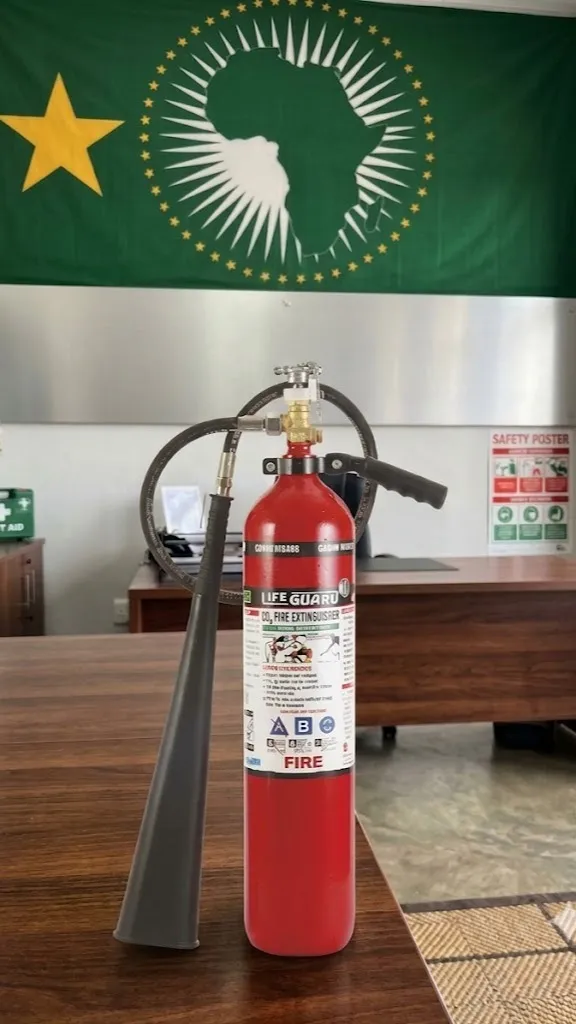
School Fire Extinguisher Solutions Africa
Reliable Fire Safety Solutions for Schools Across Africa
LIFEGUARD® provides dependable school fire extinguisher solutions in Africa for educational institutions seeking effective protection against common fire risks. Our solutions are suitable for schools, colleges, universities, training centres, boarding schools, laboratories, libraries and other educational facilities.
Every educational building contains different fire hazards. Classrooms may contain paper, furniture and electrical equipment, while laboratories, kitchens, workshops and generator rooms require specialised protection. A properly planned fire extinguisher solution helps ensure that the correct equipment is available at the right location for quick use during the initial stage of a fire.
United Fire Equipments Pvt. Ltd., the OEM of the LIFEGUARD® brand, offers fire extinguishers and associated fire safety equipment for educational projects across African markets.
Complete Fire Extinguisher Solutions for Educational Facilities
Our school fire extinguisher solutions for Africa can be planned according to the building layout, occupancy, fire risks and local fire safety requirements. Equipment selection may cover:
- Classrooms and administrative offices
- Science and computer laboratories
- School kitchens and dining areas
- Libraries and record rooms
- Electrical and server rooms
- Auditoriums and multipurpose halls
- Workshops and vocational training rooms
- School buses and transportation vehicles
- Generator and transformer areas
- Hostels and residential blocks
- Sports facilities and storage rooms
The type, capacity, quantity and positioning of extinguishers should be determined after evaluating the specific fire risks within each area.
Types of School Fire Extinguishers
ABC Dry Powder Fire Extinguishers
ABC dry powder extinguishers provide versatile protection against several common fire hazards. They are widely used in classrooms, corridors, offices, workshops, parking areas and general utility spaces.
These extinguishers may be suitable for fires involving ordinary combustible materials, flammable liquids and energised electrical equipment, subject to the extinguisher’s rating and applicable regulations.
Carbon Dioxide Fire Extinguishers
CO₂ fire extinguishers are commonly selected for electrical and electronic risks because the extinguishing agent does not leave a powder residue. They can be used in locations such as:
- Computer laboratories
- Server and communication rooms
- Electrical panel areas
- Audio-visual rooms
- Control rooms
- UPS and equipment rooms
CO₂ reduces the risk of residue-related damage to sensitive equipment. However, its suitability must be assessed carefully for the room size, ventilation and occupancy conditions.
Water-Type Fire Extinguishers
Water-based extinguishers are designed primarily for Class A fire risks involving materials such as paper, wood, cloth and certain furnishings. They may be considered for classrooms, libraries, offices and storage areas where electrical or flammable-liquid hazards are not present.
Water extinguishers must not be used on energised electrical equipment or cooking-oil fires unless specifically approved and marked for such applications.
Foam Fire Extinguishers
Foam extinguishers can provide protection against certain Class A and flammable-liquid fire risks. They may be considered for workshops, maintenance areas, fuel-handling locations and other suitable sections of a school campus.
The appropriate foam type must be selected according to the identified fuel, application and applicable environmental requirements.
Wet Chemical Fire Extinguishers
School kitchens and catering areas can present risks involving overheated cooking oils and fats. Wet chemical extinguishers are designed for suitable kitchen fire hazards and help cool the burning medium while reducing the possibility of re-ignition.
Wet chemical extinguishers should be positioned close to the kitchen risk but at a safe and accessible location.
Clean-Agent Fire Extinguishers
Clean-agent fire extinguishers may be considered for locations containing sensitive electronic equipment, valuable documents or assets where residue from conventional extinguishing agents could cause additional damage.
Suitable applications may include server rooms, control rooms, laboratories and specialised learning facilities.
Fire Risk Assessment for Schools
Effective school fire protection begins with a proper risk assessment. Important considerations include:
- Number and age group of students
- Building size and number of floors
- Location of classrooms and laboratories
- Kitchen and cafeteria fire risks
- Electrical installations and equipment
- Storage of fuels, chemicals or combustible materials
- Emergency exits and evacuation routes
- Accessibility of fire extinguishers
- Requirements for students with disabilities
- Local fire codes and authority guidelines
The assessment should be carried out by a competent fire safety professional. Fire extinguisher selection and placement must comply with applicable national standards, local authority requirements and project specifications in the relevant African country.
Strategic Placement of Fire Extinguishers
Fire extinguishers should be clearly visible, properly mounted and easily accessible during an emergency. Common installation locations include:
- Near designated exits
- Along escape routes and corridors
- Outside laboratories and kitchens
- Near electrical and mechanical rooms
- In workshops and maintenance areas
- At stairways and common areas
- Inside or near school buses, where required
Extinguishers should not be hidden behind furniture, locked inside inaccessible rooms or placed where fire may block access. Proper signs can help students and staff locate the equipment quickly.
School Fire Safety Signage and Accessories
A complete school fire extinguisher solution may also include:
- Fire extinguisher stands
- Wall-mounting brackets
- Protective extinguisher cabinets
- Fire point boards
- Photoluminescent identification signs
- Operating-instruction labels
- Inspection and maintenance tags
- Fire blankets for suitable kitchen applications
- First-aid firefighting equipment
Correct signage and mounting improve visibility, accessibility and equipment protection.
Inspection, Maintenance and Refilling
Fire extinguishers must remain serviceable throughout their installed life. Schools should establish a documented inspection and maintenance programme that includes:
- Regular visual inspection
- Verification of pressure indication, where applicable
- Checking safety seals and tamper indicators
- Inspection for corrosion, dents or physical damage
- Confirmation that operating instructions are readable
- Verification that access is unobstructed
- Periodic servicing by competent personnel
- Refilling after use or whenever required
- Hydrostatic testing according to applicable requirements
- Updating service and maintenance records
Even a partially discharged extinguisher should be inspected and serviced before it is returned to use.
Fire Safety Training for Teachers and Staff
Providing equipment alone is not sufficient. Teachers, security personnel, laboratory assistants, kitchen staff, drivers and facility teams should understand:
- How to identify different types of fire
- Which extinguisher is suitable for each hazard
- How to raise the fire alarm
- When it is safe to attempt first-aid firefighting
- How to operate an extinguisher correctly
- When to stop firefighting and evacuate
- How to assist students during an emergency
Children should be taught to raise an alarm and evacuate safely. They should not be expected to fight fires unless a qualified authority has established an age-appropriate and supervised programme.
Fire Extinguisher Solutions for School Buses
School transportation also requires careful fire-risk management. Depending on the vehicle type and local regulations, fire extinguishers may be provided for engine, fuel, electrical and passenger-compartment risks.
Extinguishers installed in school buses should be:
- Properly rated for the identified vehicle risks
- Securely mounted to prevent movement
- Accessible to the driver or trained attendant
- Protected against accidental damage
- Regularly inspected and maintained
Vehicle-specific fire suppression solutions may also be considered for engine compartments and other high-risk areas.
Why Choose LIFEGUARD®?
LIFEGUARD® focuses on practical and project-specific fire protection for educational facilities. Our capabilities include:
- Multiple fire extinguisher types and capacities
- Solutions for classrooms, kitchens, laboratories and electrical areas
- Equipment selection based on identified risks
- Support for institutional and project requirements
- Fire extinguisher accessories and signage
- Technical documentation, subject to product and order requirements
- Inspection and maintenance guidance
- Export-oriented support for African markets
- Customised solutions for new and existing school buildings
Product certification, ratings and technical compliance should always be verified against the particular model offered and the requirements of the destination country.
Serving Educational Projects Across Africa
LIFEGUARD® can support enquiries for school fire extinguisher solutions across Africa, including projects in South Africa, Kenya, Nigeria, Ghana, Tanzania, Uganda, Ethiopia, Rwanda, Zambia, Zimbabwe, Botswana, Namibia, Mozambique, Mauritius and other African countries.
Export documentation, packaging, delivery terms and technical submittals can be coordinated according to the project scope, product availability and destination requirements.
Frequently Asked Questions
Which fire extinguisher is best for a school?
No single extinguisher is suitable for every location. ABC dry powder extinguishers may be used for general risks, CO₂ extinguishers for suitable electrical risks, wet chemical extinguishers for commercial kitchens and other types for specialised hazards. Selection should follow a formal fire-risk assessment.
How many fire extinguishers does a school require?
The required quantity depends on the building area, number of floors, travel distance, fire classification, occupancy, identified hazards and local fire regulations. A competent professional should prepare an extinguisher schedule based on the site layout.
Where should extinguishers be installed in a school?
They are generally installed near exits, along escape routes and close to specific risk areas while remaining safely accessible. Exact positioning and travel distances must comply with the applicable local code.
How often should school fire extinguishers be inspected?
Visual checks should be conducted regularly, while detailed servicing, refilling and pressure testing should follow the manufacturer’s instructions and applicable national or local standards.
Do school staff need fire extinguisher training?
Yes. Designated teachers, security staff, kitchen personnel, laboratory staff and facility teams should receive suitable training. Life safety and evacuation must always remain the first priority.
Contact LIFEGUARD® for School Fire Extinguisher Solutions in Africa
Protecting students, teachers, staff and school property requires the right combination of equipment, planning, maintenance and training. LIFEGUARD® offers reliable and customised school fire extinguisher solutions in Africa for educational institutions, contractors, consultants, distributors and government projects.
LIFEGUARD® – United Fire Equipments Pvt. Ltd.
Manufacturer of Fire Safety Equipment
Corporate Office: LIFEGUARD TOWER, K-960, Opp. SBI, Rithala, Rohini, Delhi – 110085, India
Manufacturing Facility: B-38, Mangolpuri Industrial Area, Phase-II, Delhi – 110034, India
Contact us for product selection, technical proposals, project quotations and export enquiries for school fire protection requirements across Africa.
SEO Title: School Fire Extinguisher Solutions Africa | LIFEGUARD®
Meta Description: Explore LIFEGUARD® school fire extinguisher solutions in Africa for classrooms, laboratories, kitchens, electrical rooms, hostels and school buses.
Suggested URL: /school-fire-extinguisher-solutions-africa
Primary Keyword: School fire extinguisher solutions Africa
Secondary Keywords: school fire safety solutions Africa, fire extinguishers for African schools, school fire protection equipment Africa, classroom fire extinguisher supplier, educational institution fire safety Africa
Keywords






