
School Fire Extinguisher Solutions Europe
Reliable Fire Protection Solutions for Schools and Educational Institutions
LIFEGUARD® offers dependable school fire extinguisher solutions in Europe for schools, colleges, universities, training centres, libraries, laboratories, hostels, sports facilities and other educational buildings. Our solutions are planned according to the fire risks present in different areas of an educational campus, helping institutions improve emergency preparedness and protect students, teachers, employees, visitors, equipment and property.
Every educational building contains multiple fire hazards. Electrical panels, science laboratories, computer rooms, commercial kitchens, heating equipment, workshops, libraries and storage areas may each require a different type of fire extinguisher. Therefore, fire protection should be based on a proper risk assessment rather than the installation of one extinguisher type throughout the premises.
As an experienced fire safety equipment manufacturer and solutions provider, United Fire Equipments Pvt. Ltd. supplies LIFEGUARD® fire extinguishers and associated fire protection equipment for educational projects across Europe.
Complete School Fire Extinguisher Solutions
LIFEGUARD® provides a comprehensive range of portable and wheeled fire extinguishers suitable for different school environments. Depending on the identified fire class and applicable project requirements, our range includes:
- ABC dry powder fire extinguishers
- Carbon dioxide fire extinguishers
- Water-based fire extinguishers
- Foam fire extinguishers
- Wet chemical fire extinguishers
- Clean-agent fire extinguishers
- Portable and wheeled fire extinguisher models
- Fire extinguisher stands, brackets and cabinets
- Fire blankets and emergency fire safety accessories
- Fire detection and alarm equipment
- Automatic fire suppression solutions for special hazards
The final selection, quantity and placement of extinguishers should be determined through a site-specific fire-risk assessment and the regulations applicable in the destination country.
Fire Extinguishers for Different Areas of a School
Classrooms and Administrative Areas
Classrooms, staff rooms, reception areas and administrative offices commonly contain paper, furniture, fabric and other ordinary combustible materials. Suitable water-based, foam or multipurpose extinguishers may be selected according to the assessed risk and local requirements.
Extinguishers should be positioned at clearly visible and accessible locations without obstructing corridors or emergency escape routes.
Computer Laboratories and IT Rooms
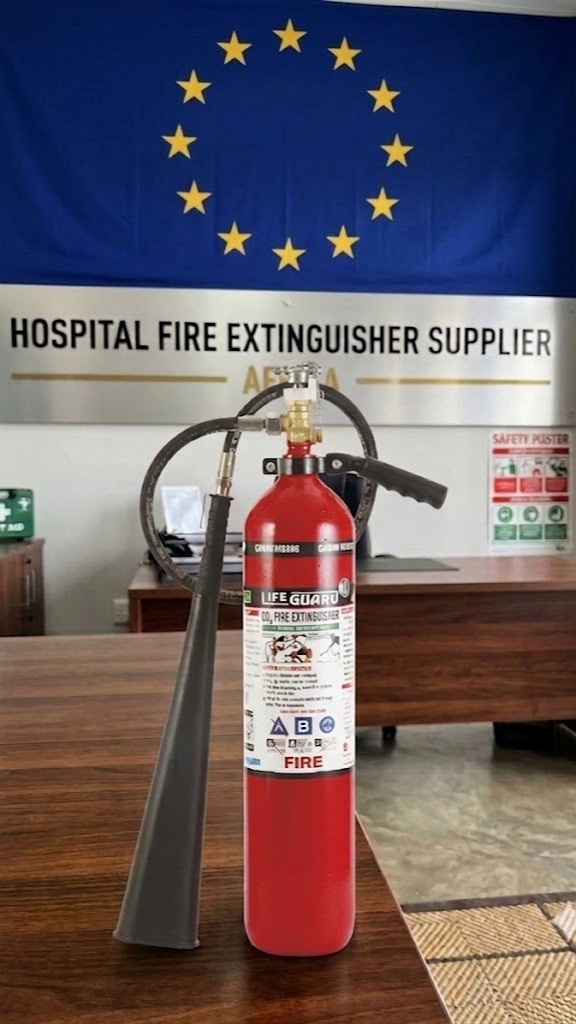
Computer laboratories, server rooms, control rooms and communication areas contain sensitive electrical and electronic equipment. Carbon dioxide or an appropriately approved clean-agent extinguisher may be considered where minimising residue and secondary damage is important.
The selected extinguisher must be suitable for the identified electrical risk and used only by trained personnel when it is safe to do so.
Science Laboratories
School and university laboratories may contain flammable liquids, combustible chemicals, gas cylinders and electrical equipment. Fire protection for these areas requires a detailed assessment of the materials stored and experiments performed.
Depending on the hazards, laboratory protection may include:
- Suitable portable fire extinguishers
- Fire blankets
- Emergency isolation arrangements
- Clearly marked escape routes
- Fire detection and alarm systems
- Specialised suppression equipment
Compatibility with the chemicals present must always be confirmed before selecting an extinguishing medium.
School Kitchens and Canteens
Commercial kitchens and food-preparation areas may face fires involving cooking oils, fats, electrical equipment and ordinary combustible materials. Wet chemical extinguishers are commonly used for relevant cooking-oil and fat hazards, subject to applicable classifications and approvals.
Additional extinguishers may be required for nearby electrical equipment or other hazards. Kitchen staff should receive suitable training in emergency shutdown and extinguisher use.
Libraries and Record Rooms
Libraries, archives and record rooms contain a significant amount of paper, cardboard and wooden furniture. Fire extinguishers for these areas should be selected to provide effective protection while considering potential damage to valuable books, documents and records.
Early fire detection, proper housekeeping and controlled storage are also important elements of library fire safety.
Electrical Rooms and Distribution Panels
Electrical switch rooms, distribution boards, UPS areas and control panels require extinguishing equipment suitable for energised electrical hazards. Carbon dioxide or approved clean-agent extinguishers may be considered, depending on the equipment, room conditions and local fire-safety requirements.
Water-based extinguishers should not be used on energised electrical equipment unless the specific extinguisher is approved and marked for that application.
Workshops and Vocational Training Areas
Technical schools and vocational institutions may include mechanical, automotive, woodworking, welding or fabrication workshops. These areas can involve ordinary combustibles, fuels, paints, oils, gases and electrical machinery.
The extinguisher combination should be selected after reviewing every fire hazard, activity and material present in the workshop.
School Buses and Transport Areas
School buses, maintenance garages and parking areas may require compact vehicle fire extinguishers and larger extinguishing equipment for fuel, electrical and mechanical hazards. Products should be selected according to the vehicle category, operating environment and applicable transport regulations.
Corridors, Staircases and Common Areas
Fire extinguishers installed in corridors and common areas should be clearly marked, unobstructed and readily accessible. Their locations should support the building’s evacuation plan without reducing the required escape-route width.
Selecting the Correct Fire Extinguisher
Fire extinguishers should be selected according to the type of combustible material and the recognised fire classification applicable to the project.
Fire riskTypical school locationsCommonly considered extinguisher typeOrdinary combustible materialsClassrooms, offices and librariesWater-based, foam or ABC dry powderFlammable liquidsLaboratories, workshops and maintenance areasFoam, dry powder or carbon dioxideFlammable gasesLaboratory or maintenance gas installationsDry powder, subject to risk assessmentEnergised electrical equipmentIT rooms, electrical panels and laboratoriesCarbon dioxide or approved clean agentCooking oils and fatsCanteens and commercial kitchensWet chemicalSpecial chemical or metal risksSpecialised laboratories and workshopsHazard-specific extinguishing media
This table provides general guidance only. Product selection must be verified against the actual hazard, extinguisher fire rating, manufacturer’s instructions and country-specific regulations.
School Fire Safety Planning
An effective school fire protection programme should include more than the supply of portable extinguishers. A coordinated approach may cover:
- Fire-risk assessment of the complete premises
- Identification of fire classes and special hazards
- Selection of suitable extinguisher types and capacities
- Determination of quantity and installation locations
- Provision of signs, mounting brackets, stands or cabinets
- Inspection and maintenance planning
- Staff training and emergency-response procedures
- Evacuation drills and assembly-point management
- Periodic review following building or occupancy changes
Students should be instructed to raise the alarm and evacuate safely. Portable extinguishers should generally be operated only by trained adults when the fire is small, an escape route remains available and there is no danger to life.
European Compliance Considerations
Fire extinguisher requirements differ across European countries. Products intended for European projects may need to comply with relevant European standards, national regulations and project specifications.
Depending on the product and destination, requirements may include:
- Applicable provisions of EN 3 for portable fire extinguishers
- Applicable requirements for mobile or wheeled fire extinguishers
- Pressure-equipment conformity requirements
- Appropriate conformity marking and documentation
- Declared fire ratings and operating instructions
- Labelling in the required local language
- National fire codes and building regulations
- Inspection, servicing and maintenance requirements
- Client, consultant or authority approvals
Compliance should always be confirmed for the specific extinguisher model and destination country before procurement. Certification, markings and approvals should not be assumed to apply universally across all European markets.
Why Choose LIFEGUARD®?
Established Fire Safety Experience
United Fire Equipments Pvt. Ltd. has been associated with fire safety equipment under the LIFEGUARD® brand since 1991. Our experience supports the selection and supply of fire protection equipment for diverse institutional and commercial applications.
Multi-Hazard Product Range
Schools contain different hazards within the same campus. Our broad product portfolio helps project teams select appropriate extinguishers and fire safety accessories for classrooms, kitchens, laboratories, electrical rooms, workshops and transport facilities.
Project-Oriented Support
We assist customers, importers, distributors, consultants and contractors with:
- Product selection based on available hazard information
- Technical data sheets
- Product catalogues
- Compliance documents, where applicable
- Packing and shipping coordination
- Commercial quotations
- After-sales and technical communication
OEM and Export Support
LIFEGUARD® supports fire safety distributors, project suppliers, contractors and institutional buyers seeking school fire extinguisher solutions for Europe. Product configuration, labelling, documentation and packaging can be discussed according to order volume, destination-country requirements and applicable commercial terms.
Quality-Focused Manufacturing
Our products are manufactured and tested according to the applicable specifications of the offered model. Model-specific certifications, approvals, fire ratings and technical parameters can be submitted for review before order finalisation.
Fire Extinguisher Inspection and Maintenance
School fire extinguishers must remain accessible, identifiable and operational. A planned inspection and servicing programme should include:
- Checking whether the extinguisher is in its assigned location
- Ensuring that access and visibility are not obstructed
- Examining the cylinder for corrosion or physical damage
- Checking the safety pin, seal, hose and discharge nozzle
- Verifying the pressure indicator where fitted
- Confirming that labels and operating instructions are readable
- Reviewing the service and maintenance record
- Arranging servicing by competent personnel
- Replacing or recharging used, damaged or expired equipment
- Conducting pressure testing or requalification when required
Inspection and servicing intervals must follow local regulations, the relevant standard and the extinguisher manufacturer’s instructions.
Solutions for New and Existing Schools
LIFEGUARD® school fire extinguisher solutions can support:
- New school construction projects
- Existing school fire-safety upgrades
- College and university campuses
- International schools
- Boarding schools and hostels
- Nurseries and childcare facilities
- Vocational and technical institutes
- Sports academies and training centres
- Libraries and research facilities
- School bus and transport operations
For existing facilities, the current fire extinguisher inventory should be reviewed whenever the building layout, occupancy, equipment or activities change.
Frequently Asked Questions
Which fire extinguisher is best for a school?
There is no single extinguisher suitable for every part of a school. Classrooms, kitchens, computer rooms, laboratories and workshops have different risks. A combination of extinguisher types is normally selected after a fire-risk assessment.
Can ABC dry powder extinguishers be used in schools?
ABC dry powder extinguishers can cover several common fire classes, but the powder may reduce visibility and contaminate sensitive equipment. Their suitability should therefore be evaluated for each location.
Which extinguisher is suitable for a school computer laboratory?
Carbon dioxide or an appropriately approved clean-agent extinguisher may be considered for electrical and electronic equipment. The final selection must comply with local requirements and the assessed hazard.
What type of extinguisher is required in a school kitchen?
A wet chemical extinguisher is commonly selected for applicable cooking-oil and fat fires. Other extinguishers may also be required for electrical equipment and ordinary combustible materials.
How many fire extinguishers does a school need?
The required quantity depends on the building size, floor layout, occupancy, travel distance, fire rating, hazard category and local regulations. A qualified fire-safety professional should assess the premises.
How often should school fire extinguishers be inspected?
Visual checks and formal servicing should be performed according to the applicable national regulations, recognised standards and manufacturer’s instructions. A documented maintenance programme should be maintained.
Does LIFEGUARD® supply school fire extinguishers to Europe?
LIFEGUARD® supports international enquiries for school fire safety equipment. Availability, compliance, certification, shipping and documentation are confirmed according to the selected product and destination country.
Request a School Fire Extinguisher Solution for Europe
If you are planning a new educational building, upgrading an existing school or sourcing fire safety equipment for distribution, share the following details with our team:
- Destination country
- Type of educational institution
- Building layout or floor plans
- Number of floors and approximate floor area
- Identified fire hazards
- Required extinguisher types and quantities
- Applicable standards or tender specifications
- Required certifications and approvals
- Delivery location and project timeline
Our team will review the available requirements and propose a suitable technical and commercial solution.
Contact LIFEGUARD®
LIFEGUARD® – United Fire Equipments Pvt. Ltd.
Manufacturer of Fire Safety Equipment
LIFEGUARD TOWER, K-960, Opp. SBI
Rithala, Rohini, Delhi – 110085, India
Manufacturing Facility:
B-38, Mangolpuri Industrial Area
Phase-II, Delhi – 110034, India
Contact us for product catalogues, technical specifications, compliance documentation and quotations for school fire extinguisher solutions in Europe.
Suggested SEO Metadata
Meta Title:
School Fire Extinguisher Solutions Europe | LIFEGUARD®
Meta Description:
Explore LIFEGUARD® school fire extinguisher solutions for Europe, covering classrooms, laboratories, kitchens, IT rooms, libraries and school buses.
Primary Keyword:
School fire extinguisher solutions Europe
Secondary Keywords:
- School fire safety solutions Europe
- Fire extinguishers for European schools
- School fire protection equipment Europe
- Educational institution fire extinguishers
- Classroom fire extinguisher solutions
- Laboratory fire extinguisher Europe
- School kitchen fire extinguisher
- School fire safety equipment supplier
- School fire protection solutions provider
- LIFEGUARD® fire extinguishers Europe
Suggested URL Slug: