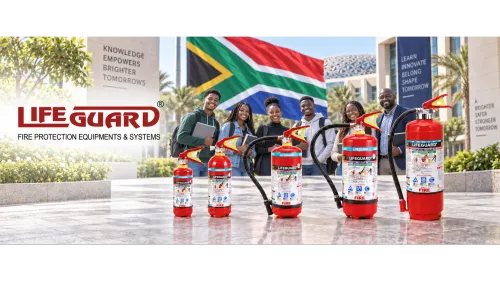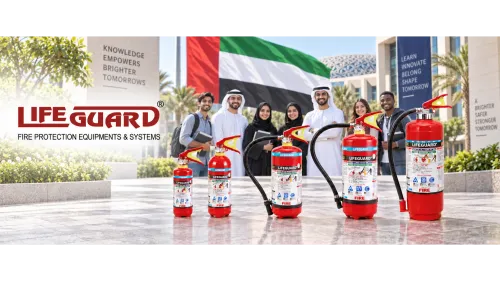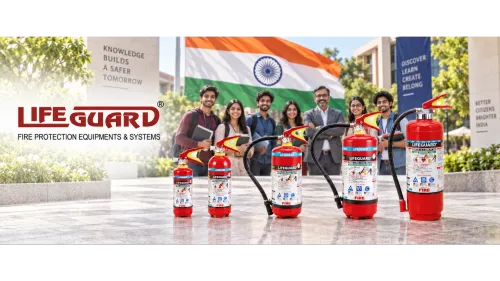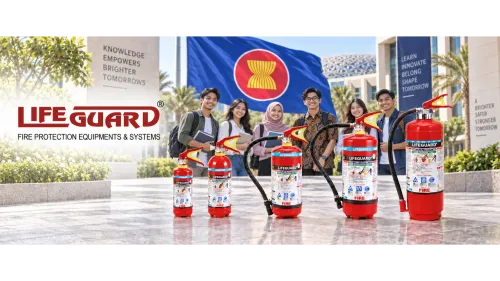

School Fire Protection System Provider in India – LIFEGUARD®
Creating a safe learning environment requires more than installing a few fire extinguishers. Schools need a carefully planned fire protection system that supports early detection, rapid evacuation and effective fire control. LIFEGUARD®, a brand of United Fire Equipments Pvt. Ltd., provides comprehensive school fire protection solutions in India for educational institutions of different sizes and configurations.
From classrooms, laboratories and libraries to kitchens, electrical rooms, auditoriums, hostels and administrative blocks, every area of a school presents different fire risks. Our team evaluates these risks and recommends suitable fire detection, alarm, suppression and evacuation solutions according to the building layout, occupancy and applicable project requirements.
Complete Fire Protection Solutions for Schools
As an experienced school fire protection system provider in India, LIFEGUARD® offers products and solutions for new school projects, existing campuses, system upgrades and fire-safety improvement works.
Our school fire protection solutions may include:
- Portable fire extinguishers
- Addressable and conventional fire alarm systems
- Smoke, heat and multi-criteria detectors
- Manual call points and alarm sounders
- Fire hydrant and hose-reel systems
- Automatic sprinkler systems
- Fire suppression systems
- Kitchen fire suppression solutions
- Clean-agent systems for critical rooms
- Emergency and exit signage
- Fire doors and fire-rated equipment
- Fire buckets and stands
- Evacuation plans and assembly-point signage
- Inspection, testing and maintenance support
- Fire-safety training and evacuation-drill assistance
The final system configuration should be selected after a detailed assessment of the premises and applicable fire-safety requirements.
Why Schools Need a Reliable Fire Protection System
Schools are high-occupancy buildings where children, teachers, employees and visitors may be present throughout the day. Younger students may require additional assistance during an emergency, making early warning and orderly evacuation especially important.
Common fire risks in schools include:
- Electrical short circuits and overloaded wiring
- Combustible furniture, paper and educational material
- Science-laboratory chemicals and equipment
- Cooking appliances, LPG and hot oil in kitchens or canteens
- Computers, servers, UPS systems and electrical panels
- Stage equipment and decorative material in auditoriums
- Fuel, machinery and chemicals in workshops
- Improperly stored waste or combustible materials
- Blocked exits and poorly marked escape routes
A properly designed school fire safety system helps detect a developing fire, alert occupants, support safe evacuation and control the incident before it spreads.
Fire Extinguishers for School Buildings
Portable fire extinguishers provide first-response protection when a fire is discovered at an early stage. The extinguisher type and capacity should be chosen according to the fire hazard present in each area.
LIFEGUARD® supplies a broad range of fire extinguishers, including:
ABC Dry Powder Fire Extinguishers
ABC extinguishers are suitable for multiple common fire risks and are widely used in corridors, classrooms, offices, security rooms and general school areas.
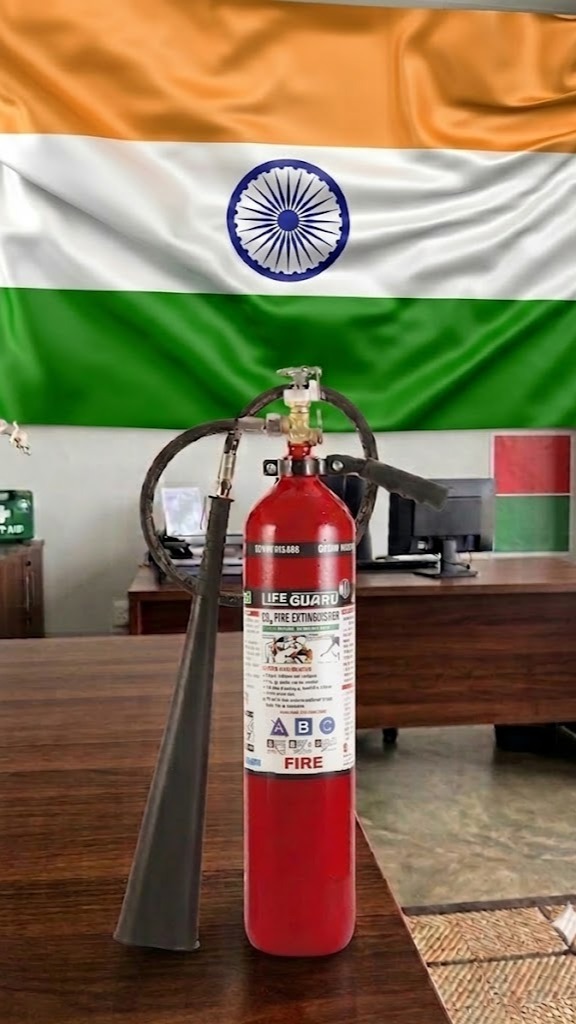
Carbon Dioxide Fire Extinguishers
CO₂ fire extinguishers are commonly selected for electrical panels, computer laboratories, server rooms, UPS areas and other locations containing energised electrical equipment. They suppress fire without leaving powder residue.
Water and Water-Mist Fire Extinguishers
These extinguishers may be considered for appropriate Class A hazards involving materials such as paper, wood, cloth and similar combustibles, subject to the area’s risk assessment.
Foam Fire Extinguishers
Foam extinguishers may be used for suitable Class A and flammable-liquid risks where specified.
Wet-Chemical Fire Extinguishers
Wet-chemical extinguishers are designed for fires involving cooking oils and fats, making them suitable for identified kitchen and canteen hazards.
Clean-Agent Fire Extinguishers
Clean-agent extinguishers may be selected for sensitive equipment areas where minimising residue and secondary damage is important.
Extinguishers should be correctly located, clearly identified and kept accessible. They must also be inspected and maintained at appropriate intervals by trained personnel.
Fire Detection and Alarm Systems for Schools
Early detection can provide valuable time for evacuation and emergency response. A school fire alarm system can include smoke detectors, heat detectors, manual call points, control panels, sounders, hooters and visual alarm devices.
Depending on the campus size and operational requirements, schools may use:
- Conventional fire alarm systems
- Addressable fire alarm systems
- Smoke and heat detection
- Multi-criteria detection
- Manual fire-alarm activation points
- Audible and visual warning devices
- Zone-wise alarm indication
- Public-address or voice-evacuation integration
- Interfaces with lifts, ventilation and other building services
Alarm devices should be positioned so that warnings can be recognised throughout classrooms, laboratories, corridors, washrooms, assembly halls and other occupied spaces.
Hydrant, Hose-Reel and Sprinkler Systems
Large schools, multi-storey educational buildings and extensive campuses may require fixed firefighting installations based on building characteristics and applicable approvals.
LIFEGUARD® can support requirements for:
- Internal and external fire hydrants
- First-aid hose reels
- Landing valves
- Fire hoses and branch pipes
- Fire-brigade inlet connections
- Fire-water storage arrangements
- Fire pumps and control panels
- Automatic sprinkler installations
- System piping, valves and accessories
Fixed systems require proper hydraulic planning, equipment selection, installation, testing and periodic maintenance to remain dependable during an emergency.
Fire Protection for High-Risk School Areas
Different parts of a school require different protection strategies.
Science Laboratories
Laboratories may contain chemicals, gas connections, electrical instruments and open-flame equipment. Protection should be selected after identifying the specific chemicals and processes involved.
Computer and Server Rooms
Electronic equipment can be damaged by both fire and inappropriate extinguishing media. Clean-agent or other suitable residue-free protection may be considered for critical rooms after technical assessment.
Kitchens and Canteens
School kitchens may face risks involving LPG, electrical appliances, cooking oil and hot surfaces. Appropriate extinguishers, gas-isolation arrangements, detection and kitchen suppression systems can help manage these risks.
Libraries and Record Rooms
Books, paper and documents create a significant combustible load. Early detection, suitable extinguishers and effective compartmentation are important in these areas.
Auditoriums and Multipurpose Halls
High occupancy, stage curtains, electrical equipment and decorative materials can increase risk. Clearly marked exits, alarm coverage, emergency lighting and crowd-safe evacuation arrangements are essential.
School Buses and Transport Areas
School buses, parking spaces and transport facilities should be equipped with suitable fire extinguishers and supported by trained personnel and documented emergency procedures.
School Fire-Safety Survey and System Planning
An effective system begins with an assessment of the campus. Important factors include:
- Total built-up area and number of floors
- Student and staff occupancy
- Age groups and accessibility needs
- Number and width of exits
- Travel distance to safe exits
- Location of staircases and assembly points
- Laboratory, kitchen and electrical hazards
- Existing firefighting installations
- Fire-tender access
- Water-storage and pumping arrangements
- Local fire-authority and project requirements
Following the assessment, a coordinated solution can be developed covering detection, notification, firefighting equipment, escape-route identification and maintenance planning.
Installation, Testing and Maintenance Support
Fire protection equipment must remain functional throughout its service life. LIFEGUARD® supports schools with installation, testing, commissioning and maintenance services based on the agreed project scope.
Typical service activities may include:
- Inspection of extinguishers and accessories
- Fire-alarm testing
- Detector and manual-call-point testing
- Pump and hydrant-system checks
- Hose, valve and nozzle inspection
- Inspection of emergency signage
- Identification of blocked or inaccessible equipment
- Replacement or refilling recommendations
- Maintenance documentation
- User demonstrations and basic fire-safety training
Regular inspection helps identify discharged extinguishers, damaged components, low pressure, system faults, expired service periods and access obstructions.
Fire-Safety Training and Evacuation Preparedness
Fire protection equipment is most effective when staff know how to respond. School administrators, teachers, security personnel, laboratory assistants, drivers and facility teams should understand their responsibilities during an emergency.
Training can cover:
- How to raise a fire alarm
- How to report an emergency
- Selection and safe use of extinguishers
- Evacuation of students
- Assistance for young children and persons with disabilities
- Responsibilities of floor or area wardens
- Assembly-point management
- Attendance and head-count procedures
- Restrictions on re-entering the building
- Coordination with emergency responders
Schools should conduct periodic evacuation drills and record observations for improvement.
Why Choose LIFEGUARD®?
LIFEGUARD® combines fire-equipment manufacturing capabilities with application-focused technical support. We assist schools, consultants, architects, contractors, facility managers and institutional buyers in selecting solutions suited to their premises.
Key advantages include:
- Established fire-safety brand since 1991
- Wide range of firefighting and fire-protection equipment
- ISI-certified products available in applicable categories
- Support for schools of different sizes and building types
- Project-specific product selection
- Supply, installation and commissioning support
- Inspection and maintenance assistance
- Technical documentation and product guidance
- Solutions for both new and existing educational facilities
- Service support across India, subject to project location and scope
Applications
Our school fire protection systems are suitable for:
- Primary and secondary schools
- Senior secondary schools
- Government schools
- Private schools
- International schools
- Boarding schools
- Residential school campuses
- Special-needs educational institutions
- Coaching and training centres
- Colleges and universities
- Vocational institutes
- Libraries and educational laboratories
- School hostels and staff accommodation
Frequently Asked Questions
What fire protection equipment is required in a school?
Requirements depend on the building height, floor area, occupancy, layout, risk classification and applicable local regulations. A school may require extinguishers, alarms, detectors, hydrants, hose reels, sprinklers, emergency lighting, exit signage and evacuation arrangements.
Which fire extinguisher is suitable for a classroom?
ABC dry-powder extinguishers are commonly used for general risks. However, the correct type, capacity and placement should be determined through a site-specific fire-risk assessment.
Which extinguisher should be used in a school computer laboratory?
CO₂ or an appropriate clean-agent extinguisher may be selected for electrical and electronic equipment areas. The final choice should consider the equipment, room conditions and applicable safety requirements.
Do school kitchens require special fire protection?
Yes. Kitchen risks can involve cooking oils, LPG, electrical appliances and high-temperature surfaces. Suitable wet-chemical extinguishers and, where required, an automatic kitchen suppression system may be recommended.
How often should school fire equipment be inspected?
Fire-safety equipment should be inspected and maintained at the prescribed intervals under the applicable standard, manufacturer’s instructions and local authority requirements. Schools should also perform routine visual checks to ensure equipment remains accessible and undamaged.
Does LIFEGUARD® provide customised school fire protection solutions?
Yes. Solutions can be developed according to the campus layout, identified fire hazards, occupancy, existing infrastructure and project specifications.
Partner with a Trusted School Fire Protection System Provider in India
Protecting students and staff requires dependable equipment, proper system planning and an organised emergency response. Whether you are developing a new school, upgrading an existing campus or procuring fire-safety equipment, LIFEGUARD® can support your project with suitable products and technical guidance.
Contact us to discuss your school layout, fire-risk areas, required equipment, quantities and installation scope.
Contact LIFEGUARD®
United Fire Equipments Pvt. Ltd.
Manufacturer of ISI Certified Fire Safety Equipment
📞 8048034226
📧 ufe126@gmail.com | info@lifeguardindia.in
Suggested SEO Metadata
SEO Title: School Fire Protection System Provider India | LIFEGUARD®
Meta Description: Looking for a school fire protection system provider in India? LIFEGUARD® supplies fire extinguishers, alarms, hydrants, sprinklers and customised fire-safety solutions for educational institutions.
Suggested URL:
/school-fire-protection-system-provider-india
Primary Keyword:
School fire protection system provider India
Secondary Keywords:
School fire protection company India, school fire safety system, fire alarm system for schools, school fire extinguisher supplier, school fire suppression system, fire hydrant system for schools, school fire safety equipment manufacturer, educational institution fire protection
Suggested Image Alt Text:
LIFEGUARD school fire protection systems and fire-safety equipment in India